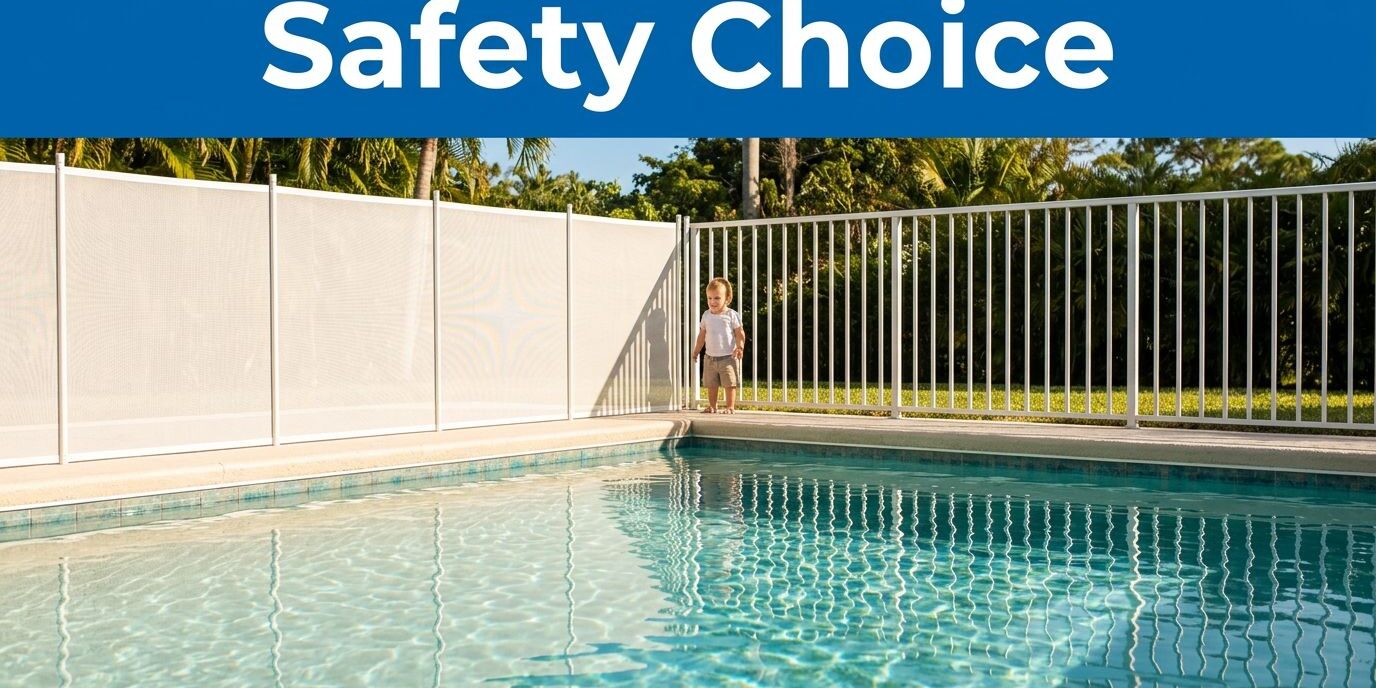
A toddler can move faster than we expect, and a pool can become dangerous in seconds. When I compare a mesh pool fence vs aluminum fence, I look past color and style first. The real questions are simple: Can my child climb it, push through it, or reach the gate?
I also want a barrier that fits my pool area perfectly, holds up in Southwest Florida weather, and lets me supervise everyone in the pool area without blocking my view. Both materials can be useful, but they feel very different in daily family life. Here is how I compare them for toddler safety.
Key Takeaways
- A properly installed safety barrier needs the right height, spacing, gate, and placement, no matter the material.
- A removable mesh fence provides high visibility, a soft surface, and flexible placement around many pool shapes.
- Aluminum pool fences are sturdy and permanent, but their rails and wider structure can create climbing concerns for young children.
- Reliable self-closing gates and self-latching gates are just as important as the fence panels themselves.
- No fence replaces adult supervision, locked doors, and a complete pool safety plan.
Pool Safety Starts With the Barrier Design
When I think about toddler protection and child safety, I don’t start with the word aluminum or mesh. I start with the complete barrier. A strong material can still create a safety problem if the fence is too short, the openings are too wide, or the gate doesn’t latch every time.
The U.S. Consumer Product Safety Commission’s pool barrier guidelines describe important features such as adequate barrier height, limited openings, and gates that close and latch on their own. These safety codes are essential, but local building requirements can add specific rules, so I always check with the city or county before installation.
For toddlers, the fence should separate the pool from the rest of the yard whenever possible. This type of isolation fencing gives a child fewer paths to the water than a perimeter fence that only blocks one side of the property. Patio furniture, planters, toys, coolers, and pool equipment should stay away from the barrier because toddlers can turn almost anything into a step.
The gate deserves special attention. I want a gate that swings away from the pool, closes without help, and latches out of a toddler’s reach. I also test it after installation. Does it close when someone walks through with a towel? Does it latch if the wind moves it? Small details matter when a child is curious and determined.
A pool fence is one part of the safety plan. The CDC’s drowning prevention information also points to supervision, barriers, water skills, and emergency preparation. I keep those pieces together as part of a comprehensive drowning prevention strategy instead of treating the fence like a magic wall.
Mesh Pool Fences Offer Clear Views and Flexible Placement
Mesh pool fencing is constructed from a tightly woven, transparent material supported by slender vertical posts. I appreciate this design around a pool because it provides an unobstructed view of the water while the safety barrier remains firmly in place.
High visibility is a significant advantage of this system. If I am supervising a toddler near the water, I do not want a solid wall blocking my view of the child or the waterline. This superior visibility makes it easier to monitor the pool area from the patio, kitchen, or nearby seating spaces.
Mesh is also highly flexible, which is ideal when the pool deck features a complex shape. Installers can easily navigate around curves, steps, raised walls, or tanning ledges. The fence allows me to create a dedicated safety zone without the need to enclose the entire backyard.
Many mesh systems are designed to be removable when adults want open access for a party or a special event. While I would never remove the barrier casually and would ensure it is reinstalled before children return, this flexibility is useful for homeowners who want protection without making the pool area feel permanently cordoned off.
The surface of the material is another major benefit. Because there are no horizontal rails, this is a non-climbable and climb-resistant barrier that prevents a toddler from using the fence as a ladder. Although the material may flex under pressure, a professionally installed system remains secure at its posts and anchors. I still make it a habit to inspect the mesh, seams, posts, and gate hardware after heavy storms or frequent use.
For homeowners in Southwest Florida, I also appreciate the clean aesthetic. The fence does not obscure the tile, water, landscaping, or patio, providing necessary protection without making the pool area feel small or closed in.
Aluminum Fences Feel Permanent and Strong
Aluminum pool fences offer a traditional look that many homeowners prefer. They utilize vertical pickets, horizontal rails, and posts connected into a permanent structure. The fence can easily match gates, existing yard fencing, and other metal features throughout your property.
I understand why homeowners choose this option. Aluminum functions as a permanent structure that offers distinct aesthetics, effectively blending security with your home design. It stays in place without requiring removal, and its inherent durability ensures it stands up to the elements while looking like a natural part of your landscape rather than just a safety addition.
The concern is how a toddler interacts with the structure. Horizontal rails can provide potential footholds, depending on the specific design and the child’s height. Wide gaps may also create reach through or climbing concerns if the fence does not meet local pool barrier standards. I never assume that an attractive aluminum fence is automatically safe for a toddler.
Aluminum can also limit visibility more than mesh alternatives. While the pickets are easy to see through, they create stronger visual lines across the pool area compared to the transparent nature of mesh. This may not matter in a large, open yard, but around a small pool or narrow patio, it can make active supervision less comfortable.
The permanent layout can be helpful, but it can also reduce flexibility. If the deck changes, the pool area gets remodeled, or you rearrange your outdoor furniture, the fence may require significant effort to adjust. A permanent barrier is a serious installation, so I recommend measuring the space carefully before choosing this route.
Both options can work when designed and installed correctly. The material alone does not decide safety. The spacing, height, gate, location, and daily habits decide much more.
Side-by-Side Comparison for Toddler Safety
This quick comparison helps me see where each option fits around a family pool.
| Feature | Mesh pool fencing | Aluminum pool fences |
|---|---|---|
| Visibility | Excellent visibility through the fabric | Open view, with visible rails and pickets |
| Toddler climbing risk | No horizontal ladder-like rails | Depends on rail design and spacing |
| Installation style | Often removable with deck anchors | Usually permanent |
| Pool shapes | Works well around curves and tight areas | Best with a simpler, fixed layout |
| Gate options | Self-closing gates and self-latching gates available | Self-closing gates and self-latching gates available |
| Feel around the pool | Light and less visually heavy | Solid and traditional |
| Maintenance | Inspect mesh, posts, and durability | Inspect coating, posts, and overall durability |
| Future flexibility | Easier to remove or reposition | More difficult to change after installation |
The biggest difference I notice is the daily experience. Mesh pool fencing lets me keep a strong view and adjust the barrier when needed. Aluminum pool fences give me a fixed structure with a classic fence appearance. For toddler safety, I give extra attention to climbing points and gate behavior with either choice.
Think About Your Pool Deck and Florida Weather
The surface around your pool affects the installation process. Concrete, pavers, brick, tile, and other deck materials may require different anchor locations and specific preparation. I avoid placing posts too close to a cracked edge or a weak section of the deck to ensure the barrier remains secure.
Tile and grout deserve extra care during the planning phase. Drilling near a tile edge can cause damage if the location is not chosen carefully, and grout lines may also influence where anchors can be safely placed. A professional installer should always review the deck surface and explain the placement plan before any work begins.
Florida weather presents unique challenges for your pool barrier. The intense sun, heavy rain, salt air, pool chemicals, and tropical storms can be hard on outdoor materials. When selecting your fence, look for high weather resistance, such as UV-resistant mesh or aluminum fencing that provides excellent corrosion resistance. Both options are considered low maintenance compared to wood fences, though you should ensure any mesh installation meets ASTM F2286 standards for child safety.
Aluminum usually needs occasional inspection for scratches, loose fasteners, corrosion around hardware, and proper gate alignment. Mesh requires its own routine checks for tears, loose connections, worn sections, and anchor movement, and panels that no longer stay tight often need mesh barrier replacement. Regardless of the material, neither fence should be ignored after the initial installation.
I also recommend keeping the area around the barrier clean and clear of obstructions. Pool toys should not stay beside the fence, and patio chairs must never become climbing equipment. Additionally, ensure that leaves and debris do not accumulate around the gate. These habits are simple, but they significantly improve the overall effectiveness of your pool safety barrier.
The Gate May Matter More Than the Fence Material
I have seen many homeowners focus entirely on the panels and forget about the gate. That is a mistake. A toddler does not need to climb a fence if someone leaves the gate open.
A good pool gate should be equipped with reliable self-closing gates and self-latching gates that lock securely every time. The latch should be positioned high enough that a young child cannot reach it. I test the gate from different angles and with both hands full, because real life around a pool is messy. Someone might be carrying a wet towel, bringing in groceries, or opening the gate for a guest, and the system must remain secure through all of it.
The gate should also have enough clearance to swing properly. Furniture, planters, toys, and deck changes can interfere with closing. After installation, I want every adult in the home to know how the latch works and what to check.
For a mesh system, the gate should match the fence’s strength and design. For aluminum, hinges and latch hardware require regular attention to maintain proper weather resistance. A sagging gate, sticky hinge, or weak latch needs immediate repair before children use the pool area again.
If you are comparing options for your own home, you can request a free estimate and discuss the pool shape, deck surface, gate location, and your preferred style for a pool safety fence. A good conversation should cover the full layout, not only the material.
Which Fence Makes More Sense for Your Home?
I lean toward mesh when toddler safety, visibility, and flexibility are my main concerns. It creates a clear separation around the water without hiding the pool. It also works well when the pool deck has curves, tight spaces, or unusual features.
I consider aluminum when a permanent fence is the top priority and the design can meet pool barrier requirements without giving a toddler useful footholds. I want the picket spacing, rail placement, height, and gate checked before making a decision.
Before choosing, I walk around the pool and ask a few direct questions:
- Can my child reach the gate latch?
- Can furniture or toys help my child climb?
- Can I see the entire pool from common seating areas?
- Will the fence fit the deck without damaging tile or grout?
- Does the gate close and latch on its own?
- Can the barrier stay secure during heavy rain and strong wind?
- Do the materials and installation meet all local regulations?
- Will I still use the fence properly every day?
Price matters, but I do not compare quotes until I know the designs are truly comparable. The upfront cost and total installation cost are important, but you should also weigh the long term value. Quality of installation, the reliability of gate hardware, the durability guaranteed by your warranty coverage, deck preparation, and future service all affect the true value of your investment.
If mesh fits your needs, you can Get a FREE Quote for a professional pool safety fence installation and review the available height, color, and layout choices.
Frequently Asked Questions
Is a mesh pool fence as strong as an aluminum fence?
While aluminum is a rigid, permanent structure, modern mesh pool fencing is engineered with high-tension materials specifically designed to withstand significant force. When professionally installed, a mesh fence provides a secure, impact-resistant barrier that is often safer for toddlers because it lacks the horizontal rails that can act as a ladder for climbing.
Can I remove a mesh pool fence when I don’t have children visiting?
Yes, the primary advantage of a mesh system is its flexibility and removability. You can easily take down the fence sections to open up the pool area for adult gatherings, though it is critical that the barrier is reinstalled properly before any children are allowed back in the yard.
Which fence type is better for the Florida climate?
Both materials are popular in Florida, but they require different maintenance habits to combat salt air and intense sun. High-quality mesh is UV-stabilized to prevent fading and brittleness, while aluminum must be checked for corrosion around fasteners and hinges to ensure the gate continues to latch reliably in humid conditions.
Does a fence guarantee my child’s safety around the pool?
No fence, regardless of the material, can serve as a substitute for active adult supervision. A pool fence is simply one layer of a comprehensive safety plan that should also include self-closing and self-latching gates, door alarms, and constant vigilance whenever children are near water.
Conclusion
When comparing mesh pool fencing with aluminum pool fences for toddler safety, I look for more than just strength or appearance. My priorities include clear visibility, safe spacing, a reliable gate, strategic placement, and a design that our family will use correctly every day.
Aluminum pool fences offer a sturdy, permanent barrier that many homeowners prefer for long-term durability. In contrast, mesh pool fencing provides a lighter look, fewer climbing surfaces, and greater flexibility for different pool deck layouts. Ultimately, child safety and drowning prevention are the most important factors when selecting your installation. By choosing a high-quality safety barrier that fits your lifestyle, you can achieve the peace of mind necessary to enjoy your pool area with confidence.