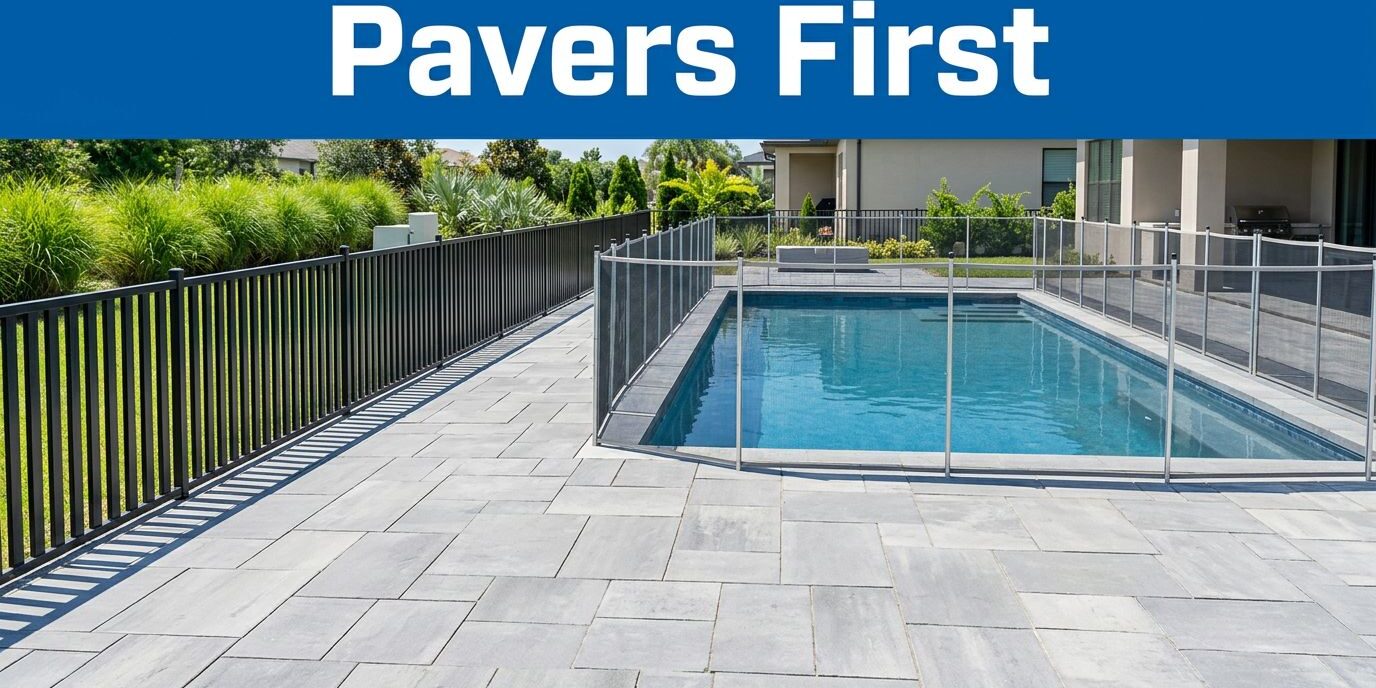
Updating your backyard with new pool deck pavers can make your outdoor space look brand new, but the order of the work matters. In most cases, I recommend planning the pool paver replacement first and installing the permanent safety fence after the finished deck surface is ready.
That doesn’t mean you should leave the pool unprotected during construction. You may need a temporary barrier, especially if children or pets live in the home. Balancing safety and aesthetics ensures your family stays protected while your new pool pavers are properly installed on a clean, stable surface by your contractors.
Key Takeaways
- Plan the pool pavers project before the permanent pool fence installation.
- Remove or coordinate around existing fence posts and pool coping before replacing surfaces.
- Install the new fence after the base preparation, final paver height, layout, and walking paths are set.
- Use a temporary safety barrier if the pool remains accessible during construction.
- Get separate, detailed bids because pavers are priced by square foot and fencing by linear foot.
Pool Paver Replacement Should Usually Come First
The short answer is yes, the paver work should usually happen before the new pool fence. A fence installer needs to know the exact finished surface before drilling holes or setting sleeves around the pool.
Installing new pool pavers can change the height of the deck. A new base, added leveling material, or thicker pool deck pavers may raise the walking surface. If you use materials like travertine pavers or porcelain pavers, or if you modify the edge with bullnose coping, the finished height changes significantly. If the fence is installed first, the posts may end up too short, too low, or out of alignment with the finished deck.
That can create a frustrating situation. You may pay for a fence installation over uneven pavers, complete the deck work, then pay again to adjust or reinstall parts of the fence. I don’t like seeing homeowners spend money twice on the same section of their yard.
The better sequence is simple:
- Mark the desired fence line and gate locations.
- Remove the existing fence or coordinate around it.
- Complete the paver removal, base preparation, leveling, and installation using your chosen pool pavers.
- Confirm the final pool deck pavers and walking areas.
- Install the permanent mesh fence and self-closing, self-latching gate.
A good paver contractor and fence installer should communicate before either project starts. Share the fence layout with the paver team. Then provide the finished paver plan to the fence company.
Why the Installation Order Matters
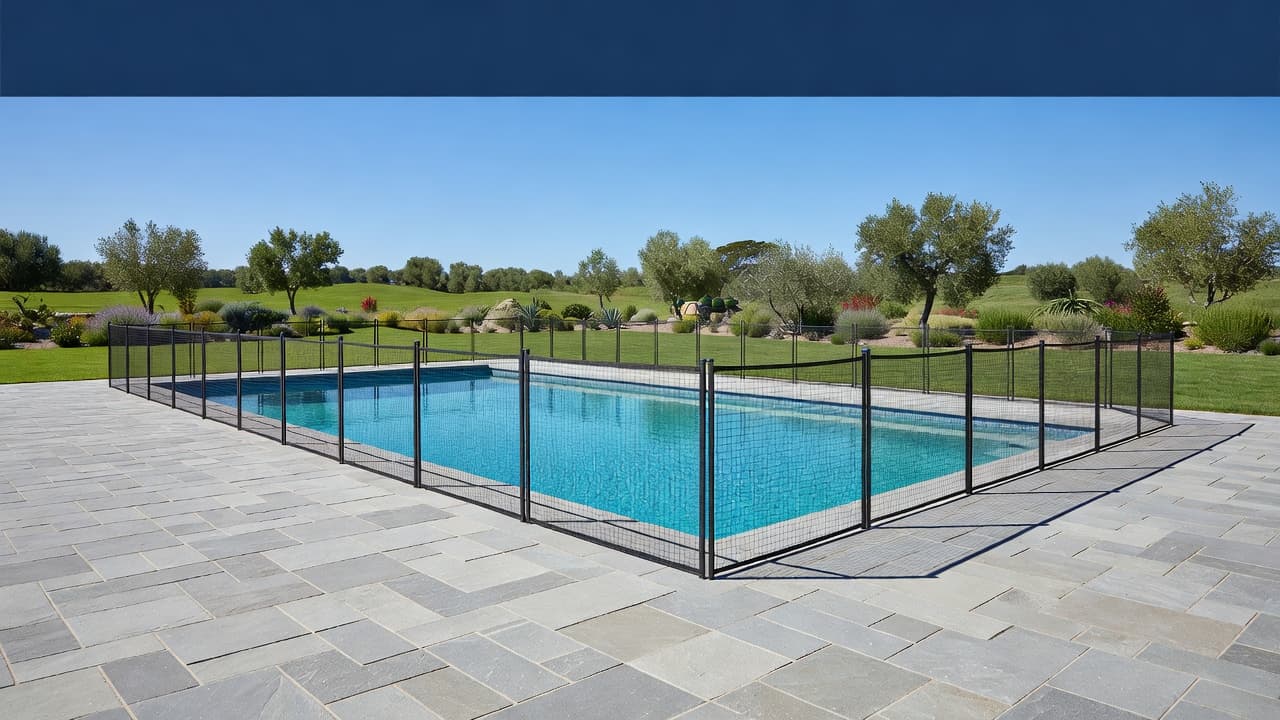
A pool fence isn’t placed randomly around the water. The layout must account for the pool shape, stairs, equipment, landscaping, access points, and the space needed for the gate to open and close properly.
Paver replacement can affect every one of those details. A new border may extend farther into the yard, whether you choose durable concrete pool pavers or elegant natural stone pavers for your project. A planting bed may be removed, a walkway may be widened, and pool coping may be repaired at the same time, which can change the edge where the fence posts need to sit.
The finished surface also matters for safe fence tension. Removable mesh pool fences rely on properly spaced posts and secure anchors. Those anchors need stable material beneath them. Proper drainage planning and secure edge restraints help keep the perimeter stable before you drill any posts. Loose pavers, an uneven base, or a newly repaired area can make installation more difficult.
This is also why I wouldn’t choose a fence line before deciding what happens to the deck. A fence that looks perfect today may block a new walkway tomorrow. Moving it later can leave unused holes in the pavers and create extra patching work. When selecting your surface materials, also consider practical factors like slip resistance and heat retention to ensure comfort on hot summer days.
If you’re comparing materials, pavers are popular because damaged sections can often be removed and replaced without tearing out the entire deck. A pool deck paver installation guide can help you compare material choices, installation steps, maintenance, and typical cost factors.
A fence line should follow the finished deck plan, not force the deck contractor to work around an unfinished safety barrier.
Good joint stability is equally important for long-term deck performance. Using quality joint sand or polymeric sand locks the units tightly together to prevent shifting around fence anchors, while also minimizing weed growth over time. Pool tile and grout repairs are a separate issue, too. If the pool interior needs tile work, that work may happen before or during the deck project. Grout repairs around the waterline won’t usually decide the fence order, but coping and deck-edge repairs can.
When the Fence May Need to Come First
There are times when safety cannot wait for a future paver project. If your current barrier is broken, missing a gate, or unable to stop unsupervised access, address that problem right away.
A temporary barrier may be the best short-term choice. Keep the pool area inaccessible while the paver project is being planned. Do not rely on a loose chair, a latch that doesn’t work, or an adult’s memory to keep a child away from the water.
If you need a permanent fence immediately, talk to the fence company about your timeline and installation methods so everyone is on the same page. The installer may help create a layout that can be adjusted later, but you should understand the possible extra cost before work begins.
Some homeowners also replace only part of the deck using pool patio pavers. In that case, the fence may remain in place if the new materials and existing concrete transitions do not affect the fence line, anchors, gate swing, or finished height. The contractor should inspect the area first. Never assume the old fence can stay simply because the replacement work is limited.
For families with young children, visiting grandchildren, or pets, I would rather see a safe temporary solution than an attractive project schedule that leaves the pool exposed. The deck can wait a little. Pool access cannot be treated casually.
A fence may also come first when the paver work has no confirmed start date. If the project is months away, waiting without a safe barrier doesn’t make sense. Install the protection you need now, then coordinate any future deck work and sealing and maintenance carefully.
How to Coordinate Both Projects
The smoothest pool paver replacement starts with a shared plan. You don’t need both contractors to be at your home every day, but they do need the same measurements and expectations.
Begin by measuring the deck area and identifying the current fence line. Take photos of the pool perimeter, gates, steps, equipment pad, drains, and any tight corners. Mark areas where you want the fence to sit after the pavers are replaced.
Then ask both companies clear questions:
- Will the existing fence and anchors be removed before paver work?
- Will the new pavers change the finished deck height?
- Where will the fence gate sit after the new layout is complete?
- Does the fence installer need a specific clearance from the pool edge?
- Who is responsible for repairing abandoned anchor holes?
- Will disposal, leveling, base preparation, edge restraints, re-sanding, and cleanup be included?
The two projects are normally priced in different ways. Paver work is usually quoted by square foot. Fence installation is commonly quoted by linear foot, with gates and difficult surfaces added separately.
| Project | Common pricing basis | Details that affect the bid |
|---|---|---|
| Paver replacement | Square foot | Removal, base repair, leveling, materials, disposal, sealing |
| Mesh pool fence | Linear foot | Layout, posts, anchors, corners, gates, deck surface |
| Fence gate | Per gate | Self-closing hardware, self-latching hardware, size, installation |
| Coping or edge repair | Linear foot or project price | Damage, access, pool coping, bullnose coping, material match, pool shape |
A full paver replacement can cost much more than a small repair. Planning figures from paver contractors often range from about $15 to $35 per square foot for replacement work, although materials like travertine pavers or porcelain pavers, access, demolition, and local labor can move the number. A pool deck materials guide is useful when comparing pavers with concrete, stone, and other surfaces.
Fence prices vary just as much. Mesh fencing is often priced by the foot, while gates, specialty surfaces, difficult access, surface texture, slip resistance, and the number of corners can change the final quote. Ask for a written bid that separates fence labor, materials, gates, removal, and any post-installation repairs.
I also recommend scheduling the fence measurement twice when possible. The first visit helps with the deck plan. The final measurement happens after the pavers are complete. That small step can prevent a lot of guessing.
A Practical Schedule for Homeowners
Here is the order I would use for most homes:
1. Plan the finished layout
Decide where the pool deck pavers will go, where the fence should run, and where the gate will open. Think about furniture, grills, pets, and the path guests will use to reach the pool.
2. Make the pool safe
If the current fence is not reliable, install a temporary barrier or schedule the permanent fence before demolition. Keep children and pets away from the work area.
3. Complete deck and coping work
Remove damaged or uneven pavers, repair the base, complete proper base preparation, level the area, and install the new surface. If coping is being replaced, complete that work before the final fence measurement.
4. Let the surface settle and clean up
The deck should be stable, finished with polymeric sand, clear of loose debris, and ready for drilling. Schedule sealing and maintenance appropriately so the fence installer has clean access to the entire planned perimeter.
5. Install the permanent fence
The final fence should fit the finished pool area based on proper installation methods. Check that every gate closes and latches properly, and that the mesh remains tight between posts.
6. Inspect the complete setup
Walk the perimeter yourself. Look for gaps, loose sections, blocked access, or a gate that doesn’t swing freely. Ask the installer to explain how to remove and reinstall sections when maintenance is needed.
If you’re in Southwest Florida and want to discuss the fence portion before your deck work begins, you can contact Pool Fence SWFL for help with layout questions and a free estimate. You can also Get a FREE Quote before choosing your project schedule.
Frequently Asked Questions
Should I install my pool fence before or after replacing my pool pavers?
In most cases, you should complete the pool paver replacement before installing the permanent fence. This ensures the fence posts are set at the correct height and alignment on the finished deck surface.
What should I do to keep the pool safe during construction?
If your pool is exposed while old pavers are removed and new ones are laid, you should use a temporary safety barrier. Never leave the pool unprotected if you have children or pets living in the home.
How are pool pavers and pool fences typically priced?
Pavers are generally priced by the square foot, which includes materials, base preparation, and installation. Fencing is usually quoted by the linear foot, with additional costs for gates and specialized installation surfaces.
Can my old fence stay in place if I am only replacing part of the pool deck?
Sometimes an existing fence can remain if the partial deck replacement does not alter the finished height, anchor points, or gate swing. However, your contractor should always inspect the area first to confirm whether adjustments are needed.
Conclusion
The safest and cleanest plan is usually to complete the pool paver replacement first, then install the permanent fence on the finished surface. That order helps protect the fence layout, gate position, post height, and your budget while ensuring your new pool patio pavers look their absolute best.
If the pool is currently exposed, don’t wait for the new pool pavers to be finished before adding protection. Use a temporary barrier or install the fence sooner with a clear plan for the upcoming deck work. A little coordination now will successfully balance safety and aesthetics, giving you a beautiful outdoor space and the peace of mind your family deserves.