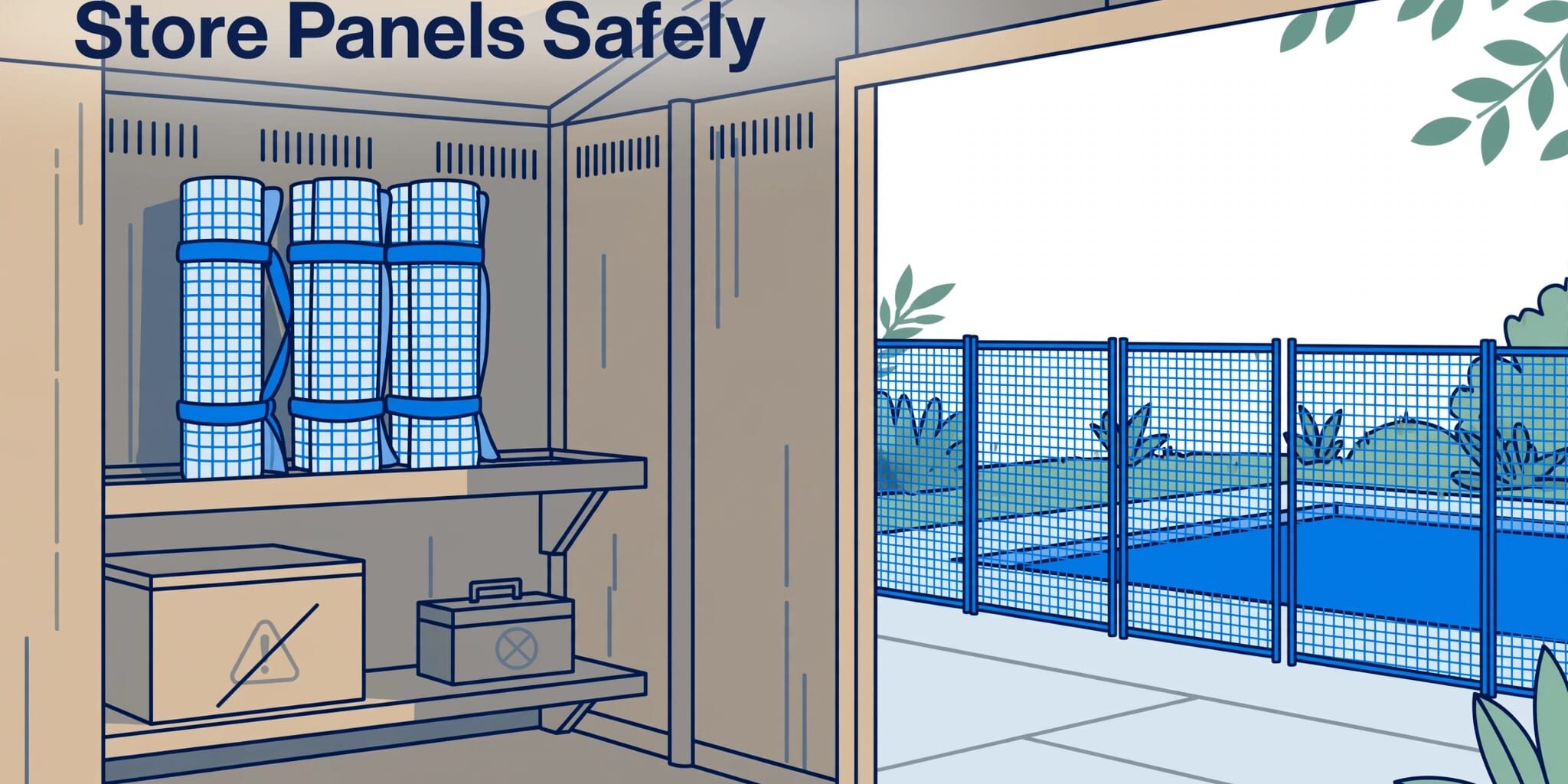
Storing mesh barrier panels starts with gentle cleaning, complete drying, and loose rolling in a protected, ventilated space. Keeping panels dry and off the floor helps prevent mildew, odors, and damage between uses.
A removable pool fence makes occasional deck access convenient, but removal needs a clear safety plan. The pool must remain inaccessible while any section is missing. Good storage starts before the first pole leaves its sleeve.
Key Takeaways
- Dry every seam and fold before rolling panels or placing them inside a storage bag.
- Keep bundles elevated, shaded, and away from chemicals, sharp tools, and standing water.
- Restore the complete barrier and test the gate before children or pets return.
Keep Pool Access Secure During Removal
A fence protects the pool only when the complete system stands securely in place. An open section creates an access point immediately.
Plan protection before taking panels down
Homeowners should arrange another compliant barrier before removing any section that controls pool access. Ordinary temporary fencing doesn’t automatically provide suitable pool protection.
Party preparations, landscaping, and seasonal cleanup shouldn’t leave the water accessible. Adults should remove only the sections necessary for the job.
An alarm adds another warning layer, but it doesn’t physically stop a child from reaching water.
Lift panels without dragging
Adults should release connections and tension according to the fence’s removal instructions. Then, they should lift poles straight out of their sleeves.
Dragging mesh across concrete, deck edges, or artificial turf seams can damage the fabric and binding. A clean staging area keeps panels away from grit.
After removal, adults should replace sleeve covers and keep nearby drainage openings clear.
Clean and Dry Panels Before Packing
Use gentle washing methods
Warm water, mild soap, and a soft sponge work well for routine mesh cleaning. A gentle hose rinse removes loosened dirt without forcing water through seams.
Before storing mesh barrier panels, rinse away salt spray, sunscreen residue, pollen, and yard debris. Clean fabric also makes small tears easier to spot.
Use pressure washers, abrasive brushes, bleach, ammonia, and solvents only with manufacturer approval. Strong cleaning methods can damage mesh, stitching, coatings, or hardware.
Give seams enough drying time
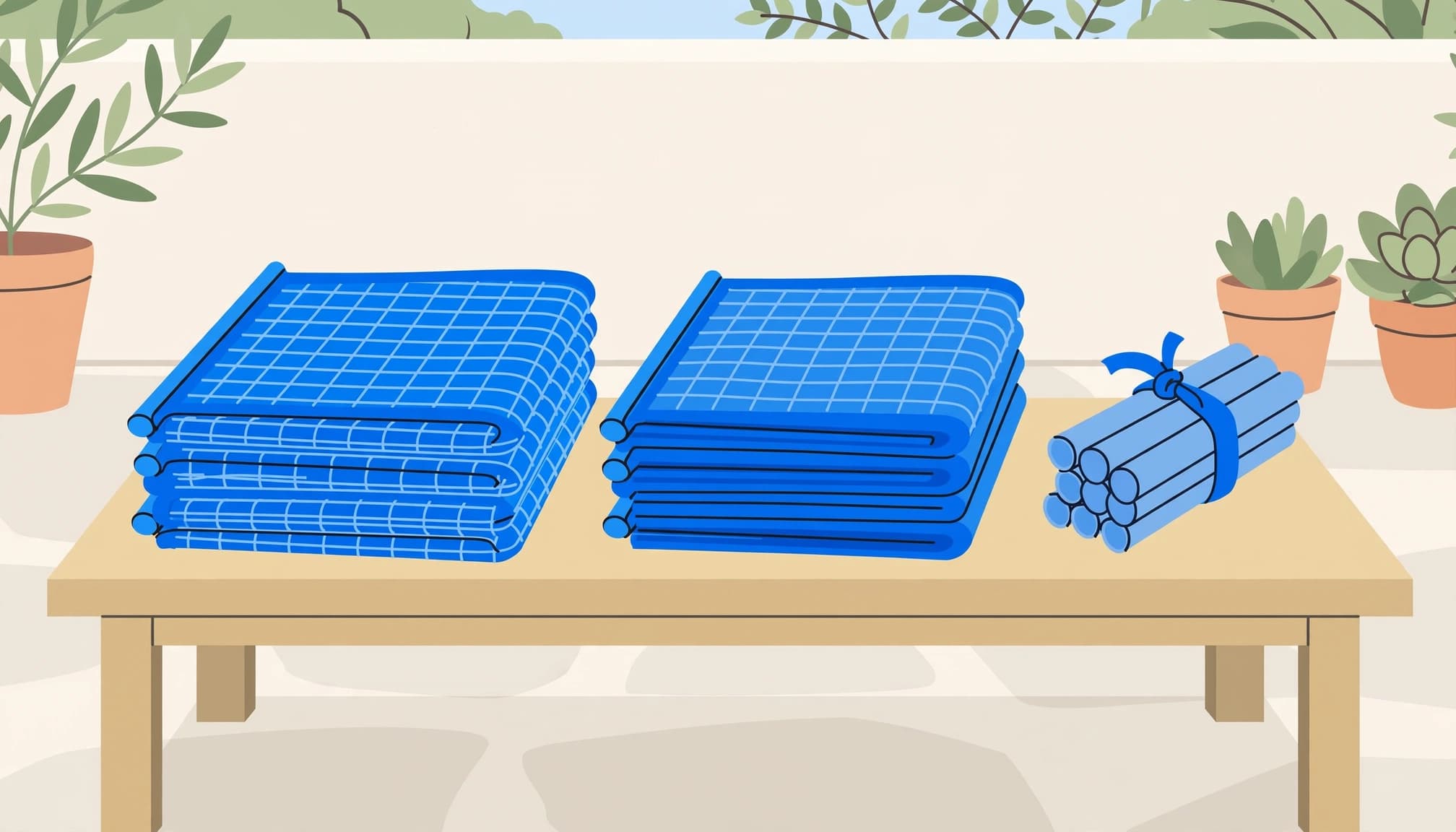
Let panels dry loosely in the shade with steady airflow. Extended midday sun adds unnecessary UV exposure during preparation.
Surface dryness doesn’t mean every seam has dried. Feel along the binding, folded areas, and connections before packing.
Any cool or damp spot needs more drying time. Humid Southwest Florida weather can extend the drying process.
A sealed bag won’t finish drying the panels. Trapped moisture can cause mildew and unpleasant odors.
Storing Mesh Barrier Panels Without Creases or Crushing
Roll loosely and protect the fabric
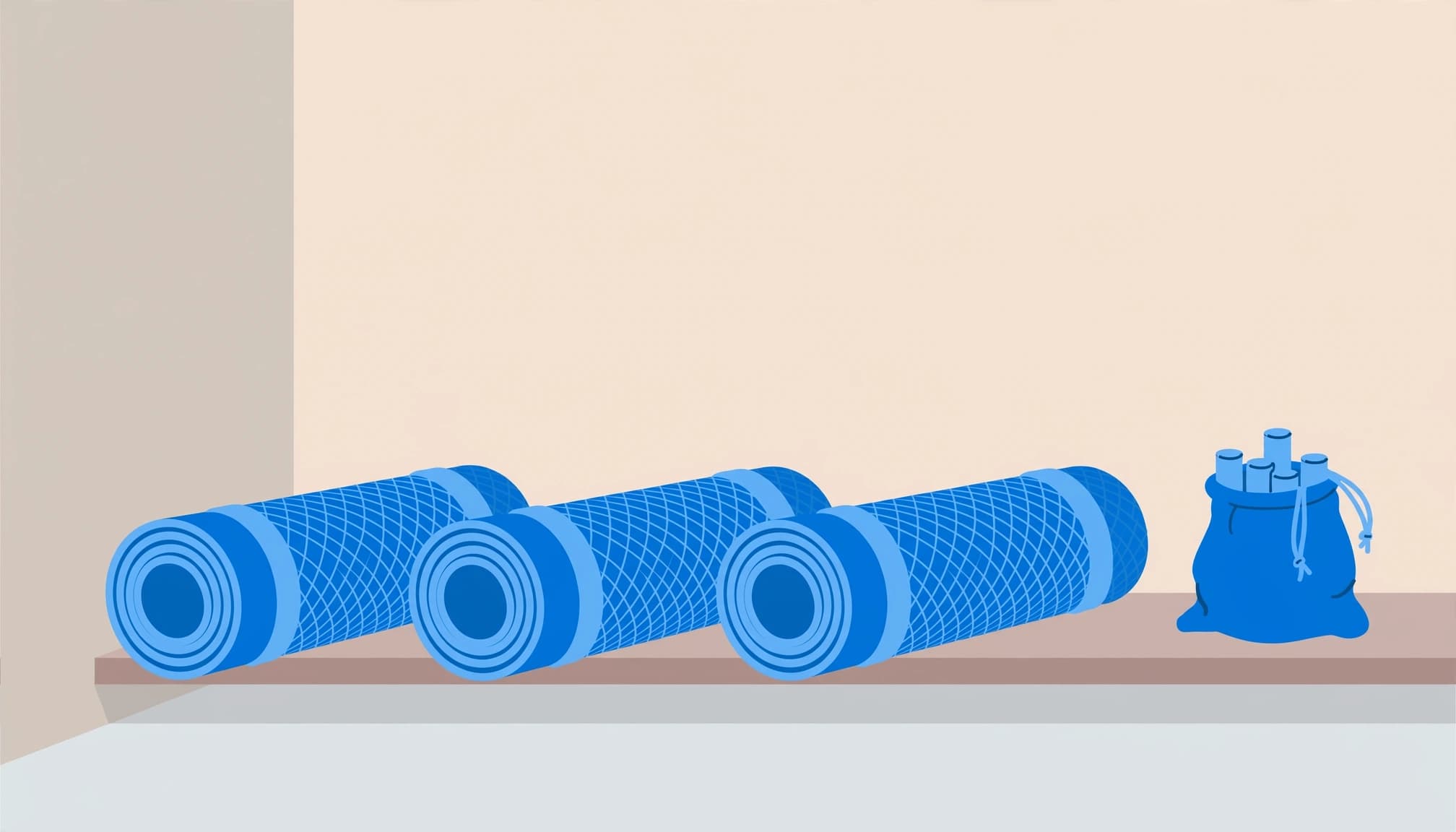
Loose rolling usually treats flexible mesh more gently than tight folding. However, the fence manufacturer’s storage arrangement should guide the process.
Homeowners should keep poles aligned and avoid forcing stiff sections into a small bag. Tight straps can press hardware against fabric.
A soft tie can hold a bundle together without squeezing it. Sharp fasteners should face away from exposed mesh.
Nothing heavy belongs on top. Toolboxes, patio furniture, and stacked bins can crush poles or leave lasting creases.
Choose an elevated, breathable storage spot
A dry garage shelf, household storage rack, or protected utility area is better than an exposed patio corner. Keep the location clear of leaks.
Panels should sit off concrete and away from chlorine, fertilizer, fuel, and sharp garden tools. Chemicals and splashes don’t belong beside stored fencing.
For outdoor storage, pallets or suitable racking should provide at least 150 mm, approximately six inches, of ground clearance. A sheltered location still matters.
Breathable bags or covers allow moisture to escape. Plastic sheeting and sealed containers can trap damp air around the panels.
Keep Hardware Together and Damage Separate
A small, dedicated parts pouch prevents missing connectors and loose hardware during reinstallation. Labels should identify sections without sticking adhesive directly onto mesh.
A quick phone photo of the installed layout also helps. Curves, gate connections, and wall attachments can look similar after several months.
Before storage, homeowners should inspect mesh, stitching, poles, and connectors for fraying, tears, bends, cracks, and corrosion.
Damaged sections should stay separate from ready-to-use panels. That simple habit prevents someone from reinstalling a questionable section by mistake.
Homeowners needing layout or repair guidance can contact the pool safety team before returning the barrier to service.
Why Steel Fence Storage Advice Needs Different Handling
Online storage advice often describes welded steel mesh panels for construction fencing, not flexible pool mesh. Their cleaning methods and damage limits aren’t interchangeable.
Construction panels need different inspections
Inspect temporary fence panels made from galvanized steel for welded joints, mesh-wire cuts, and connectors. Check the zinc coating for damage, corrosion, or worn galvanizing.
Some temporary fencing maintenance routines specify pressure washing at 1,500-2,000 psi for concrete residue and debris. That isn’t a cleaning recommendation for residential pool mesh.
Hot-dip galvanized panels may have a zinc coating around 50-85 microns thick. Suitable zinc-rich touch-up paint should address scratches within days.
Those products don’t automatically suit aluminum pool-fence poles or powder-coated parts. The American Galvanizers Association explains how coating thickness affects service life.
Steel lifespan figures don’t predict pool-mesh performance
Planning estimates for galvanized steel fence panels include 10-20 rural years, 5-10 urban or industrial years, and 3-5 coastal years. Coastal corrosion and galvanizing condition affect actual service life.
The association’s guidance on galvanizing in coastal climates addresses salt-related corrosion. Salt exposure also makes freshwater rinsing useful before storage.
Some steel-panel guidance uses roughly 15 degrees of square-tube bending as a retirement threshold. Significant bends can indicate yielded steel and possible microcracks.
Such panels should leave perimeter-security duty. Homeowners shouldn’t treat that angle as an acceptable bend allowance for pool-fence poles.
Match Storage Equipment to the Panel Type
Industrial rack figures don’t transfer to household fencing
Industrial rack specifications for steel mesh panels don’t set storage requirements for household pool mesh.
Olivec lists its hot-dipped galvanized storage rack at 300 pounds, 120 inches long, and 61 inches high. It describes stacking up to three units high.
However, its specifications list 75 panels or 5,511 pounds. Its description instead says up to 50 panels.
These conflicting counts don’t establish a dependable loaded or stacked capacity for a household storage rack. Industrial rack measurements, including ground clearance, don’t set household storage requirements. Pool mesh needs supported, uncrushed storage.
Rigid partitions have different dimensions and purposes
These Avanta specifications describe rigid warehouse wire mesh partitions, not removable pool fencing.
| Feature | UR350 | UX450 |
|---|---|---|
| Frame | 19 x 19 x 1 mm | 30 x 20 x 1.25 mm |
| Wire | 2.5 mm | 3 x 3.75 mm |
| Mesh size | 50 x 50 mm | 50 x 50 or 25 x 25 mm |
| Finish listed | Not specified here | Grey RAL 7037 powder coat |
Standard warehouse partition sizes include 2,200 mm and 800 mm heights, with widths spanning 200-1,500 mm. The mesh size varies by model, and dimensions and weight require different support.
These wire mesh partitions restrict access, secure valuables and machinery, and create marked areas. Hazardous-liquid storage still requires suitable containment and fire protection.
Open mesh admits natural light and can preserve sprinkler coverage with suitable layouts. OSHA requires 18 inches below sprinklers for stored workplace materials.
Some welded mesh has half-inch-square openings, but mesh size alone doesn’t establish flying-debris protection.
Chain-link instructions may specify tension bars and ties or hog rings spaced 12-18 inches apart. Those attachments don’t apply to removable pool mesh.
Reinstall the Complete Barrier Before Returning to Normal Use
Reinstallation deserves the same care as removal. Clean, organized panels make the job easier, but appearance alone doesn’t establish safety.
Adults should clear grit from sleeves and seat every pole correctly. Each connector should engage securely without forcing damaged parts.
The mesh should hold its intended tension without sagging or leaving an easy opening underneath. Gate alignment needs its own inspection.
A self-closing, self-latching gate should close and latch without help. Testing from fully open, halfway open, and barely open positions catches different problems.
A panel that looks clean can still have damaged stitching, a bent pole, or an unreliable connection.
Furniture, coolers, planters, and stored bundles should stay away from the restored fence. They can create climbing opportunities.
If damage affects security, professional repair should come before normal use resumes. Cleaning can’t restore structural strength.
Frequently Asked Questions
Can removable mesh panels stay outside between uses?
A sheltered outdoor location can work when panels remain dry, elevated, shaded, and protected from windblown debris. Breathable covers help moisture escape.
Long-term exposure to direct sunlight, standing water, or salt spray adds avoidable wear. A protected indoor location offers better control.
Is a breathable bag better than a plastic bin?
A breathable bag allows ventilation around fully dried mesh. A sealed plastic bin traps any remaining moisture.
Regardless of the container, panels need complete drying first. Bags also need protection from sharp tools and heavy objects.
Should a pool fence come down for the off-season?
Seasonal storage makes sense only when another compliant arrangement prevents pool access. An unused pool still presents a drowning risk.
Homeowners shouldn’t remove their only access barrier simply because swimming season ends. Removable fencing should remain installed whenever the safety plan depends on it.
What happens if panels smell musty after storage?
A musty smell calls for unpacking, inspection, gentle cleaning, and complete drying. Repacking damp mesh will continue the problem.
Visible damage or stubborn contamination needs appropriate attention before reinstallation. Stronger chemicals aren’t an automatic solution.
Keep Panels Ready for Their Next Safe Use
Good storage keeps removable mesh clean, dry, supported, and easy to reinstall. The most reassuring result is a complete barrier that works properly afterward.
Homeowners planning pool safety fence installation can Get a FREE Quote by phone or email. Reliable protection starts with the whole system, including careful removal and reinstallation.
Questions or ready to get started? Call us at (941) 500-9484