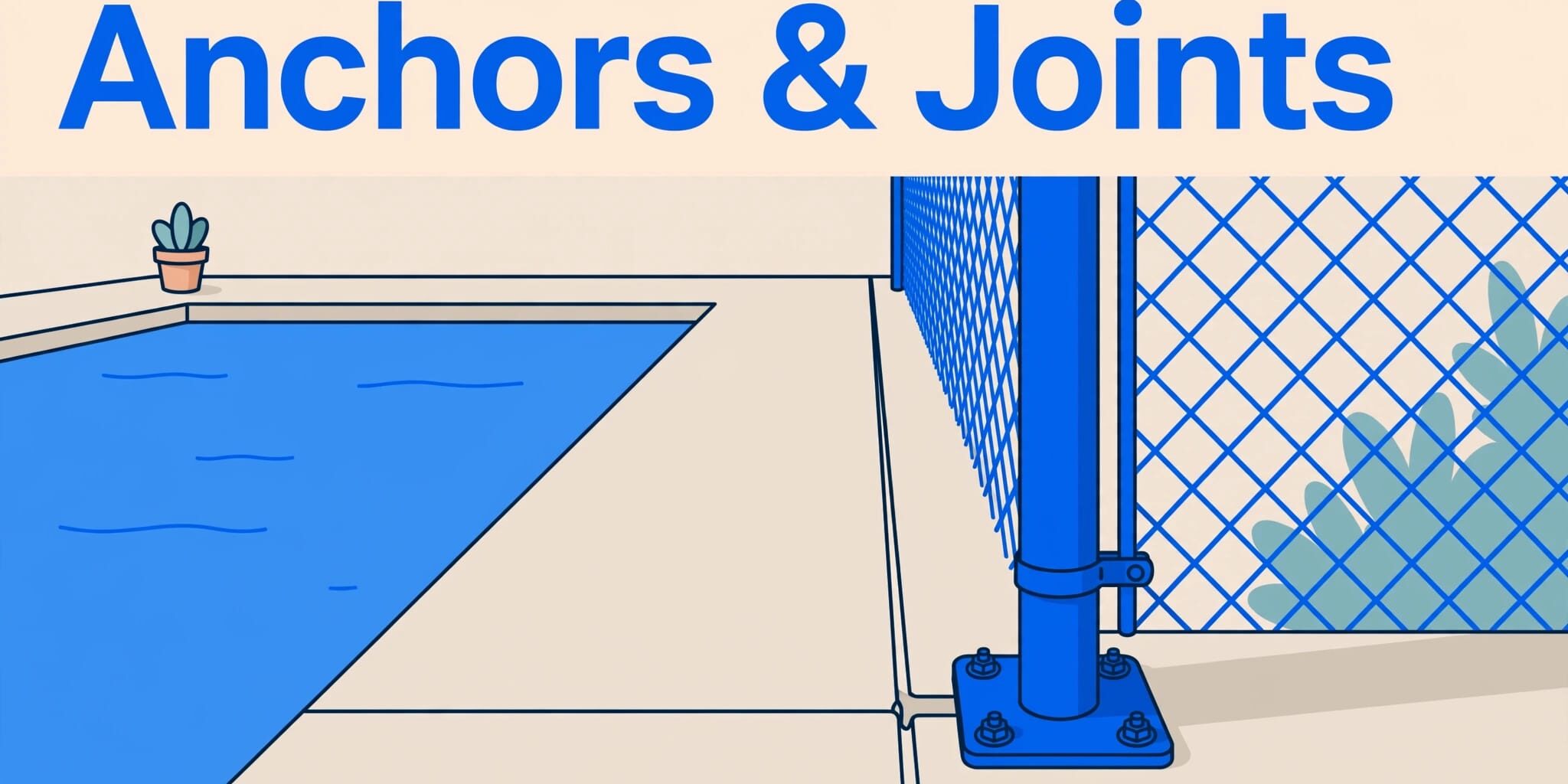
Yes, pool fence anchors can sit near concrete expansion joints when the selected system allows adequate clearance in sound concrete. They shouldn’t enter the joint or rely on cracked, loose, or weakened concrete.
For families, careful placement protects the deck and supports a dependable mesh barrier. The first step is understanding what that joint means for anchor support.
Key Takeaways for a Safer Installation
- Anchor clearance depends on the fence system, mounting hardware, and concrete condition.
- Expansion joints allow movement, so sleeves and mounting plates shouldn’t bridge them.
- Moving a post requires checking mesh tension, bottom clearance, gate alignment, and the neighboring fence section.
- Pavers, stone, and wood need support appropriate to their underlying construction.
How Close Can Pool Fence Anchors Sit to a Joint?
A visible gap doesn’t show the full condition beneath the deck. Identify the joint and confirm the surrounding concrete can support pool deck anchors before choosing sleeve locations.
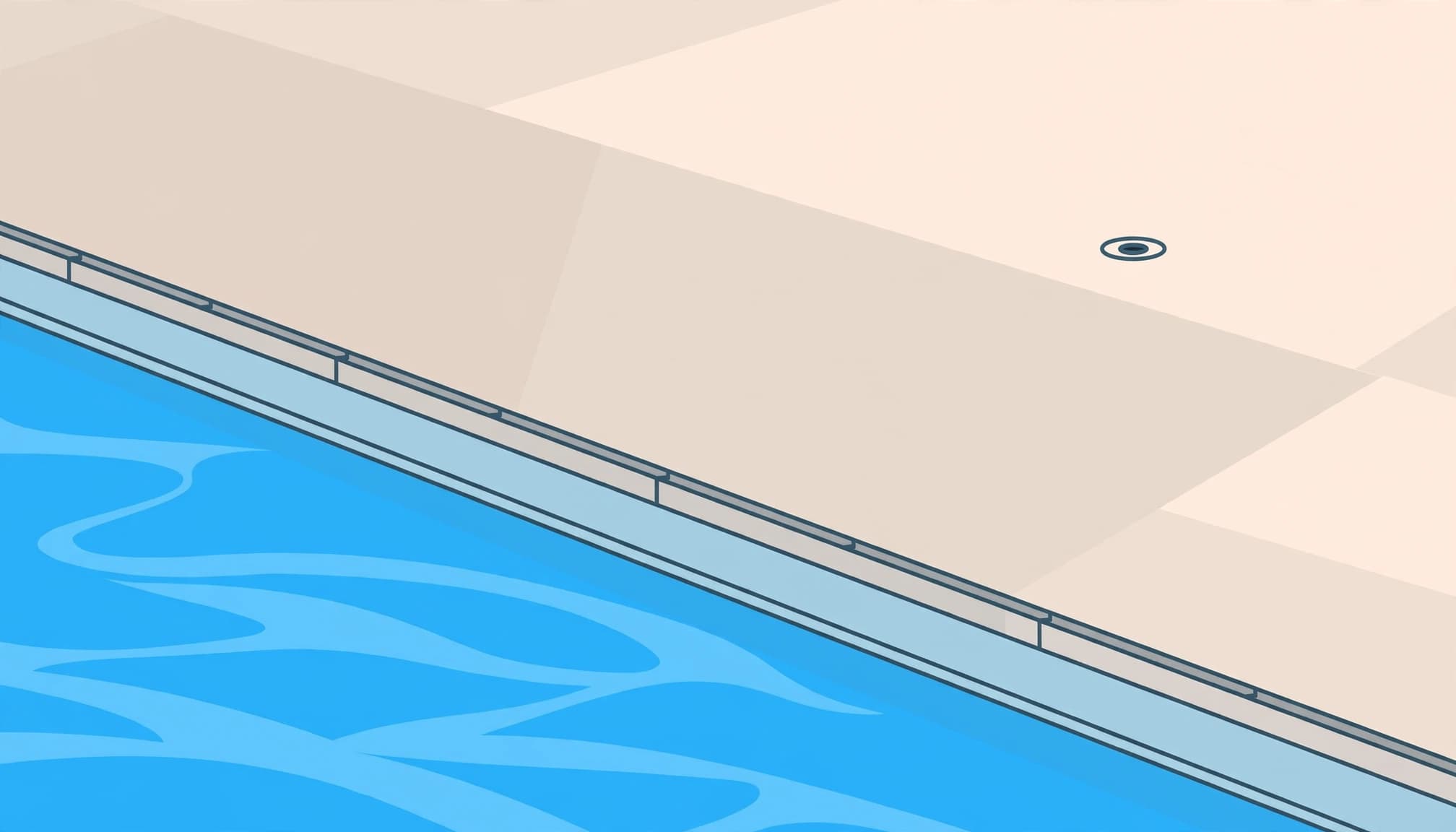
Expansion joints and control joints work differently
An expansion or isolation joint separates concrete sections so they can move independently. Flexible filler often occupies the gap.
A control joint usually creates a weakened line that encourages concrete to crack in a planned location. It may look like a shallow saw cut.
Neither location provides the same uninterrupted support as sound concrete away from the joint. Drilling into an expansion joint, or too close to one, can leave a sleeve unsupported because filler can’t support it. Nearby concrete may crack or chip, and joint movement can compromise the anchorage.
There isn’t one safe distance for every anchor
No universal setback applies to every removable mesh fence. Hole diameter, embedment, slab thickness, concrete strength, and mounting loads all matter.
Follow the selected anchor system’s guidance and the concrete manufacturer’s guidance for the specific hardware and concrete conditions. Hilti’s anchor fastening technical guide addresses edge distance, spacing, and concrete condition as anchoring design factors.
A clearance listed for a ladder socket or equipment anchor doesn’t automatically apply to fence sleeves. Consult a qualified installer if the guidance is unclear or the concrete is damaged.
An anchor rated for cracked concrete doesn’t automatically permit installation through a moving expansion joint.
Match the Mounting Method to the Deck
Removable mesh sleeves need solid support
Removable mesh fence poles slide into sleeves installed in the deck. On a concrete deck, the mounting method must match the deck’s construction and the system design. The selected manufacturer’s instructions control drilling equipment, hole dimensions, spacing, and sleeve preparation.
Some systems require diamond core drilling. Others allow a hammer drill. Use the specified drill bit and a drill alignment tool when directed. Keep holes aligned as instructed. Hammering near weak edges can chip or damage concrete, so equipment choice deserves care.
Expansion anchors, including a wedge anchor, press outward against concrete as installers tighten them. Adhesive anchors avoid that expansion action, but still require suitable concrete and specified clearances.
Neither method repairs an unsuitable anchor location. A removable mesh pole needs support through its sleeve. A buried fence post needs support suited to its installation.
Pavers and surface mounts need attention underneath
A firm-looking paver can hide loose bedding, sand, or voids. The fence can’t depend on a loose paver alone.
Some installations require support through the finished surface into a suitable footing. Wood decks need a mounting design supported by sound framing.
A surface mount still transfers force through its fasteners. Its base plate shouldn’t bridge an expansion joint. A wall anchor isn’t automatically a suitable substitute for a rated deck mounting point.
Garden stakes, ground staples, and general-purpose post brackets aren’t interchangeable with a complete pool barrier anchoring system. Use only materials approved for the selected system, such as galvanized steel or an aluminum post when permitted. Follow the system’s corrosion-protection guidance.
Plan the Fence Line Before Drilling
A dependable pool fence installation starts with the complete route, including gates, corners, drains, and walking space.
- The installer identifies joints, cracks, thin edges, repairs, and questionable concrete.
- Utility locating addresses public services and private pool plumbing, electrical runs, and irrigation.
- The layout places each sleeve in suitable support without compromising the complete barrier.
- Drilling follows the selected system’s equipment, depth, angle, and cleaning requirements.
- The installer fits compatible sleeves, tensions the mesh, and tests the gate repeatedly.
Spacing figures belong to specific products. For example, Sentry Safety’s layout uses 36 inches between poles and 2.5 inches between sections. Its template begins 2.5 inches off a wall.
Those measurements don’t establish clearance from expansion joints.
Florida’s residential pool barrier requirements call for barriers at least four feet high. Access gates must open outward and have self-closing operation and a self-latching locking device.
Testing the pool fence gate should include release from fully open and several partially open positions. The gate should close and latch without help.
Rubbing, sticking, or missed latching needs adjustment. Testing should continue after the mesh settles and normal use begins.
Frequently Asked Questions
Is 400mm deep enough for pool fence anchors?
A 400mm depth isn’t a universal requirement or guarantee of support. Removable mesh sleeves differ from buried fence posts.
Depth alone doesn’t establish capacity near a joint. Slab thickness, edge clearance, hardware, and the complete mounting design determine suitability.
Are ladder anchors the same as fence sleeves?
No. Ladder anchors commonly use an embedded deck anchor socket and a collar or sleeve that holds the ladder base with a wedge.
For a wobbling ladder, a worn anchor wedge often causes trouble before the socket fails. That makes the wedge the first inspection point.
Stainless steel Grade 304 suits most freshwater pools. Grade 316 contains molybdenum and provides better corrosion resistance in a saltwater pool.
Inspect the socket rim first for corrosion. Standing water and concentrated pool chemicals commonly collect there.
Replacing an embedded socket requires cutting or drilling out the old socket and cleaning the opening. A suitable replacement system may use hydraulic cement or anchoring epoxy.
These ladder-anchor details don’t establish installation requirements for removable mesh fencing.
A Careful Layout Protects the Deck
Pool fence anchors need sound support, even when moving a sleeve would make installation easier. A suitable layout respects deck movement while keeping the mesh and gate dependable.
For difficult joints, damaged concrete, or uncertain support, homeowners can schedule a free estimate. Families planning a mesh pool safety fence can also Get a FREE Quote.
Questions or ready to get started? Call us at (941) 500-9484