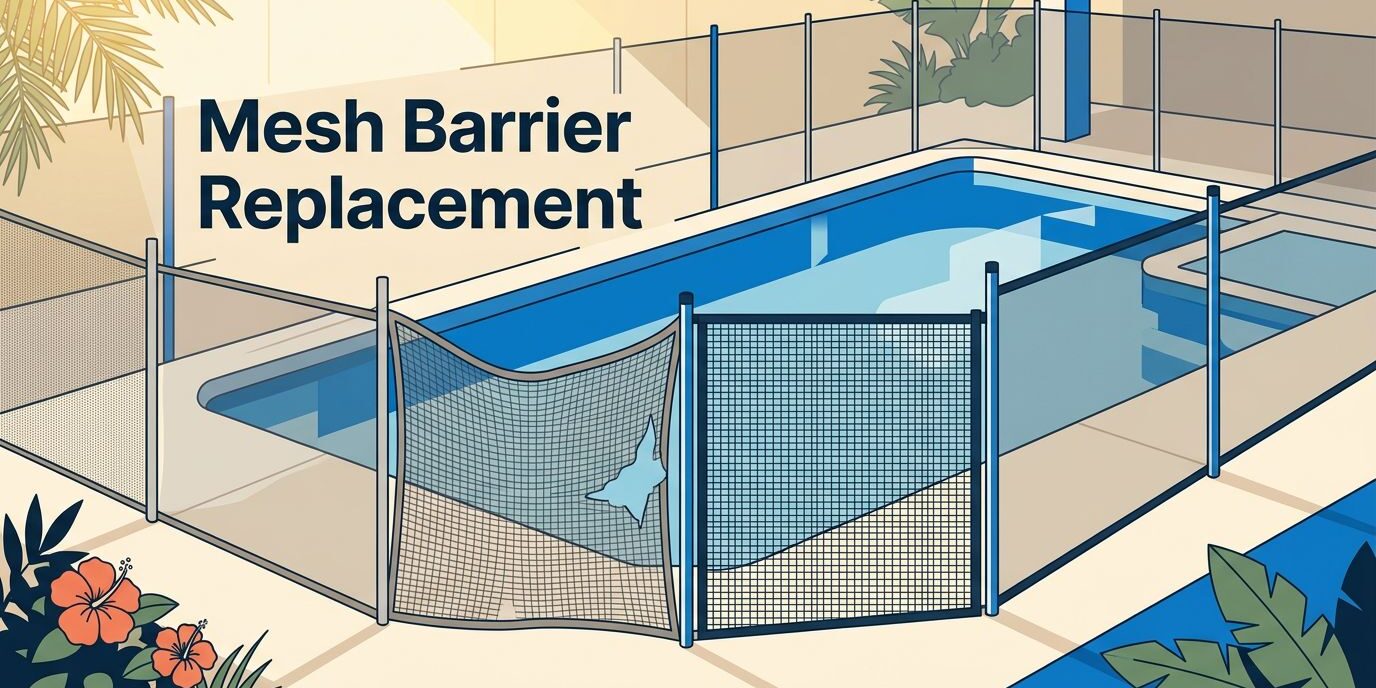
A mesh pool fence can look fine from across the patio, then show real trouble up close. For homeowners, a mesh barrier replacement is needed when their pool safety fence no longer stays tight, strong, and dependable around the water.
Florida sun, rain, chlorine, and daily use can wear down even quality pool fence mesh. A quick look every month helps families catch small problems before a panel becomes an opening.
As a protective safety barrier, the fence should be checked for signs that call for repair, replacement, or a professional inspection.
Pool Fence Mesh Fabric: Signs Homeowners Shouldn’t Ignore
A removable mesh fence should look neat and feel firm. As a pool safety fence, it should stay secure and ready for daily use. Flexible pool fencing is designed to move slightly, unlike rigid wire mesh barriers, which serve a different purpose and aren’t a substitute here.
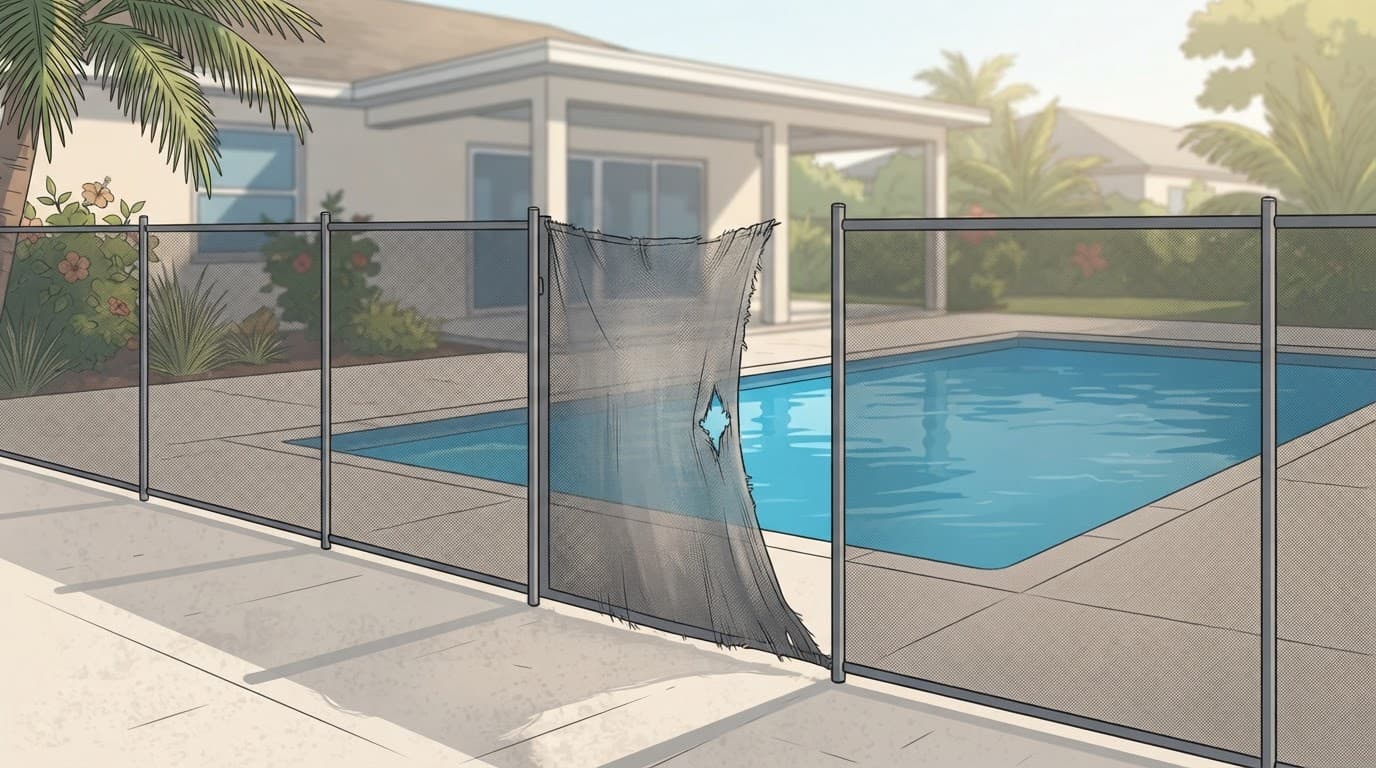
Faded, brittle, or sagging mesh
Sun fading alone doesn’t always mean a panel has failed. However, faded mesh that feels stiff, brittle, or chalky is a concern. Strong mesh should stay flexible and hold its shape.
Sagging also matters. A panel that no longer stays taut can create a weak spot. It may pull away at the seams or leave a space near the deck. That is not a spot to watch and hope for the best.
Tears, holes, and loose stitching
A small tear can grow fast when children, pets, wind, or pool toys press against it. Loose stitching along a panel edge is also a red flag. The fabric may look mostly intact, but the connection is already failing.
Whether mesh material repair is viable depends on the surrounding fabric, seams, and attachment points. A professional should inspect those areas before recommending a repair or replacement.
Homeowners shouldn’t rely on tape, zip ties, a quick household patch, or a fencing repair kit for daily protection. Those options may tempt homeowners into diy fence repair, but they aren’t long-term solutions for a safety-critical pool barrier. A pool barrier needs to work every day, even when nobody is standing nearby.
A damaged panel is not only a fabric issue. It can create the gap a child or pet needs to get through.
Repair or Replace a Removable Mesh Fence?
Not every problem requires a full mesh barrier replacement. Still, the right choice depends on where the damage sits and how well the panel holds tension.
When a focused repair may work
A professional may be able to repair minor edge stitching or replace a small damaged part. The surrounding pool fence mesh fabric must remain strong and tight. The posts, sleeves, and panel connections must also be in good condition.
A homeowner should get help if the panel pulls loose at either end. That job needs the right tension and fit. A fence that looks installed but has weak connections isn’t a safe answer.
When replacement is the safer call
Replace a panel when it has a tear, stretched weave, brittle fabric, repeated seam failures, or damage near an attachment point. Replacement also makes sense after a storm or impact that changes the panel’s shape.
Many removable pool fences use 48-inch-tall mesh. Panel widths and attachment details can differ by brand. The replacement mesh must match the existing system. It shouldn’t be treated like a one-size-fits-all screen.
When shopping online, products may be labeled mesh screen rolls, a mesh fabric roll, or mesh screen netting. Verify that any outdoor mesh fabric is designed for pool fencing. It should use uv-resistant material and the heavy-duty mesh screen strength specified by the system. A privacy fence screen, shade privacy screen, or set of mesh windscreens may serve other outdoor uses. Industrial wire mesh, a wire partition system, and generic wire mesh barriers serve different applications. They aren’t interchangeable with a removable pool-fence panel.
Homeowners should measure the panel, note the post spacing, and photograph the attachment areas before ordering anything. A fencing repair kit can’t correct incorrect post spacing, tension, or attachment geometry. Household scissors can leave a rough edge, so custom trimming and other unsupported DIY modifications belong with a trained installer.
Check the Gate and Pool Barrier Fit
The mesh is only one part of the safety barrier. A great panel can’t make up for a gate that doesn’t close or a section that no longer fits correctly.
The gate must close and latch every time
A pool gate should swing outward from the pool area, close on its own, and latch without help. If it sticks, bounces back open, or needs a push to latch, it needs service now.
Florida pool barrier rules require a barrier at least four feet high. They also require gates to be self-closing and self-latching.
When evaluating a residential pool barrier, confirm that your pool safety fence meets Florida law and local requirements. Review current mesh fencing requirements with Florida and local building officials before making changes.
The CPSC’s residential pool barrier guidelines offer helpful federal guidance on height, openings, and child-resistant gate latches. They don’t replace applicable state and local codes.
Compatibility protects the whole system
The replacement mesh must match the posts, sleeves, connectors, and gate hardware. These pool fence parts work as one system, so mixing components can cause loose edges, poor tension, or gaps.
Components made for generic wire mesh barriers may not fit a removable pool-fence system. The new material may look close enough, but close enough isn’t good enough around a pool.
A professional inspection can spot problems that aren’t obvious during a quick walk-around. This is especially helpful after a renovation, when new pavers, deck settling, or custom fence layouts may change post alignment and tension.
For a damaged panel or an older fence that no longer feels solid, homeowners can request pool fence repair or replacement for professional fence screen installation or repair. A gate that can’t be restored to reliable self-closing and self-latching operation may need pool gate replacement. A clear answer brings real peace of mind.
Keep the Fence Ready Every Day
A removable mesh pool fence does its job when it stays secure, tight, and properly latched. As a pool safety fence, it should never be left down, partly connected, or held together with a temporary fix.
A simple monthly check can focus on a few important points to keep the safety barrier ready:
- Look for fading, brittleness, tears, loose seams, and slack mesh.
- Check each panel edge for gaps near the deck or support posts.
- Test the gate’s self-closing and self-latching action every time.
- Remove furniture, planters, and toys that could help a child climb.
If you find a damaged section, arrange professional service or replacement mesh instead of relying on a temporary fix. A fencing repair kit isn’t a substitute for properly tensioned mesh and a fully connected barrier.
If a section is removed for yard work or a pool party, it should go back up as soon as the job ends. A temporary gap can become a serious problem in minutes.
Homeowners who want a fresh installation or an honest replacement recommendation can Get a FREE Quote. A strong, professionally fitted barrier makes the pool area feel safer for everyone.
Final Thoughts
A worn panel may seem like a small backyard repair. Around a pool, it deserves a fast response. Replacing a worn panel is the right move when fabric, stitching, tension, or fit no longer protects the pool area.
The goal is simple. The fence should stay strong, the gate should latch, and families should feel confident every time they step outside.