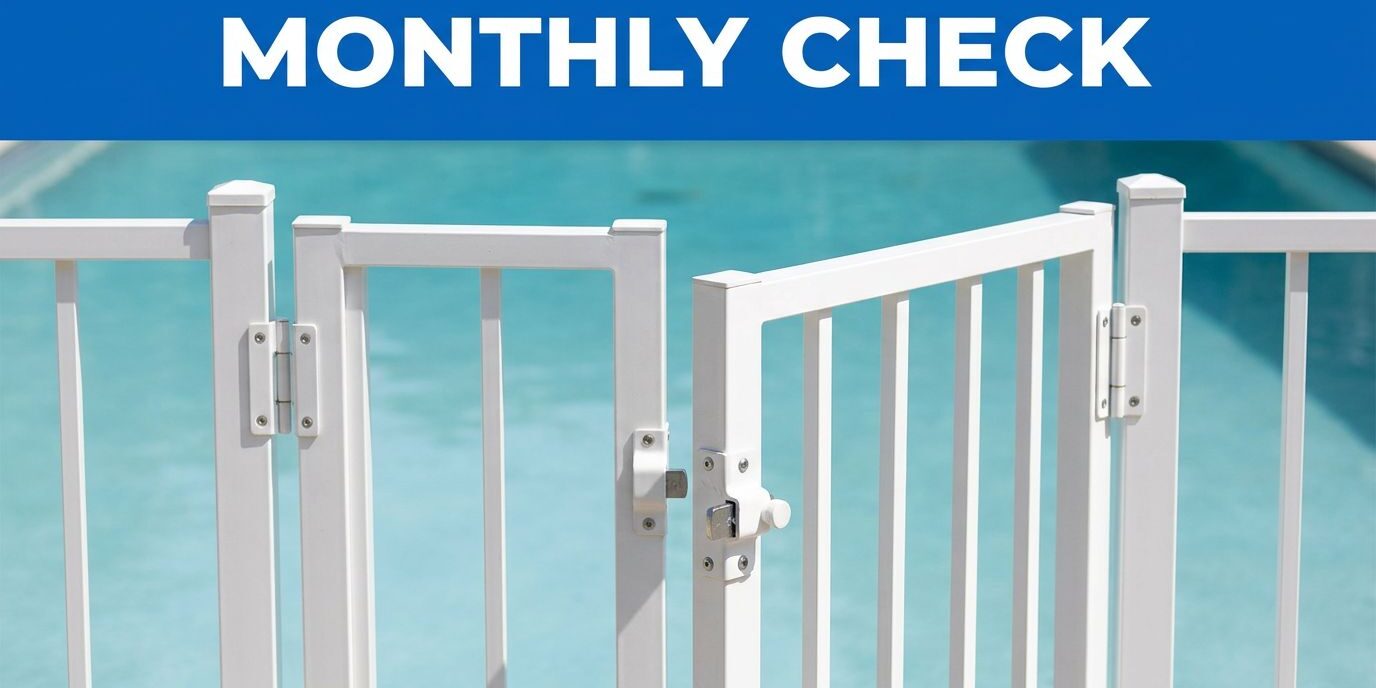
A pool gate can look perfect and still fail when you need it most. The latch may miss by an inch, the hinges may sag, or a small piece of debris may keep the gate from closing completely. Consistent pool safety maintenance is a vital part of owning a pool, as it ensures your family stays protected. To meet standard requirements, your self-closing pool gate should also be self-latching, ensuring that the safety barrier remains secure at all times.
I like to test my self-closing pool gate once a month because the check only takes a few minutes. It gives me peace of mind and helps me catch small problems before they become serious. The CPSC pool safety booklet also supports using layers of protection around residential pools, including barriers, alarms, and close supervision.
Key Takeaways
- Inspect the gate, hinges, latch, mesh, and surrounding hardware before beginning your monthly safety check.
- Release the gate from fully open, halfway open, and slightly open positions to ensure consistent movement.
- Confirm that the gate closes fully and the toddler-resistant latch catches securely every time to maintain a high standard of pool safety.
- Stop using the pool area without direct adult supervision if the gate fails any part of your test.
- Re-test the gate immediately after storms, major repairs, accidental impact, or any adjustments to the hardware.
Start With a Quick Gate Inspection
I always begin with a visual inspection. Testing the closing action will not tell me much if the gate is already dragging, leaning, or damaged.
Look over the entire gate and the surrounding pool enclosure. Check for loose posts, torn mesh, bent metal, missing screws, or anything that could affect the gate’s movement. In Southwest Florida, salt air, heavy rain, and strong sun can be hard on outdoor hardware. Even high-quality powder coated aluminum and stainless steel components of your gate hardware should be checked regularly for signs of wear, as small changes can show up long before a complete failure occurs.
Next, open the gate by hand. It should move smoothly without scraping the deck or stopping halfway. Pay attention to unusual sounds. A squeak may be minor, but grinding, rubbing, or a sudden drop can point to a hinge or alignment problem.
The ground around the gate needs attention too. Remove leaves, toys, sticks, and pool equipment that could block the swing. If the hardware is mounted near tile, inspect the tile for cracks and the grout for loose sections. Movement in the surrounding surface can affect how securely the hinges or latch stay mounted.

Photo by David Brown
A gate that closes most of the way isn’t doing the job. It needs to close completely and latch without help.
Test the Gate From Three Open Positions
A self-closing mechanism may work from one position and fail from another. That is why I test the gate several ways instead of opening it once and calling it good. These consistent inspections are essential for maintaining child safety around your swimming pool.
Keep children and pets away from the pool area while testing. Make sure nobody is standing in the gate’s swing path, then follow these steps:
- Open the gate fully and let go. Watch the entire movement. Using high-quality hinges like Tru-Close is the industry standard for ensuring a reliable, consistent closing movement without dragging, stopping, or bouncing back.
- Open the gate halfway and release it. The gate should still swing shut at a steady pace.
- Open it only a few inches and let go. This catches problems that may not show up during a full-open test.
- Watch the latch as the gate closes. Reliable pool gate latches, such as the Magna-Latch, utilize magnetic technology to ensure the mechanism engages securely every time without you needing to push the gate or lift the handle.
- Pull the gate gently after it closes. It should stay secured. Do not yank it or force the hardware, since that can create damage that was not there before.
I also test the gate after someone has carried furniture, pool equipment, or large items through the opening. A small bump can change the alignment. The gate may still appear normal while the latch misses.
If the gate closes but the latch does not catch, I treat that as a failed test. A closed gate is not the same as a latched gate.
Check the Latch, Hinges, and Hardware
The latch deserves a close look because it is the component that keeps the gate secured after the closing action. You should ensure the mechanism is not blocked by dirt, leaves, rust, or loose hardware. For added security, verify that your latch is key lockable, as these components are designed to meet international safety codes. The release handle should move normally and return to its resting position without resistance.
I do not add oil, bend metal, or adjust screws unless the manufacturer or installer provides clear instructions. Making the wrong adjustment can mask an issue temporarily while creating a larger problem later.
When inspecting the gate hinges, observe them while the gate is both closed and open. These parts should remain firmly attached, with no visible gaps or movement at the mounting points. If the gate sags, rubs against the deck, or needs to be lifted before the latch catches, it needs attention. Many professional systems utilize adjustable hinges, which are specifically designed to fix sagging and ensure the gate maintains proper alignment over time.
A monthly test is also a good time to check whether anything has changed around the pool barrier. New landscaping, a moved chair, a decorative pot, or a pool toy can give a child something to climb on. I keep the area next to the gate clear and easy to monitor.
For homeowners who need a new barrier or want a professional look at an existing setup, contact Pool Fence of SWFL for help with pool safety fence installation.
Record Problems and Stop Using a Failed Gate
I keep a simple note on my phone with the test date and anything I noticed. It does not need to be complicated. A quick entry such as “gate passed, latch clean, hinges secure” gives me a record and makes the next monthly check easy. If you have a removable pool gate, make sure to include a quick inspection of the deck sleeves to ensure they remain secure and free of debris.
If the gate fails to close or latch, do not depend on memory or a verbal reminder to keep it closed. Use active supervision and keep children and pets away from the pool until the issue is corrected. A temporary chair or cooler in front of the opening is not a reliable fix.
I take a photo of the problem, note whether it happens from a full or partial opening, and call the installer or a qualified service professional. While testing is simple, repairs often require more than basic DIY installation to maintain the necessary corrosion resistance of your hardware. Keep in mind that high-quality gate components often carry a lifetime warranty, which is exactly why professional repair is preferred to keep your coverage intact and your safety features functioning correctly.
I also repeat the test after a major storm, fence repair, gate adjustment, or accidental impact. Monthly testing is a good baseline, but those events can change the gate before the next scheduled check.
Frequently Asked Questions
How often should I test my self-closing pool gate?
You should perform a comprehensive safety test on your pool gate at least once a month. It is also important to conduct an immediate inspection after any severe weather, major yard repairs, or accidental physical impact to the gate hardware.
What should I do if my gate closes but fails to latch?
A gate that does not latch completely is considered a failed safety test and requires immediate attention. You should restrict access to the pool area until the issue is repaired, as a non-latched gate does not provide a secure barrier for children or pets.
Can I adjust the hinges or latch myself to fix a sagging gate?
You should only perform adjustments if you have clear instructions from the manufacturer or a professional installer. Improper DIY adjustments can often mask deeper issues or lead to hardware damage, so contacting a professional is usually the safest way to maintain your gate’s reliability and warranty.
Why does my gate need to be tested from different positions?
Testing from full, halfway, and slightly open positions ensures the self-closing mechanism is consistent regardless of the gate’s starting point. A gate may function correctly from a wide opening but fail to close from a partially open position, which could leave the pool area unintentionally exposed.
Conclusion
A reliable self-closing pool gate should close smoothly, latch completely, and remain secured every time it is used. To ensure your system is functioning correctly, you should test the gate from several positions, inspect the hinges and latch, clear the surrounding area, and document any issues you find.
Ultimately, a properly maintained self-closing pool gate serves as the most important part of your pool safety barrier. While the monthly test is quick, the peace of mind it provides lasts much longer. If your gate consistently fails to close or you feel your backyard needs an added layer of protection, consider installing a new pool safety fence. You can Get a FREE Quote from Pool Fence of SWFL to learn more about your options. A few minutes of monthly attention will help ensure your gate remains ready to protect your family whenever they need it.