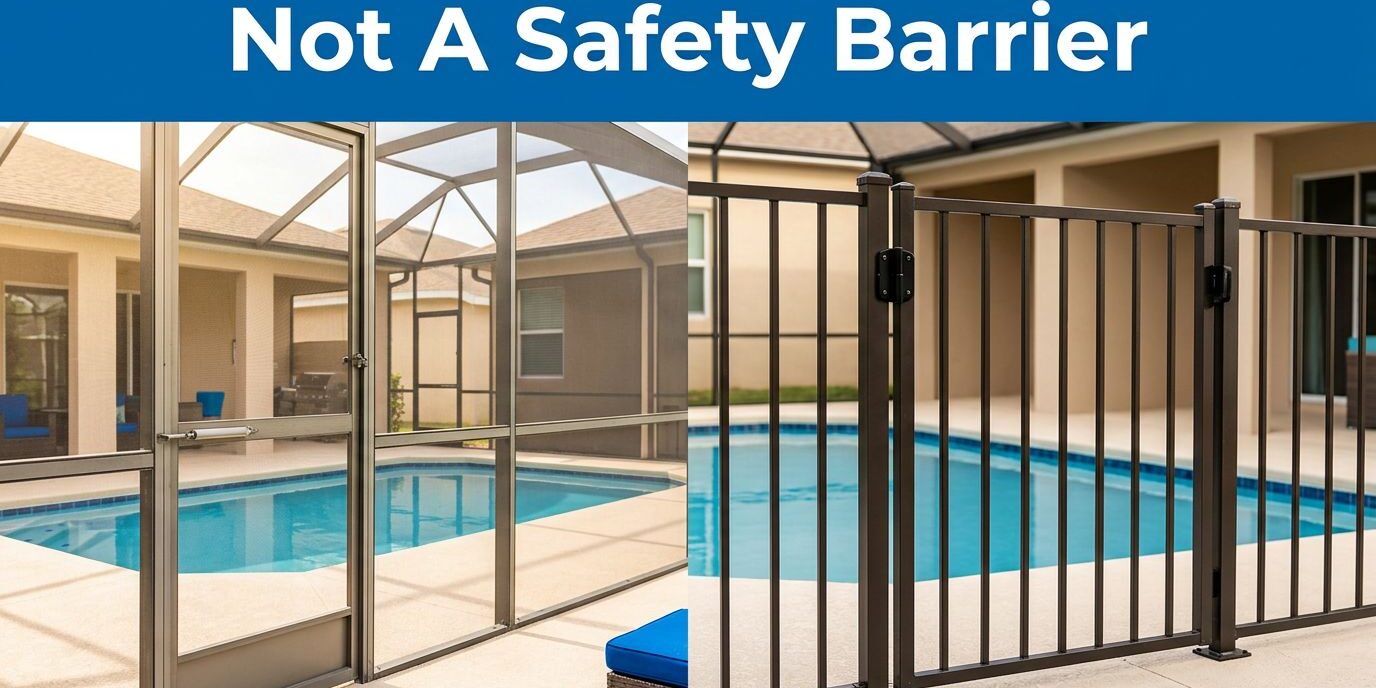
A lanai screen keeps bugs out, but it does not act as an effective pool safety barrier to keep a determined child out of the water. That difference matters more than many homeowners realize.
I see lanai screens confused with safety enclosures all the time. While they may surround the pool area, they are not built with the height, strength, spacing, or gate hardware required for child safety. Because these structures lack self-closing and self-latching mechanisms, they fail to prevent unsupervised access to the water. I always recommend looking at what the enclosure is designed to do before trusting it as your primary form of protection.
Key Takeaways
- A lanai screen provides protection from insects, shade, and falling debris, but it should not be considered a reliable physical barrier for pool safety.
- Screen panels, frames, and weak door latches often allow unsupervised access to the water, posing a significant risk to child safety.
- A proper pool safety barrier must meet specific standards, including adequate height, limited openings, secure installation, and a functional self-closing gate.
- Adult supervision, pool alarms, and locked doors remain essential, even when a home is equipped with a compliant pool fence.
- Installing a mesh pool fence around the water creates a necessary, separate layer of protection that a lanai screen simply cannot provide.
A Lanai Screen Protects the Patio, Not the Pool
A lanai, often called a pool enclosure in Florida, is made for outdoor comfort. It helps keep mosquitoes away, provides light shade, and reduces the amount of leaves or other debris around your outdoor swimming pool.
Those are helpful features, but they are not the same as preventing a child from reaching the water.
The framing is usually made from lightweight aluminum, and the panels consist of flexible screen material. If a child pushes against a screen panel, the material can stretch, pull loose, or pop out of its frame. The enclosure may look complete again after a quick repair, but that does not make it a reliable safety barrier. Unlike purpose-built safety covers, a standard screen is not designed to support weight or withstand persistent pressure.
The same problem applies to the structure’s openings. A screen enclosure can have gaps beneath the frame, uneven areas near the pool deck, or sections that are easy to climb. A child does not need to damage the entire lanai; one open panel or low gap may be enough.
A tile pool deck and clean grout can make the area look neat and well cared for, but neither one stops access to the pool. Appearance is not the test. The question is whether the barrier can consistently prevent a young child from getting through, over, under, or around it.
The CPSC’s residential pool barrier guidelines explain that barriers are one part of drowning prevention. They do not replace supervision, but they help create time and distance when an adult looks away. This is especially important for residential pools where the proximity of the living space to the water is often very close.
That extra time matters. A child can reach the water in seconds. I do not want a homeowner finding out after an accident that a screen enclosure was never designed for that job.
What Makes a Pool Safety Barrier Different?
A true pool safety barrier is planned around access control. It is not simply something that surrounds the patio; it must be designed to make entry difficult for young children while remaining secure during normal household activity. Effective swimming pool barriers are intended to provide layers of protection that a standard patio screen cannot offer.
When I look at the requirements for an isolation fence, I pay attention to several specific details:
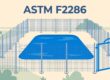
- Height: Many safety standards, including ASTM F2286, call for a minimum height of at least 48 inches. Local requirements can vary, so homeowners should always confirm the specific rules that apply to their property.
- Openings: Gaps must be limited so a child cannot pass through or use them as footholds. The common standard uses a 4-inch sphere test to ensure that no openings allow a child to squeeze through.
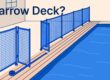
- Bottom clearance: The space underneath the fence matters just as much as the space between its pickets or mesh. Uneven ground can create a crawl-through opening that compromises safety.
- Strength: The fence must remain rigid when pushed or pulled. A flexible screen panel is not the same as a properly anchored fence designed to withstand pressure.
- Gate hardware: A compliant pool gate should close and latch on its own. The latch must be positioned out of a child’s reach, and the gate should be designed to open away from the pool area.
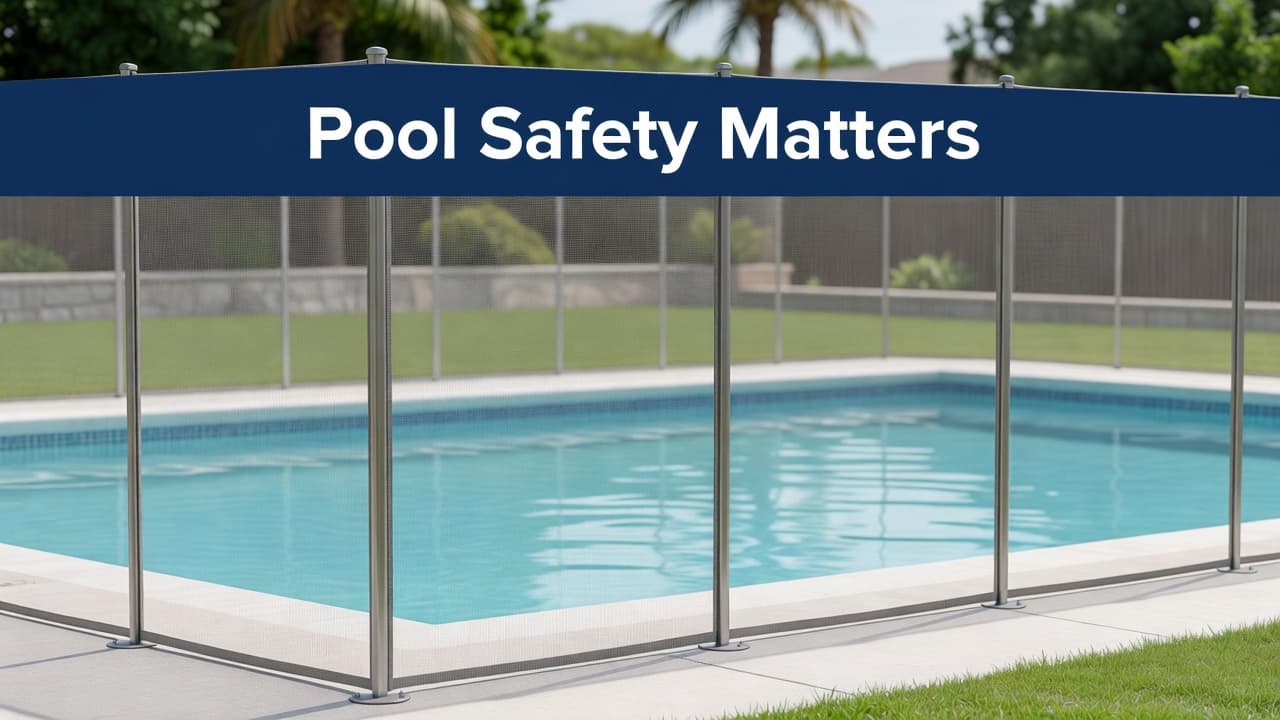
A removable mesh fencing system is designed specifically for this type of separation. It creates a clear line around the water while allowing homeowners to remove sections when needed. A mesh pool fence provides a clear view of the water, and the posts are anchored securely into the deck instead of relying on the frame of a loose screen panel.
The NIH review of pool fencing describes pool fencing as a passive safety measure that reduces a child’s unplanned access to the water. That is the primary goal of the fence. It works in the background, providing a vital layer of security even during the few seconds when direct supervision breaks down.
A lanai may cover the same general area, but it does not automatically meet these rigorous standards. While some enclosures could potentially be modified to serve as part of a compliant system, homeowners should never assume that a screen qualifies as a safety barrier simply because it surrounds the pool.
The Lanai Door Is Often the Weakest Point
Even when the screen panels are in good shape, the lanai door can create a serious opening to the pool.
Most screen doors use a simple handle, spring, or magnetic catch. Some do not close all the way after someone walks through, while others can be held open with a chair, a toy, or a pool float. A toddler may not understand that the door needs to stay shut.
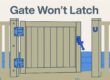
A dedicated pool gate has a different job. It should be a self-closing gate that returns to the closed position without someone pulling it. The latch should engage every time, and the self-latching device must be reliable. Furthermore, the gate latch height should be placed where a young child cannot easily reach it.
I also look for doors from the house that open directly into the lanai. Sliding glass doors, French doors, and other access points can become part of the problem. If the pool area depends on a home door staying locked, one forgotten opening can remove the protection.
Depending on the setup and local code, a door that forms part of a pool barrier may need exit alarms or other safety devices. While a door alarm can alert adults when the door opens, it is not a substitute for a physical pool gate or a fence around the pool.
That distinction is important. A pool alarm tells you that access happened, but a separate pool fence helps stop access before a child reaches the water.
I recommend checking every possible route, including:
- Doors from the home into the lanai
- Access points leading from the yard
- Open spaces beneath screen frames
- Low furniture or planters that create climbing points
- Pool equipment areas that a child could use to get around the enclosure
A barrier is only useful when the entire path to the water is considered.
Why Four-Sided Pool Fencing Offers More Protection
A pool fence that completely isolates the water provides homeowners with a significantly stronger line of defense than a barrier that relies on the house or lanai walls. While perimeter fencing runs along the property line, it fails to separate the home from the water, leaving the pool exposed to anyone inside.
By contrast, four-sided isolation fencing creates its own dedicated boundary. A child who leaves the house or wanders through the yard must cross this barrier before reaching the water. This level of separation is vital for maintaining safety when grandparents, babysitters, guests, or pets are moving through the property. In fact, the California Pool Safety Act serves as an excellent benchmark for these regulations, emphasizing that true isolation is the most effective way to prevent unauthorized access.
The National Drowning Prevention Alliance reports that four-sided isolation fencing reduces a young child’s drowning risk compared with standard perimeter fencing. Their barrier safety guidance also supports using physical barriers along with constant supervision, pool alarms, and other essential layers of protection.
I highly recommend removable mesh fencing because it provides families with a clear view of the pool without making the backyard feel closed in. Because these systems are climb-resistant, they prevent children from gaining leverage to scale the barrier. Furthermore, mesh fencing can be installed around many pool shapes, including areas with curves, raised decks, landscaping, and various outdoor living spaces.
To remain effective, the fence must be used correctly at all times. Furniture should never be placed next to it, and toys should not be left near the gate. The gate must always stay closed and latched whenever the pool is not being actively used.
A good barrier does not make supervision optional. Instead, it provides a crucial safety net that makes a short distraction significantly less dangerous.
What Homeowners Should Check Before Relying on a Lanai
I do not recommend removing or ignoring a lanai screen. It still provides significant value by making the pool area more comfortable, reducing insects, and helping to keep debris out of the water.
However, I do recommend treating it as only one layer, rather than a complete pool safety plan. Before deciding that an enclosure provides sufficient protection, check the following:
- Confirm whether your local building department recognizes the lanai as a compliant pool barrier.
- Measure the barrier height and inspect for low sections, gaps, or uneven ground.
- Test every door to ensure it is equipped with a functional self-latching device that secures the entry every time.
- Evaluate the area for furniture, planters, toys, or equipment that could assist a child in climbing over the screen.
- Consider modern pool fence installation options, including those that offer no drilling requirements to protect your deck or patio surface.
- Enhance your overall protection by installing a pool alarm on doors leading to the water or utilizing safety covers when the pool is not in use.
- Add a separate isolation fence if the existing enclosure does not meet the necessary safety standards.
Florida requirements often depend on the specific pool design, property layout, permit history, and local enforcement. I would not rely on a general internet answer for a specific home. A qualified professional or local building official can help you confirm the right setup.
If you are unsure what your pool needs, you can contact our pool safety team for guidance on layout, gates, and installation options. Homeowners can also Get a FREE Quote before deciding what works best for the yard.
A Lanai and Pool Fence Can Work Together
A lanai screen and a pool safety barrier do not have to compete. In fact, they can work together very effectively to keep your home safe.
The lanai creates a comfortable outdoor room, while a separate mesh pool fence establishes a controlled boundary directly around the water. Together, they help reduce unauthorized access, improve visibility, and give adults another vital physical barrier when daily life gets busy.
Think of it like locking a front door. You may also have a home alarm, security cameras, or a perimeter gate, but each layer helps protect your household. No single safety feature can watch a child every second, which is why experts often recommend combining multiple swimming pool barriers for maximum peace of mind.
The most reliable setup is one that matches the layout of your pool, the specifics of your property, and your family’s daily routine. Prioritize a professional pool fence installation that is easy to use, simple to inspect, and strong enough to serve its intended purpose.
Frequently Asked Questions
Can I use a lanai screen as my primary pool fence?
No, a lanai screen is designed for comfort, not safety. It lacks the structural rigidity, self-closing gate hardware, and height requirements necessary to consistently prevent a child from accessing the pool.
What are the main differences between a pool fence and a screen enclosure?
A pool fence is an isolation barrier specifically engineered to withstand pressure and restrict entry, featuring self-latching gates and climb-resistant materials. In contrast, a lanai screen is a lightweight structure meant to keep insects and debris out rather than securing a body of water.
Why is four-sided isolation fencing recommended?
Four-sided fencing creates a dedicated boundary that separates the home from the water entirely. This ensures that even if someone accidentally leaves a door to the patio open, a child must still cross a second, secure barrier before reaching the pool.
Do I need to remove my lanai if I install a pool fence?
Not at all, as they can work together as layers of protection. You can keep the comfort and pest-reduction benefits of your lanai while adding a dedicated mesh pool fence around the water to achieve the necessary safety standards.
Conclusion
A lanai screen is excellent for keeping bugs and debris away, but it is not automatically a reliable pool safety barrier. Its panels, frame, and door may not have the strength or hardware needed to prevent unsupervised access.
I always recommend a properly designed enclosure that creates clear separation around the water. Prioritizing child safety means implementing multiple layers of protection, such as a self-closing, self-latching pool gate, along with diligent supervision and alarms where needed. While a comfortable lanai is a great addition to your home, a dependable pool barrier provides the lasting peace of mind that every pool owner needs.