
When a pool gate won’t latch, the usual cause is misalignment or a gate that doesn’t close completely. A shifted post, loose bracket, or weak hinge can keep otherwise sound hardware from catching.
That needs prompt attention, but it doesn’t always mean replacing the latch. The safest starting point is the whole gate system, followed by careful adjustments and a reliable closing test.
Key Takeaways
- A gate that closes without catching has failed its safety test.
- Fence connections, deck sleeves, brackets, and hinges deserve attention before anyone moves the latch.
- Cleaning or adjustment may restore operation, but damaged hardware and unstable supports need professional service.
Until repairs restore reliable operation, adults should keep children and pets away from the pool.
When a Pool Gate Won’t Latch, Start With the Fence
A latch often reveals movement elsewhere. Adjusting it first can hide the original problem and leave the gate unreliable.
Check connections and support points
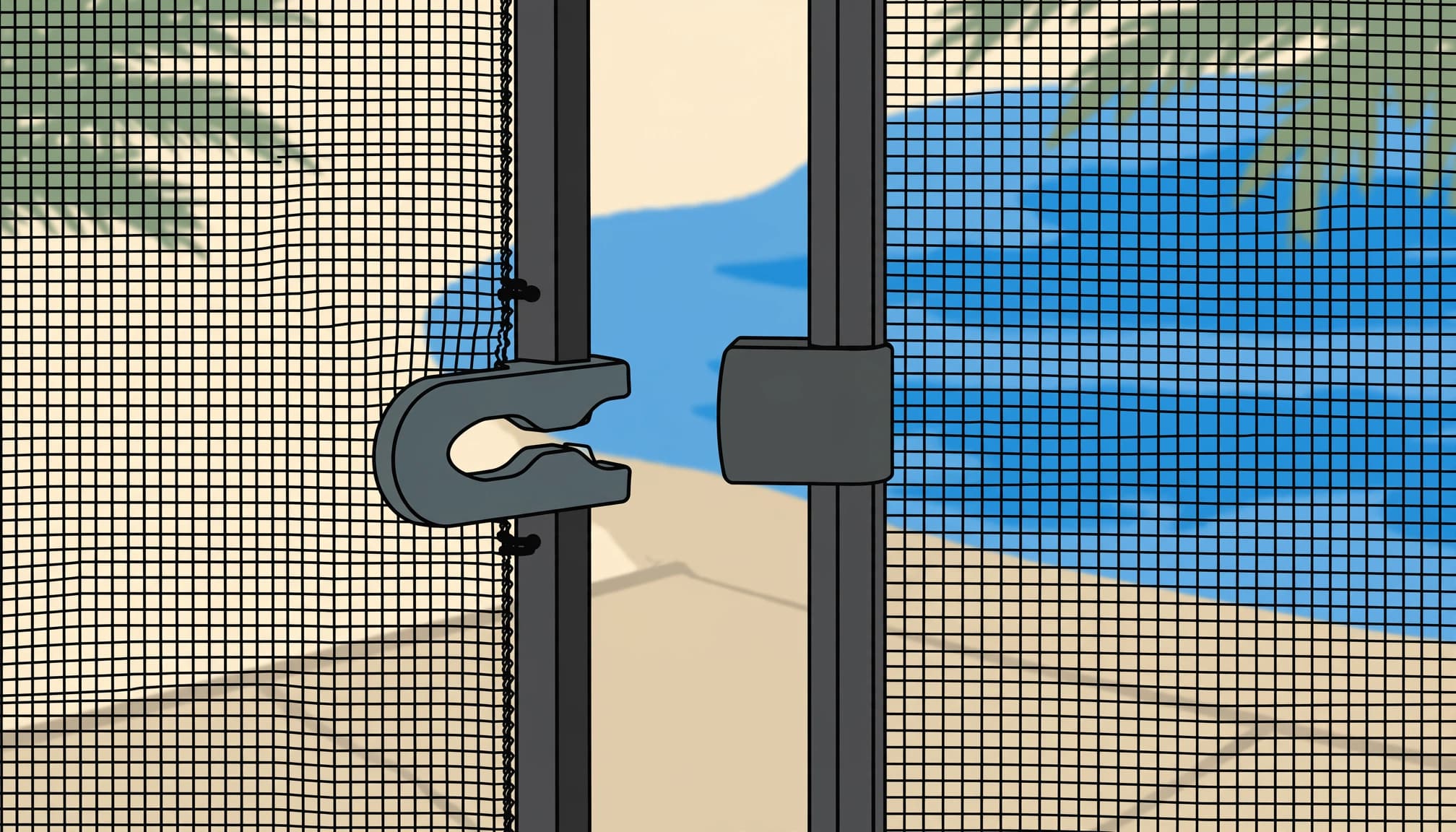
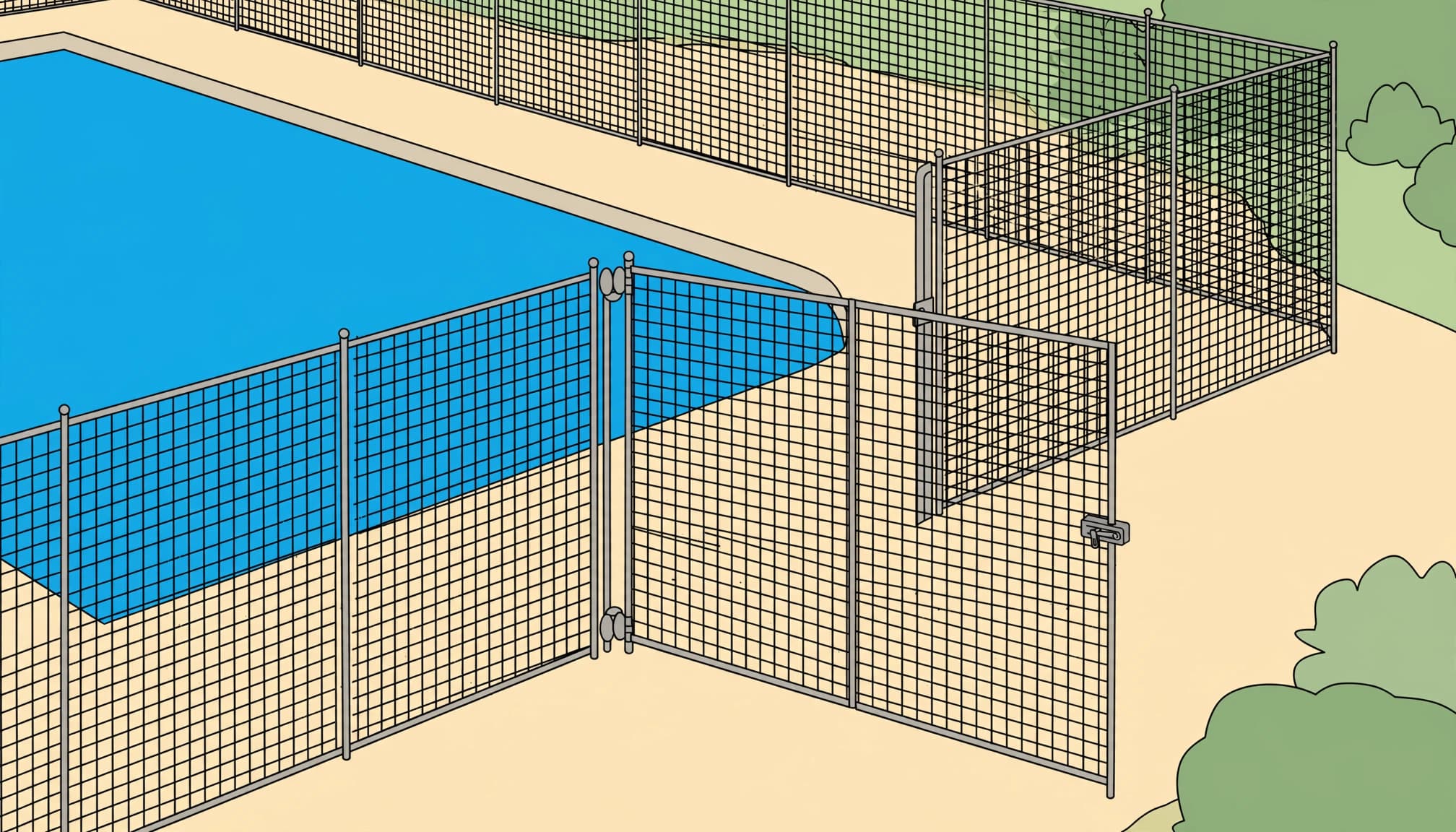
On removable mesh fences, every section should connect securely. Each of the fence poles should sit fully in its deck sleeve without leaning or moving unusually.
Wall attachments and termination points should stay firm. Loose anchors, damaged sleeves, or shifting pavers can change the gate opening.
The gate trusses should sit correctly in their supports. The rectangular support bracket should stay square and tight.
Reseating a pole or correcting a bracket may restore alignment without moving the latch. Cracked decking or a loose sleeve needs professional attention.
Watch the hinges and closing path
The gate should swing freely without rubbing the deck. Leaves, toys, uneven surfaces, and nearby furniture can stop it short.
The gate hinges should hold the gate upright and provide enough closing tension. A gate that needs lifting may have sagging hinges or shifting supports.
If lifting the gate makes the latch catch, the support or hinge alignment needs attention before latch adjustment.
Adjust the hinges according to the model’s instructions. Extra tension can’t correct a dragging gate or unstable post.
A photograph can help document movement before service. Keep the gate out of use as a safety barrier until it’s checked.
Adjust Latch Alignment Carefully
Once the fence and hinges sit correctly, the latch and striker should meet naturally. The striker is the receiving piece.
The gate shouldn’t need a shove, a lift, or a slam.
Correct vertical alignment first
With the gate resting naturally, the striker should line up with the latch’s receiving opening. Sagging often leaves it too low.
For adjustable hardware, the model’s instructions identify which mounting screws allow movement. Small adjustments provide better control than large changes.
The homeowner should never hold the gate upward while setting alignment. That creates a position the gate can’t maintain.
After tightening permitted adjustments, another unassisted closing test should show whether the parts meet correctly.
Set horizontal alignment and clearance
Side-to-side misalignment can leave the striker too far away or cause contact before engagement. Magnetic latches need the specified working gap.
Some clearance also allows movement as temperatures change. Metal expands and contracts, while wooden gates can also swell with moisture.
There isn’t one correct gap for every latch. The hardware’s specified adjustment range controls that distance.
A manual screwdriver offers better control during permitted bolt adjustments. Power tools can strip threads or damage the housing.
Clean a Sticky Latch Before Replacing It
A latch that jams open or closed may have dirt, corrosion, or spring trouble. Cleaning may help when nothing has broken.
However, a temporary improvement doesn’t establish dependable operation. The complete gate still needs testing.
Remove dirt and use suitable lubrication
Sand, grit, and chemical residue can interfere with moving parts. Homeowners can remove loose debris without taking apart the safety mechanism.
Lubrication should match the manufacturer’s instructions. A product suited to one latch may attract dirt or harm another latch’s components.
Pouring general-purpose oil into an unfamiliar housing can create more trouble. A cracked housing, broken spring, or severe corrosion usually calls for replacement.
The release should move smoothly and return fully after use. Continued sticking needs professional attention.
Leave internal spring repairs to a technician
A displaced spring can cause binding. A technician may straighten it or loosen an over-tightened spring mounting when the design permits.
On systems with a spring pole, it must move freely without striking nearby fence sections. An overly narrow gap can make it hit a neighboring fence pole and push it crooked.
Simply bending the rod back doesn’t resolve continuing interference. The technician must correct the gap and restore reliable spring movement.
Identify the Pool Gate Latch Before Buying Parts
Brand and model matter. Similar-looking latches can use different keys, adjustment points, and replacement parts.
The housing, striker, installation paperwork, or existing key information may identify the hardware. A clear photograph can also help an installer.
TriLatch operation and model differences
A TriLatch opens through two simultaneous actions: pressing the red release button and lifting the release knob. This makes opening harder for small children.
Rare-earth magnets help draw the gate through its final closing movement. With a working mechanism, missed engagement can indicate excessive distance.
The TriLatch SL-50-TRI-90 has an alignment marker on its striker body. The older SL-50-TRI-90L doesn’t have that marker.
These versions also take different keys. Matching the model before ordering avoids an unnecessary replacement or an unusable spare.
Magnetic, gravity, and spring-operated options
A magnetic latch needs proper striker spacing. Gravity and spring-operated latches also depend on free movement and accurate alignment.
The MagnaLatch Series 3 Top Pull, also called a Magna Latch, places its release high above the gate. Compatible mounting accessories allow installation on round posts.
Some latch options include alarms for an open or unlatched gate. An alarm adds notice, but it doesn’t repair failed hardware.
A replacement must suit the complete mesh gate system. Confirm the MagnaLatch model and mounting compatibility before buying a Magna Latch replacement. Physical fit alone doesn’t establish compatible or compliant operation.
Pool Gate Safety Rules Need the Full Picture
A safe repair preserves a child safety gate’s required height, clearances, swing direction, and child-resistant release. These features support drowning prevention, but they don’t replace supervision. One measurement alone doesn’t establish compliance.
Fence height and bottom gaps differ
Florida residential pool barriers must stand at least 4 ft high (48 inches) on the outside. Check your pool code and local ordinances, since some jurisdictions require 60 inches.
For barriers with vertical pickets, the commonly cited opening limit is four inches. That isn’t an acceptable mesh-to-deck gap.
ASTM F2286 sets a maximum one-inch bottom clearance for removable mesh fencing. Slopes, steps, and uneven decking deserve close attention.
A straight top edge can still hide an unsafe opening underneath. Raising the gate to stop dragging can create another problem.
Closing action and latch placement work together
The CPSC’s residential pool barrier guidelines cover a self-closing gate, a self-latching gate, and child-resistant releases.
Pool gates should swing outward, away from the water. They must close and latch without help.
ASTM F2286 places outside-mounted latching and locking devices at least 54 in from the ground. CPSC guidance measures its 54-inch benchmark above the gate bottom and describes protected lower releases.
Those provisions aren’t interchangeable. Florida’s residential pool safety law also distinguishes barrier requirements from other safety options.
Its 54-inch direct-access door provision doesn’t establish every fence gate’s latch height. The complete arrangement must satisfy its standard, instructions, and governing requirements.
Test Every Repair Before Relying on the Gate
A successful repair should feel straightforward. The gate swings freely, closes fully, and catches without help.
The installer or homeowner should test several starting positions:
- Open the gate fully and release it without adding force.
- Repeat from a partly open position.
- Release it near the latch, following the manufacturer’s testing instructions.
- After each closure, gently test whether the latch holds without operating the release.
One missed catch means the problem remains. Bouncing open, dragging, or needing a final push also means failure.
A gate alarm doesn’t change that result. Neither does a key lock that only works after someone manually closes the gate.
Bent posts, loose sleeves, stripped fasteners, and repeated misalignment deserve professional service. A chair, cooler, or temporary tie isn’t reliable protection.
Homeowners considering a new barrier can request pool fence guidance about installation options. They can also call or email to Get a FREE Quote for pool safety fence installation.
Frequently Asked Questions
Can a pool gate close without latching?
Yes. Closing and latching are separate actions. The hinges may return the gate while misalignment keeps the striker from engaging.
That gate has failed its safety test, even if it looks closed.
Will stronger hinge tension fix the problem?
Only when insufficient closing tension causes the failure and the hardware permits adjustment. Stronger tension won’t correct unstable supports or scraping.
Too much tension can make the gate slam or bounce. The complete closing action needs attention.
How often should homeowners test the gate?
A monthly inspection provides a useful routine. Gate operation also deserves attention after storms, landscaping, patio work, or impacts.
Everyday use offers another chance to notice sticking or missed engagement. Any failure needs prompt service before families rely on the barrier.
Reliable Latching Brings Peace of Mind
When a pool gate won’t latch, the best starting point is stable supports and free movement. Careful alignment comes next.
Cleaning, adjustment, or compatible replacement parts can restore operation. The final requirement stays simple: the gate must close and latch without help, every time.
Dependable hardware and regular attention bring welcome peace of mind. Close supervision remains essential around the water.
Questions or ready to get started? Call us at (941) 500-9484