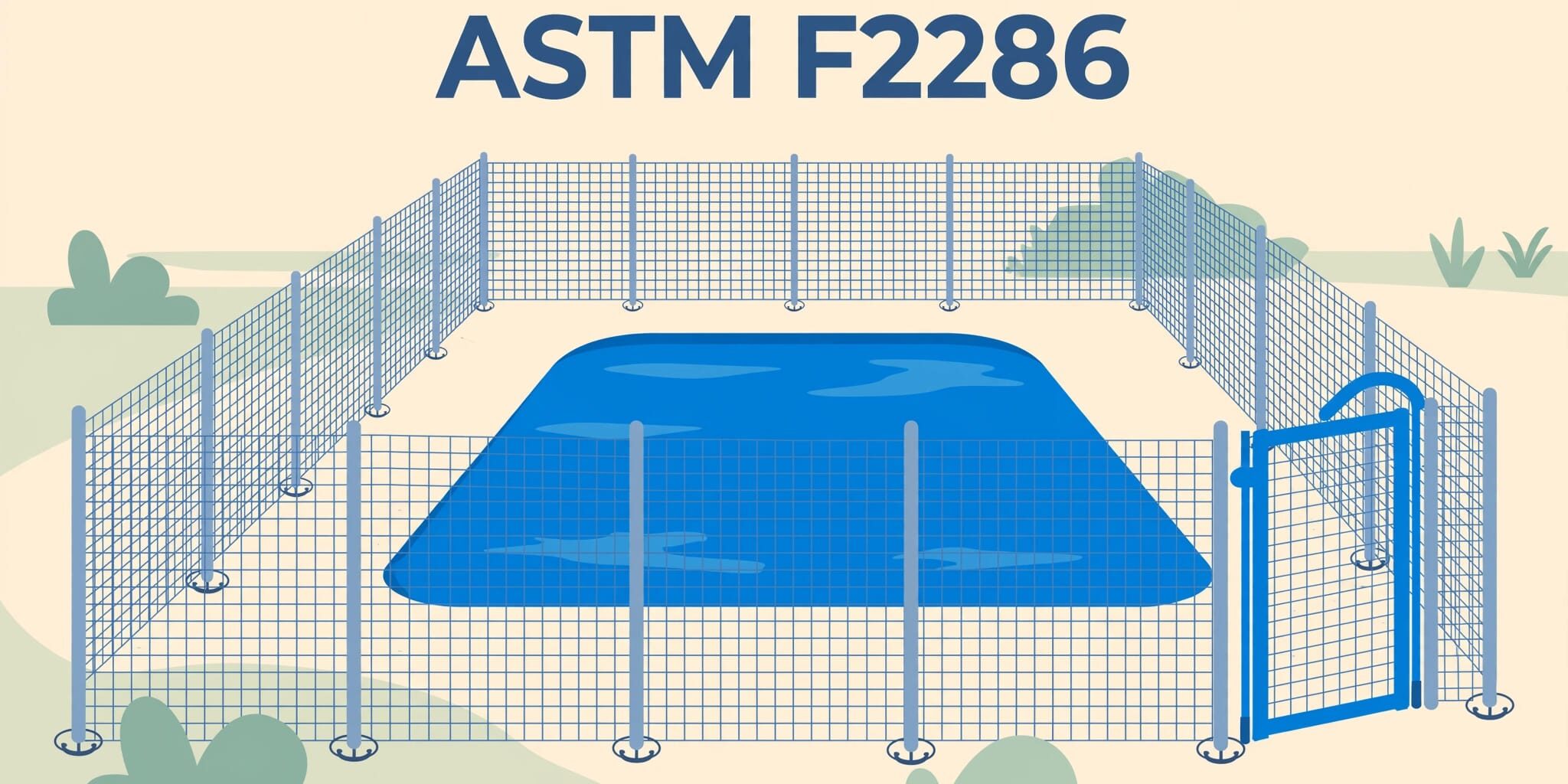
ASTM F2286 describes design and performance requirements for removable mesh barriers around pools, hot tubs, and spas. A mesh pool fence must also meet local building rules and suit the property.
Tight mesh alone doesn’t provide dependable protection. Height, openings, anchors, and gate operation matter, and the complete installation must work together. Start by checking what the standard covers and which requirements apply to the property.
Key Takeaways for Homeowners
- ASTM F2286 covers removable mesh barriers intended to help protect children through age five.
- Core measurements include a 48-inch minimum height, pole spacing limited to 40 inches, and 1-inch maximum bottom clearance.
- Gates must open away from the pool, close automatically, and latch automatically.
- Product documentation supports compliance, while local approval addresses the finished installation.
What ASTM F2286 Covers
A standard written for removable mesh barriers
ASTM International’s official ASTM F2286 listing identifies the current edition as F2286-16, reapproved in 2023. Manufacturers may shorten that reference to F2286-16R23.
The standard covers removable mesh barriers around pools, hot tubs, and spas. Its purpose includes reducing injuries and deaths among infants and children through age five.
That purpose matters. A pool fence should restrict access to water, rather than simply mark the pool area. Clear visibility through mesh is helpful, but dependable physical separation remains the main job.
The finished system matters
Compliance involves the mesh, support poles, connections, anchors, and gate working together. A compliant component doesn’t establish compliance for an entire backyard installation.
ASTM compliance describes the standard’s requirements. It doesn’t establish that every backyard installation complies or has legal approval.
The installer carries responsibility for installation compliance, whether a professional or homeowner performs the work. Manufacturer instructions remain important, especially for anchoring, tension, and gate hardware.
ASTM International’s public listing provides a summary. The full standard requires purchase or subscription access, so a short checklist cannot replace its complete requirements.
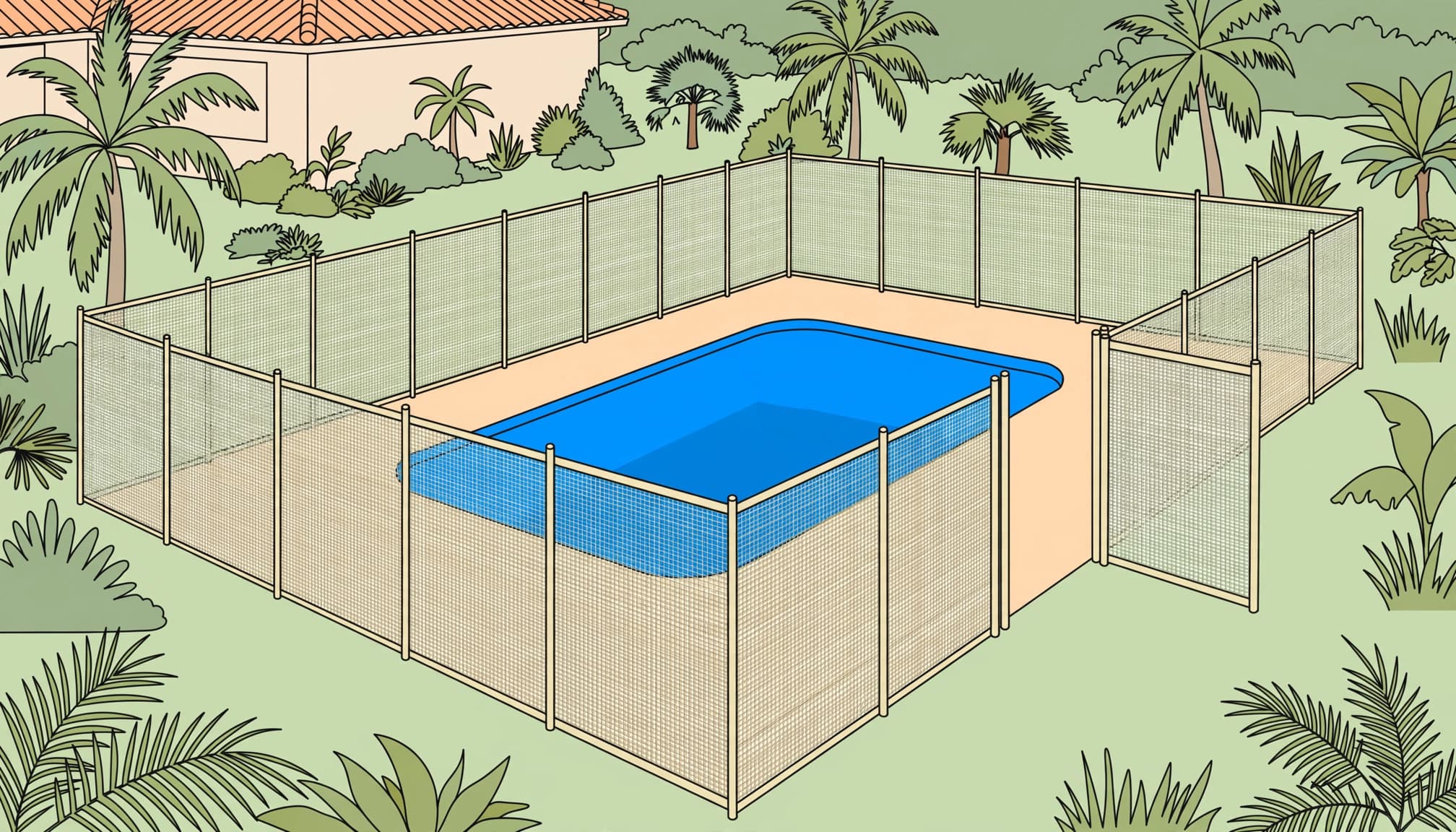
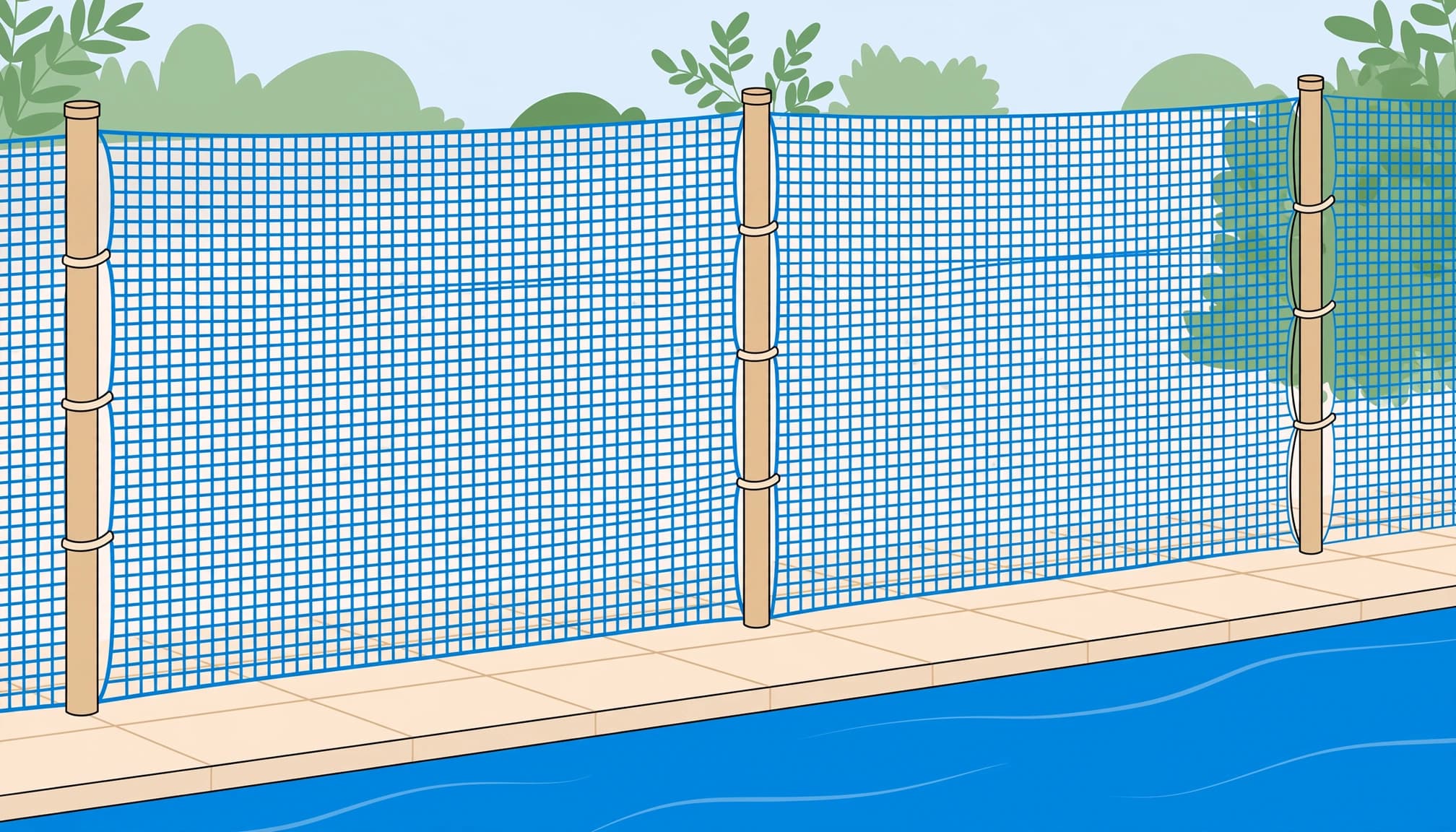
Alt text: Removable mesh pool fence for ASTM F2286
Is ASTM F2286 Legally Required?
Local rules determine what a property needs
ASTM publishes a technical standard. It doesn’t create a universal legal requirement for every homeowner to install removable mesh fencing.
A jurisdiction can adopt requirements through a building code, making them part of an enforceable pool barrier code. Child care licensing, foster care approval, insurance conditions, and HOA rules can also affect a project.
These requirements have different purposes. An HOA may review appearance, while a building inspector evaluates the applicable pool barrier rules. Approval from one doesn’t replace approval from another.
Florida’s residential pool barrier law sets a minimum outside height of four feet. Local rules and some licensing programs may require a 5 foot minimum instead.
California uses separate safety-feature requirements
California’s Swimming Pool Safety Act covers Health and Safety Code sections 115920 through 115929. Since January 1, 2018, covered new or remodeled residential pools require two listed safety features.
The California safety-feature provisions include qualifying removable mesh fencing and approved safety covers. One qualifying fence doesn’t automatically satisfy the entire two-feature requirement.
ASTM F1346 addresses safety covers, including qualifying safety-net systems, rather than removable mesh fencing. Check product documentation and local acceptance before counting a pool cover or pool net as a required safety feature under ASTM F1346.
Child care and foster care programs can impose separate conditions. A generally accepted residential safety option doesn’t automatically satisfy a particular licensing program.
The Installation Measurements That Matter
The CPSC’s residential pool barrier guidelines explain several important mesh-fence dimensions. Small differences deserve careful attention!
- The fence must stand at least 4 feet high. Some local codes and licensing rules set a stricter 5 foot minimum. A taller product still needs correct spacing and gate operation.
- Keep pole spacing at 40 inches or less. A 36-inch spacing falls within that limit, but the selected system’s instructions still govern installation. Tighter spacing alone doesn’t prove overall compliance.
- The mesh bottom clearance must be no more than 1 inch above the deck or ground. Slopes, steps, and low spots can create excess clearance. A straight top edge doesn’t guarantee a safe bottom edge.
- The completed barrier must prevent passage of a rigid 4-inch sphere. That applies to potential passage points, including connections and openings. A narrow tape measurement alone may miss an opening that changes shape.
- F2286 requires at least 20 inches between the barrier and the pool, spa, or hot tub. Include this separation in the layout before drilling begins. Gates, curves, and narrow deck areas need room too.
The 1-inch bottom limit remains separate from the 4-inch sphere requirement. The sphere test never permits a 4-inch gap beneath removable mesh.
Deck material matters as well. Concrete, natural stone, pavers, and wood require anchors suited to the complete supporting assembly. A secure-looking pole isn’t enough if the material underneath can’t support the installation.
Gate Operation and Latch Placement
The gate must close and latch without help
A compliant gate opens away from the pool. It must also close automatically and latch automatically.
Those are separate functions. A self-closing gate may swing shut yet fail to engage the latch. Another may latch properly only when someone gives it a push.
The installer should test operation from several opening positions. The gate should close fully and latch without dragging, binding, or assistance.
Reliable operation brings real peace of mind. However, a propped-open gate removes that protection, regardless of the hardware’s quality.
Latch rules need their full context
F2286 sets the latch height at least 54 inches above grade for self-latching and locking devices mounted outside the gate.
Separate CPSC barrier guidance describes protected interior-side releases below 54 inches. That general guidance doesn’t replace the mesh standard’s hardware provisions.
Florida also emphasizes keeping the release beyond a young child’s reach. Nearby openings, gate height, and access over the top can affect that protection.
A single latch measurement doesn’t establish compliance. The complete gate arrangement must satisfy the applicable standard, manufacturer instructions, and governing local requirements.
Hardware substitutions deserve the same care. A replacement latch that fits physically may change the tested system or its operation.
What Supports a Passing Inspection?
A complete barrier plan comes first
A useful permit submission identifies the property, pool layout, fence route, gate location, and selected fence system. It should name the applicable pool barrier code, code edition, and amendments.
This ties the proposed safety barrier to specific requirements. A building department’s written plan review can identify required height, acceptable barriers, and documentation before installation. Ask the inspector to confirm these requirements before work begins.
The plan should address every route toward the water. Doors, stairs, screen entries, adjoining walls, and gaps around fence ends all matter.
A removable fence qualifies as a primary barrier only where local rules accept the complete installation. Removability alone doesn’t establish approval.
Documentation should match the installed system
Useful records include the manufacturer’s compliance statement, model identification, installation instructions, and available testing documentation. A compliance letter should name the applicable standard and system.
These records document the manufacturer’s ASTM compliance claims and explain what the manufacturer tested or represents. They don’t replace the inspector’s evaluation of the finished work.
The installer should retain the approved layout and inspection records alongside the product documents. Changes to anchors, hardware, or panel arrangements can affect those documents’ relevance.
Local amendments can exceed ASTM’s minimums. Compliant products can face different approval requirements across cities and counties.
Homeowners can schedule a pool fence consultation to discuss layout, access, and installation planning. For installation pricing, homeowners can Get a FREE Quote by phone or email.
Keeping the Barrier Dependable After Installation
A passing inspection records conditions at that time. Storms, landscaping, deck repairs, and everyday use can change them.
Regular checks should cover mesh tears, loose poles, damaged sleeves, missing connectors, and gate alignment. Lawn equipment can damage mesh even when the fence originally met the standard.
After removal, reinstall every panel correctly. Poles should seat fully, connections should engage, and mesh should hold its intended tension.
Test the gate after putting the panels back in place. A shifted support or dirty sleeve can affect alignment and closing.
Keep furniture, planters, and toys away from the barrier. They can create climbing opportunities that undermine an otherwise sound fence.
A fence doesn’t replace attentive adult supervision. For pool safety, a designated adult should watch children near the water without distractions during swimming and gatherings.
Frequently Asked Questions
Does a four-foot mesh fence automatically comply?
A four-foot fence meets the standard’s minimum height, but height alone doesn’t establish compliance. Openings, bottom clearance, strength, anchoring, and gate performance also matter.
Some properties require a five-foot barrier. The applicable code or licensing requirement determines whether four feet is sufficient.
Does an ASTM compliance letter replace inspection?
A letter describes the manufacturer’s compliance claim for an identified system. It doesn’t establish that every pole, anchor, panel, and gate was installed correctly.
The finished barrier still needs to satisfy applicable inspection requirements. Product documentation and installation approval answer different questions.
Can a safety cover replace removable mesh fencing?
Some jurisdictions accept qualifying safety covers as an approved safety option. A pool cover or pool net qualifies only if local rules accept it and its documentation supports the claim.
ASTM F1346 applies to safety covers, while F2286 applies to removable mesh barriers. California’s covered projects require two listed safety features, so one accepted cover doesn’t meet that requirement on its own.
A Dependable Barrier Starts With the Complete System
ASTM F2286 gives homeowners clear requirements for removable mesh fencing. Reliable protection depends on correct measurements, suitable anchoring, dependable gates, and an approved pool fence layout.
The strongest takeaway is simple: every part must work together. Careful setup and regular attention help maintain that protection while adults keep supervision at the center.
Questions or ready to get started? Call us at (941) 500-9484