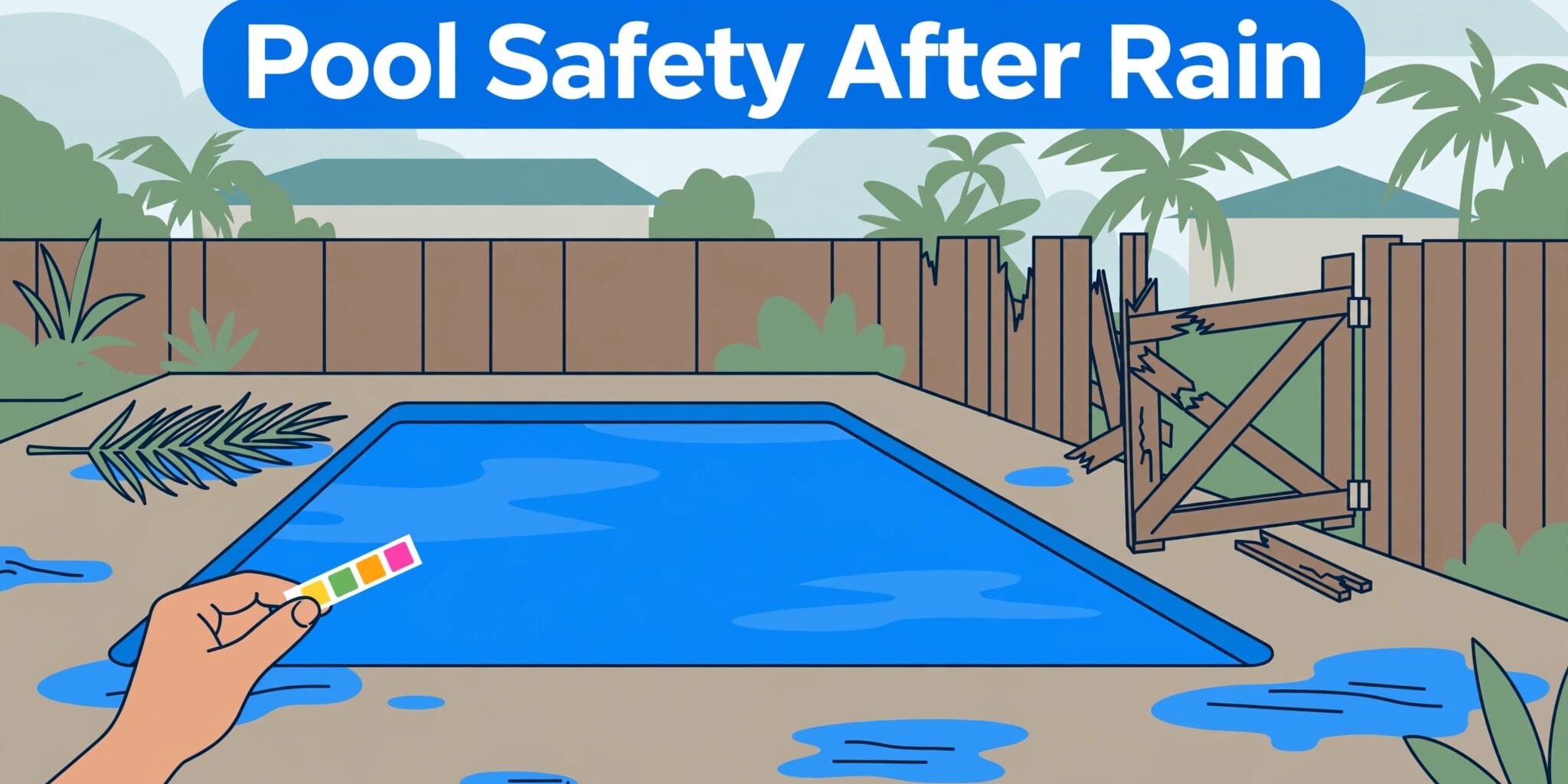
Heavy rain means a swimming pool needs fresh water tests and a safety inspection before anyone swims. Pool water safety depends on clean water, working equipment, and secure barriers, even when the sun returns quickly.
Southwest Florida storms can leave slippery decks, fallen branches, and fence damage alongside changes in water chemistry. A careful reopening routine gives families welcome peace of mind. The safest starting point is keeping everyone away until an adult checks the entire area.
Key Takeaways
- Keep children and pets away until storm hazards, water quality, equipment, and the pool barrier pass inspection.
- Test chlorine and pH before swimming, because clear water alone doesn’t prove the pool is safe.
- Restore secure fencing and gates before reopening, then assign a focused adult to watch every swim.
1. Wait Until the Storm and Immediate Hazards Pass
A break in rainfall doesn’t automatically make the backyard safe. Thunder, standing water, and damaged equipment all deserve attention first.
Stay inside until lightning danger passes
Everyone should leave the pool when thunder sounds. A screen enclosure, patio umbrella, or covered porch doesn’t provide safe lightning shelter.
Families should remain inside a substantial building until at least 30 minutes after the last thunder. Each new thunderclap restarts that waiting period.
Toys, cleaning tools, and floating equipment can wait. Nobody should return to the water to collect them during the storm.
Keep away from electrical hazards
Afterward, an adult should look for downed lines, damaged wiring, and standing water near pool equipment.
Nobody should touch electrical equipment while standing in water. If flooding or visible damage affects equipment, a qualified professional should inspect it before anyone restores power.
Children and pets should stay inside during this first inspection.
2. Test Pool Water Safety Before Swimming
Rain can dilute sanitizer, while leaves and runoff add material that reduces its effectiveness. Pool water safety depends on chemistry, even when the water looks clear.
Measure chlorine and pH
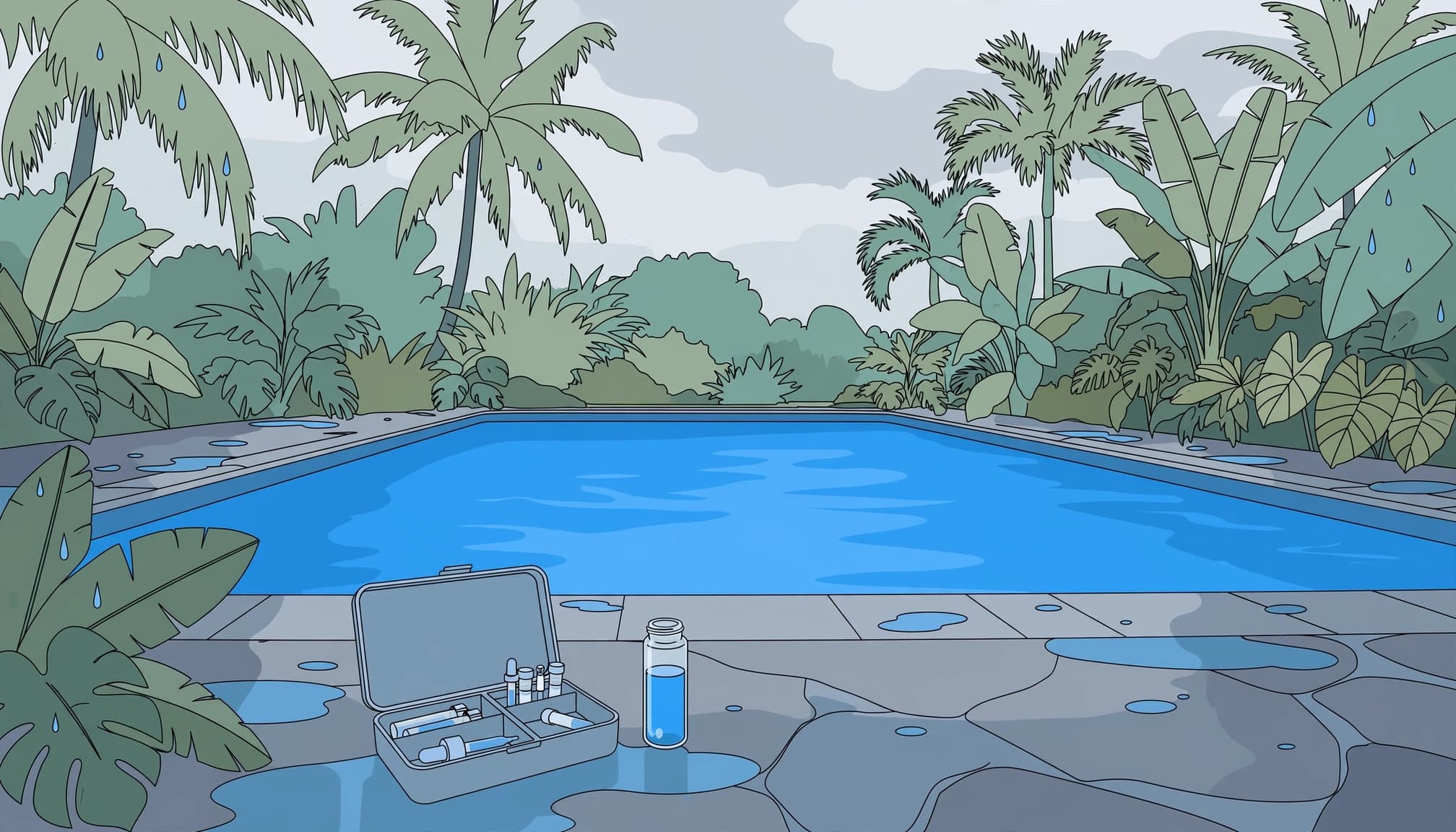
The CDC’s home-pool testing guidance recommends pH between 7.0 and 7.8. Free chlorine should measure at least 1 part per million, or ppm, or 2 ppm for pools using cyanuric acid or stabilized products.
Stabilizer slows sunlight’s effect on sanitizer, but it also affects disinfection.
These minimums aren’t permission to ignore excessive sanitizer. The treatment product’s swimming limits and directions still matter.
Homeowners should use a suitable test kit and follow its sampling instructions. A low reading needs correction before swimmers return.
Look beyond the test results
The pool bottom and drain should remain clearly visible. Cloudy water can hide a struggling swimmer, so nobody should enter when visibility is poor.
Floodwater creates a different problem from ordinary rainfall. If sewage, muddy runoff, or unknown contaminants enter, keep the pool closed and arrange professional cleanup.
A passing test reading cannot establish that a flood-contaminated pool is ready for swimming.
Water should meet the applicable treatment targets after cleanup, with no unresolved contamination or visibility concerns.
3. Clear Debris and Restore Normal Operation
Once the area is safe, an adult can remove branches and large debris using suitable tools. Nobody should reach near a drain or suction fitting.
Children should stay elsewhere during cleanup. Another adult should supervise them rather than expecting the person cleaning to watch everyone.
Next, inspect skimmer baskets and accessible equipment for debris or damage. Restart circulation only when the system is safe to operate.
Homeowners should keep damaged pumps, heaters, wiring, and filters off until a professional inspects them.
Wet leaves and mud also make decks slippery. Clear walkways, remove sharp debris, and address loose or shifted deck surfaces.
If treatment is necessary, follow the chemical label exactly. Never mix pool chemicals together. Retest after treatment and circulation before reopening the pool.
4. Inspect the Removable Mesh Fence and Gate
Clean water doesn’t protect a child who reaches the pool alone. Storm cleanup makes a complete barrier especially important.
Keep a complete, child-resistant barrier
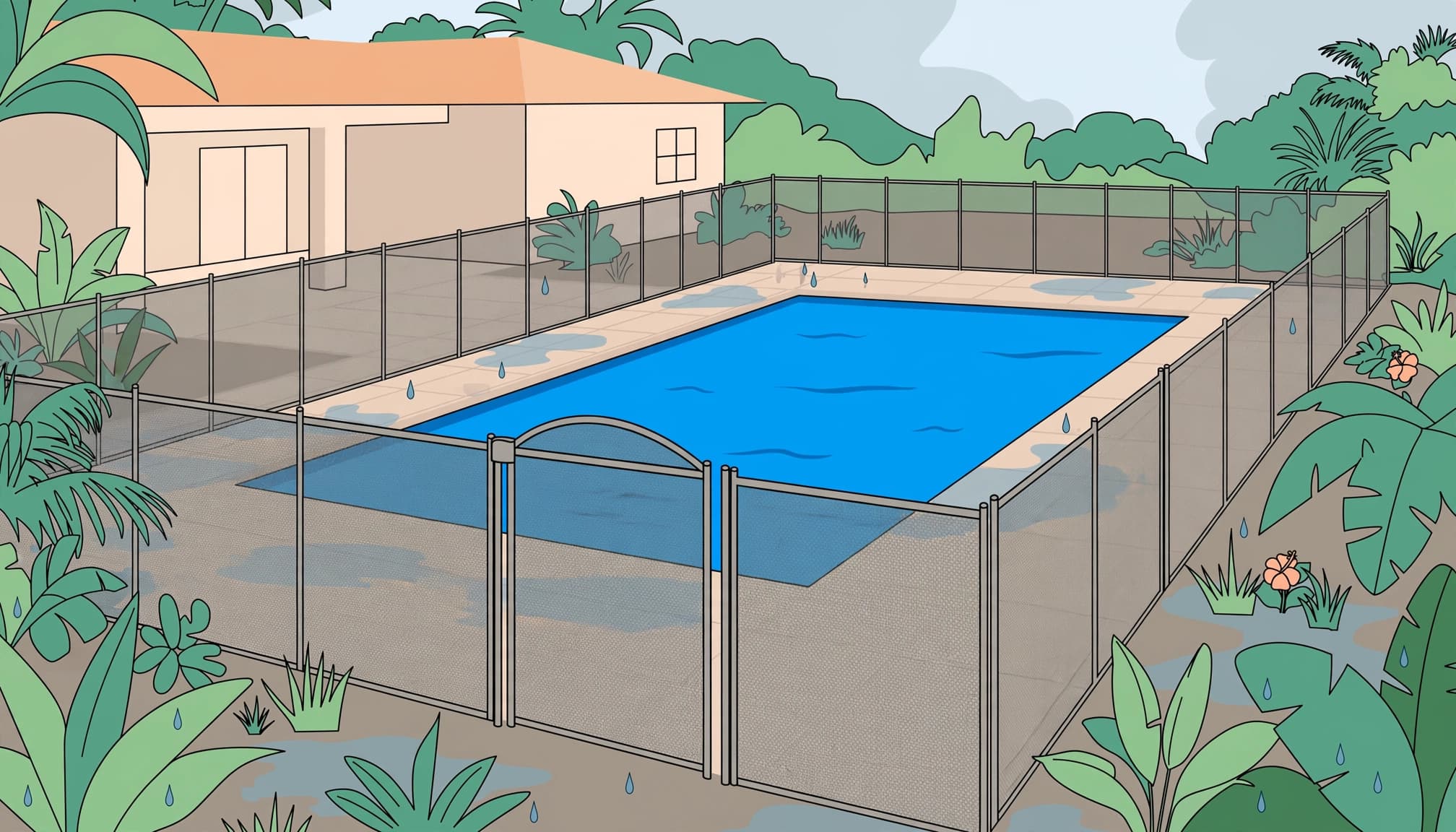
The AAP’s pool-barrier recommendations call for fencing at least 4 feet high, surrounding all sides.
The fence should separate the pool from the home and yard without climbable footholds. Gates should self-close, self-latch, and open away from the pool.
Gate latches should sit 54 inches above the gate’s bottom, beyond children’s reach. Fences with vertical slats should have gaps no wider than 4 inches.
The AAP discourages chain-link pool fencing. Keep chairs, coolers, and branches away from a removable mesh pool fence.
Check for damage that isn’t obvious
After the storm, inspect every mesh panel, post, anchor, and gate connection. Cracked decking around a post can matter even when the post looks straight.
Check that the self-latching gate closes and latches without help. A bent gate, loose post, torn panel, or unreliable latch means keeping the pool area closed.
Tape, rope, and temporary ties aren’t dependable fence repairs.
5. Assign Supervision Before Children Enter
After cleanup, the pool still needs the same dependable family rules. A working barrier and an attentive adult nearby protect children at different times.
Give one adult the watching job
A designated water watcher should focus only on children in the water. Phones, cooking, cleanup, and alcohol don’t belong with that responsibility.
Most home pools don’t have a lifeguard, so the designated adult must stay focused on the children.
Infants and toddlers need touch supervision, with an adult within arm’s reach. Older children still need constant attention.
When adults switch roles, both should acknowledge the handoff. Nobody should assume another person has taken over.
After swimming, the last adult should check the water, gather toys, and close the gate. This matters during busy cleanup days.
The Red Cross reports that drowning at home pools often occurs during non-swim times, after a child disappears for less than five minutes.
Treat lessons as another protective layer
The AAP’s swimming-lesson guidance supports swim lessons for most children age 4 and older.
Children ages 1 through 4 can also benefit when developmentally ready. Comfort, maturity, and individual needs help guide that decision.
Lessons can help children become more water competent, but they don’t provide drown-proofing. A child who swims confidently still needs an attentive adult nearby and secure barriers.
6. Set Safe-Entry Rules and Inspect Drains
Storms can move toys, damage fittings, and leave underwater debris. Before swimming resumes, adults should review clear pool rules, including post-storm water safety rules for entering the pool and never swimming alone.
Keep swimming simple and supervised
Swimmers should enter feet first. Nobody should dive into above-ground pools, shallow water, or through inner tubes.
Nobody should swim alone. Running on a wet deck also creates an avoidable fall risk.
Children who need flotation support should wear properly fitted, U.S. Coast Guard-approved life jackets. Water wings and floaties don’t replace adult supervision.
Adults should remove toys after swimming so children have fewer reasons to approach the water alone.
Keep damaged drains off-limits
Inspect pool drains before swimming resumes. Loose, broken, or missing drain covers can trap hair, limbs, or jewelry. A pool with damaged covers should stay closed until professional repairs address the hazard.
The CPSC’s drain-cover guidance explains the Virginia Graeme Baker Pool and Spa Safety Act.
Its drain-cover requirements apply to public pools and spas. Residential owners should also maintain secure covers meeting applicable safety standards.
7. Prepare for an Emergency Before Reopening
A charged phone, reaching pole, and life ring should remain nearby. Nobody should leave children unattended to retrieve rescue equipment.
The Red Cross’s swimming safety guidance puts checking the water first when a child goes missing.
- Check the pool immediately, including the bottom and places hidden by floats or shadows. Shout for help.
- Have another adult call 9-1-1 immediately. A lone responder should use speakerphone when possible and follow dispatcher instructions.
- Use a reaching pole or life ring when possible, without creating another victim. Once safely out, begin CPR if the person isn’t breathing normally.
CPR for drowning includes rescue breaths when the responder can provide them. The dispatcher can guide immediate care.
Adult and child CPR classes through the American Red Cross and hospitals help families prepare before an emergency.
Frequently Asked Questions
Does a saltwater pool need testing after heavy rain?
Yes. Saltwater pools still use chlorine, which a salt generator produces. Rain and debris can change sanitizer levels and water balance.
Homeowners should test sanitizer and pH before swimming, just as they would with other pools. A running generator doesn’t prove that the water currently meets swimming targets.
Can a floating cover replace a pool fence?
No. Floating solar pool covers aren’t safety covers and don’t keep children out of the pool.
A properly installed safety cover can add protection, but families still need an attentive adult and secure access control. Standing water on a cover also deserves attention. Nobody should walk onto a cover to remove debris or collected rainwater.
A Careful Reopening Brings Peace of Mind
After heavy rain, a complete safety check matters more than how quickly the pool looks inviting again. Clean water, safe equipment, and a secure mesh barrier give families a dependable starting point.
Once swimming resumes, focused adult attention keeps that protection working. A few careful checks help everyone enjoy the pool with greater confidence.
Questions or ready to get started? Call us at (941) 500-9484