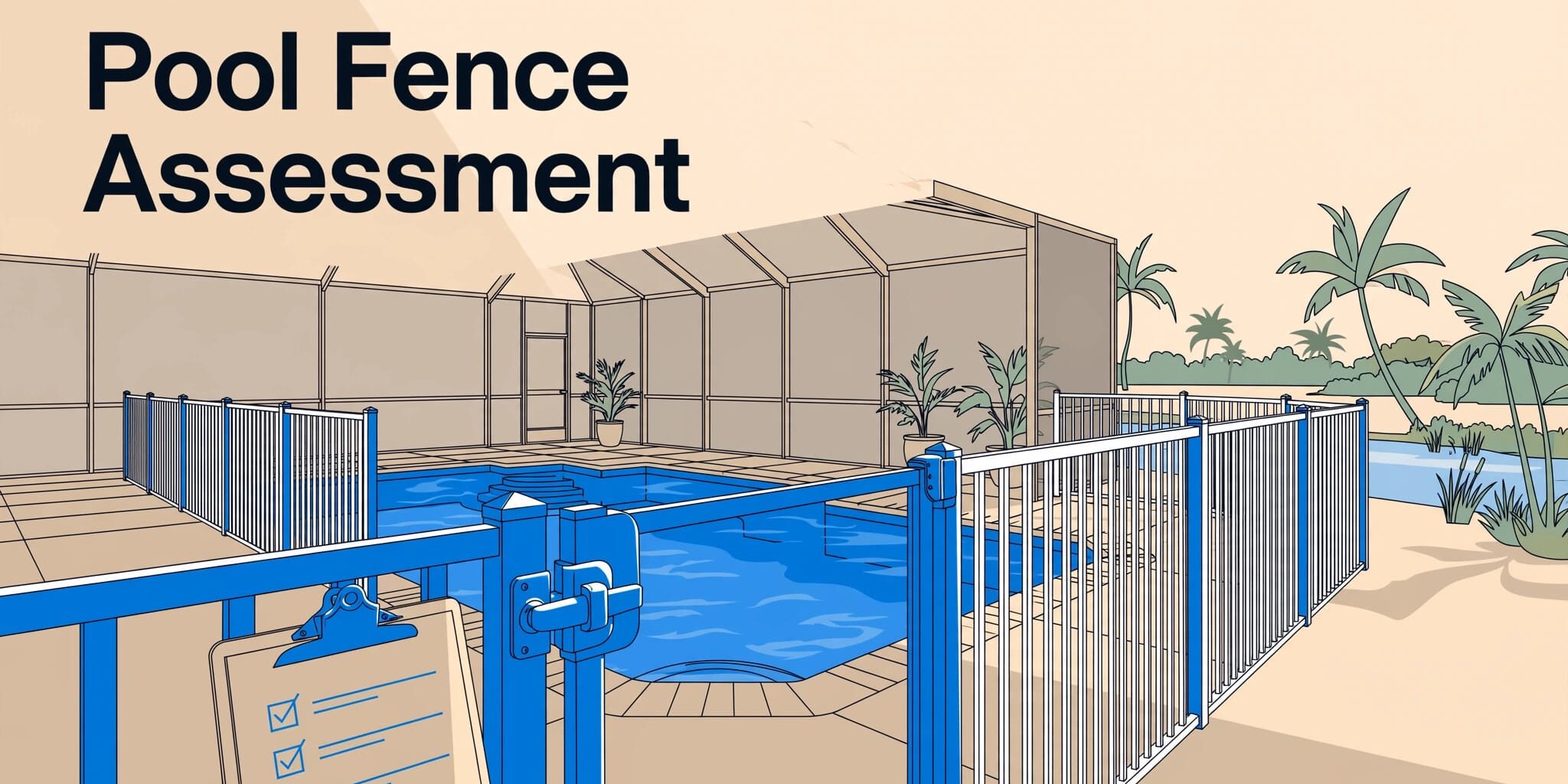
One open gate can turn a beautiful pool day into a serious safety concern. A pool fence assessment gives Southwest Florida homeowners a clear look at areas that need attention.
Every yard has its own challenges, from screened lanais and pavers to landscaping, canals, docks, pets, and busy family routines. A site assessment helps homeowners prepare for a later pool safety inspection, but it doesn’t replace an official review.
A thoughtful site visit helps families move forward with a plan that feels safe, clean, and practical.
What a Pool Fence Assessment Checks First
A site assessment is a hands-on review of the pool area. It isn’t the same as a pool safety inspection, city inspection, or permit approval.
This homeowner-focused visit differs from residential pool inspections and commercial pool inspections. The installer reviews the actual property, not a drawing of it. That makes a big difference around freeform pools, narrow walkways, and changing deck surfaces.
The pool, deck, and existing barrier
The visit starts with a walk around the pool and surrounding deck. The assessor notes the pool shape, steps, ladders, spa edges, equipment pads, and nearby screen doors.
They also inspect existing walls, fences, and gates. A yard fence might help form a pool barrier, but the completed layout still needs an evaluation for pool fence compliance.
Florida law requires a residential pool barrier to stand at least four feet high on the outside. The Florida pool barrier requirements also prohibit openings or features that let a young child crawl under, squeeze through, or climb over.
The assessor records the minimum barrier height and may note technical references such as ASTM F1908. That reference doesn’t automatically establish Florida approval or local compliance.
Every route toward the water
Next, the assessor identifies how people enter the pool area. That includes doors, gates, stairs, screen entries, side yards, and paths from a dock or seawall.
A good layout gives adults an easy path without leaving an uncontrolled shortcut to the water. Pool equipment and service access matter too.
Assessment notes can also help homeowners prepare for a later pool safety inspection. However, they don’t guarantee approval by a city, county, or other reviewing authority. Local amendments may create additional requirements.
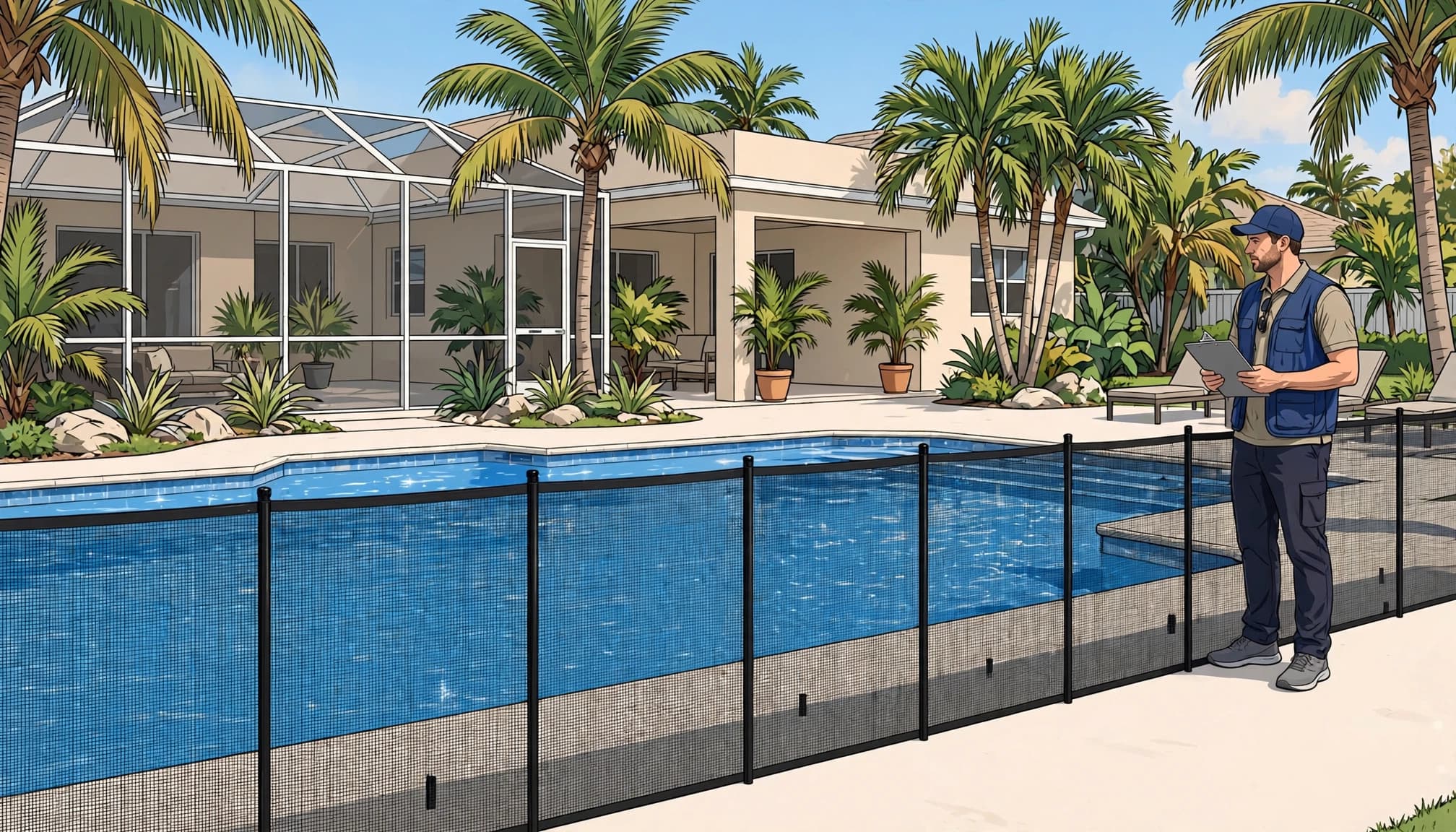
The pool fence assessment image shows a removable mesh fence around a Southwest Florida pool.
Measuring the Fence Line and Ground Clearance
A removable mesh pool fence needs a stable, well-planned route. The assessor measures more than the pool’s straight edges.
Curves, tanning ledges, drains, landscape beds, and deck changes can add important distance. String can help show the full route before any drilling begins.
Why uneven grade needs attention
Fence height gets measured from the outside grade, not only from the pool deck. A low spot near the fence can change the effective barrier height.
Heavy rain can shift soil around landscaped areas. Fresh mulch can also change ground clearance. Southwest Florida yards need another look after storms, paver work, or major landscaping, when ground movement can alter the route.
The bottom edge matters because a child should not crawl below it. Assessors check bottom gap clearance for dips, washouts, raised pavers, and loose soil that create a larger opening.
Openings and climbable objects
The assessor checks every section for gaps beside posts, under mesh, and near gates. A 4-inch sphere test can help during a visual review.
A pool fence testing kit may help check openings, but it doesn’t replace local review. This visual pool safety inspection isn’t the same as official approval, which depends on applicable pool barrier standards.
Chairs, planters, storage bins, grills, toys, and pool floats also get attention. Assessors consider climbability resistance when these objects sit beside the fence.
The safest fence line stays clear after installation, not only on the day the crew finishes.
Testing the Self-Closing Pool Gate
The gate is one of the most important parts of a pool fence assessment. During a pool safety inspection, gate operation is a central review item.
The assessor checks the gate several times, not just once. Wind, deck slopes, standing water, and daily use can affect its operation. Repeated testing supports a pool safety inspection, but it doesn’t replace an official review by the applicable authority.
The correct swing direction
Florida rules generally require the gate swing direction to be outward, away from the pool area. Homeowners should confirm the applicable local requirements before relying on one general rule.
The assessment confirms there is enough clear space for the full swing. Furniture, planters, slopes, and nearby screen doors can block movement.
A gate should also have a simple approach for adults. Families shouldn’t need to squeeze through a tight corner while carrying towels or pool supplies.
Closing and latching without help
The assessor opens the gate and lets it go. Self-closing gates should close fully and latch on their own every time.
The latch should engage through a self-latching mechanism. Homeowners should verify the applicable latch height requirement with the local authority rather than assume one universal measurement.
A pool fence testing kit may supplement gate checks, but it doesn’t replace an on-site assessment.
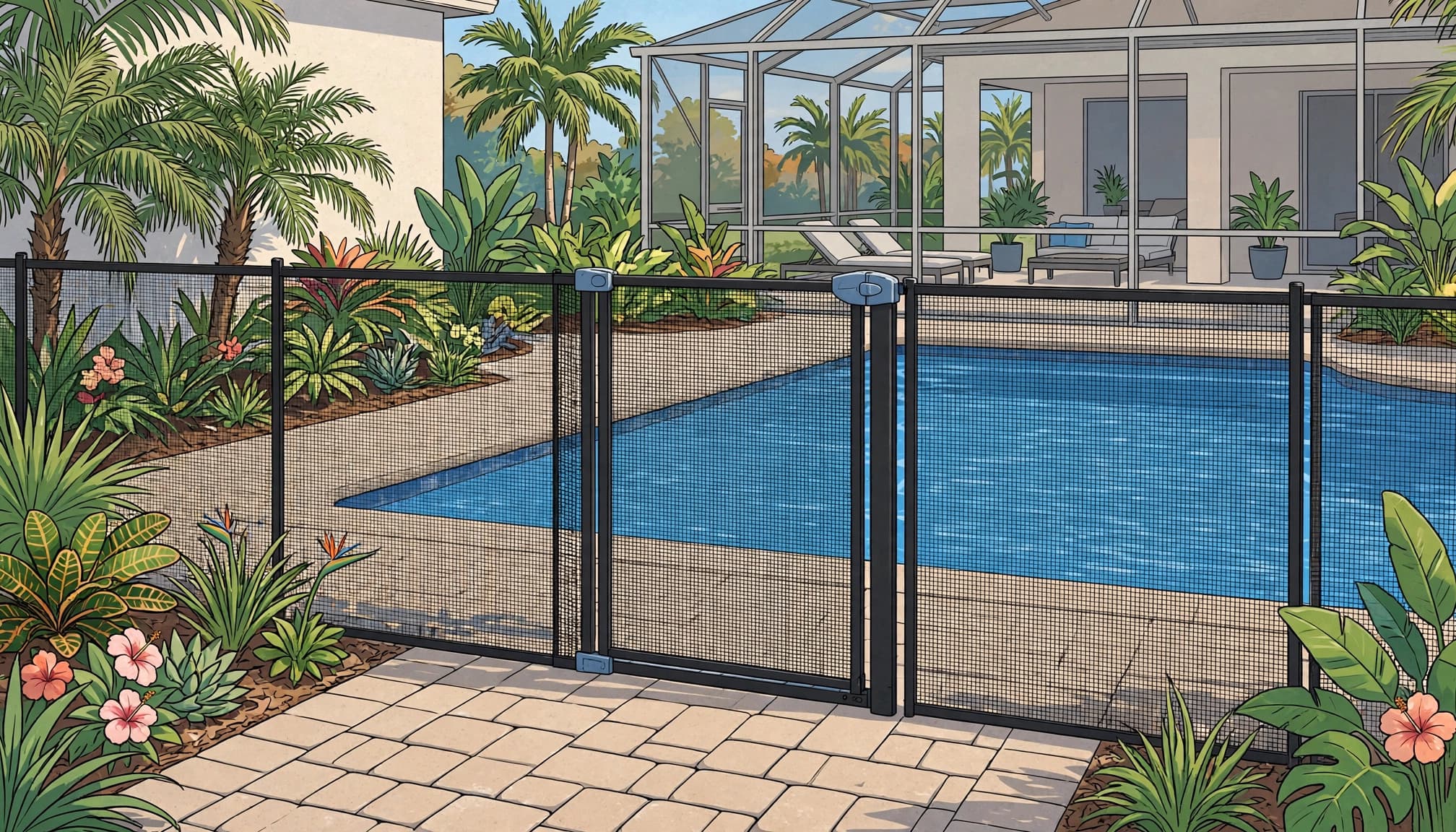
Loose anchors, damaged caps, sagging mesh, or standing water near the threshold can affect gate alignment. Hardware checks should include hinges, fasteners, and any stainless steel hardware. These issues deserve correction before final approval.
Mapping Posts, Surfaces, and Obstacles
A clean fence layout starts before a drill touches the deck. The assessor maps post locations around the pool’s real conditions.
Concrete, travertine, pavers, natural stone, and artificial turf all need different planning. For a removable mesh pool fence, surface type, joints, and finished height affect anchor placement.
Deck surfaces and anchor locations
The installer looks for solid locations that can support anchor sleeves. Drains, irrigation zones, electrical lines, and buried pool equipment need to stay clear.
Natural stone needs extra patience because cracks and weak edges can cause damage. Pavers may require careful planning around joints and finished height.
An aluminum pool fence or vinyl pool fence may involve different layout details, including vertical picket spacing. The primary goal remains a stable barrier with properly planned access points.
The goal is a tight, stable barrier with clear lower-edge clearance. No homeowner wants a beautiful deck damaged by a rushed layout.
Pool access and family routines
The best fence route follows the way the family uses the backyard. It protects the water without blocking every useful path.
A pool safety inspection should account for regular access to canals, docks, and other waterfront areas. A pool gate shouldn’t become the only route to the water.
The assessor also asks about young children, pets, visiting grandchildren, and regular service visits. Those details help place the gate where it works every day.
Florida Rules and Local Requirements
Florida Chapter 515 sets the statewide baseline for residential pool safety. Local cities and counties can add requirements through permits and local amendments.
This guide focuses on residential pool inspections, not commercial pool inspections. A site assessment also differs from an official pool safety inspection. Confirm the applicable requirements with your local building department, including any ISPSC barrier codes your jurisdiction may reference.
That is why a pool fence assessment includes questions about the home’s location. Sarasota, Fort Myers, Cape Coral, and coastal communities can handle details differently.
Statewide pool safety basics
Florida’s barrier rules focus on limiting unsupervised access. Pool fence compliance depends on the completed route, height, openings, gate, and nearby objects.
The minimum barrier height is generally 48 inches, with openings limited under the 4-inch sphere test. The barrier should also resist climbing, including features that reduce climbability resistance.
A wall of the home can form part of a barrier only when it has no direct door or window opening to the pool area. Gate hardware, latch placement, and gate swing direction also affect the completed barrier. Aboveground pool ladders and steps need secure control.
For new residential pools, Florida connects final approval to an approved safety feature. The state safety feature options include qualifying barriers and other protective measures.
Local details can change the plan
A local official may require more detail about barrier placement, gate hardware, finished grade, or permits. Homeowners should confirm those details with the applicable local building department before installation begins.
A six-foot privacy fence at the property line does not automatically create a compliant pool barrier. An aluminum pool fence, vinyl fence, or other material does not establish compliance by itself.
Removable mesh fencing works well for many homes because it creates a visible boundary while keeping backyard views open. Still, the final layout and gate operation matter most.
What Happens After the Site Visit
After the assessment, the installer can prepare a layout and estimate based on the actual yard. The plan should show the fence route, gate location, and likely post placement.
The assessment report records observed conditions, but it isn’t an official pool safety inspection. Homeowners should ask local officials or the installer what documentation and approvals apply for code compliance.
This is the time to ask direct questions. Families should understand how the mesh comes down, how it goes back up, and how gate service works.
Preparing for installation day
Homeowners can use a pool safety checklist to clear furniture, toys, planters, and loose pool equipment from the planned fence route. They should also point out drains, irrigation, deck repairs, and known surface issues.
If paver replacement or major deck work is planned, it usually makes sense to finish that work first. Fence posts need the final deck height and alignment.
Families ready to plan their project can Get a FREE Quote before choosing an installation date.
Keeping the barrier ready
A pool inspection checklist can help families track mesh tension, post stability, anchor sleeves, caps, self-closing gates, and the self-latching mechanism. Homeowners can also use the recorded observations during follow-up, including any later pool safety inspection.
Storm season deserves extra attention. Heavy rain, wind, shifting soil, and landscaping work can change bottom gap clearance or gate alignment.
Torn mesh, loose posts, or a gate that fails to latch need prompt service. For a custom layout review, homeowners can schedule a free pool fence estimate.
Key Takeaways
- A site assessment reviews the full pool area, while an official pool safety inspection verifies compliance.
- Finished grade, low spots, openings, and nearby climbing aids all matter.
- Every pool gate should swing away, close fully, and latch without help.
- Local building requirements can add details beyond Florida’s statewide rules.
- After storms, deck work, landscaping, or installation, use a pool safety checklist for recurring barrier checks.
Frequently Asked Questions
Is a four-foot pool barrier required in Florida?
Florida pool fence regulations require a residential pool barrier to be at least four feet high on the outside. This minimum barrier height may be affected by local amendments, so verify property-specific requirements with the applicable local authority.
The measurement should happen after pavers, mulch, landscaping, and grade work are complete. A later change can affect clearance and height.
Does the 4-inch sphere test guarantee compliance?
No. The 4-inch sphere test is a useful visual check for reviewing openings. A site review or visual check isn’t an official pool safety inspection.
A pool fence testing kit can help identify gaps, but no tool guarantees approval. Assessors also look beside gates, around posts, and below mesh.
Climbable furniture and damaged sections matter too.
Can a homeowner use an existing yard fence?
An existing fence may form part of the pool barrier if it sits on the pool perimeter and meets the required safety standards. Its material alone doesn’t establish pool fence compliance.
During residential pool inspections, assessors review the layout, height, openings, gate function, and nearby climbing hazards. Homeowners should ask the relevant local authority whether non-compliance penalties apply.
A proper assessment makes those details much easier to see.
A Safer Pool Area Starts With a Clear Plan
A pool should bring families together, not create constant worry. A careful assessment finds small problems before they become serious access points.
The strongest setup has a clear fence line, secure anchors, tight mesh, and a gate that latches every time. That kind of peace of mind feels good every day.
Questions or ready to get started? Call us at (941) 500-9484