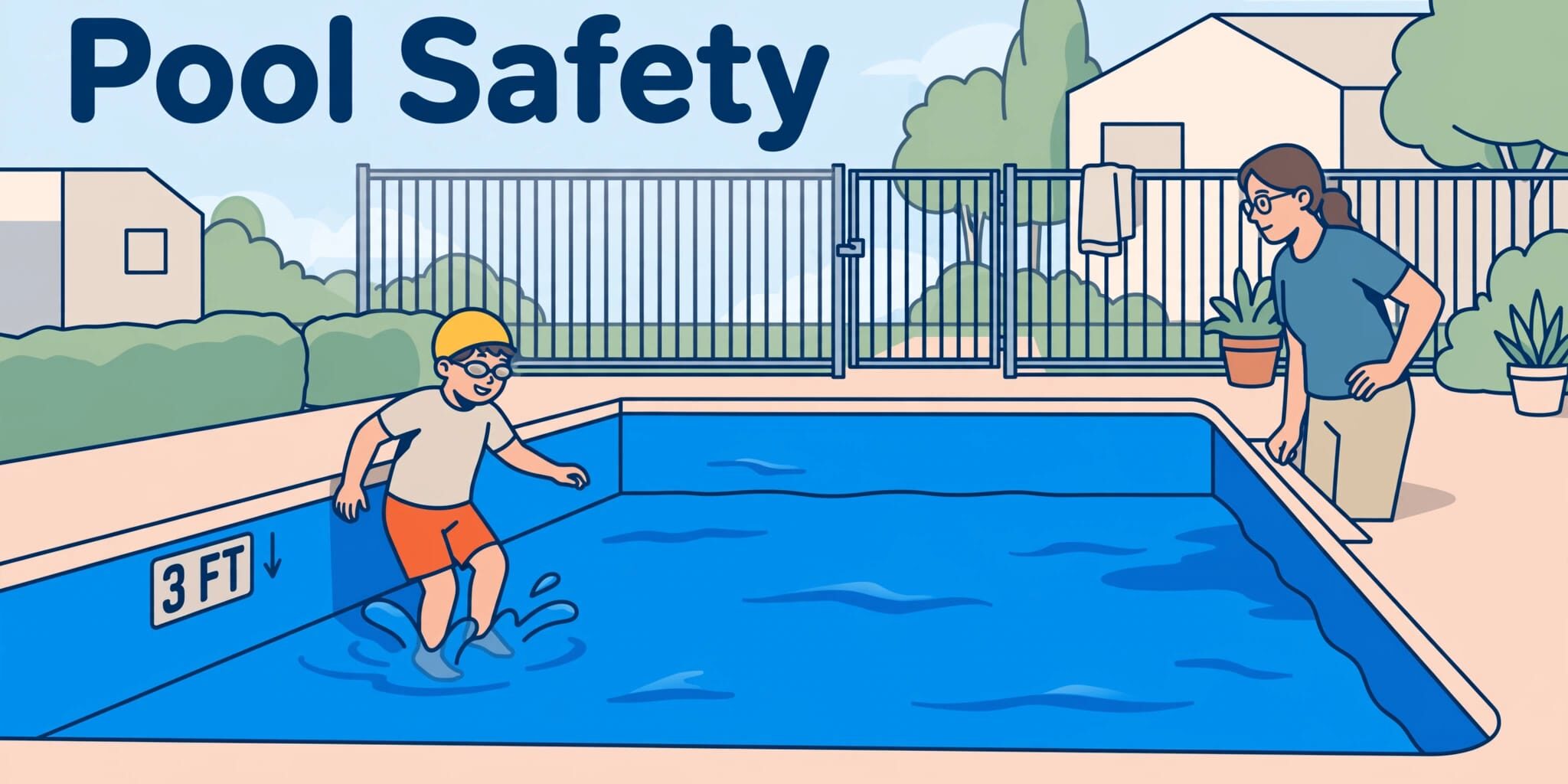
For most residential pools, children should enter feet first because the pool lacks a properly designed diving area. Safe entry depends on pool design, water depth, training, and an attentive adult watcher.
Even a confident swimmer can strike the sloping bottom and suffer a serious head or neck injury. The clearest starting rule is feet first, unless every condition supports supervised diving.
Key Takeaways for Backyard Pools
- Children should never dive into an above-ground pool, a shallow end, or any pool not explicitly designed for diving.
- The American Red Cross recommends at least nine feet of water for head first entries, including pool-deck dives.
- Depth alone doesn’t establish safety because pool length, slopes, and entry height also matter.
- Qualified instruction and an attentive adult watcher remain necessary, even for strong swimmers.
- A closed, latched pool barrier helps prevent children from reaching the water outside supervised swimming.
Pool Diving Safety Starts With Depth and Design
Why eight, nine, and six feet mean different things
Different numbers describe different situations. They don’t offer interchangeable permission for backyard diving.
These thresholds need their proper context.
| Depth | Meaning |
|---|---|
| Eight feet | New York prohibits ordinary pool-deck head-first diving below this depth in regulated pools. |
| Nine feet | The American Red Cross recommendation covers head-first dives, including pool-deck entries. |
| Six feet | New York’s minimum for certain starting-block installations concerns competitive swimming and training. |
The New York pool-operation rule includes competitive-swimming and training exceptions. It isn’t a nationwide residential-pool law or a Florida backyard standard.
The nine-foot recommendation isn’t a universal legal minimum depth or automatic approval for a residential pool. Effective diving safety also depends on pool dimensions and the intended entry method.
Why a deep spot isn’t enough
A diving area needs sufficient depth throughout the entry path. It also needs enough length and width for the swimmer’s movement.
Many residential pools have a short deep pocket followed by a rising floor. A child can clear the wall yet hit the slope.
Above-ground pools don’t provide an appropriate diving area. Children should never dive into them, regardless of apparent depth.
Starting blocks belong only in suitable facilities during supervised training. A qualified coach must directly supervise their use. Families shouldn’t treat the six-foot training provision as permission for recreational backyard diving.
Why Shallow Dives Cause Serious Injuries
When the head hits the bottom, body momentum can compress the neck. That impact can damage vertebrae and the spinal cord.
A child doesn’t need a dramatic fall for a severe injury. Even a deck-level dive can cause paralysis.
The Canadian Red Cross’s diving guidance attributes over 40% of careless-diving spinal injuries to backyard pools.
Older safety estimates place nine in ten diving injuries in water six feet deep or less. That statistic doesn’t make seven feet a safe target.
New York’s fact sheet cites an estimated 800 annual U.S. diving-related spinal cord injuries. Approximately three-quarters occurred in natural bodies of water, with the remainder in pools. These historical estimates don’t describe a verified 2026 annual total.
The practical message stays clear: familiar water doesn’t protect a child’s head or neck.
A pool’s deepest measurement doesn’t describe the whole dive path. The rising bottom can remain directly ahead.
Inspect the Entire Entry Area Before Swimming
Adults should establish the rules before children enter the pool enclosure. Excitement makes last-minute explanations harder to follow.
A practical inspection follows this order:
- Establish whether diving belongs there. Only a designated area designed for diving qualifies; an ordinary deep end doesn’t.
- Read depth markings and consider the entire bottom profile. Appearance, water color, and a previous successful dive don’t establish suitability.
- Look through clear water for swimmers, steps, benches, toys, and other submerged obstacles.
- Keep the entry area empty. The next swimmer waits until the previous swimmer leaves the complete diving path.
- Inspect drain covers and the walking surface. Loose covers, damaged fittings, slippery clutter, or poor visibility mean swimming stops.
If pool design or depth remains unknown, children enter feet first using the steps or another suitable entry.
Adults should never send a child underwater to investigate an obstacle or damaged drain. A licensed pool professional should handle damaged equipment.
Likewise, jumping feet first still requires a clear, suitable landing area. Steps, benches, and shallow shelves can cause injuries.
Teach Controlled Entry Only With Qualified Instruction
Arms and hands help protect the head
Diving lessons belong in an appropriate facility with a qualified instructor. A written description can’t replace hands-on assessment and correction.
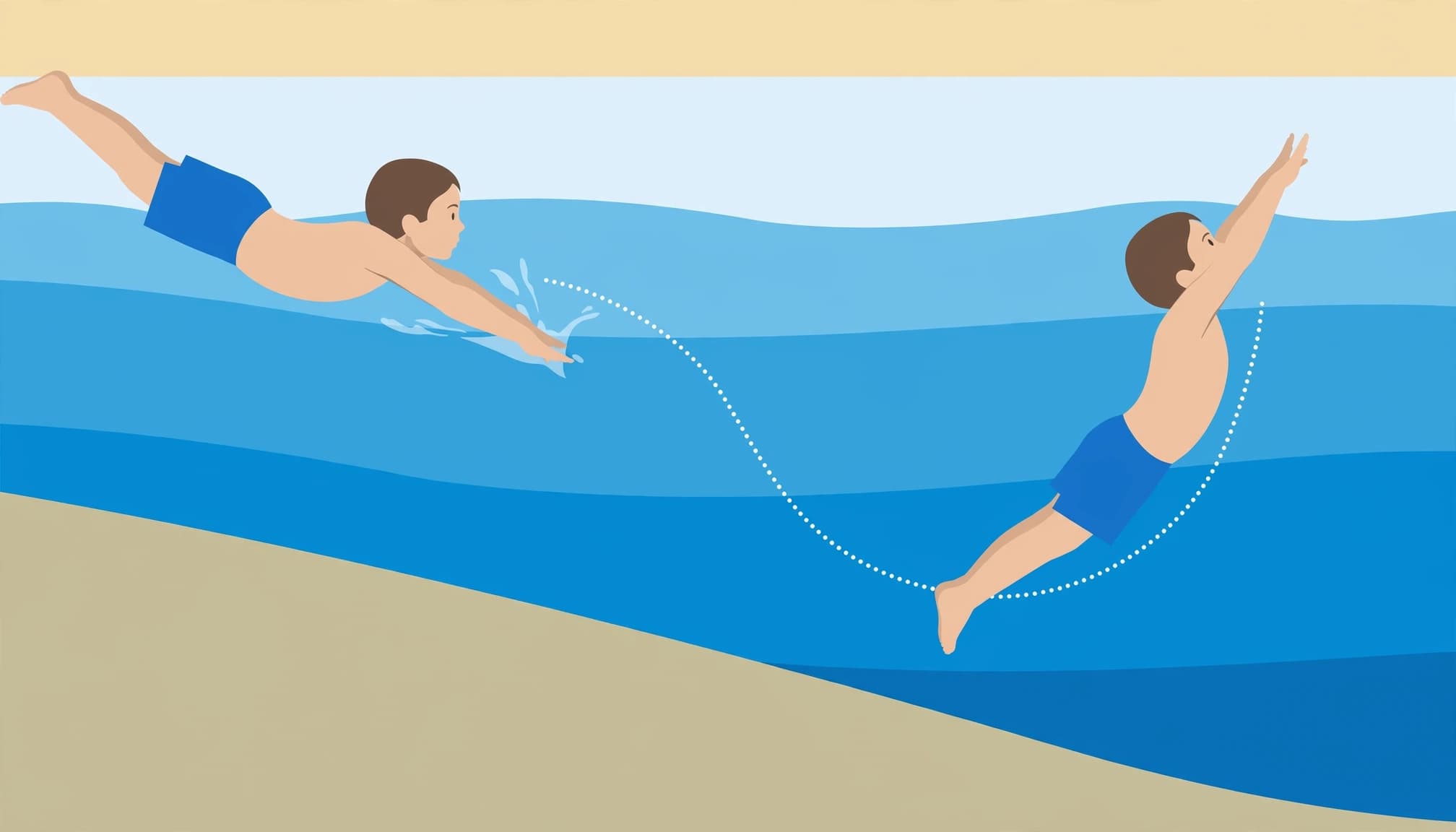
During instruction, the swimmer keeps arms extended overhead. Hands stay flat and point along the intended shallow entry path.
The arms remain forward to help protect the head. After entry, the swimmer brings the head and hands up toward the surface.
A controlled back arch helps the swimmer steer up toward the surface. However, no arm position can make shallow water safe.
Entry angle and speed change the risk
A steep dive sends the swimmer deeper before an upward turn. Extra speed increases the distance needed to change direction.
New York’s head-first diving guidance explains how running deck dives can approach one-meter-board entry speeds.
Therefore, a running start creates serious risk even without an elevated platform. Children should never practice a running dive or back dives at home.
Instruction should emphasize controlled movement, immediate upward steering, and stopping before fatigue affects technique.
Set Firm Rules for Boards and Elevated Surfaces
A diving board doesn’t prove that a residential pool meets diving requirements. The board and pool must form a compatible, properly designed installation.
Board height changes the required diving envelope. Therefore, a nine-foot depth alone doesn’t authorize board use.
Children should dive straight ahead from the board’s end. Diving off either side can send them toward a wall or shallow slope.
Only one child should use the board at a time. The next child waits until the entire landing and exit area clears.
Safety guidance calls for at least 25 feet of clear dive path before considering a dive across a narrow pool. That distance doesn’t override inadequate depth or an unsuitable pool design.
Roofs, balconies, ledges, fences, retaining walls, ladders, slides, and pool equipment must never become diving platforms. Children also shouldn’t dive through inner tubes or floating toys.
Adults should stop flips, pushing, surprise entries, and contests involving height or distance. Clear limits help visiting children understand that household rules apply to everyone.
If an adult can’t confidently enforce those limits, diving should stop.
Keep Supervision and Barriers Working Together
Assign one sober water watcher
One adult should accept responsibility for watching children without phone use, chores, or distracting conversations. Another child’s presence doesn’t replace that adult.
Toddlers and weak swimmers need an adult within arm’s reach. When watchers change, both adults should clearly acknowledge the handoff.
Alcohol slows reaction time and weakens judgment. The Canadian Red Cross reports alcohol or drug involvement in over half of diving injuries and deaths.
That figure isn’t specific to children. Still, it supports a strict rule: don’t drink and dive. Anyone using alcohol or drugs should stay out of the water.
Close access outside swim time
A four-sided removable mesh barrier separates the pool from everyday play areas. Its self-closing, self-latching gate should stay closed between entries.
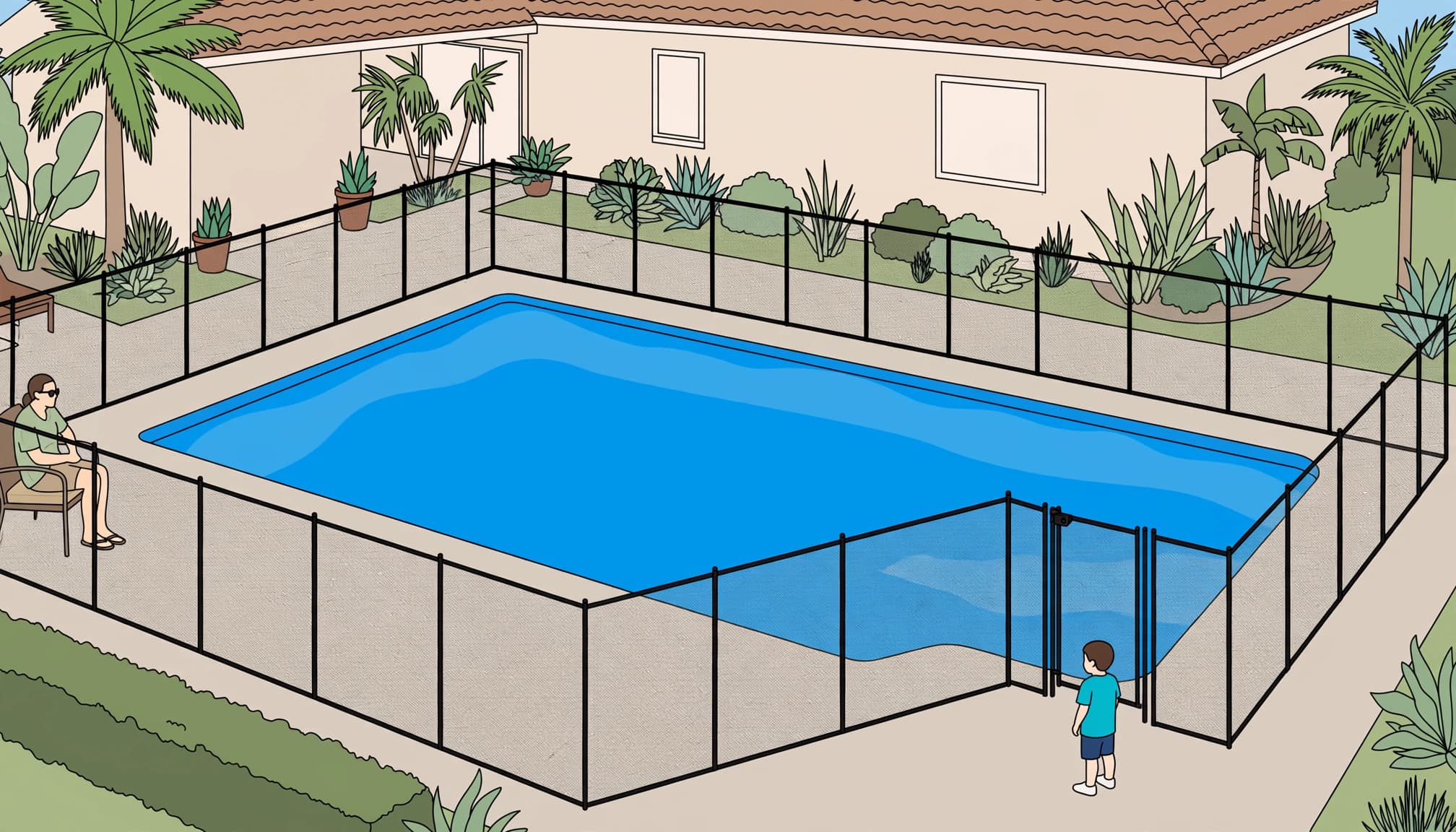
Adults should remove toys after swimming and store them away from the fence. Storage bins and furniture shouldn’t create climbing steps.
Families can discuss removable mesh fencing when planning better separation between the pool and yard.
However, fencing never replaces an adult’s attention. Swimming lessons, alarms, and flotation devices also leave gaps when adults stop watching.
Children who need flotation support should wear properly fitted, U.S. Coast Guard-approved life jackets. Water wings don’t provide equivalent protection.
Prepare for a Diving Emergency
Caregivers should learn child CPR, including rescue breaths, before supervising swimming. A charged phone and the property’s address should remain readily available.
A reaching pole and ring buoy also belong within quick adult reach. Equipment shouldn’t sit behind a locked storage door.
After a suspected head or neck injury, an adult should call 911 immediately. The swimmer should remain as still as possible while help arrives.
However, breathing takes priority over limiting spinal movement. If the child isn’t breathing normally, safe removal and CPR take priority.
Caregivers should follow dispatcher instructions and their emergency training. They shouldn’t force an injured child to stand, walk, or demonstrate neck movement.
Another adult should keep the other children out of the water. Emergency access through the pool gate should remain clear.
Common Questions About Children’s Diving
Can a strong swimmer dive into a six-foot pool?
Swimming ability doesn’t change the bottom’s location. Six feet falls below the American Red Cross’s nine-foot recommendation for head-first entries. Children should use feet-first entry unless an appropriate, designated diving area supports supervised instruction.
How can homeowners tell whether a pool permits diving?
Depth markings alone don’t establish suitability. Pool design documents and a qualified pool professional’s assessment can establish whether a suitable diving envelope exists. Until suitability is established, the household rule should remain feet-first entry.
Should children swim alone if diving isn’t allowed?
Children still need focused adult supervision. A no-diving rule addresses head and neck injuries, but drowning and other hazards remain. Similarly, a buddy can notice trouble without providing an adult’s judgment or rescue ability.
Make Feet-First Entry the Dependable Household Rule
The most dependable approach combines feet-first entry, focused supervision, and controlled pool access. Diving belongs only where pool design and qualified instruction support it.
For pool safety fence installation, homeowners can Get a FREE Quote. A secure mesh barrier adds protection between swimming sessions.
Questions or ready to get started? Call us at (941) 500-9484