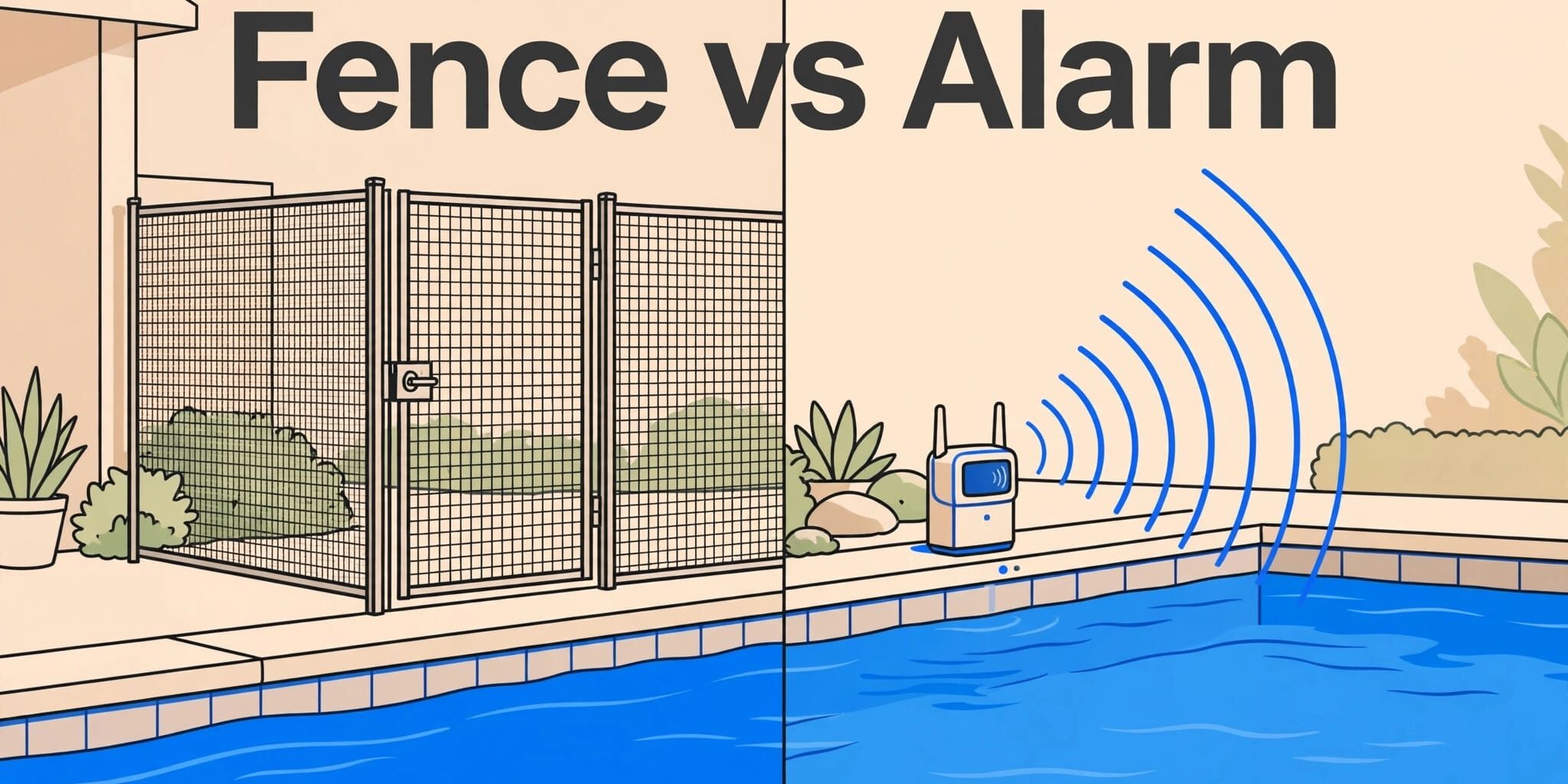
A backyard pool can look peaceful while a child finds an open path to the water. For families weighing a pool fence vs pool alarm, the distinction matters right away. A fence helps stop access. An alarm gives a warning when something has opened or someone may have entered the pool.
Both can bring peace of mind while serving different roles in a pool safety system, creating layers of protection. The safest choice starts with the routes children could take when no one expects them near the water.
The short answer: fence or alarm
A properly installed pool safety fence is the first choice for limiting unsupervised pool access. An alarm adds a warning if someone opens a door or gate, crosses a monitored area, or enters the water.
That distinction makes the decision easier.
| Safety question | Removable mesh pool fence | Alarm |
|---|---|---|
| Does it separate a child from the water? | Yes, when the barrier fully surrounds the pool and the gate stays latched. | No, it detects an event but doesn’t block access. |
| When does it help? | Before a child reaches the water. | When a monitored door or gate opens, or when a pool sensor detects activity. |
| What needs regular attention? | Gate operation, mesh, anchors, and nearby climbing hazards. | Batteries or power, sensor placement, volume, and alert testing. |
| Best role | The physical foundation of the safety plan. | An added warning at access points or at the pool. |
The strongest setup often uses both. Together, they provide complementary pool safety equipment: the fence creates a boundary, while the alarm can alert a caregiver to an open door or gate.
Neither replaces a focused adult when children are swimming.
Why a four-sided pool fence matters
A property-line fence may keep others out of the yard. It may still leave a child with a direct path from the house to the pool.
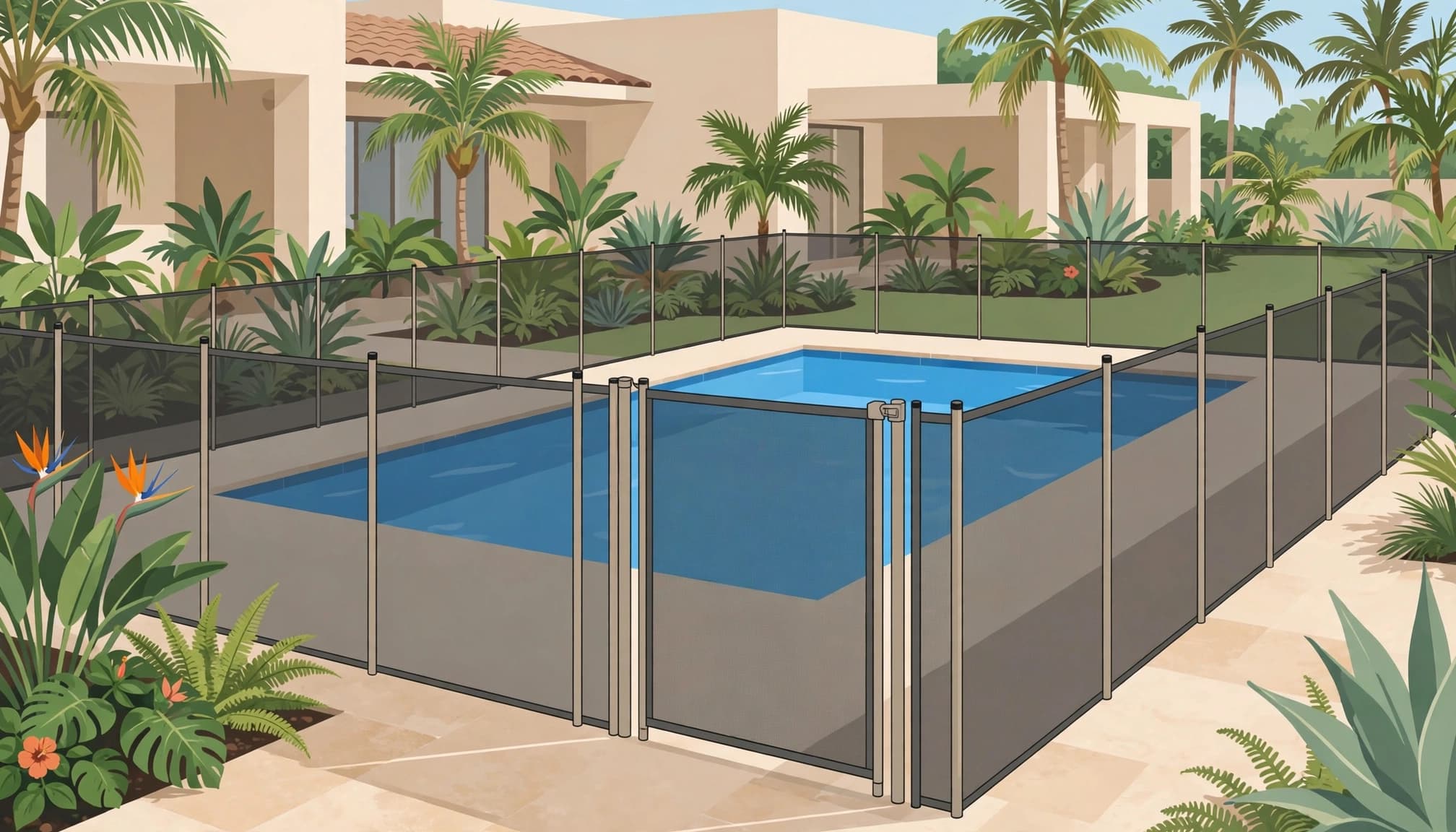
Four sided isolation fencing creates a separate pool safety barrier between the pool, house, and rest of the yard. The CDC’s pool-fencing guidance reports an 83% lower child drowning risk compared with three-sided property-line fencing. That difference makes a four-sided barrier a meaningful investment in child drowning prevention.
The fence must close every route
An effective barrier separates the pool from the house and the rest of the yard. Families should check routes through a patio, side yard, garage, or lanai. A fence section that stops short of an access route leaves the job unfinished.
A removable mesh safety fence is a practical choice for many Southwest Florida homes. In a pool fence vs pool alarm comparison, it creates a clear boundary while keeping the pool visible. Families can also plan the gate around how they use their deck.
Visibility is helpful, but it isn’t supervision. Adults still need to know where children are, even when the water stays in view.
The gate deserves a daily check
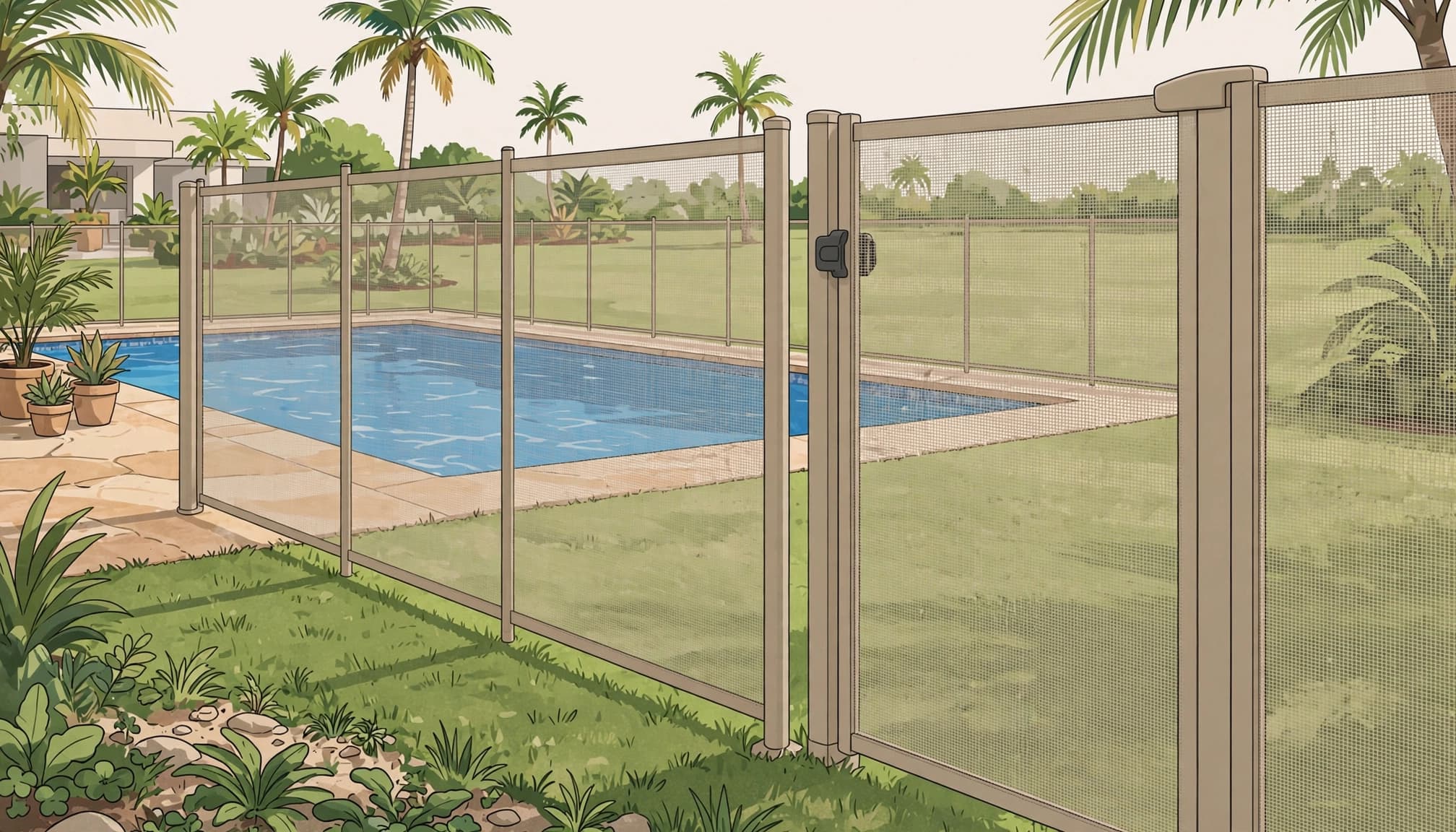
The gate gets used more than any other part of the fence. It should close and latch on its own every time. Self-closing self-latching gates help maintain the barrier, but they still need regular checks.
Keep chairs, planters, storage bins, and pool safety equipment from creating steps near the fence. A child may use them to climb. Check the gate again after storms, repairs, or a fence removal and reinstallation.
The CPSC’s residential pool barrier guidelines provide a helpful reference for height, openings, and gate design. Local requirements still control the finished installation.
What alarms can catch, and what they cannot
Alarms are useful because adults can’t see every access point at once. Their value depends on what they monitor and whether someone hears the alert.
The CPSC identifies surface, subsurface, perimeter, and personal-immersion alarms under its pool-alarm standards information. Door and gate alarms cover a different moment: they alert when someone opens an access point on the way to the pool.
Door and gate alarms warn earlier
A door alarm can sound when someone opens a pool-facing exit. A gate alarm can sound when someone passes through the pool fence gate. Those warnings may come before a child reaches the water.
Placement matters. A sliding door may get attention while a side door or low window goes unchecked. Homeowners should walk every possible route and identify who will hear each alert.
Adults also need a simple way to manage normal access. An alarm that stays switched off after a gathering won’t help the next day.
Pool entry alarms warn later
A pool entry alarm monitors activity at or in the water. Surface and subsurface units use different detection methods, and some subsurface sensors use subsurface wave detection. Setup instructions and limits vary by product.
A pool alarm may alert adults after someone has already entered the water. That leaves no room to assume an alert will arrive early. Wind, rain, pool features, and routine swimming can also affect how useful a particular device feels.
Before buying, check whether an in ground pool alarm is compatible with your pool features. As with other pool safety equipment, test the alarm as directed and confirm someone inside the home can hear it. An unheard alarm offers little comfort.
Florida barrier rules and pool layouts
Florida homeowners need more than a product that looks secure. Florida Statute Section 515.29 sets a four-foot minimum height for a residential pool barrier, measured on the outside. It also addresses openings, climbing access, and gate operation.
Local building officials can explain how the rules apply to a particular pool. Homeowners should confirm permit, inspection, and community requirements before installation, and check pool safety equipment regularly. A professional layout can account for pavers, slopes, landscaping, and the space a gate needs to swing.
Review above-ground pool access carefully; an above ground pool alarm adds a warning, not a compliant physical barrier. Under Florida law, the pool structure may count as a barrier if it meets the requirements. Ladders and steps still need proper protection when the pool isn’t in use.
A screened lanai also deserves a close review. It may surround the outdoor space without separating the pool from household doors or play areas. A removable mesh fence can create that separate boundary while preserving the open backyard view.
Choosing a setup that fits the home and budget
The decision often starts with a quote. A better starting point is the backyard itself. Where can a child reach the water, and what stands in the way?
Compare the whole job, not one price
A fence estimate should account for the pool’s shape, deck surface, gate location, and installation details. Ask how the layout separates the pool from every household access route. Also ask what happens if landscaping or a future deck change affects the fence.
When comparing pool safety equipment, consider the full alarm setup, not just the price of one sensor. A home may need alerts at several doors and a receiver someone can hear. Ask about batteries, replacement parts, and ongoing service costs before deciding.
For a local layout and clear pricing, homeowners can request a free pool fence estimate. A written plan makes it easier to compare the proposed barrier with the home’s actual risks.
Plan for the upkeep each layer needs
A removable fence is useful only when it’s in place and secure. Families should agree on when removal is appropriate and how they’ll protect the pool until reinstallation.
The gate needs regular hands-on checks. Open it, let it go, and confirm that it latches without help. Look for loose anchors, damaged mesh, and objects moved beside the fence.
Alarms need their own routine. Test alerts according to the maker’s instructions and replace batteries when required. After a storm or power problem, check that every device still works. These small checks support a reliable safety plan.
The layers that complete pool safety
A secure fence and working alarms are important layers of protection, but children still need adult supervision near water.
Give one adult the watching job
During swim time, one adult should focus on the children in and around the pool. That person should stay close and avoid phones or other distractions. At a gathering, adults can clearly hand off the watching job rather than assume someone else has it.
Swim lessons and self rescue practice can build useful skills and confidence, but no lesson makes a child drown-proof. Private or adaptive lessons may suit a child’s needs. Before a home lesson, adults can check the gate, water, drain covers, and rescue gear. End the session before the child gets tired.
Water safety habits matter beyond the backyard, too. Southwest Florida families also spend time near canals, ponds, docks, and beaches. A pool safety system is only part of the wider plan, so clear rules and close supervision should travel with them.
Keep rescue equipment ready
A reaching pole or shepherd’s crook and a ring buoy belong where adults can reach them quickly. Keep this pool safety equipment ready, and keep a charged phone nearby, too. Caregivers should know CPR and call 911 immediately in an emergency.
The National Drowning Prevention Alliance’s barrier guidance treats fences and alarms as parts of a wider protection plan. A camera or outdoor motion alert may help adults notice activity, but it can’t stop pool access.
The same goes for floaties and safety covers. They may have a place in a family’s routine, but they don’t replace a closed gate or a focused watcher.
Key takeaways for homeowners
- A four-sided pool fence helps prevent access before a child reaches the water.
- Door and gate alarms can warn of an opening; pool entry alarms may sound after someone enters the water.
- Self-closing, self-latching gates need regular checks, especially after storms or changes to the deck.
- Florida homeowners should confirm current local requirements before choosing a fence layout.
- Supervision, swim lessons, CPR knowledge, and rescue equipment support both safety layers.
Common questions about fences and alarms
Can a pool alarm replace a fence?
An alarm doesn’t create a physical barrier. It can warn an adult, but the adult must hear it and respond. A compliant fence helps stop unsupervised access in the first place. Families get stronger protection when alarms support that boundary.
Does a pool fence work for an above-ground pool?
A fence can protect an above-ground pool, but the right layout depends on its structure and access points. Florida law may allow a qualifying pool structure to act as the barrier. Ladders and steps still need secure treatment, so local guidance matters.
Is a removable mesh fence safe if families take it down?
It can provide protection while it is installed correctly and the gate works. Once removed, that barrier no longer separates children from the water. Families need a safe plan before taking it down and should check every section after putting it back.
A safer choice starts before the alarm sounds
A calm backyard in the morning can become busy by afternoon. Physical separation gives families a dependable layer of protection when attention is elsewhere. Alarms add another warning, while supervision remains essential.
A good plan fits the pool, the people at home, and how they use the yard. Homeowners ready to plan that first barrier can Get a FREE Quote for a mesh pool fence installation.
Questions or ready to get started? Call us at (941) 500-9484