Pool care happens on a schedule, but pool safety cannot take a day off. A technician needs room to reach pumps, filters, heaters, and skimmers without weakening the barrier that protects children and pets.
Good pool fence access plans make both jobs easier. A well-planned swimming pool fence supports the home’s pool safety barriers while helping prevent unauthorized access during technician visits. The gate works for regular service visits, then closes and latches every time, giving homeowners peace of mind.
Plan Pool Fence Access Before Installation
A pool fence should create a protected area around the water, not simply follow the property line. Plan pool fence access for service technicians during pool fence installation, not after the work is complete.
Separate the pool from the service route
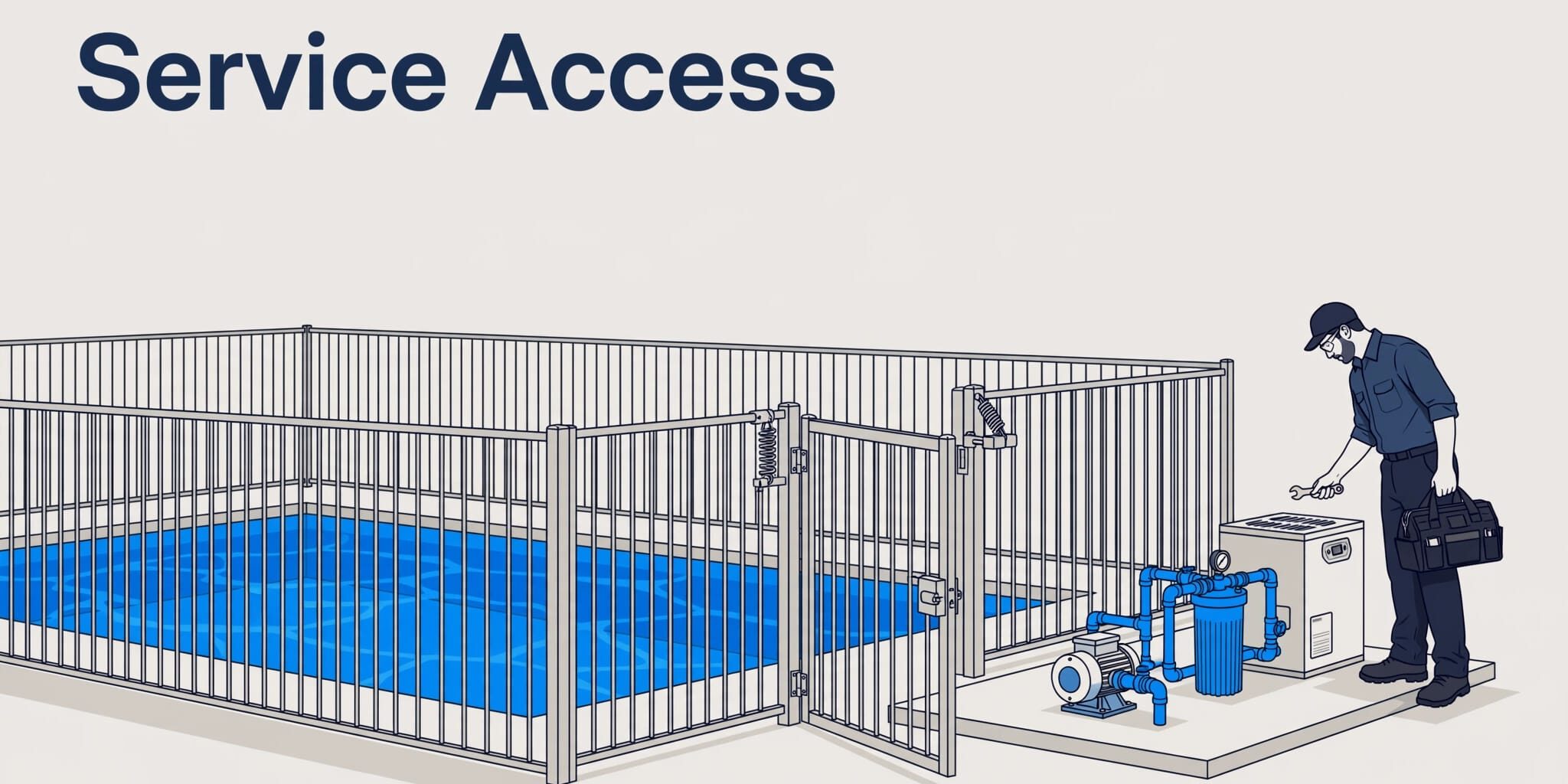
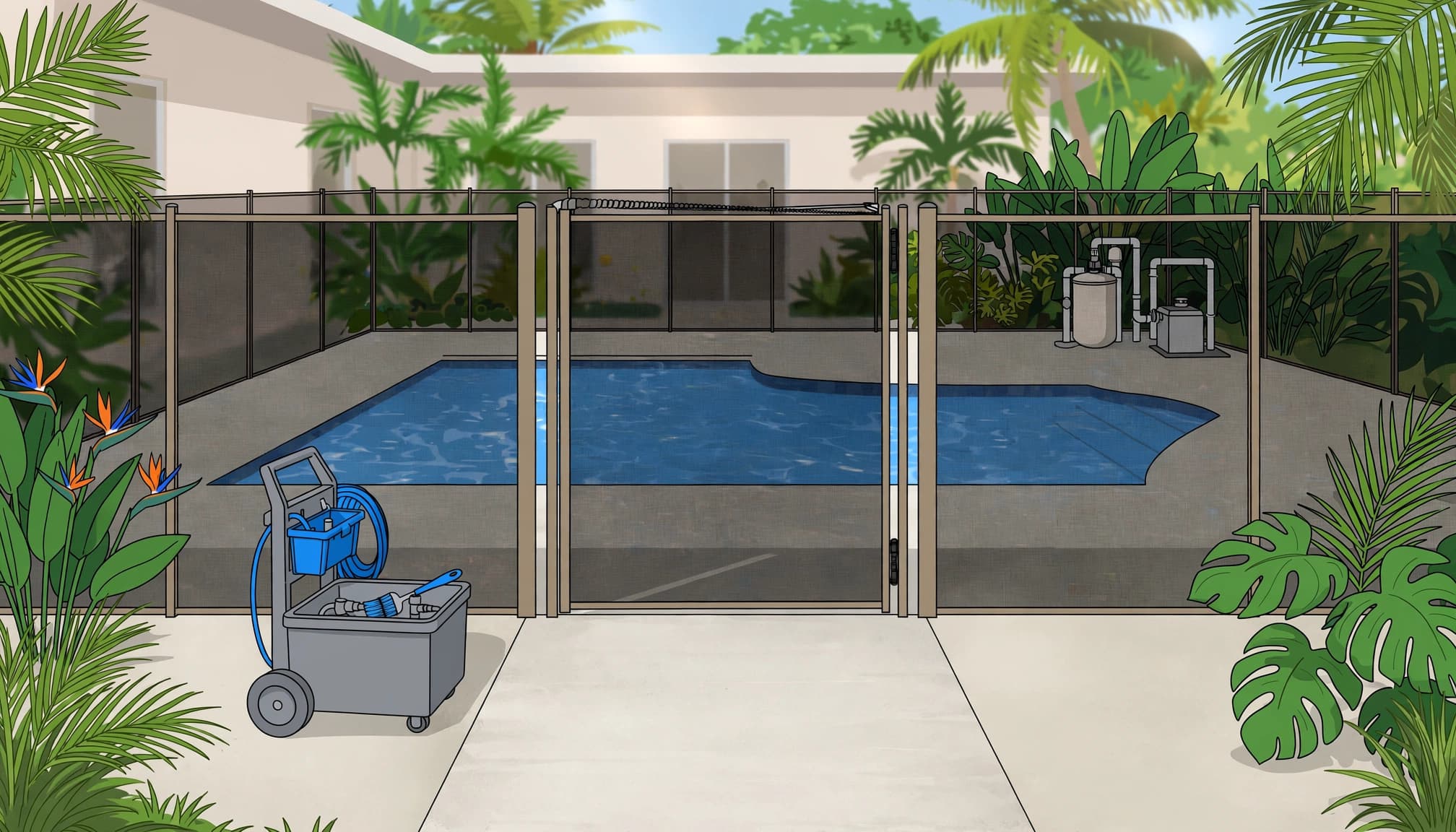
The best route usually starts outside the pool barrier. A technician should reach the equipment pad without walking through the pool area whenever the layout allows it.
That keeps routine service separate from family swimming space. It also means the gate gets less traffic, less wear, and fewer chances to stay open.
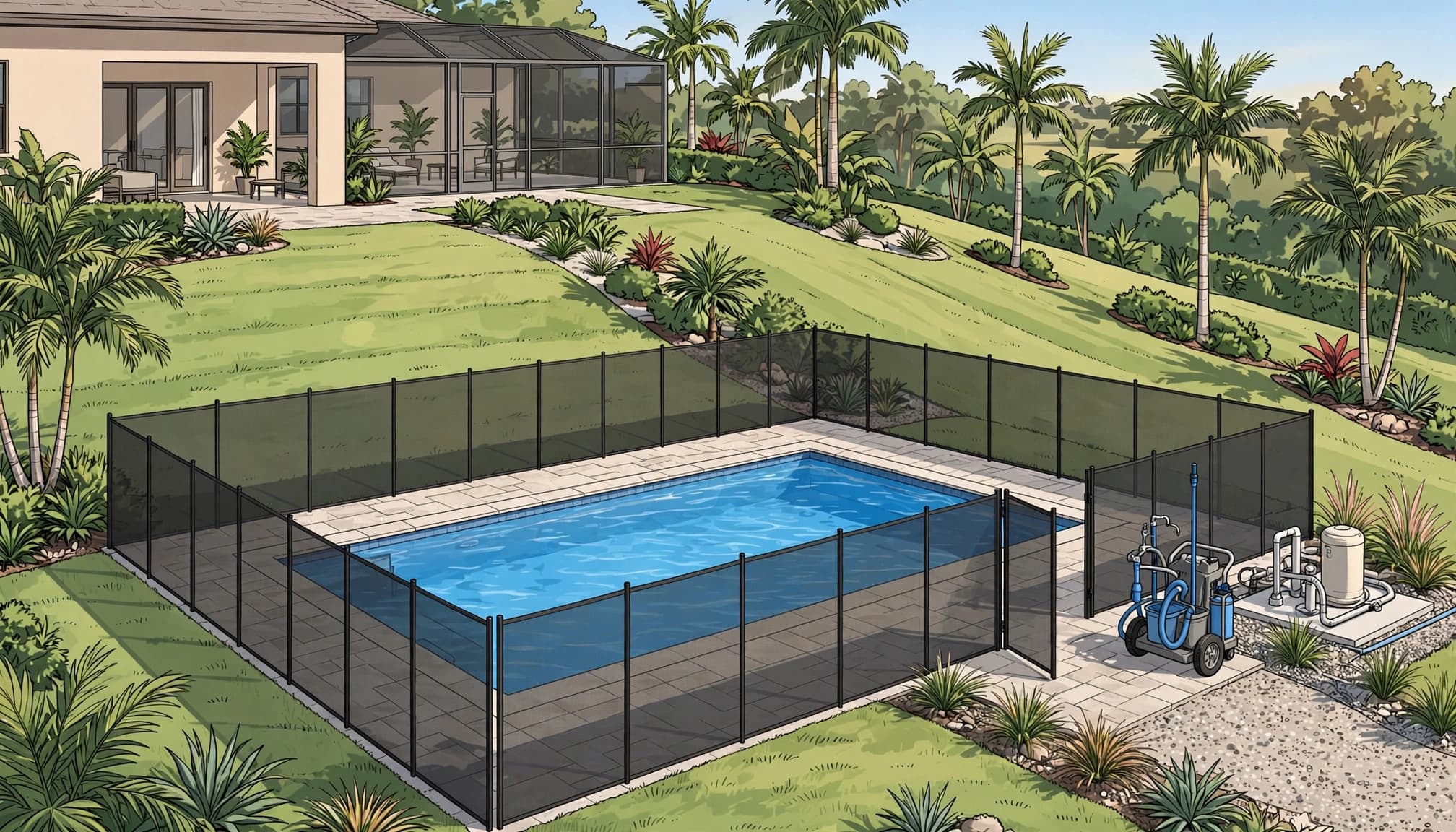
A four-sided pool fence gives families a stronger layer of access control. A backyard perimeter fence may block one direction, but it can leave easy access from the home, patio, or side yard.
Homeowners should map every regular service task before comparing pool barrier materials and fence layouts. That includes vacuuming, chemical delivery, filter cleaning, heater repairs, and landscaping near the equipment.
Aluminum pool fencing, for example, may require a different service-route discussion than a removable mesh fence. The access plan should come before choosing the final material.
Walk the job like a technician would
A clear path matters. The technician may carry a leaf net, hose, test kit, replacement filter, or small service cart.
Routine maintenance needs a clear walking route. Major repairs or replacement work may also require temporary staging space and a wider path.
The path should have room for normal movement without dragging equipment against fence panels. It should also avoid outdoor furniture, grills, planters, and pool toys.
Keep these objects away from the fence line to support a climb-resistant design. A gate placed directly beside a crowded seating area creates trouble fast.
A gate that opens into a clear walkway is easier to use and easier to check.
Confirm the Rules That Apply to the Property
A pool fence plan should start with the local building department. ISPSC barrier codes provide a helpful model, but cities and counties can adopt different rules.
Start with code, then check local amendments
ISPSC barrier codes commonly address barrier height and openings that could allow a 4-inch sphere to pass through. The applicable requirements can change with current local regulations.
Homeowners can review the 48-inch barrier and four-inch sphere baseline before discussing a layout with their installer. The minimum fence height and other details depend on the property’s jurisdiction, so confirm code compliance early.
Florida requires a barrier at least four feet high on the outside. Arizona homeowners often encounter five-foot barrier rules. California homeowners should check their city or county rules, because local amendments can differ.
For example, Fontana’s pool fencing requirements address the four-inch sphere test and gate operation. A nearby municipality may use different details.
Check the entire barrier, not only the mesh
The four-inch sphere test is simple. A rigid 4-inch ball shouldn’t pass through openings at panels, gates, or the ground line.
That means homeowners should inspect gaps between panels, below the fence, and around gate edges. Grade changes can create a larger bottom gap after installation.
Nearby items matter too. Chairs, coolers, storage boxes, grills, and low tree limbs can become climbing aids, so they should support a climb-resistant design. A fence can look great and still create an unsafe path over the top.
A pool barrier works as one system. Height, openings, ground clearance, gate hardware, and nearby furniture all matter for safety compliance.
Design the Service Gate Around Real Use
The service gate gets more use than most fence sections. It needs a practical location, but it must never become the weak point.
Choose a gate that closes without help
The gate should swing outward, away from the pool, and remain self-closing and self-latching after every entry.
The ISPSC gate requirements call for outward-opening pedestrian gates. Florida pool gate rules use the same basic approach, but local pool gate requirements may address other details, including latch height. Verify the applicable local requirement before installation.
Homeowners should test the gate from a full opening and a partial opening. A gate that sticks, drags, bounces open, or misses the latch needs attention right away.
A technician should never prop a pool gate open with a bucket, chair, hose, or cooler. That shortcut can leave the pool open to a child or pet.
Allow clearance for people and equipment
The gate needs enough room to swing fully without hitting furniture, landscaping, or equipment. A tight gate may look fine until a service cart or pool vacuum blocks it.
Routine service may only need ordinary walking clearance. Larger repairs, equipment replacement, or cart movement may require a wider gate, a longer approach, and a temporary staging area.
During pool fence installation, ask the installer to review the approach from the driveway to the equipment pad. Then ask where chemicals, tools, and carts will sit during a normal visit.
For a custom layout and a dependable self-closing gate, homeowners can Get a FREE Quote before work begins. A quick plan now can prevent a frustrating rebuild later.
Solve Slopes, Decks, and Tight Yard Layouts
Every backyard has its own challenges. Slopes, pavers, drains, screened patios, and narrow side yards can all change the fence route.
Plan for grade changes and deck surfaces
A sloped yard can create a bottom gap beneath a removable mesh fence, reducing the effectiveness of a child safety fence. The installer should measure the outside grade along the entire fence line, not just one corner.
Pavers, concrete, travertine, and textured decks each need a careful installation plan. The posts must hold securely, and the gate must still swing and latch correctly.
After heavy rain, homeowners should inspect the ground line again. Soil movement, standing water, or shifted pavers can change gate operation and bottom clearance.
Treat house doors as another access point
A house wall can form part of a barrier only when it meets all applicable local regulations. Sliding glass doors and patio doors can create direct pool access.
Florida law recognizes several approved safety features for new residential pools. The Florida residential pool barrier statute includes exit alarms, qualifying covers, pool alarms, and controlled door access.
An exit alarm under that statute must produce at least 85 dB A at 10 feet. Door alarms and other safety features don’t make supervision optional.
A removable mesh pool fence can give the water its own boundary. That is often helpful when doors, guests, pets, or grandkids create regular movement through the patio.
Run a Technician-Access Check Before Every Visit
A great installation still needs regular attention. Families should check the route after storms, landscaping work, deck repairs, or a hard impact.
Before a service visit, use this inspection checklist to confirm a clear path and a working gate:
- Remove toys, furniture, hoses, and planters from the gate swing area.
- Test the gate and confirm that it closes and latches from different opening positions.
- Check mesh panels, posts, and deck anchors for looseness or visible damage.
- Keep climbing aids away from the fence line.
- Confirm children and pets cannot reach the pool during the visit.
Larger repair or replacement work needs advance coordination, extra clearance, and a safe plan for staging equipment.
The CPSC residential pool barrier guidelines also recommend pool safety barriers with self-closing and self-latching gates. They offer a strong safety reference, but local rules control the final requirement.
If the gate fails, homeowners should keep children and pets away from the pool area to prevent unauthorized access. A verbal reminder isn’t a safety plan. Neither is a chair or other makeshift block placed in front of the opening.
Key Takeaways
- An inspection checklist confirms that pool fence access supports service work without weakening the barrier.
- A four-sided pool fence usually offers better separation than a property-line fence alone.
- The 48-inch height and four-inch sphere test are common benchmarks, not universal rules.
- Gates should open away from the pool and close and latch without help.
- Slopes, pavers, furniture, doors, and equipment pads all affect a safe fence layout.
- Local building officials should review the plan before installation or major changes.
Homeowners who want help with the layout can request a free pool fence estimate. A professional review can make the path safer for technicians and simpler for families.
Frequently Asked Questions
Can a service gate stay open during pool maintenance?
No. The technician should pass through, then let the gate close and latch. If frequent service requires open access, the layout needs another route or a better gate location.
Can a house wall or sliding door count as part of the barrier?
It may, but only when it meets applicable local rules. Doors, windows, alarms, locks, and access paths all need review before homeowners rely on the house as part of a pool barrier.
Can renters use a non-drilling removable mesh fence?
A non-drilling system may work on some decks or rental properties. The final design still needs secure placement, a reliable gate, and approval under local requirements.
What happens if the pool barrier does not meet code?
Penalties vary by city, county, permit process, and local enforcement rules. Homeowners should not assume a model code carries the same fine everywhere.
A Safer Route Is a Better Route
The best pool fence plan gives technicians a clear path and keeps the pool protected after they leave. It is practical, dependable, and built around real family life.
A self-closing, self-latching gate and a clear service route bring peace of mind back to the backyard.
Questions or ready to get started? Call us at (941) 500-9484