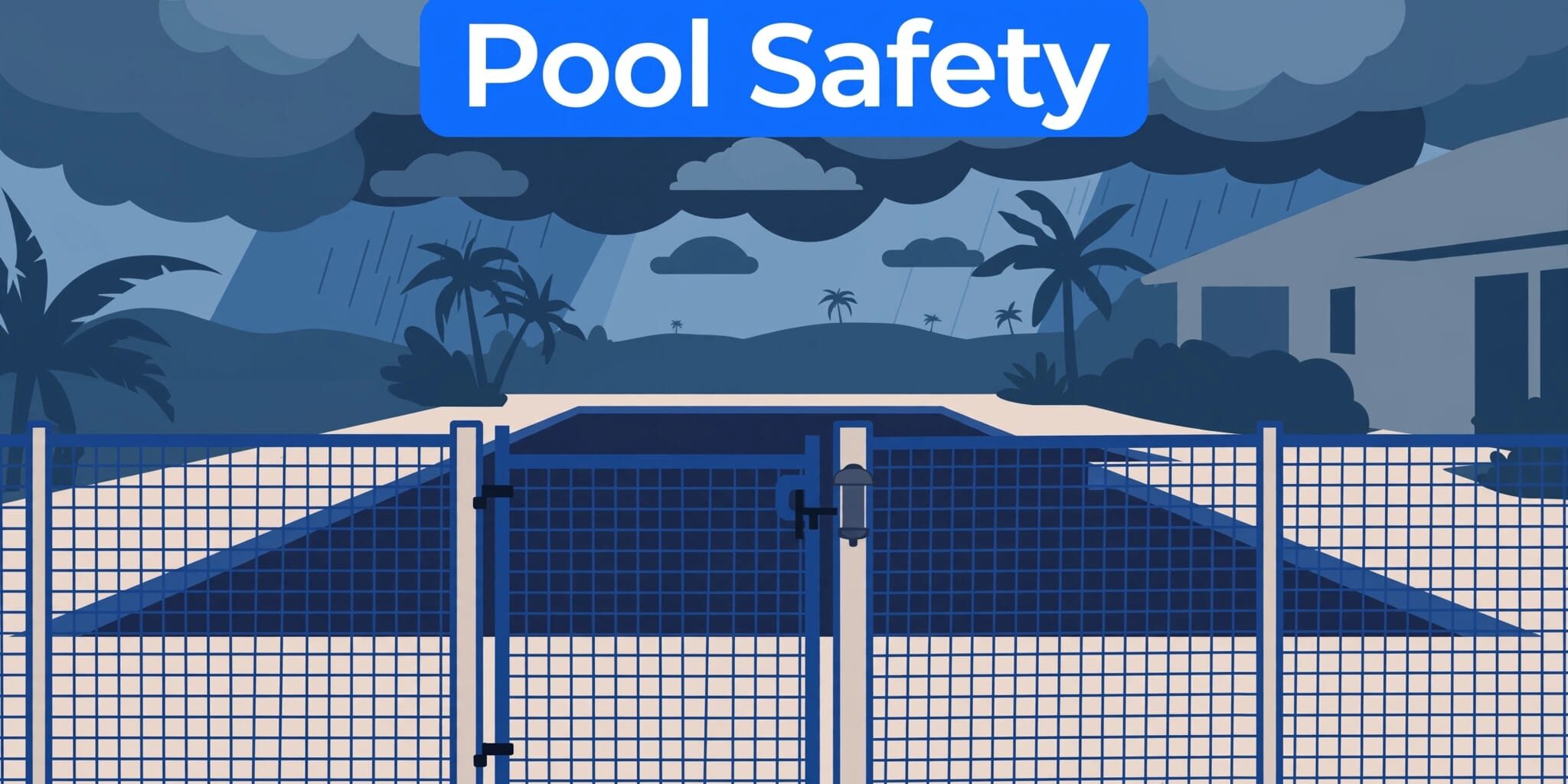
Pool safety during a Florida power outage starts by clearing the water and keeping everyone outside the barrier. An unlit pool doesn’t prove every electrical source is off.
Even small amounts of electricity can paralyze swimmers and cause drowning. Storm damage and poor visibility can increase electrical hazards and make supervision harder. A dependable plan puts people before equipment, starting with controlled access and a clear emergency response.
Key Takeaways
- Families should close the pool during an outage and keep children under adult supervision outside the pool barrier.
- Flickering lights, tingling, buzzing equipment, or repeated electrical trips require immediate attention before swimming resumes.
- Rescuers must not enter a pool that may be energized. Disconnect power only from safe locations, and call 911 for electrical emergencies.
A removable mesh fence helps limit unsupervised access. However, it doesn’t protect swimmers against electrical faults or lightning.
When the Power Fails, Close the Pool
An outage changes normal backyard routines. Families need a clear rule everyone understands: swimming stops while adults assess conditions safely.
Keep Children Away From the Water
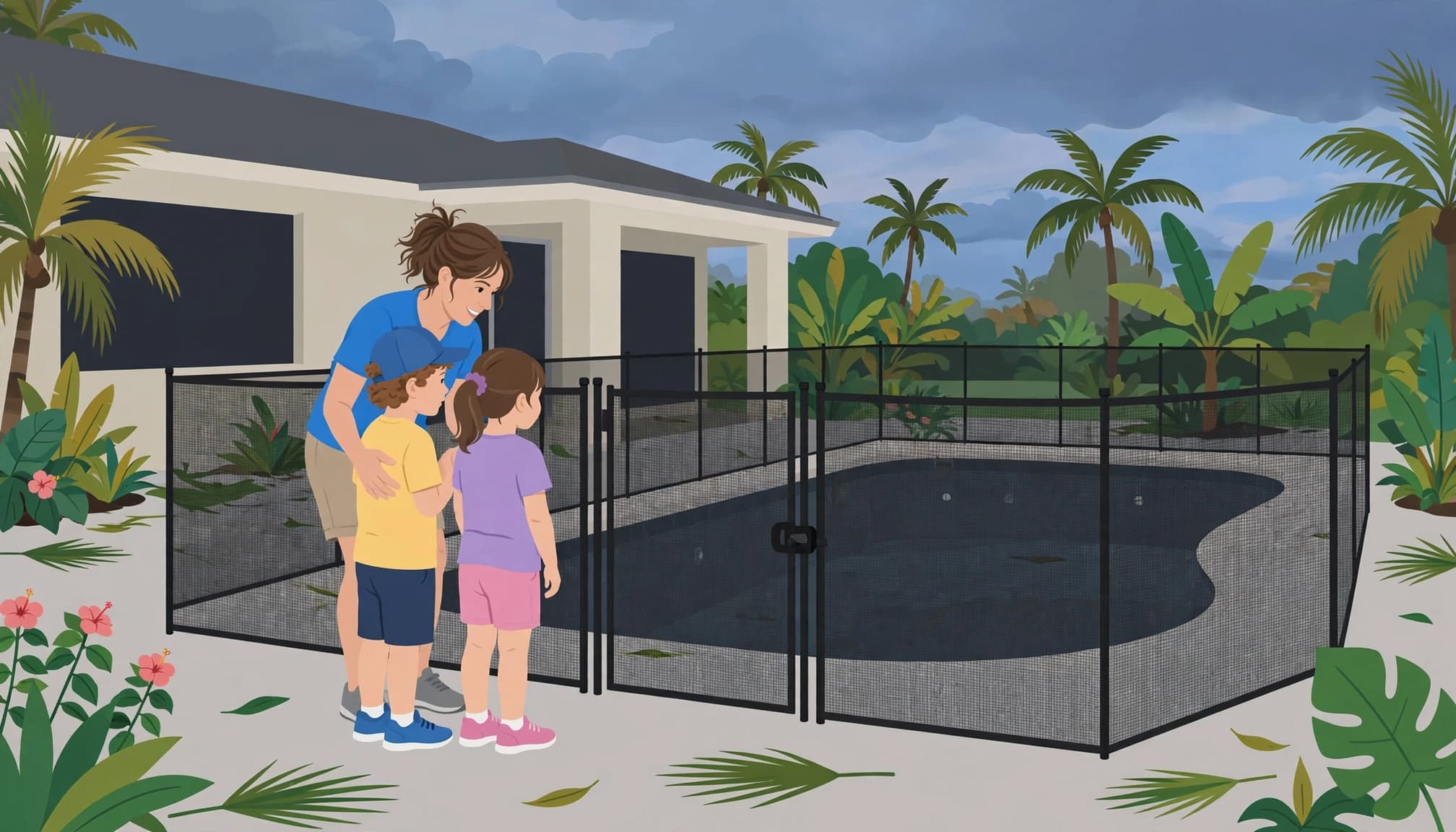
An adult should guide swimmers out promptly, then secure the pool gate. Children and pets should remain inside during storm conditions.
Battery-powered flashlights help adults move safely without running extension cords toward the pool. Flashlights don’t make nighttime swimming safe during an unresolved outage.
Supervise children and keep them away from the unlit pool. Storm preparation, phone calls, and household problems can pull adults’ attention elsewhere.
Treat Thunderstorms as a Separate Danger
Families shouldn’t swim as a thunderstorm approaches, during the storm, or immediately afterward. At the first thunder or lightning, everyone should enter a substantial enclosed building.
Everyone should wait at least 30 minutes after the last thunder before returning outdoors. A brief break in the rain doesn’t end the lightning risk.
Restored household electricity doesn’t clear electrical hazards. Keep the pool closed, stay clear of damaged or wet equipment, and have a qualified electrician assess warning signs before swimming resumes.
Electrical Protection Still Matters During an Outage
Wet skin and wet decks increase shock risk when water and electricity are present. Faulty underwater lights, pumps, heaters, outlets, and portable products can create dangerous conditions.
Know Which Circuits Have GFCI Protection
A ground fault circuit interrupter detects current escaping its intended path and quickly disconnects power. ESFI explains how GFCIs protect against electrical shock.
Protection can sit inside an outlet, circuit breaker, or equipment connection. Therefore, missing TEST and RESET buttons at an outlet don’t necessarily mean protection is absent.
CPSC recommendations cover pool pumps and heaters, outdoor receptacles, and receptacles within 20 feet of the pool’s edge. They also address underwater lighting above 15 volts.
GFCI protection also matters for lighting around swimming pools, hot tubs, and spas. A licensed electrician should identify protected circuits and label emergency controls.
Respect Failed Tests and Warning Signs
CPSC recommends monthly testing for permanently installed GFCIs, following manufacturer instructions. Portable and infrequently used devices need testing before each day’s use.
Testing belongs in safe, dry conditions. Nobody should handle electrical controls while standing in water.
A failed test or repeated trip requires professional diagnosis. Homeowners shouldn’t bypass protection or repeatedly reset a device to keep equipment running.
Flickering lights, strained filter equipment, buzzing, corrosion, and moisture inside fixtures also warrant attention. Periodic electrical inspections help identify needed repairs or upgrades before problems become emergencies.
Poolside Distances and Power-Line Precautions
Safety organizations publish different clearance recommendations. These guidelines provide context, but they don’t replace electrical requirements for a particular installation.
The following recommendations distinguish portable-product precautions from utility-line planning.
| Organization | Item or location | Recommended clearance |
|---|---|---|
| Eureka Fire Protection District | Electrical appliances, equipment, and cords | At least 6 feet from water |
| Safe Electricity | Plug-in appliances | At least 10 feet from the pool |
| Safe Electricity | Pools and decks near buried utility lines | At least 5 feet |
| Safe Electricity | Pools and decks near overhead utility lines | At least 25 feet |
For portable appliances, using the larger 10-foot separation avoids choosing the less protective recommendation. Battery-operated speakers and lights also reduce dependence on poolside cords.
However, battery-powered products don’t justify leaving chargers beside the pool. Charging connections and extension cords still require safe placement.
Safe Electricity also recommends GFCI protection for outlets within 20 feet of swimming pools. Permanent pool equipment needs an approved electrical installation, not relocation based on portable-appliance guidance.
An electrician should handle layout decisions involving buried or overhead utilities. Educational clearance figures aren’t a complete construction plan.
If Someone Feels Tingling or Suffers a Shock
Even a small electrical current can interfere with muscle control. As a result, a swimmer may lose the ability to stay afloat.
A Swimmer’s First Response
Tingling signals danger, even when the sensation seems mild. The swimmer should move toward a tingling-free area and exit immediately.
Nobody should use a metal ladder after suspected electrical shock. Metal conducts electricity and can worsen the exposure.
Other swimmers must stay out. A person struggling unexpectedly may face an electrical problem rather than ordinary fatigue.
A rescuer entering energized water can become another victim, even when the pool looks calm.
A Safe Rescue Starts Outside the Water
The emergency response should follow this order whenever safe shutdown is possible.
- An adult immediately uses safely accessible, dry controls to turn off power, without approaching wet or damaged equipment.
- Someone calls 911 and clearly reports a suspected electrical incident in the pool.
- Only after electrical isolation can a rescuer use a fiberglass shepherd’s hook to reach the person without entering.
- After safe removal, a rescuer places the person on their back on a firm, dry surface and checks breathing.
- If breathing isn’t normal, the rescuer starts CPR and follows dispatcher instructions for an AED.
For drowning, trained rescuers include rescue breaths. Nobody should touch a person who remains connected to an electrical source.
If shutdown isn’t safe, someone should call 911 immediately. With two adults, safe shutdown and the emergency call can happen together.
Generators and Waterfront Hazards Need Separate Precautions
Florida outages often affect more than the pool area. Therefore, families should include generators, docks, and nearby power lines in their safety plan.
Keep Generator Use Separate From Pool Activity
General Florida generator safety guidance addresses another serious outage hazard: carbon monoxide.
Fuel-powered generators belong outdoors, away from doors, windows, and vents. A garage remains unsafe even with its door open.
Homeowners must never connect a generator through a household outlet. Improper connections can send electricity into utility wiring and endanger workers.
CDC’s electrical hazard guidance warns against connecting generators to household circuits without approved protective equipment. A qualified electrician should handle permanent generator connections.
Generator availability doesn’t establish that a damaged pool area is safe.
Include Boats and Docks in the Plan
Boaters should maintain at least 10 feet between boats and nearby power lines. Masts, antennas, and other tall parts need that clearance too.
If a boat contacts a power line, occupants should remain aboard rather than jump into potentially energized water. Someone should call 911 immediately.
Boat wiring should follow American Boat and Yacht Council standards. Meanwhile, dock electrical systems need professional inspections annually and appropriate GFCI protection.
A household breaker cannot disconnect a fallen utility line. Emergency responders and the utility must handle that danger.
Keep the Barrier Dependable After the Storm
Once outdoor conditions allow safe access, adults should check for damaged fencing and debris before children return outside. Stay away from standing water near electrical equipment.
A removable mesh fence should remain complete and secure. Its gate should close and latch without help.
Storm debris can interfere with the gate or shift nearby objects into climbing positions. Keep furniture and equipment away from the barrier.
Loose posts, torn mesh, or a faulty latch need attention before families rely on the fence again. Don’t prop the gate open during cleanup.
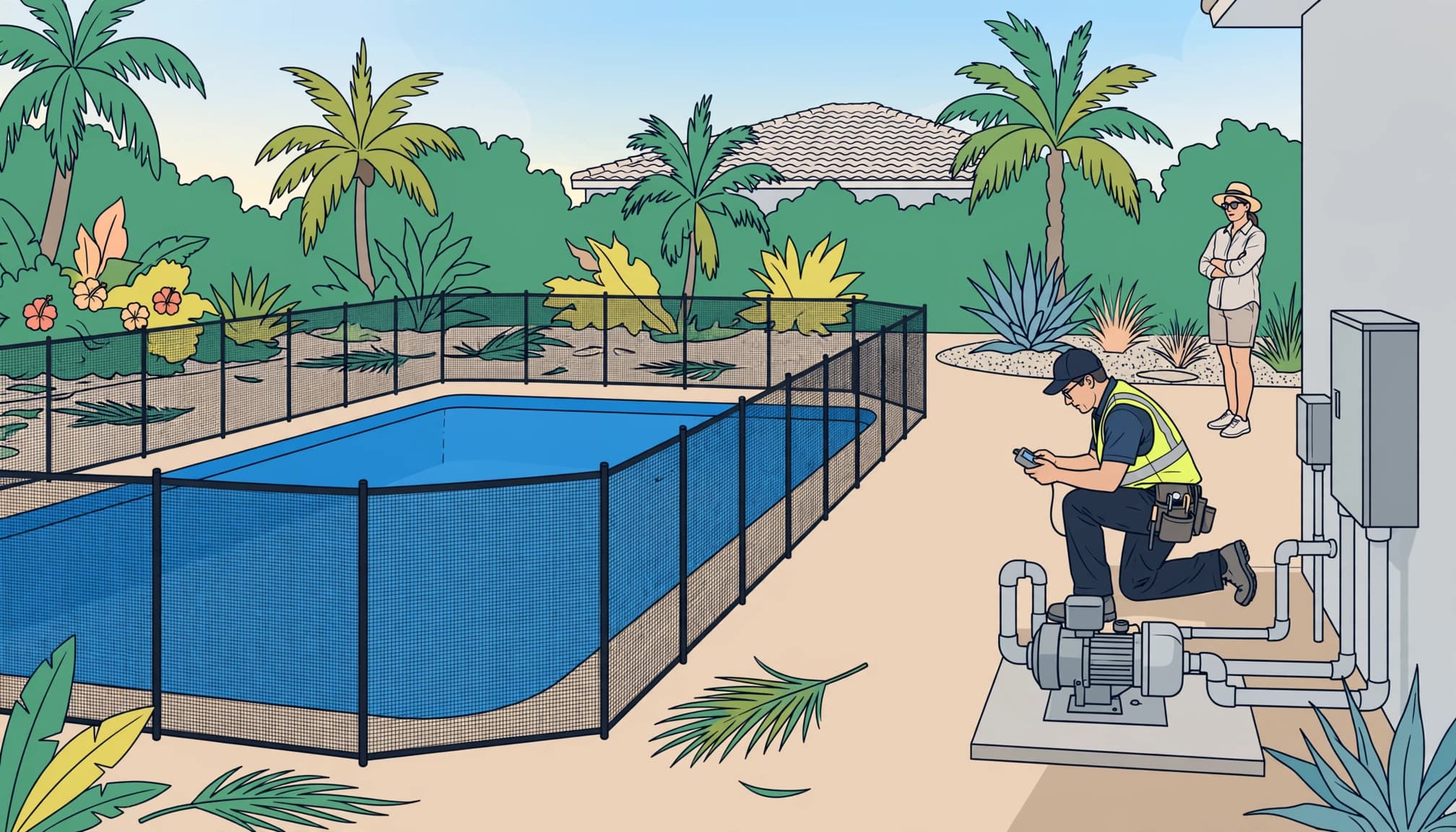
A barrier check addresses access control, not wiring, grounding, or equipment faults.
Electrical concerns require a qualified electrician.
Frequently Asked Questions
Does Clear Water Mean the Pool Is Safe During an Outage?
Clarity doesn’t reveal electrical faults. Likewise, silent pumps and dark lights don’t establish that every possible electrical source is disconnected.
The pool should remain closed while electrical hazards or storm conditions remain unresolved. Good visibility cannot replace working electrical protection.
Does a Mesh Fence Protect Against Electrical Shock?
A mesh fence helps restrict unsupervised pool access. It doesn’t disconnect electricity, stop lightning, or make damaged equipment safe.
Families need both access control and electrical safeguards. Adult supervision remains necessary alongside those protections.
Should Homeowners Reset a Breaker That Keeps Tripping?
Repeated trips require diagnosis, even when equipment runs after a reset. Moisture, damaged wiring, or equipment faults may explain the problem.
Homeowners shouldn’t bypass a protective device or repeatedly reset it. A licensed electrician should investigate before anyone relies on that circuit.
Keep the Pool Closed Until Hazards Pass
Dependable pool safety during a power outage starts with controlled access and respect for electrical danger. A secure mesh barrier supports that plan, while qualified electrical care addresses equipment hazards.
Questions or ready to get started? Call us at (941) 500-9484