Should a pool gate open in or out? A gate can look closed and still leave a family exposed. If it swings toward the water, a young child may push it open from outside. Good residential pool safety limits easy access and helps prevent child drownings.
The right pool gate swing direction gives the gate a safer default position. Requirements can vary by location, so the applicable local building code or authority having jurisdiction determines what applies. Direction, closing action, the latch, and the surrounding barrier must work together.
A safe gate needs more than strong hinges. It needs reliable closing action, a secure latch, and a barrier that stays hard for children to defeat.
Key Takeaways
- A residential pool gate should swing outward, away from the pool and toward the yard or patio.
- The gate must close and latch by itself every time; a gate that only closes is not enough.
- Keep the outward swing path clear of furniture, toys, equipment, landscaping, and other obstructions.
- Barrier height, openings, ground clearance, picket spacing, latch placement, and climbing hazards all affect pool safety.
- Local building codes and adopted model codes can vary, so verify requirements with the authority having jurisdiction before installing or changing a gate.
Pool Gate Swing Direction Should Always Lead Away From Water
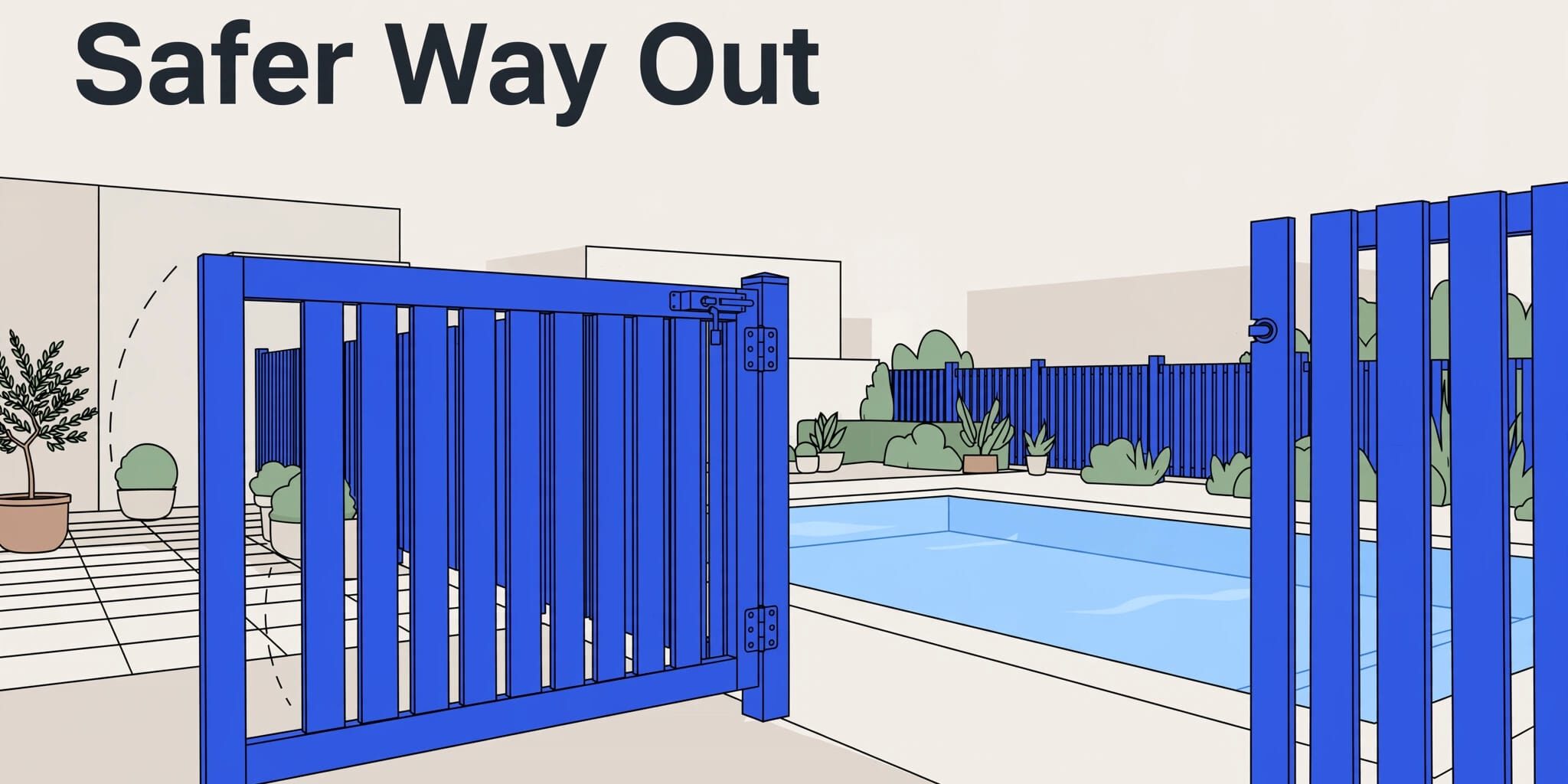
For a residential pool barrier, the gate should swing outward, away from the pool. It should open toward the yard or patio, not toward the water.
That design helps when a small child pushes against the gate. An outward-swinging gate doesn’t move directly into the pool area under that pressure. It doesn’t replace a secure latch, supervision, or a complete pool barrier.
Florida’s Residential Swimming Pool Safety Act requires pool access gates to open outward, away from the pool. Gates must also close and latch by themselves. The CPSC residential pool barrier guidelines support the same practical safety approach.
Pool gate requirements can vary by location. Verify the applicable local building code with the authority having jurisdiction before installing or changing a gate.

Why the direction matters so much
A pool gate is the one moving part in a safety barrier. That makes it the spot a child will notice first.
An inward-swinging gate can create a direct path toward the water. It may also interfere with pool deck furniture, pool equipment, or a narrow walkway.
An outward-swinging gate keeps the opening action on the safer side of the fence. It creates a small but meaningful extra layer between a child and the pool.
A latch can fail if a gate doesn’t close fully. A gate can close poorly if its swing direction fights the space around it.
Homeowners shouldn’t assume an existing gate swings correctly. A quick look at the hinges and open path can reveal a problem right away.
Florida Rules and Model Codes Aren’t Identical
Pool fence regulations depend on the home’s location and permit requirements. Florida law sets statewide rules, while the local building department may impose additional requirements.
Florida Statutes Section 515.29 calls for a pool safety barrier around the pool perimeter. The barrier must stand at least four feet high on the outside. Picket spacing and other openings can’t let a young child crawl under, squeeze through, or climb over it.
Florida focuses on child reach and access
Florida requires a self-closing gate with a self-latching mechanism. The latch release must sit on the pool side.
Florida uses a reach-based rule for gate latch height, with added conditions when the release sits below 54 inches. The release must remain positioned so a young child can’t reach it over the top or through an opening.
This rule addresses access, not only a single measurement.
A pool barrier needs separation from the yard. A backyard privacy fence may count only when it surrounds the pool itself and meets every applicable requirement.
How the ISPSC and ASTM F1908 fit in
The International Swimming Pool and Spa Code, or ISPSC, is a model swimming pool code. Cities and counties may adopt it, revise it, or use another code edition.
An adopted ISPSC can affect building code compliance, but it isn’t automatically enforceable everywhere. Without local adoption, its provisions remain guidance rather than requirements.
The ICC pool barrier provisions list a 48-inch minimum barrier height and detailed gate rules. That 48-inch example may differ by jurisdiction, permit, code edition, or adopted amendments. Latch-release measurements, opening limits, and other requirements may also vary.
ASTM F1908 is a safety guide for fences around residential pools and spas. It can inform product and installation standards, but it doesn’t automatically govern every property. The ISPSC supplies code language officials can enforce only when the jurisdiction adopts it.
For example, an adopted ISPSC provision may use a 54-inch gate latch height. Florida law also emphasizes whether a young child can reach the release, with added conditions for lower placements. Verify current requirements with that department or the authority having jurisdiction before installing the gate or scheduling an inspection.
Self-Closing Pool Gates Need More Than Strong Hinges
A self-closing pool gate should return to the closed position every time. It should not need a nudge or stop inches short of the latch. Closing by itself is not enough, because the latch must catch.
Quality spring hinges, paired with compatible closing components, are among the most reliable gate hardware solutions. Correct installation matters just as much.
The latch must catch every time
The latch should engage without force. If someone must lift the gate, push it harder, or pull it into place, the setup needs attention.
A gate can close without the latch fully catching. A child does not need much room to get through a pool gate. Even a small gap can turn into a dangerous opening.
The National Drowning Prevention Alliance’s pool fencing guidance also calls for self-closing and self-latching gates. Those two features work together. One without the other is not enough.
Homeowners should avoid makeshift hooks, rope ties, or temporary clips. They can block the latch or train adults to leave the gate unsecured.
A simple self-closing test
Use this short inspection checklist at home: open the gate a few inches and let go. Then repeat the test from halfway open and nearly fully open.
The gate should close, meet the frame, and latch each time. Listen for the latch click. Then gently pull on the gate without touching the release.
If it opens, the latch has not caught. If it drifts slowly or stops, the closer may need adjustment. A qualified professional can adjust the spring hinges’ tension and alignment without weakening the gate.

A homeowner should test the gate after storms, landscaping work, and heavy use. This takes seconds and brings real peace of mind.
Ground, Wind, and Space Can Change Gate Performance
A gate may work perfectly on installation day. Rain, shifting soil, or a new patio layout can change its opening path and closing performance.
Southwest Florida weather adds real concerns. Heavy rain can wash out soil, while wind can push against a gate. Patio surfaces may settle over time.
Slopes need a careful plan
A sloped yard can create too much clearance under a gate. A changed grade can also affect nearby picket spacing and cause the gate to scrape before it latches.
The installer should account for the slope before setting posts. The gate needs room to move freely, but not enough for a child to crawl beneath it.
A mesh pool fence may accommodate a custom layout around some pool decks. It still needs a stable, level gate landing, and every site requires its own assessment.
Wind should not decide whether the gate closes
A breeze should not hold the gate open. Spring hinges can lose closing tension when wind, settling, or alignment changes affect the gate.
Furniture, a grill, planter, toy bin, or narrow walkway can reduce gate swing clearance and block the outward swing path. Keep that area clear.
After a major storm, landscaping, or patio changes, recheck the gate for rubbing, sagging, or latch problems. Service any problem before relying on it, and verify altered conditions against the applicable local building code or authority having jurisdiction.
Barrier Details That Support a Safe Gate
The gate is only one part of a pool safety barrier. Its surrounding fence needs the same careful attention. A privacy fence counts only if it forms the required barrier and satisfies every applicable local rule.
The four-inch sphere test checks whether a child could fit through an opening. Openings, ground conditions, and adopted local rules determine whether it applies. If a four-inch ball passes through a gap, that opening may fail applicable pool barrier requirements.
Height, gaps, and picket spacing
Many codes include barrier height requirements calling for at least 48 inches. Measurements usually start from the side that faces away from the pool.
The ground clearance gap beneath a barrier needs close attention. It shouldn’t create a crawl-through opening. Picket spacing should stay narrow enough to stop a child from squeezing through.
Local requirements can vary. The pool barrier requirements used by regional code officials show how this test appears in inspection rules.
Homeowners shouldn’t rely on a tape measure alone. A pool safety inspector or code official may evaluate the gate, mesh, posts, and ground line as one system. An inspection checklist can cover barrier height, openings, picket spacing, gate operation, latch placement, and nearby climbing aids.
Keep the non-climbable zone clear
The non-climbable zone is the space near a barrier where children shouldn’t find a foothold. It sounds simple, but backyard items can defeat it fast.
Move these items away from the fence:
- Patio chairs, benches, and tables can become climbing aids.
- Planters, coolers, and storage boxes can give a child extra height.
- Low tree limbs and stacked pool toys can create an easy route over the barrier.
A transparent removable mesh fence helps adults keep an eye on the pool area. It also keeps the backyard view open. That combination feels good for families and stays practical.
Can a Wood Fence Work as a Pool Barrier?
A standard wood privacy fence can work only if it meets local pool barrier rules. Vinyl fence panels may also qualify, but no material automatically satisfies code. The barrier needs the right height, picket spacing, safe gaps, secure construction, and a compliant self-closing gate.
Many wood fences have horizontal rails on the yard side. That horizontal rail spacing can create easy climbing points. Gaps at the bottom may also grow as wood shifts or soil erodes.
A removable mesh pool fence creates a separate layer around the water. That closer barrier limits direct access from the home and yard. It also keeps pets away from the pool when adults step inside.
Planning pool fence installation involves the layout, permits, post locations, gate operation, and inspection requirements.
Confirm the materials, layout, gate operation, and permit requirements with the local building department or authority having jurisdiction.
Frequently Asked Questions
Which direction should a pool gate swing?
A residential pool gate should swing outward, away from the water. It should open toward the yard or patio rather than directly into the pool area.
Does a pool gate need to close and latch automatically?
Yes. A compliant pool gate generally needs to return to the closed position and latch without help every time. Test it from several opening positions and gently pull on it to confirm the latch has caught.
Can a wood or vinyl fence serve as a pool barrier?
It can, but only if it meets every applicable local pool barrier requirement. Height, openings, ground clearance, picket spacing, construction, and the gate all need to comply.
What can interfere with a pool gate’s swing?
Patio furniture, grills, planters, toys, pool equipment, narrow walkways, slopes, shifting soil, and wind can affect gate operation. Keep the outward swing path clear and recheck the gate after storms, landscaping, or patio changes.
Are pool gate requirements the same everywhere?
No. State law, local building codes, adopted model codes, permit requirements, and amendments can differ by location. Confirm the current requirements with the local building department or authority having jurisdiction.
A Safer Gate Starts With One Clear Direction
The safest pool gate opens outward, away from the water. The surrounding barrier should be difficult for a child to climb or pass through. Then the gate closes and latches every time.
Local requirements can vary by location, so verify them before relying on the barrier. A final review, including a compliance inspection, should be checked against the applicable local building code and authority having jurisdiction.
These safeguards offer more than code compliance. They bring peace of mind when little ones, pets, and guests are near the backyard pool.
Questions or ready to get started? Call us at (941) 500-9484