Above ground pools can look self-contained, but a ladder can turn them into an open invitation. For Florida homeowners, above ground pool barriers create a clear line between a busy yard and deep water.
The right barrier supports safer routines and informed permit conversations for residential pools. Florida law gives homeowners options, but every option has conditions. Details matter most around pool walls, ladders, decks, gates, and local review.
Why Pool Barriers Matter in Florida
Florida’s long outdoor season keeps backyards active and increases exposure to water hazards around residential pools. Children visit, grandchildren play, and pets move through outdoor spaces. A pool barrier helps separate those everyday activities from the water.
The CDC’s drowning facts state that drowning causes more deaths among children ages 1 to 4 than any other cause. Most accidental drownings in that age group happen in swimming pools, making toddler safety a year-round concern.
A barrier doesn’t replace adult supervision. It adds another layer when someone looks away, a gate fails to close, or a child wanders outside.
A pool wall can hold water safely, but a separate barrier controls who reaches the ladder.
Pool walls don’t control every access point
An above-ground pool may have a tall wall, but the ladder creates access. Nearby furniture can also help a child climb. Pool decks create even more entry points.
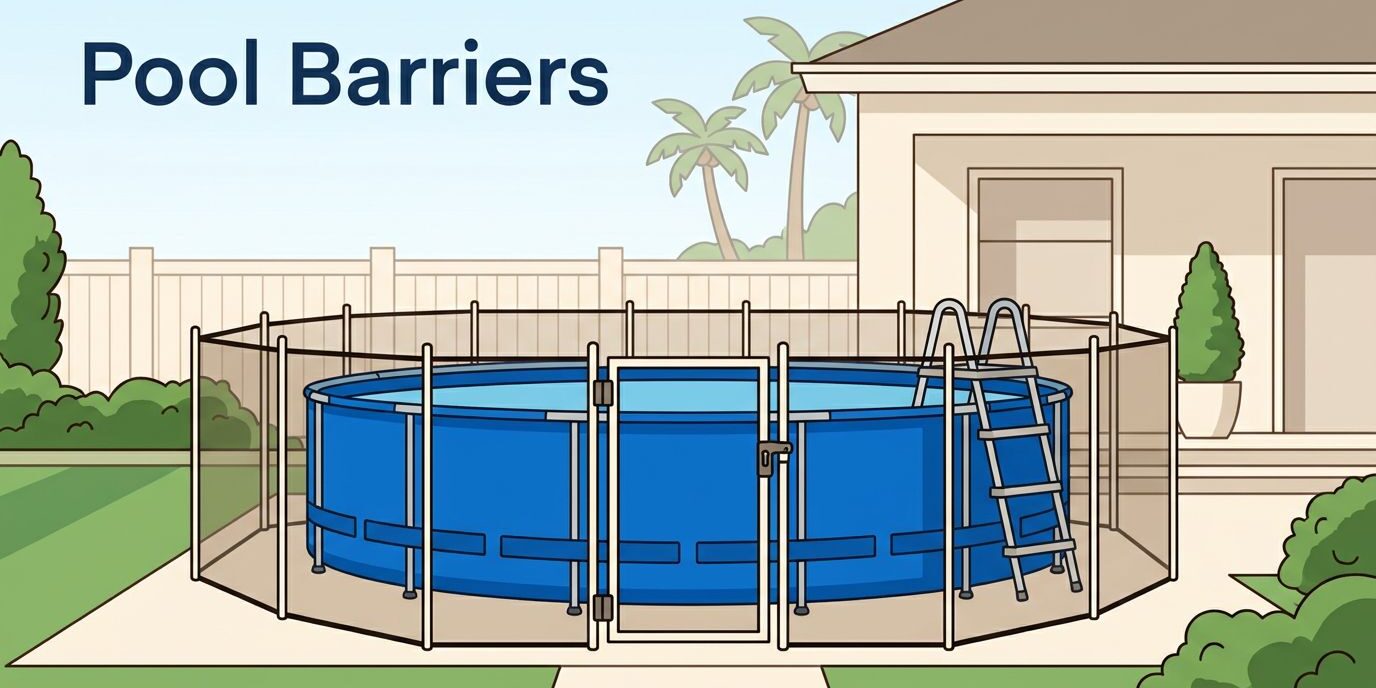
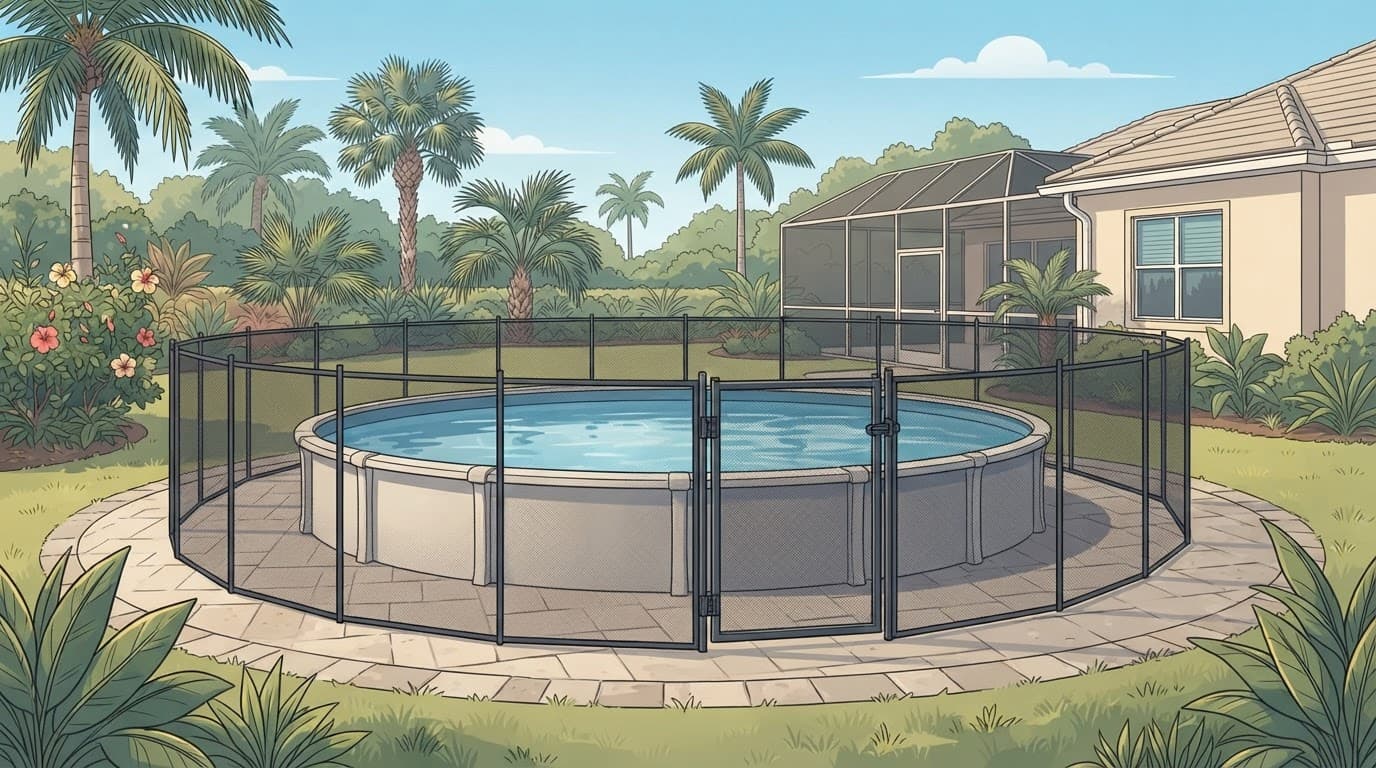
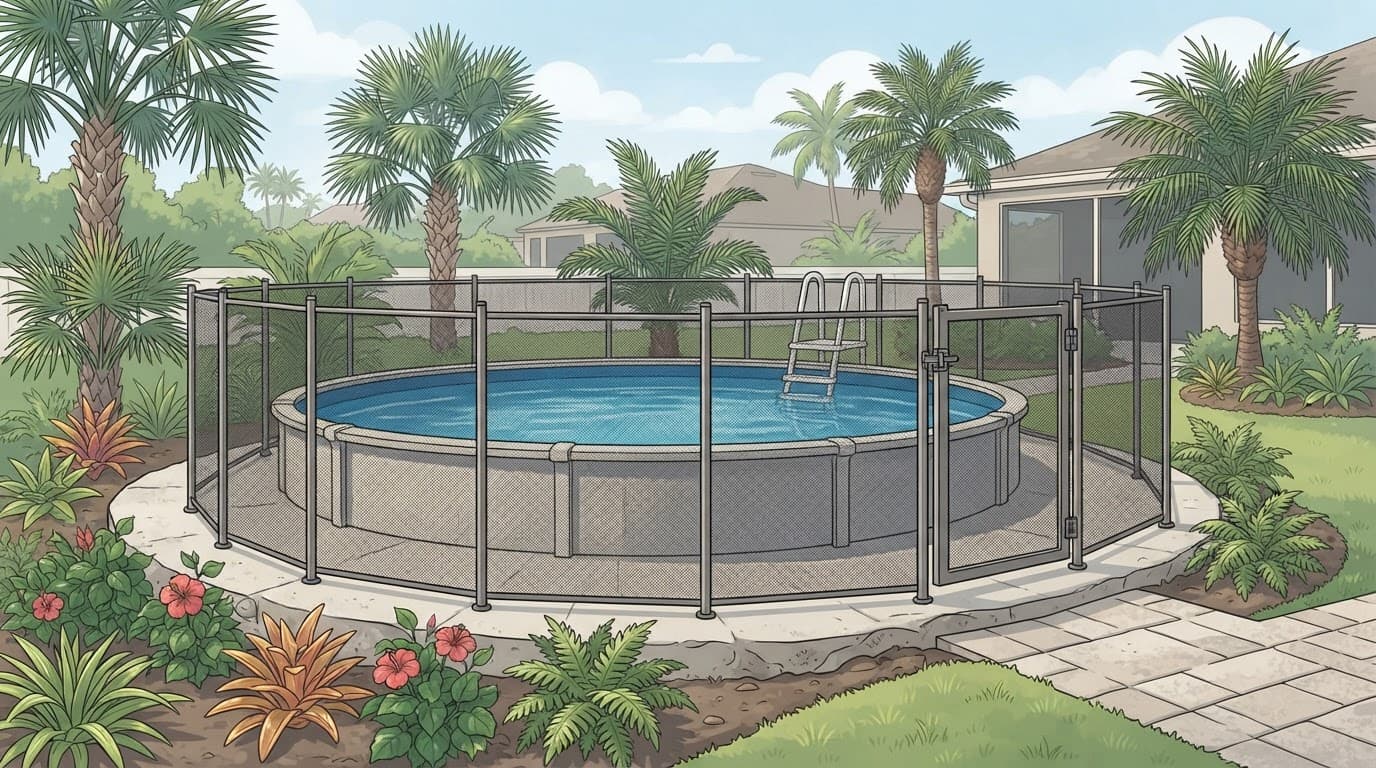
A removable mesh pool safety fence surrounds the water separately. It helps control access to the ladder, steps, and pool edge by keeping them inside a defined area. The open design also keeps the pool visible from the home.
A fence adds time during an emergency
A properly installed safety barrier slows unsupervised access. That extra time can make a serious difference.
The barrier should stay closed whenever the pool isn’t in use. Adults should also remove toys from the water and keep chairs away from the fence.
Do Florida Homeowners Legally Need a Pool Fence?
Florida’s pool barrier laws don’t require every above-ground installation to use a freestanding fence. For new residential pools, state law requires at least one approved safety measure before final inspection or a certificate of completion.
Options include a compliant pool enclosure as a physical safety barrier, an approved safety cover, alarms on doors and windows with direct pool access, or an approved pool alarm.
Self-closing, self-latching doors can also qualify under certain statutory conditions.
The Florida Statute Chapter 515 requirements explain Florida’s safety rules for home swimming pools.
The statewide rule has several safety options
Florida’s Residential Swimming Pool Safety Act focuses on preventing unsupervised access. It doesn’t say every new above-ground pool must use a freestanding fence.
However, a homeowner still needs a safety feature that meets the applicable requirements. A pool structure may count in some above-ground installations. The ladder or steps must then meet separate access rules.
A cover or alarm may satisfy one state option, but many families still choose a removable pool safety fence. It offers a physical boundary that adults can see and use every day. State compliance and insurance requirements are separate questions, so review your policy for any additional conditions.
Local building departments can apply additional requirements
Counties and cities handle permits and inspections. Local pool fence requirements may address gate operation, setbacks, pool decks, and barrier placement. The local municipality’s building department handles these details.
Miami-Dade’s official swimming pool permit guidance lists a 48-inch fence height measured from the outside grade.
Southwest Florida homeowners should contact the applicable building department before installation. Lee, Charlotte, Sarasota, and Collier County requirements may differ in practical details.
Can a 48-Inch Pool Wall Count as the Barrier?
Sometimes, yes. Florida law allows above ground pools to use their structure as the barrier. It also allows a barrier mounted on top of the pool structure.
That permission doesn’t make every setup compliant. The pool’s access method remains the deciding issue under applicable pool fence requirements.
The pool structure may qualify
A 48-inch pool wall can create a significant physical boundary. If the wall meets applicable code requirements, it may count as part of the safety barrier.
Homeowners should measure the wall from the correct side. Local code may measure barrier height from the grade outside the pool area.
The International Swimming Pool and Spa Code can inform building standards, but local officials make the final permitting decision under local building codes. Product instructions don’t override local code.
Ladders and steps change everything
Florida law requires ladders or steps for above-ground pools to be secured, locked, or removed. Otherwise, ladder access must sit inside a compliant barrier. A separate pool safety fence may enclose permanent ladders or steps unless local officials approve another solution.
A removable ladder can work well when adults take it away after swimming. A locking ladder can also limit access. Permanent ladder access needs a barrier around it unless local officials approve another solution.
Attached decks require extra attention. Deck stairs can give a child direct access to the pool area. A fence may need to enclose the deck, isolate the pool opening, or protect the stairs.
Florida Pool Fence Height and Gate Requirements
A safe barrier needs more than strong fabric or attractive posts. Its openings, gate, and position affect performance, while local pool fence requirements may guide the review.
Many Florida code reviews use a 48-inch minimum barrier height. Exact measurements and construction details depend on the adopted code and local authority.
Height and openings need careful checking
The barrier should block easy passage beneath, through, and over the fence. Small gaps near the ground can create problems, especially on sloped yards.
Homeowners should also check for climbable objects nearby. Planters, benches, storage bins, pool equipment, and toys shouldn’t sit against the barrier.
The fence line should fully separate the pool from the yard. A short section that leaves a path around the side doesn’t provide complete protection.
A self-closing gate must close every time
A pool gate should close and latch without help. This design gives the barrier a better chance of working after someone walks through.
Gate hardware should resist casual opening by a young child. Local rules may control latch height, swing direction, lock type, and opening size.
The 54-inch release height in Florida’s statute applies to one self-closing, self-latching door safety option. Homeowners shouldn’t automatically apply that number to every fence gate.
A professional installer can match the gate to local requirements. The gate should also remain easy for adults to use during normal pool activity.
Which Materials Work Best for Florida Pool Barriers?
Material choice affects visibility, maintenance, appearance, and permanence. It also affects how well the barrier fits the yard.
A material alone doesn’t guarantee compliance. The finished layout must meet local requirements.
Removable mesh keeps the yard open
Removable mesh is popular with Florida homeowners because it works as a pool safety fence without creating a solid wall. Adults can see the pool, gate, and children more easily.
The mesh can surround unusual pool shapes, work around nearby pool uprights, and fit narrow spaces. Professional installers can also place removable sleeves into concrete, pavers, or other approved surfaces.
Many homeowners like the option to remove fence sections when the pool area changes. A modular system can also remain in place during regular use.
A quality system should include durable mesh, secure posts, a reliable gate, and clear installation instructions. Homeowners should ask about UV exposure, weather resistance, rustproof materials, repairs, and the manufacturer’s warranty.
Vinyl, aluminum, and chain link each have tradeoffs
Vinyl construction creates privacy and a solid visual boundary. However, it can block views of the pool and take more space.
Aluminum fencing looks permanent and works well with many landscape designs. It usually costs more than basic removable mesh and cannot move easily after installation.
Chain link fencing offers strength and broad availability. Its appearance doesn’t suit every backyard, and its openings or top rail require a code review.
For many Southwest Florida homes, removable mesh offers the best balance of visibility, flexibility, and pool access control.
How Much Does a Removable Mesh Barrier Cost?
A realistic 2026 planning range for removable mesh in Southwest Florida is about $17 to $35 per linear foot installed. Straightforward layouts may fall below that range, while gates and difficult surfaces increase the price.
Round pool owners can use the table for an early estimate. The final fence line may differ from the pool’s circumference.
| Pool or fence layout | Approximate fence length | Installed planning range |
|---|---|---|
| 24-foot round pool | 75 linear feet | $1,275 to $2,625 |
| 30-foot round pool | 94 linear feet | $1,600 to $3,290 |
| 33-foot round pool | 104 linear feet | $1,770 to $3,640 |
| Typical larger layout | 150 linear feet | $2,550 to $5,250 |
Perimeter matters more than pool diameter
A 24-foot pool needs about 75 feet around its circular edge. A 30-foot pool needs about 94 feet.
The actual measurement can grow when the fence sits away from the pool wall. A ladder, pump, deck, walkway, or property feature can change the layout.
Homeowners should measure the proposed barrier line, not only the pool itself. An installer should provide the final linear-foot total before work begins.
Gates and difficult surfaces add cost
A self-closing gate may add roughly $75 to $350. Most projects need one gate, although large or divided spaces may need two.
Pavers, stone, uneven concrete, and difficult access can add around $1 to $15 per linear foot. A 100-foot project could therefore add $100 to $1,500.
A clear quote should list fence length, gate hardware, surface work, permits, and deck modifications. If applicable, it should list the base kit separately, including anchors, sleeves, or product-specific components.
Homeowners can Get a FREE Quote for a project-specific estimate.
Installing a Removable Mesh Pool Safety Fence on Uneven Ground
Florida yards aren’t always flat. A pool deck, pavers, tree roots, drainage areas, and settled soil can complicate the fence line.
Uneven yards require a planned fence line
A mesh barrier can follow many yard shapes, but the installer must control the bottom gap. Large spaces under the mesh defeat the purpose of the fence.
A sloped yard may need a stepped layout or carefully adjusted post spacing. Pavers may need different anchors than a solid concrete deck.
Homeowners should confirm the proposed fence line meets pool fence requirements before drilling. They should also mark irrigation lines and identify drains, electrical runs, and buried pool equipment.
The cleanest installation starts with a site visit. The installer can then confirm the fence path, gate location, surface, and ladder access.
The final inspection should include the whole system
The fence deserves a careful check after installation. A quick walk-through can catch issues before children or pets reach the pool.
- Gate hardware should let the gate close and latch reliably after a normal release.
- The mesh should stay tight without large gaps at the bottom.
- The ladder should lock, remove, or sit inside the fenced area.
- Pool toys and furniture should stay away from the barrier.
- The fence should receive another check after severe weather.
Homeowners should keep installation records, product information, permits, and inspection documents together in case insurance requirements call for them.
Insurance and Liability Questions for Pool Owners
A compliant barrier supports safer ownership, but it doesn’t guarantee coverage or an insurance discount. Insurance requirements vary by carrier, while Florida’s official safety statutes address barriers and inspections, not automatic insurance coverage.
Homeowners should ask their insurance carrier about its insurance requirements before installation and obtain those conditions in writing. The insurer may request photos, permit records, gate details, or proof of maintenance.
Insurance rules vary by policy
Some policies may require a fence, while others may accept a cover or alarm. The carrier’s written conditions matter more than a general internet checklist.
A missing barrier could raise serious questions after an accident. It may also affect renewal decisions or liability discussions, depending on the policy.
A licensed insurance professional can explain the home’s exact coverage. Homeowners shouldn’t assume that meeting one state safety option satisfies the insurer.
Barriers work best with daily habits
Adults still need to supervise children around water. The CDC’s drowning prevention guidance identifies pools as a common location for drownings among young children.
A strong routine includes a closed gate, secured ladder, working alarms, and clear supervision. Pets also need protection because they can slip through open gates or climb pool steps.
Southwest Florida homeowners ready to discuss a custom layout can request a pool safety fence estimate. A professional review can bring clarity before the first post goes into the ground.
Frequently Asked Questions
Does Florida require a separate fence for every above-ground pool?
No. Florida law allows several approved safety options, and an above-ground pool wall may count in some installations. The ladder, steps, deck, and local building requirements still need careful review.
Can a 48-inch pool wall serve as the barrier?
Sometimes, yes. The wall must meet applicable requirements, and the ladder or steps must be secured, removed, or enclosed by a compliant barrier.
What height should an above-ground pool barrier be?
Many Florida code reviews use a 48-inch minimum barrier height. Exact measurements depend on the adopted code, how height is measured, and the local building department’s requirements.
Does a pool fence gate need to close and latch automatically?
A pool gate should close and latch without help so it remains secure after someone passes through. Local rules may also address the gate’s swing direction, latch height, lock type, and opening size.
Is removable mesh a good choice for Florida homeowners?
Removable mesh offers visibility, flexibility, and access control around many above-ground pools. A quality system still needs secure posts, reliable gate hardware, proper installation, and a layout that meets local requirements.
Final Thoughts on Florida Pool Barriers
An above-ground pool wall may count under Florida law, but ladders, steps, decks, and local codes determine whether the setup qualifies. A removable mesh fence can provide a visible, flexible boundary around the water.
The safest setup combines a properly planned barrier, secured access points, and consistent supervision. Add a self-closing gate, and pool ownership feels easier, safer, and more comfortable for the whole family.