
A hurricane can turn a safe backyard into a dangerous area in a few hours. That’s why pool barrier hurricane preparation belongs on your early-season home checklist, alongside general swimming pool safety measures, rather than on the morning a storm is approaching.
I’ve learned that the best preparation is simple, practical, and done ahead of time. Check the mesh, test the gate, clear the pool deck of any loose items, and make sure your family knows the pool area is off-limits during and after the storm. These small steps bring a lot of peace of mind.
Key Takeaways
- Inspect mesh panels, anchors, posts, and gate hardware as part of your early storm preparation before the season begins.
- Keep the pool full or lower the water only modestly when local guidance calls for it.
- Move furniture, umbrellas, toys, planters, and loose equipment indoors.
- Turn off your pool equipment at the breaker before the storm arrives.
- Keep children and pets away until the pool area, electrical system, and barrier are safe.
Start Pool Barrier Hurricane Preparation Before the First Storm
Southwest Florida hurricane season begins June 1, but waiting until June to inspect your pool barrier can leave you rushing. I recommend starting your hurricane pool preparation while the weather is calm and you have time to repair or replace anything worn.
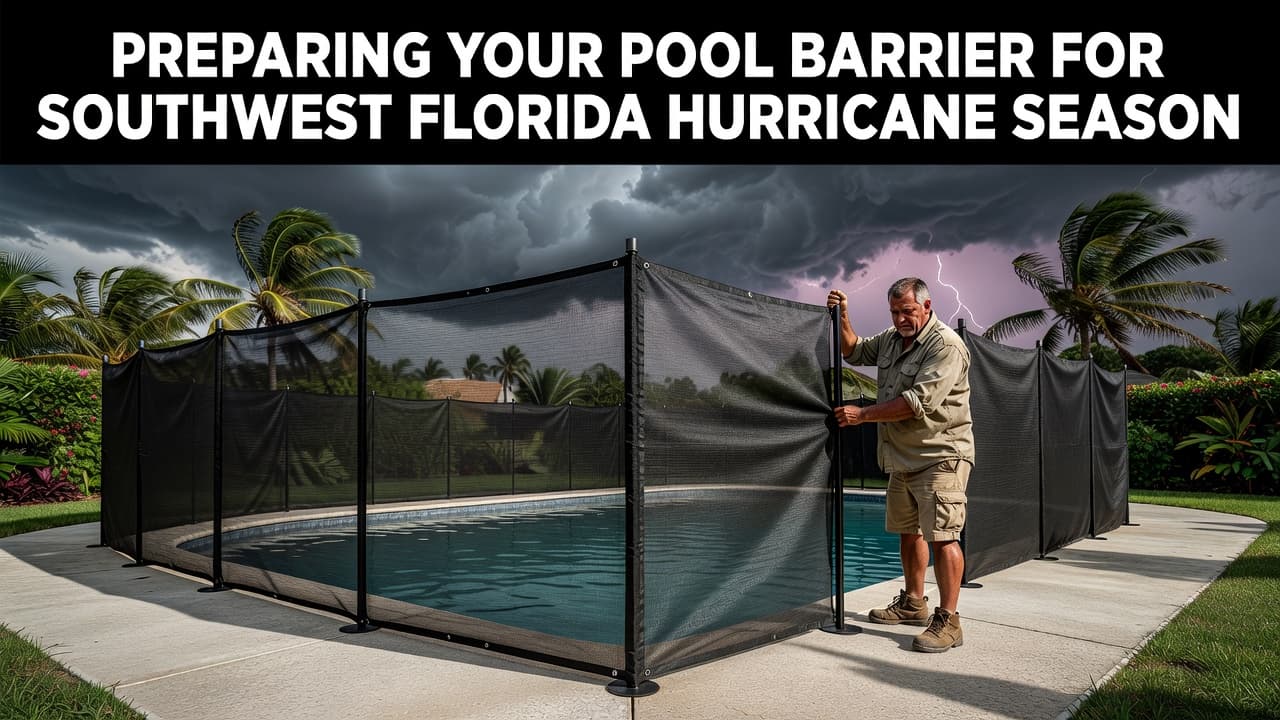
Walk the entire fence line. Look closely at each mesh panel, especially where your safety fence meets the deck. The mesh should stay secure, without tears, loose stitching, or areas pulling away from the posts. Check every anchor point for movement. A post that feels loose today may become a serious problem in heavy wind or flooding.
The pool deck needs attention too. Look for cracks, lifted areas, and loose sections around the anchors. If your pool deck has tile, inspect the grout around the anchor locations. Small cracks or gaps can let water collect around the hardware and weaken the installation over time.
The gate deserves its own inspection. Open it and let it close on its own. It should swing back into the closed position without dragging. Test the latch several times from different angles. A self-closing gate that does not latch every time needs attention before hurricane conditions arrive.
I also like to check the gate height and surrounding area as part of my storm preparation. A chair, planter, storage bin, or toy placed beside the fence can give a child a way to climb over. Move anything that could help a small child reach the top.
A pool barrier is only helpful when the gate closes, latches, and stays clear of climbing objects.
If you notice damage or want a licensed professional, you can contact our pool safety experts for guidance and a free estimate.
Check the Mesh, Posts, and Gate Hardware
A removable mesh safety fence is strong, but it still needs regular care. Southwest Florida weather brings strong sun, salt air, heavy rain, and sudden wind. All of that can affect outdoor materials.
Run your eyes over the mesh from top to bottom. Search for holes, frayed edges, stains that could hide damage, and sections that no longer sit evenly. Don’t pull hard on the mesh to test it. A visual inspection and a gentle check at the posts are safer.
The posts should remain upright and firmly seated. If one rocks when you touch it, stop using that section until it has been checked. Loose anchors in the pool deck may need professional attention, particularly if the concrete has cracked or shifted.
Pay attention to corners and turns. These areas often receive more tension than a straight section of fence. The same goes for the area near the gate, where regular opening and closing creates more movement.
Before a storm, remove decorative items attached to the fence. Take down hanging plants, lights, signs, and anything else that could catch wind. Keep the barrier clear so wind and debris have fewer things to strike.
A hurricane preparation check is also a good time to confirm the fence layout still works for your family. New furniture, a new grill, a playset, or a changed patio arrangement may have created an opening between the barrier and the house. The barrier should create a complete separation between children and the water.
Secure the Pool Deck and Surrounding Yard
Loose objects become flying objects during a hurricane. Pool furniture, patio furniture, umbrellas, floats, toys, planters, cleaning tools, and outdoor decorations all need to go inside a garage, shed, or secure storage area. If you use a pool cover, make sure to remove and store it along with your other loose items.
Do not place patio furniture inside the pool. Pool chemicals can damage furniture, and the furniture can damage the pool finish. It may also create more work when you need to clean the water after the storm.
Trim tree branches before the season becomes active. Remove dead limbs and cut back branches that hang over the pool cage or barrier. Southwest Florida yards often include palms, coconut trees, and heavy fruit. Those items can become dangerous debris in high winds.
If you have a screen enclosure, inspect the frame, fasteners, and panels. Damaged screens can tear quickly. Some local guidance recommends removing selected panels to allow wind to pass through, but the correct choice depends on the enclosure design and the storm forecast. Follow the enclosure manufacturer’s instructions or ask a qualified professional.
Keep the fence area open and easy to see. A clear view helps you notice damage, standing water, or a gate that has shifted. It also makes it easier to confirm that children and pets are not entering the area after the storm.
For general pool preparation, local advice often recommends removing loose items and avoiding decisions to drain the pool completely. A Southwest Florida hurricane pool checklist also stresses keeping the pool water at a safe level instead of emptying it.
Prepare the Water and Pool Equipment
Effective hurricane pool preparation involves caring for your water chemistry and machinery before severe weather strikes. You should not drain the pool before a hurricane, because an empty pool can face severe hydrostatic pressure from saturated ground, which may cause the shell to lift or pop out. Furthermore, rising groundwater pressure and a high water table can counteract the weight of the water, creating a serious risk of pool popping if you try to drain the pool entirely. Keeping the water in place gives the structure the necessary stability.
Proper pool water levels vary for every property, but many Florida recommendations call for lowering the pool water level only modestly, often around 6 to 18 inches, when heavy rainfall, storm surge, and overflow are concerns. Your pool professional can help you decide what fits your drainage, flood risk, and pool construction.
Before the storm, clean the pool and apply a shock treatment to sanitize the water according to the product directions. Heavy rain, leaves, dirt, and nearby flooding can contaminate the pool, so you should super chlorinate the water to protect your chemical balance and water chemistry. Extra chlorine gives the water a better starting point if the pump cannot run for a while. If you use a pool cover, make sure it is safely secured or stored so it does not blow away.
Remove leaves and debris from every skimmer basket and pump basket. Clear the area around the pool pump and filter system. Make sure the pool equipment pad is free of loose objects that could strike the system.
Turn off the pool pump, heater, lights, automation, chlorinator, and other pool equipment at the circuit breakers before the storm arrives. Don’t wait until lightning is overhead. If you have a saltwater system, turn off the salt chlorine generator as directed by the manufacturer at the main circuit breakers.
Do not disconnect plumbing or remove equipment unless a qualified professional tells you to do so. If flooding is expected, avoid touching electrical equipment in standing water, and never operate electrical equipment while standing in water. Your safety comes first.
Keep Children and Pets Away During the Storm
A pool barrier is one layer of protection. It is not permission to enter the pool area during a hurricane.
Stay away from the pool during the storm because of lightning, flying debris, downed lines, broken screens, and slippery surfaces. Review the Florida pool lightning safety rules before storm season, including when to clear the water and when it is safe to return. Keep children and pets inside, even if the storm briefly becomes calm. Wind conditions can change quickly.
After the storm, check the yard from a safe distance. Look for downed power lines, broken branches, damaged fencing, standing water, and shifted deck materials. Do not walk through water near electrical equipment.
Inspect the pool barrier before opening the gate. Check every panel and post again. Look at the gate hinges, latch, and surrounding deck. If the gate is bent, the latch does not catch, or any post has pulled loose, keep the pool area closed.
Children should not approach the pool while adults are cleaning up. A damaged barrier can look secure from a distance. Pets can also step on sharp debris or enter through an opening that was not there before the storm.
Once the area is safe, handle debris removal by clearing large branches and other items by hand before restarting your pool pump. Never put your hands near a drain or suction fitting. If the pump, wiring, heater, or filter appears damaged, leave the equipment off until it has been inspected.
Know When to Repair or Replace the Barrier
Some hurricane damage is easy to see. A torn panel, broken post, bent gate, or missing anchor needs attention right away. Other problems are less obvious. A post may look straight while the deck around it has cracked. A latch may close but fail to hold securely.
Don’t patch a safety fence with household tape, wire, rope, or a temporary tie. These fixes may change how the barrier works and can create a false sense of security. Use the manufacturer’s repair instructions or have the swimming pool safety checked by a licensed professional.
Replacement may be the better choice when the mesh has repeated tears, the posts no longer sit firmly, or the gate hardware has been damaged more than once. A properly fitted safety fence should match the pool shape and leave no easy passage around equipment, steps, or landscaping.
I prefer handling these decisions before a storm is named. It gives you time to choose the right fence height, gate position, and layout without making a rushed decision. A professional installation can also confirm that the barrier fits the deck and works with the way your family uses the yard.
If you’re ready to review your options, Get a FREE Quote for a pool safety fence installation.
Frequently Asked Questions
Should I drain my pool completely before a hurricane?
No, you should never drain your pool completely before a storm. An empty pool shell can be pushed out of the ground by extreme hydrostatic pressure from saturated soil. Keeping the water in the pool provides the necessary weight and structural stability.
When should I start my pool barrier hurricane preparation?
You should begin inspecting and preparing your pool barrier well before hurricane season starts on June 1. Taking care of inspections and repairs while the weather is calm ensures you will not be rushed when a storm approaches.
What should I do with my pool equipment before the storm arrives?
You must turn off all pool equipment—including the pump, heater, lights, and automated systems—at the circuit breakers before the storm hits. This protects the electrical components from power surges, lightning, and potential water damage.
Conclusion
Good pool barrier hurricane preparation starts with a calm-weather inspection. Check the mesh, anchors, posts, and self-closing gate. Clear the deck, protect the equipment, keep the pool at a safe level, and turn off power before the storm arrives.
Afterward, take your time. Check for electrical hazards and barrier damage before anyone enters the pool area. Proper storm preparation involving a few careful minutes before and after a hurricane can protect your home, your pool, and the children and pets who depend on you.