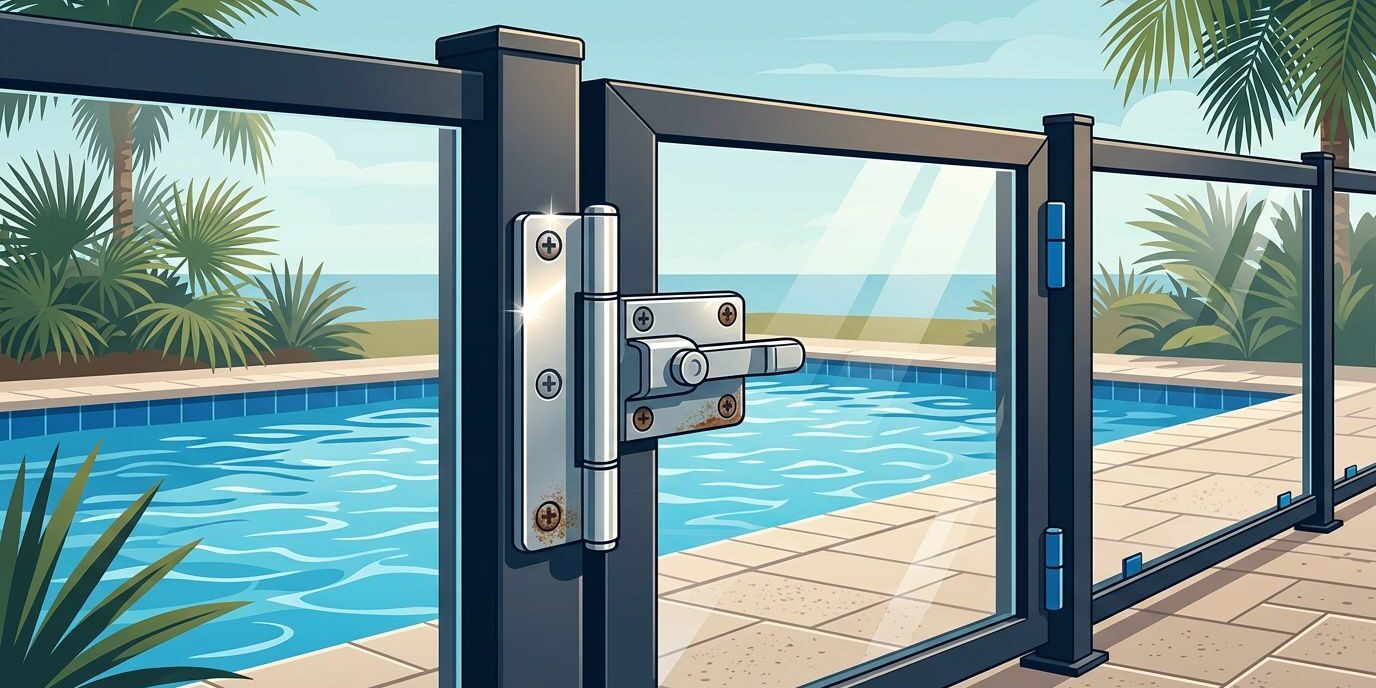
Salt air pool hardware can corrode fast in Southwest Florida. Learn which parts fail first and how to protect your pool gate.
In Southwest Florida, coastal air takes a toll on outdoor metal, including swimming pool equipment and the small components that help keep a pool barrier secure. Gulf breezes, high humidity, pool chemicals, and daily sunlight can gradually weaken these parts.
I tell homeowners not to wait until a gate stops closing. A few simple checks and the right hardware can protect your family, your pool, and your peace of mind. First, it helps to understand what salt air is doing to the barrier.
Key Takeaways
- Salt air, humidity, pool chemicals, and sunlight can corrode pool gate hinges, latches, screws, fasteners, and deck connections in Southwest Florida.
- Self-closing and self-latching gate hardware deserves close attention because corrosion or misalignment can leave the pool barrier open or unreliable.
- Marine-grade materials such as 316 stainless steel generally handle chloride exposure better than 304, but every material still needs regular rinsing and inspection.
- Monthly gate tests, fresh-water rinsing, balanced pool chemistry, and storm inspections can help catch corrosion before it becomes a safety issue.
- Replace weakened or deeply pitted hardware with compatible coastal-rated parts, and use professional installation when alignment or deck connections are involved.
How salt air pool hardware starts to break down
Salt air carries chloride particles that settle on metal surfaces. In coastal neighborhoods around Fort Myers, Cape Coral, Naples, Sarasota, and nearby waterfront areas, those particles can remain on hinges, screws, latches, and deck hardware for hours, creating the conditions for salt air corrosion.
Humidity makes the problem worse. Instead of staying dry, the salt residue mixes with moisture and creates a thin corrosive film. The damage may start as a small discoloration, but it can turn into pitting, rust stains, loose fasteners, or a gate that no longer moves properly.
A saltwater pool can add another source of exposure. Saltwater pool systems use lower salt levels than seawater, but splashing and evaporation can still leave mineral residue around the equipment. Water chemistry also plays a role, since imbalanced chemicals, moisture, and coastal air can accelerate corrosion around hardware and swimming pool equipment.
The first signs are easy to miss. A hinge may feel slightly stiff. A latch may need an extra push. A screw head may show brown spotting. Aluminum posts can develop a white, chalky buildup, while stainless steel parts may show tiny dark pits.
Coastal pool owners face the same issue with other outdoor metal parts. This overview of salt-air pool challenges discusses why marine-grade materials often last longer in a harsh marine environment, though they can cost more at installation.
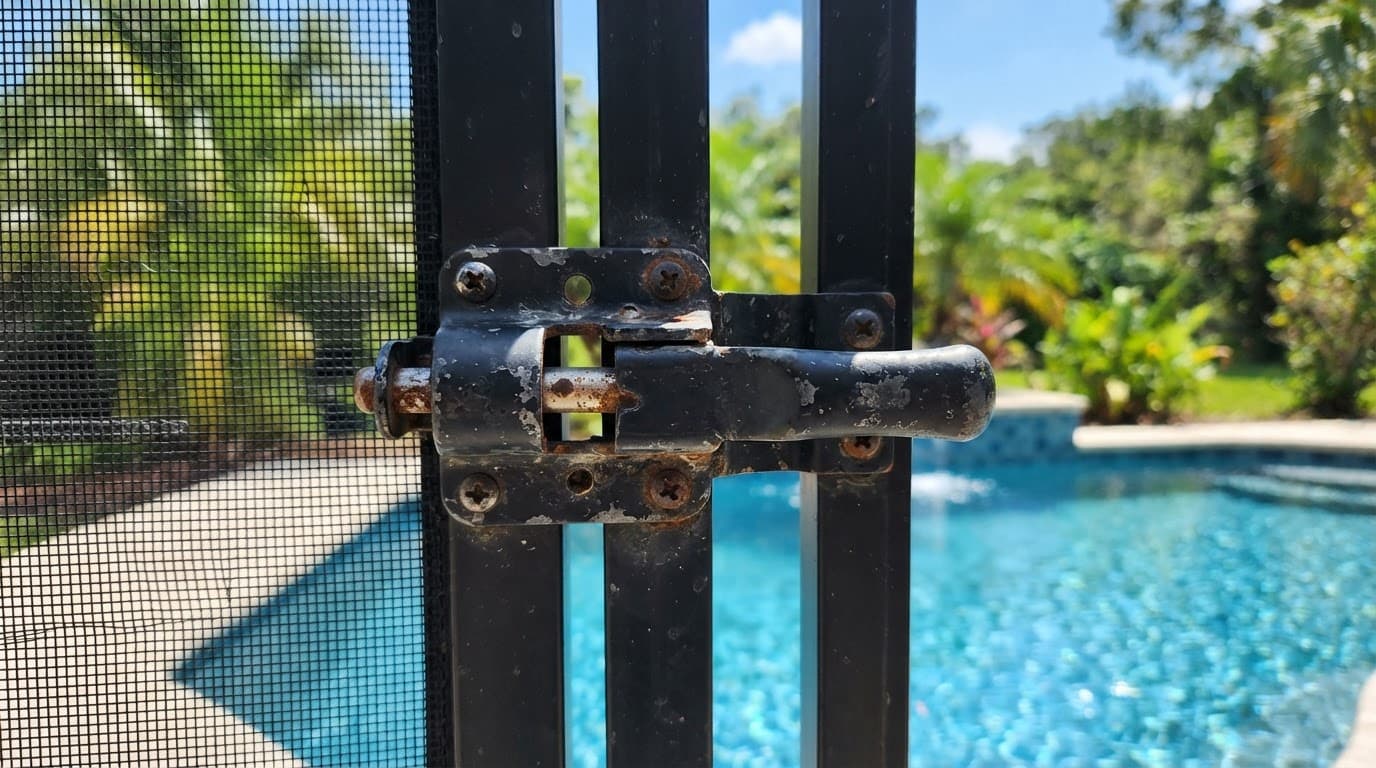
A pool gate latch needs to move smoothly and close securely, even after years of coastal exposure.
Which pool barrier parts need the closest watch
The gate usually deserves the most attention because it has moving parts and is used every day. A stationary fence post may show surface wear, but a gate can become a safety concern when corrosion affects alignment, closing, or latching.
The parts I check first include:
- Hinges, because salt buildup and rust can make the gate drag or stop swinging freely.
- Self-closing mechanisms, because a weak spring or damaged hinge can leave the gate open.
- Self-latching hardware, because a latch that sticks or misses the catch cannot protect the opening.
- Screws and fasteners, because corrosion can make them loose, brittle, or difficult to remove.
- Deck anchors and brackets, because movement around the post can create an unstable section of fence.
The self-closing and self-latching gate is especially important for families with young children, visiting grandchildren, or pets. The gate should close without help and latch every time. If you have to lift, pull, or push it into place, something needs attention.
Posts and fence fittings can also suffer from galvanic corrosion. This happens when different metals touch while moisture and salt are present. For example, a fastener made from one metal may react with an aluminum post or bracket. The connection can weaken even when the visible damage looks minor.
Stainless steel is not all the same. Many homeowners hear “stainless” and assume it cannot rust. That isn’t true. 316 stainless steel hardware generally handles chloride exposure better than 304 because it contains molybdenum, making it one of the more reliable options among corrosion-resistant alloys. Even 316 hardware can stain or pit in harsh conditions if salt residue remains on it.
When corrosion has already weakened a hinge, latch, or fastener, using compatible replacement parts is important. In some pool systems, a sacrificial anode can also help protect connected metal components, but it should be selected and maintained according to the system manufacturer’s recommendations.
The same basic problem affects other coastal hardware. This Florida salt-air corrosion guide explains why outdoor metal components near the coast can require better materials and regular care.
Choosing hardware for a Southwest Florida pool fence
The best barrier is not only strong on installation day. It also needs hardware that fits the local conditions and continues to work after months of rain, heat, and coastal air.
When I discuss a pool fence with a homeowner, I focus on the complete system. The mesh gets most of the attention because it is easy to see, but the gate hinges, latch, posts, and deck connections do much of the daily work. Coastal pool builders also recommend choosing durable pool supplies and salt air pool hardware that can handle Southwest Florida conditions.
Black mesh pool fencing is popular because it gives a clean view of the pool area while creating a removable barrier around the pool. A proper installation should surround the pool on all sides, with a gate positioned for safe access. The gate hardware must match the fence design and deck surface, whether the barrier is installed around an in-ground pool or above ground pools.
Ask what materials are used for the hardware. Good questions include:
- Is the latch designed for outdoor coastal use?
- Are the screws and brackets rated for regular moisture exposure?
- How will the posts be secured to the deck?
- Can worn gate parts be replaced without rebuilding the entire fence?
- What workmanship and manufacturer warranties are included?
I also recommend looking at the gate in person before choosing a fence. Open it. Let it close. Check whether the latch catches without assistance. A gate can look attractive in a photo and still feel flimsy or poorly aligned.
The installation matters as much as the material. A high-quality hinge will not perform well if the gate is installed out of square. A strong post can still loosen if the deck connection is not drilled and secured correctly. In Southwest Florida, professional installation gives you a better chance of catching these details before they become a problem.
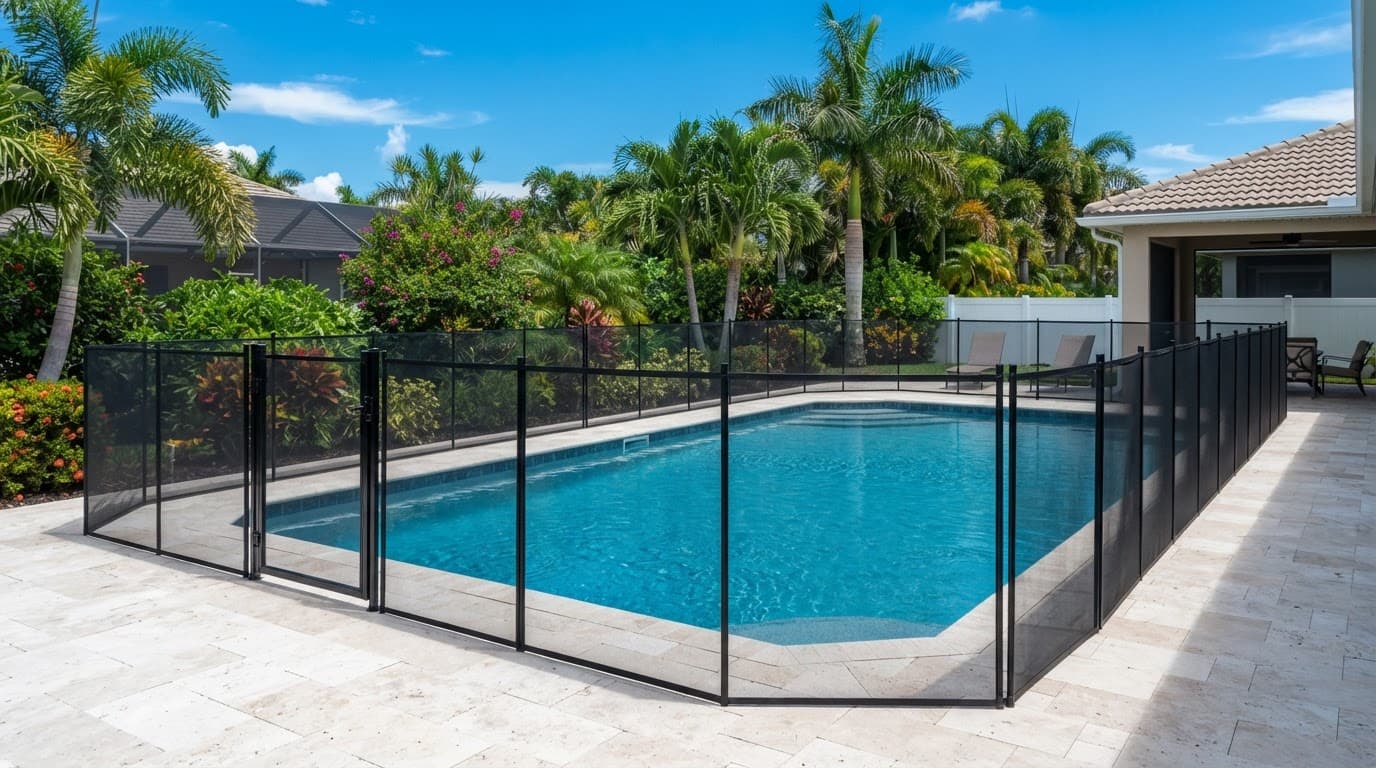
An all-around black mesh pool fence creates a clear safety boundary while the gate provides controlled access.
Simple maintenance that helps prevent corrosion
Pool maintenance doesn’t need to take all afternoon. I like to keep it simple and consistent, with a quick focus on the barrier, nearby swimming pool equipment, and the surrounding deck.
Rinse exposed metal with fresh water when salt residue or pool splash is visible. A garden hose is usually enough. Use a soft cloth and approved pool supplies for stubborn buildup, then dry the hardware if possible. Avoid abrasive pads, strong acids, and harsh cleaners unless the hardware manufacturer approves them.
Balanced water chemistry can also help limit residue and buildup around the pool area. Check your water regularly and address imbalances before they leave deposits on gate hardware or other metal surfaces.
Look closely at the gate once a month. Open it halfway and let go. It should swing toward the closed position without sticking. Check that the latch catches when the gate closes. Then pull gently on the gate to confirm the latch holds.
Pay attention after storms. Wind-driven rain can bring salt and debris farther into the yard, increasing the risk of salt air corrosion. Heavy rain can also shift soil, loosen deck areas, or change the way a gate sits. If the gate suddenly drags after a storm, don’t ignore it.
A light lubricant may help some hinges, but not every latch needs oil. Certain products attract sand and dirt or interfere with the mechanism. I recommend following the manufacturer’s care instructions instead of spraying a random lubricant on every moving part.
Keep sprinklers pointed away from the gate and fence posts when possible. Irrigation water can leave mineral deposits and keep metal wet. Pool equipment that splashes near the barrier deserves the same attention.
A quick maintenance routine should include:
- Rinse salt and chemical residue from exposed hardware.
- Check hinges for stiffness, rust, pitting, or unusual noise.
- Test the self-closing and self-latching action.
- Look for loose screws, shifting posts, or damaged deck connections.
- Schedule repair if the gate does not close and latch by itself.
These small steps help you catch a worn part before a child or pet finds an open gate.
When pool gate hardware needs repair or replacement
Some surface stains are cosmetic. Other signs point to a part that should be repaired or replaced, especially when salt exposure affects equipment across the pool equipment pad.
Call for help if the gate stays open, closes slowly, misses the latch, or needs to be lifted. The same applies when a hinge is bent, a fastener spins without tightening, or the post moves when you apply light pressure.
Deep pits in stainless steel are another concern. A small stain can sometimes be cleaned, but pitting removes material from the surface. The part may continue to look acceptable while becoming weaker, just as heater cabinets, pool pump motor casings, and pool plumbing fittings can weaken after prolonged exposure to salt air.
Don’t try to fix a safety latch with a temporary tie, hook, or household lock. Those fixes can prevent normal operation and may stop the gate from closing automatically. Replacement hardware should fit the existing gate and be installed correctly, using quality pool supplies suited to saltwater pool systems.
I also recommend checking the rest of the pool barrier when one part fails. Corrosion often affects nearby hardware at the same time. Replacing one latch while leaving loose hinges or damaged fasteners can leave the system unreliable.
The same inspection is worthwhile around a salt chlorine generator, salt chlorination system, variable speed pump, and pool filtration system. Salt cell installation, pool water circulation equipment, and nearby pool plumbing fittings can all experience salt degradation over time, even when the gate is the first issue you notice.
If you are installing a new fence, choose a design with replaceable gate components and a clear warranty. If you already have a barrier, contact Pool Fence SWFL for help discussing your options and scheduling an estimate.
Frequently Asked Questions
What is the best hardware for a pool fence near the coast?
316 stainless steel is generally a reliable choice for pool fence hardware because it handles chloride exposure better than 304 stainless steel. The hardware should also be designed for outdoor use, installed correctly, and maintained regularly.
How often should I inspect salt air pool hardware?
Check the gate at least once a month and after major storms. Test that it closes and latches by itself, then look for rust, pitting, stiff hinges, loose fasteners, or movement around the posts.
Can salt air damage a pool gate even if it is not directly beside the ocean?
Yes. Salt particles can travel through coastal air and settle on pool hardware throughout Southwest Florida. Humidity, pool splash, and irrigation water can keep the residue wet and speed up corrosion.
How can I protect pool gate hardware from salt air corrosion?
Rinse exposed metal with fresh water when salt or chemical residue is visible, and use a soft cloth and manufacturer-approved cleaners for buildup. Keep sprinklers away from the barrier and follow the hardware manufacturer’s instructions for lubrication and care.
When should pool gate hardware be replaced?
Replace or repair hardware when the gate stays open, closes slowly, misses the latch, needs to be lifted, or has deeply pitted metal. Temporary ties, hooks, or household locks should not be used as substitutes for a properly functioning self-closing, self-latching gate.
Protecting your pool barrier in coastal air
Salt air pool hardware won’t stay perfect without care, but coastal exposure doesn’t mean you need to accept a failing gate. In a marine environment, protecting the gate, the pool equipment pad, and nearby swimming pool equipment requires the right materials, accurate installation, fresh-water rinsing, and consistent pool maintenance.
I prefer a black mesh pool fence that surrounds the entire pool and includes a dependable self-closing, self-latching gate. It keeps the barrier visible, practical, and easy to inspect, while regular checks can also help identify corrosion around a salt chlorination system before it affects performance. It also gives families a safety layer without blocking the whole backyard from view.
If your current gate is stiff, rusty, or unreliable, don’t wait for it to fail completely. You can Get a FREE Quote and find out what repair or replacement option fits your Southwest Florida home.
A safer gate starts with small details
Salt air works slowly, which is why hardware problems are easy to overlook. A little rust from salt air corrosion today can become a loose hinge or open gate later.
Regular checks keep small problems manageable. Along with dependable salt air pool hardware, the right pool supplies and consistent pool maintenance help protect a properly installed black mesh barrier, so you can enjoy your pool with greater confidence in the safety of the people and pets who use your backyard.