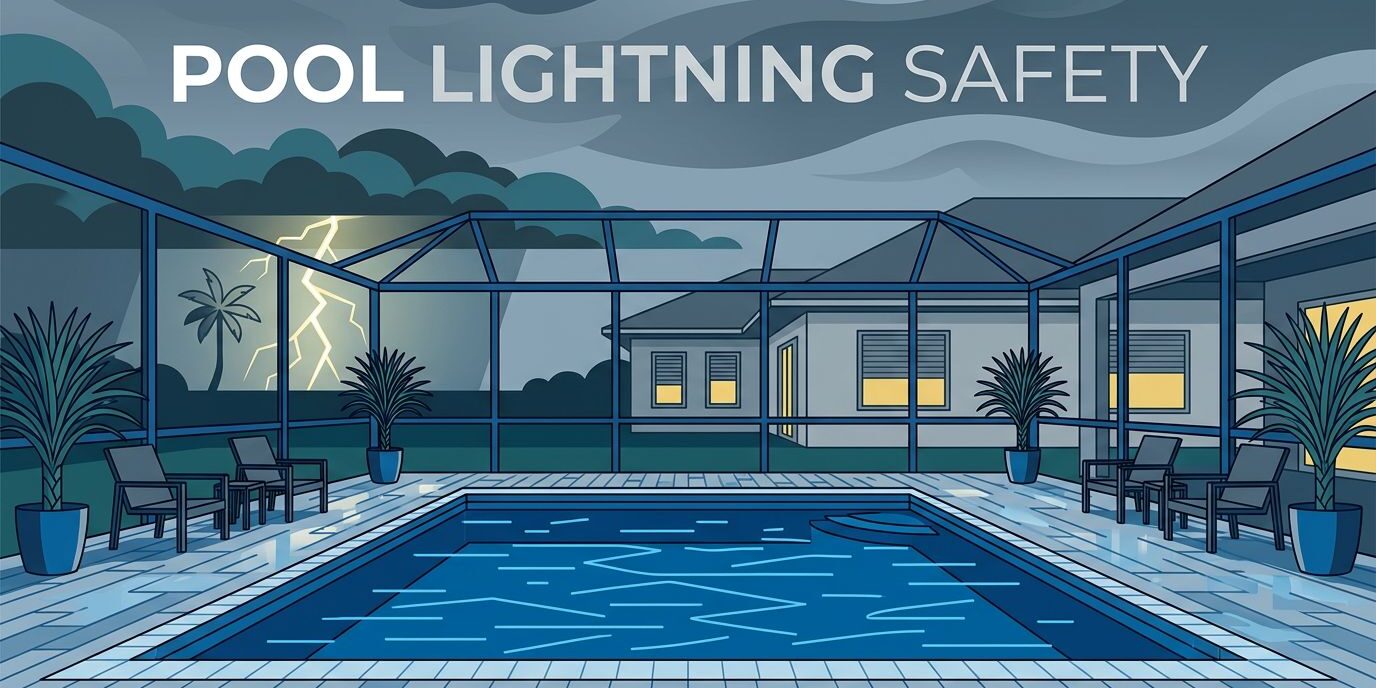
Lightning can make a backyard pool dangerous before heavy rain arrives. Florida pool lightning safety means every swimmer leaves at the first thunder or visible lightning.
Move everyone to a substantial enclosed building, then wait at least 30 minutes after the last thunder before returning to the pool. Don’t wait for a closer strike, since an early exit removes unnecessary risk.
Key Takeaways
- Clear the pool immediately at the first sound of thunder or sight of lightning. Do not wait for rain, a closer strike, or louder thunder.
- Move everyone into a substantial enclosed building with four solid walls, a roof, and closed windows and doors. A screened lanai, open garage, patio, gazebo, carport, or tree is not safe shelter.
- Wait at least 30 full minutes after the last audible thunder before returning to the pool. Restart the clock after any new thunder or visible lightning.
- Keep the route from the pool to the house clear, assign an adult to monitor the weather and swimmers, and maintain the pool fence and gate. A removable mesh barrier supports swimming pool safety but does not protect against lightning or replace supervision.
- If lightning strikes someone, call 911, check breathing, begin CPR when needed, and use an AED if available. Lightning victims do not retain an electrical charge, so rescuers can safely touch them.
Leave the pool at the first sign of lightning
The NWS lightning rules, issued by the National Weather Service, say people should leave pools immediately when lightning appears or thunder sounds. These lightning safety rules apply to outdoor pools, spas, water parks, lakes, and nearby wet areas.
The guidance also calls for a substantial, enclosed building. A safe shelter is fully enclosed, so a covered patio, open garage, gazebo, or screened lanai isn’t one.
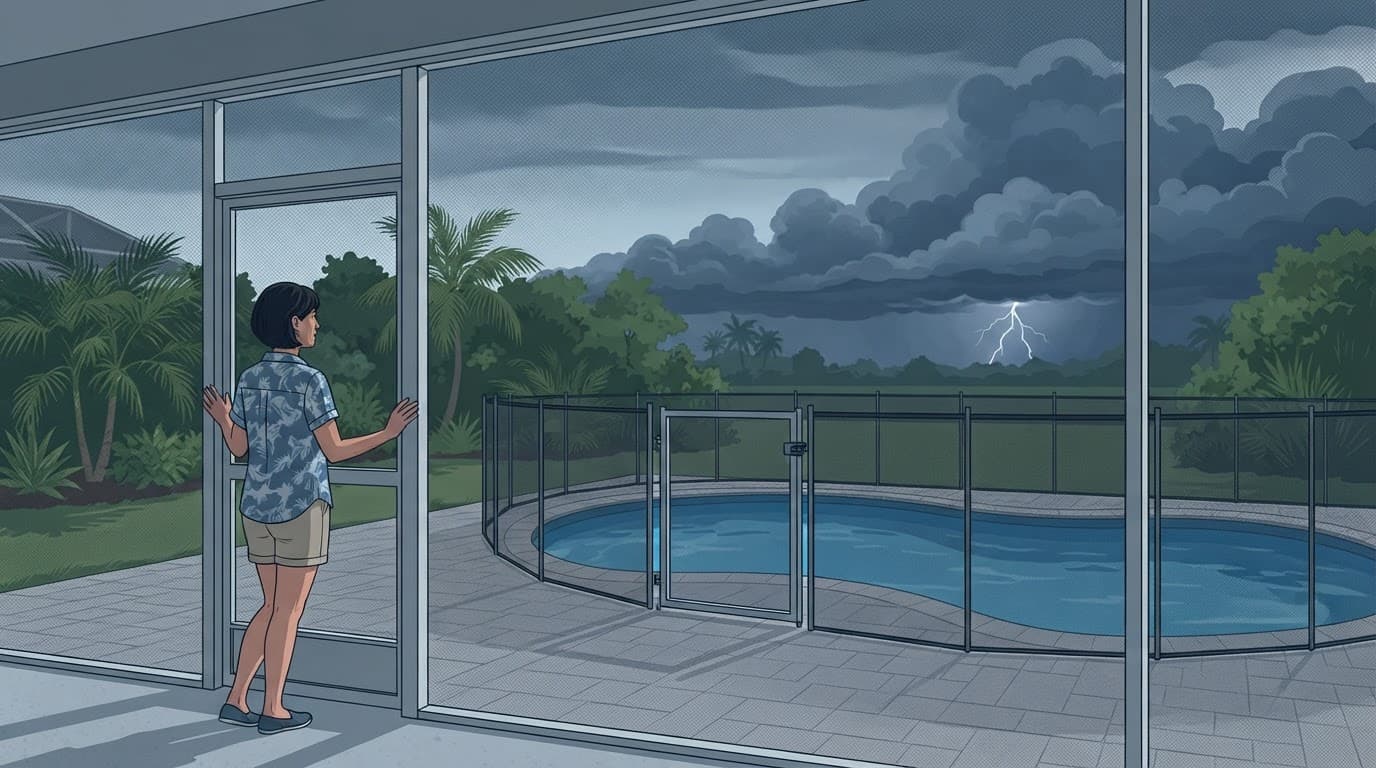
A screened enclosure may keep insects away, but it isn’t a safe lightning shelter. The homeowner should move fully inside the house and close the doors.
The National Lightning Safety Institute offers similar conservative guidance, urging people to leave the water when thunder or lightning threatens.
What the 30-30 rule means
The 30-30 rule gives families an easy storm protocol.
- If 30 seconds or less pass between a lightning flash and thunder, everyone should leave the pool.
- Everyone should stay inside until 30 minutes pass after the last thunder.
The flash-to-bang method estimates storm distance. Sound travels about one mile every five seconds. Therefore, a 30-second count places the storm roughly six miles away.
That distance still presents danger. Lightning can strike outside the rain shaft, and a storm can move closer quickly. No homeowner should treat a longer count as permission to keep swimming.
A pool deck can look calm while lightning remains close enough to strike.
Why a pool creates serious risk
Pool water conducts electrical current. A nearby strike can send current across it and through anyone in it.
Pools also connect with plumbing and wiring, pumps, gas lines, and other systems. Current can travel through those connected pathways. A person standing barefoot on a wet deck can face danger too.
A small pool isn’t safer than a large pool. A shallow pool isn’t safe during lightning. Floating toys, rubber shoes, and pool noodles don’t protect swimmers from a strike.
Why Florida sees so many dangerous lightning storms
Florida is often called the lightning capital of the United States. Its warm surrounding waters provide moisture for frequent thunderstorms, while heat helps storms build quickly.
Florida’s large population adds another concern. More people live, work, travel, and spend time outdoors where thunderstorms develop. That exposure helps explain the state’s long history of lightning fatalities.
Afternoon thunderstorms need a daily plan
Florida families often see afternoon thunderstorms form after lunch. A blue sky at noon doesn’t guarantee a safe afternoon at the pool.
The highest-risk months usually include June, July, and August, but lightning can occur during any season. Changing weather conditions, including shifts in heat and humidity, can make a blue sky an unreliable safety signal. Families should check the thunderstorm forecast and any severe storm alerts before beginning outdoor activities.
NOAA’s lightning safety guidance offers the same basic message: when thunder roars, people should go indoors.
A pool owner can make that routine simple. One adult checks the forecast, watches the sky, and listens for thunder. Another adult gets towels, shoes, and a clear path ready.
A distant storm still deserves attention
Thunder doesn’t need to sound loud before it matters. Wind, rain, trees, and buildings can muffle sound.
Lightning also doesn’t follow a neat path around a neighborhood. A storm that appears several miles away can produce a strike beyond its visible rain area or storm center.
Pool time should end at the first flash or thunder. Families shouldn’t wait for rain, strong wind, or a nearby strike.
Choose real shelter, not just a covered space
A safe shelter has four solid walls, a roof, and closed windows and doors. A home is usually the best option for a residential pool.
A hard-topped vehicle with closed windows also provides protection when a substantial building isn’t nearby. Everyone should remain inside until the storm passes and the 30-minute waiting period ends.
Why open garages and patios don’t count
Open garages, carports, porches, pavilions, and picnic shelters leave people exposed. They may block rain, but they don’t create a fully enclosed building.
Trees are also unsafe. Tall, isolated trees can attract strikes and transmit lightning through wet ground.
The NWS outdoor sports guidance recommends stopping outdoor activities and waiting at least 30 minutes after the final thunder. Residential pool routines should follow that same standard.
Once inside, residents should stay away from windows and doors. They should also avoid contact with plumbing, faucets, corded electronics, and electrical equipment.
Indoor pools don’t create a free pass
An indoor pool still exposes swimmers to pool water and a building’s plumbing and wiring, windows, showers, and connected systems. The roof may reduce direct exposure, but it doesn’t remove every lightning-related hazard.
Indoor facility operators should follow their emergency closure plan. Residential owners should leave the water and move away from windows, pipes, showers, and electrical equipment.
A licensed electrician should inspect pool electrical systems after major work, storm damage, pump replacement, or visible corrosion. The inspection should address bonding, grounding, wiring, disconnects, electrical equipment, and code compliance.
The National Electrical Code, NFPA 70, includes requirements for electrical installations around pools. Proper bonding, grounding, and compliant electrical work support a broader lightning protection plan, but they don’t make an indoor pool risk-free.
A homeowner shouldn’t assume an older system remains compliant because it once passed inspection.
Prepare the pool area before the storm arrives
Good storm preparation starts before anyone enters the water. The goal is simple: make leaving quick, obvious, and automatic as part of a broader swimming pool safety routine. For everything beyond lightning, a written backyard water emergency plan can assign the 911 caller, rescue equipment, and responder-meeting roles before swim season.
A homeowner can mark a safe shelter location inside the house as the family meeting point. The family can also assign one adult to count swimmers and check the pool after everyone enters the house.
Keep the exit clear
Towels, shoes, phones, and medications should stay near the normal exit, with furniture clear of the path from the deck to the house. Homeowners should secure loose metal objects during normal setup, so nobody needs to retrieve them during a storm.
A pool alarm can support the plan, along with a thunderstorm forecast or weather alert. It shouldn’t replace an adult watching the sky and listening for thunder.
Homeowners should follow the manufacturer’s storm instructions for the pool pump and other equipment. Residents shouldn’t touch outdoor electrical equipment during a storm.
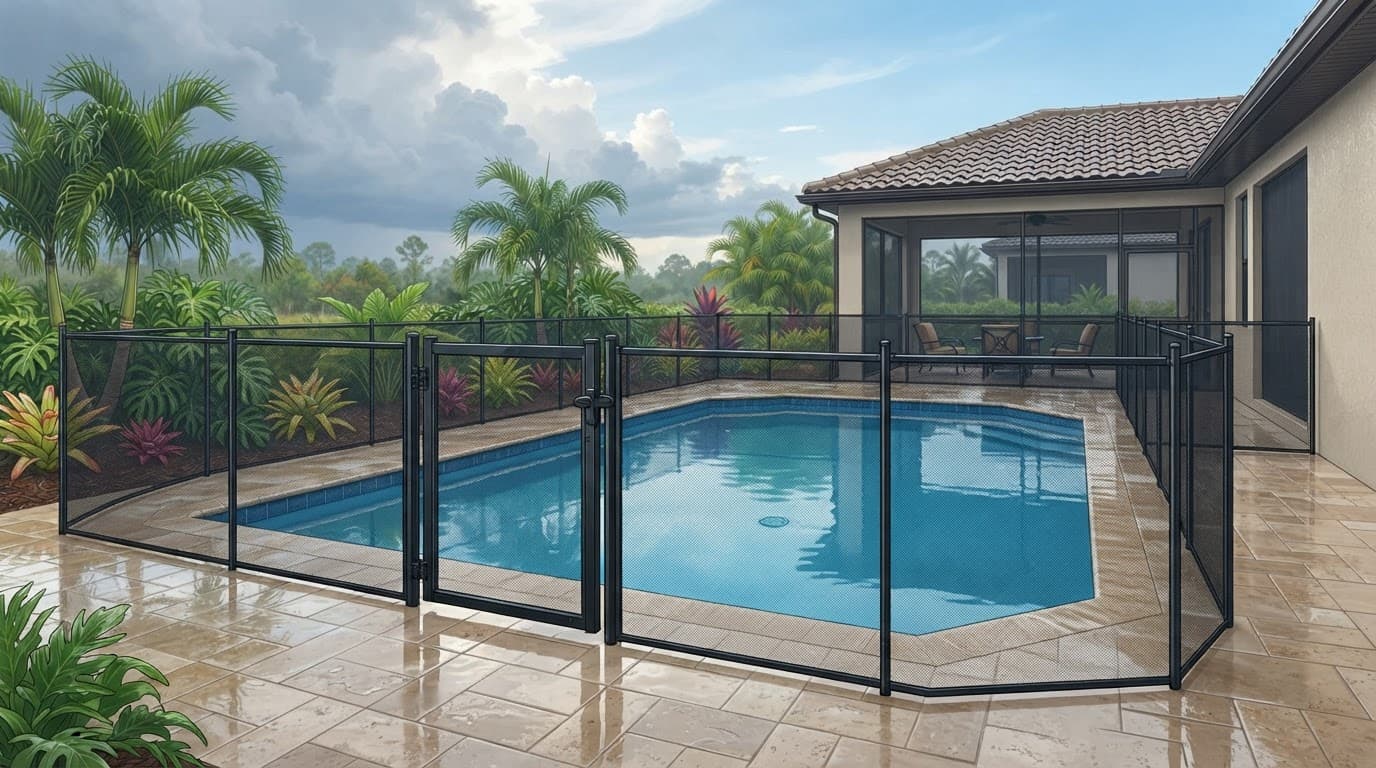
A removable mesh fence supports access control and swimming pool safety when no one supervises the pool. It limits unsupervised access before and after storms, but it doesn’t stop lightning or replace the storm response plan.
Check the barrier and gate regularly
The fence should remain upright, secure, and properly fitted around the pool. The gate should close and latch without help.
Homeowners should check for loose sections, damaged mesh, worn hardware, and changes in the deck surface. Landscaping, construction, and pool repairs can affect the fence layout.
A professional installer can review the barrier when a property changes. Homeowners in Southwest Florida can request a pool safety fence installation quote for a custom residential setup.
A removable mesh barrier works best as one part of a larger safety plan. It cannot replace adult supervision, locked doors, swimming skills, or the storm response plan. Homeowners who need a quote can also Get a FREE Quote.
Know when swimming can safely resume
The 30-30 rule begins after the last audible thunder. Wait 30 full minutes before reopening the pool.
Rain stopping or sunlight returning doesn’t mean the storm is safe. A storm can move away while another cell remains nearby. Thunder may also disappear briefly before the next strike arrives. The clock restarts after any new thunder or visible lightning.
Use one adult to track the clock
One responsible adult should record the time of the final thunder. That person should avoid restarting the clock based on guesses.
If another rumble sounds, the 30-minute period begins again. The same applies when lightning becomes visible.
The rule protects more than swimmers. It also protects adults who return outside to collect toys, adjust equipment, or clean the deck.
No one should enter the pool water to collect toys or equipment during the waiting period. Pool equipment can wait. A person’s safety cannot.
Inspect the area before reopening
After the storm, an adult should check the pool deck for fallen branches, broken glass, standing water, and damaged equipment. No one should touch downed wires or damaged electrical components.
The pool itself may contain debris. A professional should inspect electrical equipment after a direct strike, surge damage, fire, or visible damage.
The National Weather Service’s NWS lightning safety overview confirms that lightning victims don’t carry an electrical charge. It also supports waiting 30 minutes before returning outdoors.
If lightning strikes a swimmer, act immediately
Lightning strike victims can suffer cardiac arrest, breathing problems, burns, confusion, weakness, hearing damage, and nervous system injuries. Some may appear awake but remain seriously injured.
A strike can affect more than one person. A ground stroke can injure someone nearby, while electrical current can move through pool water and across wet surfaces.
Touching a victim is safe
A lightning victim doesn’t retain an electrical charge. Another person can touch the victim without receiving a residual shock.
The first responder should move the victim only when the area remains unsafe. If lightning continues, rescuers should wait for a safer moment when possible.
Emergency help should start quickly:
- Call 911 and give the exact home address.
- Tell the dispatcher that lightning struck the person.
- Check responsiveness and breathing.
- Begin CPR if the person doesn’t breathe normally.
- Use an AED when one is available.
- Follow the dispatcher’s instructions until help arrives.
A person who seems fine still needs medical evaluation. Lightning injuries can affect the heart, brain, nerves, muscles, and skin.
Keep rescue plans realistic
A pool owner should keep the home address visible to every adult caregiver. Gates, locked doors, and landscaping can make emergency access harder.
Families should tell babysitters and guests about the storm plan. They should also show visitors the safest route into the house.
No one should delay CPR because of fear that the victim remains electrically charged. Quick action can make a serious difference.
Lightning myths Florida homeowners should ignore
Several common beliefs create dangerous delays. Clear lightning safety rules work better than guessing based on rain, pool size, or past experience.
“The pool is safe if lightning hasn’t struck nearby”
Lightning can strike away from the storm center. A nearby strike may also send current through water, wet ground, plumbing, or electrical systems.
The absence of a previous strike proves nothing. Every thunderstorm deserves the same response.
“Rain means the storm has passed”
Rain can arrive before lightning, during the most active part of a storm, or after thunder becomes harder to hear. A wet deck doesn’t provide a safety signal.
The 30-minute waiting period begins after the last thunder, not after the last raindrop.
“Indoor pools are always safe”
Indoor spaces reduce exposure, but people should still avoid windows, plumbing, and electrical devices. A pool building needs a clear closure policy during lightning.
“A lightning victim will shock the rescuer”
That belief costs time. Victims carry no residual charge, so trained adults can provide CPR and use an AED.
“A pool fence prevents lightning injuries”
A removable mesh pool barrier helps stop unsupervised entry. It doesn’t ground the pool or protect a swimmer from current.
That distinction matters. Families need both a physical barrier and a reliable storm response.
Frequently Asked Questions
When should swimmers leave a Florida pool?
Swimmers should leave the pool at the first sound of thunder or sight of lightning. They should not wait for rain, strong wind, or a nearby strike.
Is a screened lanai safe shelter during lightning?
No. Everyone should move into a substantial enclosed building or, when necessary, a hard-topped vehicle with closed windows; open garages, patios, carports, gazebos, and screened lanais do not provide the same protection.
When does the 30-minute waiting period begin?
The 30-minute period begins after the last audible thunder, not after the rain stops or sunlight returns. Restart the clock after any new thunder or visible lightning.
Are indoor pools safe during a lightning storm?
Indoor pools are not risk-free because swimmers may remain exposed to plumbing, wiring, windows, showers, and connected systems. Leave the water and follow the facility’s closure plan while staying away from windows, pipes, and electrical equipment.
What should someone do if lightning strikes a swimmer?
Call 911, check the person’s responsiveness and breathing, begin CPR if needed, and use an AED when available. A lightning victim does not retain an electrical charge, so another person can safely provide aid.
Conclusion
Florida pool lightning safety follows a simple routine. Clear the pool at the first thunder or lightning. Enter a fully enclosed building, then wait 30 minutes after the last thunder.
Keep exits clear, maintain the removable mesh fence, and schedule electrical inspections after major work or storm damage. If someone is struck, call 911 and begin CPR or use an AED when needed.
A calm pool can become dangerous in seconds. Acting early brings everyone inside before those seconds matter.