A pool can fill a Southwest Florida vacation rental calendar, but it can also turn a five-star stay into an emergency. I treat vacation rental pool safety as part of preparing the property, not something to think about after the listing is live.
The heat, screened lanais, canals, docks, and visiting families create real safety concerns. A four-sided barrier, secure gate, clear rules, proper insurance, and a written maintenance routine give you a much stronger guest safety plan. Here is the approach I recommend for homeowners and rental managers.
Key Takeaways
- Use a four-sided isolation barrier with a self-closing, self-latching gate to separate the pool from the house and other outdoor areas.
- Check every route to the water, including doors, windows, side gates, garages, lanais, canals, and nearby water bodies.
- Give guests clear rules, visible safety signage, rescue equipment, emergency instructions, and a reminder that there is no lifeguard on duty.
- Confirm current Florida and local requirements, maintain suitable insurance, document inspections, and close the pool when equipment or water conditions are unsafe.
Start with a four-sided fence and self-latching gate
The first thing I look at is how a child could reach the water without an adult noticing. The strongest answer is an isolation barrier that separates the pool from the house, patio, yard, and other outdoor areas.
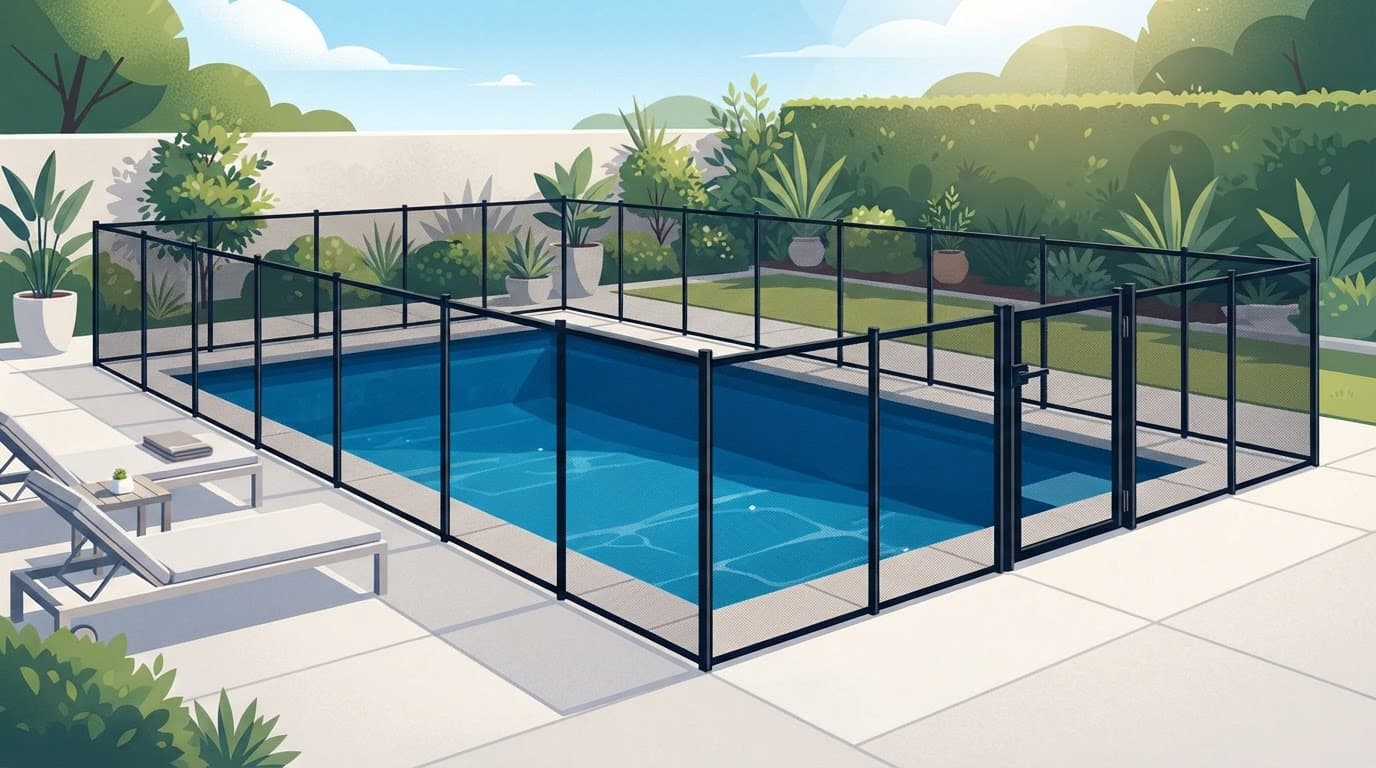
A proper barrier should be at least four feet high, difficult to climb, and free of objects children could use as steps. This follows guidance from the Consumer Product Safety Commission. The gate should close by itself and latch every time. I always check that the self-latching gate works smoothly, sits high enough for children, and still works after rain, sand, and daily use.
The CDC reports that a four-sided isolation barrier can reduce child drowning risk by 83% compared with a three-sided property fence. That is a big difference. The barrier does not replace adult supervision, but it creates valuable time and distance when someone looks away.
Florida’s residential pool law, found in Chapter 515, requires at least one approved safety feature for qualifying pools. Options can include a barrier, approved safety pool cover, exit alarms, self-closing and self-latching doors, or an approved pool alarm. For a vacation rental, I treat that as the starting point, not the complete plan. Owners should verify current pool barrier requirements and local rules before choosing a feature.
A black mesh pool fence is a practical choice because it keeps the pool visible while creating a physical separation. It can be fitted around unusual pool shapes and removed when needed. This physical barrier supports guest safety, not merely compliance. If your property needs a new barrier, you can Get a FREE Quote for a professional pool fence installation.
Secure every route to the pool and nearby water
A fence only helps when every access point is considered. Children may reach the pool through a sliding door, side gate, garage, lanai, or another overlooked opening.
I check doors and windows that lead directly outside, along with side gates, garages, lanais, and any self-latching gate. Furniture should not sit beside the fence, and pool toys should not encourage climbing. Documenting each route also supports guest safety. A screen enclosure may help, but it should not automatically be treated as a qualifying isolation barrier. Have the setup checked against current Florida and local pool safety standards.
If you use door or window alarms, test them before every guest arrival. Florida safety provisions have referenced exit alarms that sound at 85 decibels at 10 feet. Self-closing and self-latching doors may also have release hardware positioned at least 54 inches above the floor. Confirm these details against current requirements.
A pool alarm adds another layer, but it does not physically stop a child. I would never choose an alarm as the only protection when a dedicated barrier is possible.
Nearby water needs attention too. Vacation rental properties with a pool or canal nearby may face additional rules. Recent Florida vacation-rental legislation has addressed properties with pools or water bodies within 150 feet. Requirements and effective dates can change, so confirm current DBPR rules and local pool barrier requirements before listing or renewing the rental.
Give guests clear pool safety signage and simple rules
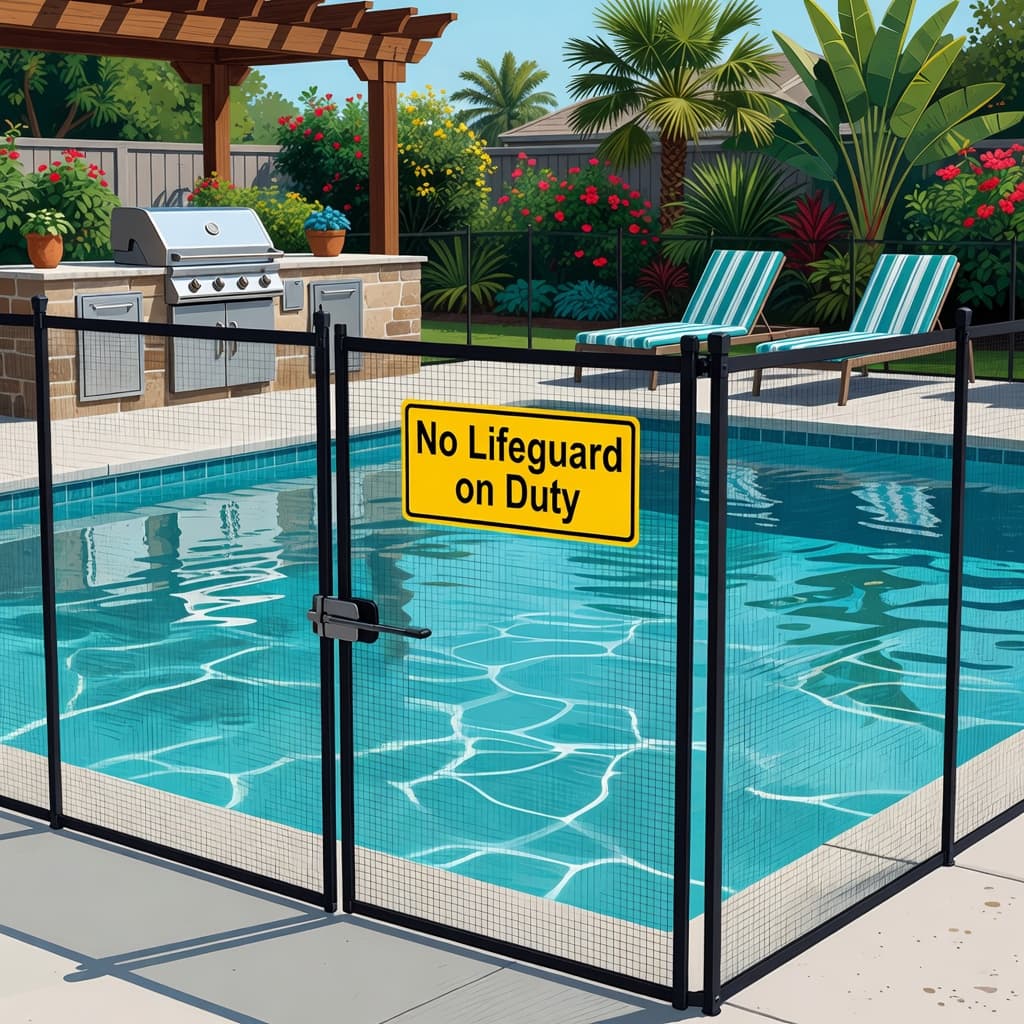 Vacation guests arrive tired, excited, and unfamiliar with the property. A small sign and a concise set of pool rules in the house manual can support guest safety and prevent confusion. The manual should set expectations for guest supervision, gate use, no diving, and emergency response. It should also state, “No lifeguard on duty.”
I recommend posting clear pool safety signage inside the barrier. Include “No lifeguard on duty” and a reminder that children need close adult supervision. Add emergency instructions and the location of rescue equipment. Pool depth markers should be easy to see along the pool edge and near changes in depth.
Keep at least one lifebuoy inside the pool barrier. A reaching pole, first-aid supplies, and a visible address for 911 calls are also smart additions. Guests may not know the property address, especially when the rental sits on a large street or private road.
The Florida Department of Health’s drowning prevention guidance reports that more than 500 Floridians died from unintentional drowning in 2023. The number is a serious reminder that vacation homes need more than attractive pool photos and a line that says “swim at your own risk.”
Remove diving boards and slides from a short-term rental whenever possible. These swimming pool hazards can confuse guests about depth, invite improper use, or encourage children to copy unsafe behavior. A waiver does not repair a dangerous setup.
A pool alarm can tell you that a child entered the water. A four-sided barrier can slow that entry before the alarm is heard. Clear instructions and available equipment support water safety, but neither replaces active supervision.
Match the rental plan to Florida rules and insurance
Insurance is a core part of short-term rental pool safety. A standard homeowner policy may not cover injuries or property damage from commercial rental activity. Some policies exclude short-term rentals, while others limit coverage or require a special endorsement.
I ask the insurance company, in writing, how the policy handles insurance liability for pool-related injuries during a guest stay. I also ask about premises liability, guest medical payments, legal defense, property damage, lost rental income, and umbrella coverage. A commercial insurance policy designed for short-term rentals may be the better fit.
Platform protection should not be treated as a replacement for your own insurance. Gaps in platform or personal coverage can expose an owner to legal liability. Read the exclusions, limits, claims process, and rules about safety equipment. A claim can lead to medical bills, attorney fees, settlement costs, higher premiums, canceled bookings, and problems with a rental license.
The Virginia Graeme Baker Act is a federal anti-entrapment law. It generally applies to public pools and spas, including many lodging facilities, rather than a typical private backyard pool. A vacation rental’s classification can matter, so ask a licensed pool professional or DBPR whether the rule applies to your property.
I still want compliant anti-entrapment drain covers on every pool. A broken, missing, or outdated one needs attention before guests swim. Never try to repair it with a homemade solution.
Keep a digital record of the safety work. I would save:
- Fence and gate inspections, including repairs and latch checks.
- Service visits and water chemistry readings.
- Alarm tests, entrapment-prevention checks, and replacement dates.
- Guest complaints, incidents, and corrective actions.
If a guest is injured, safety comes first. Call 911 and provide help within your training. Then preserve relevant camera footage, photographs, maintenance records, and witness information. Notify your insurer promptly and avoid admitting fault or posting details online. Follow the insurer’s instructions and contact a qualified legal professional when the injury is serious.
Keep the pool clean, documented, and ready for guests
Clean water is part of guest safety, not only appearance. Florida heat, heavy rain, sunscreen, and frequent swimming can change water chemistry quickly. Poor chemistry can irritate skin and eyes, damage equipment, and create slippery surfaces. Those surfaces can increase the risk of a slip and fall around the pool.
My routine would include a pool safety checklist before each arrival and service visit, after heavy rain, and during busy stays. Use it to check equipment condition and closure triggers. Keep pool maintenance logs with the date, time, readings, tester initials, and adjustments.
A smart pool monitor can provide alerts when sanitizer, pH, temperature, or water levels change. I like that extra notice, but I don’t treat an app as a substitute for a manual test kit and an in-person inspection. Sensors need calibration, batteries, cleaning, and occasional comparison against a reliable test.
The pool should be closed if the water is cloudy, the drain cover is damaged, the gate won’t latch, or the circulation system is not working correctly. Delaying a stay is far better than admitting guests to an unsafe pool.
Frequently Asked Questions
Is a screen enclosure enough to protect a vacation rental pool?
A screen enclosure may help limit access, but it should not automatically be treated as a qualifying four-sided isolation barrier. Have the setup checked against current Florida and local pool safety requirements.
What safety equipment should a vacation rental pool have?
Keep a lifebuoy, reaching pole, first-aid supplies, visible depth markers, and emergency instructions inside the pool barrier. Door or window alarms and a pool alarm can add protection, but they do not replace a physical barrier or active supervision.
Does a pool alarm replace a fence?
No. A pool alarm can alert you after someone enters the water, while a four-sided barrier can slow or prevent access before an alarm is heard.
What should an owner do if the pool becomes unsafe during a guest stay?
Close the pool immediately if the water is cloudy, the gate will not latch, a drain cover is damaged, or the circulation system is not working correctly. Document the issue, arrange qualified repairs, communicate clearly with the guest, and reopen the pool only after it has been inspected and made safe.
Does standard homeowner insurance cover a short-term rental pool?
Not always, because some homeowner policies exclude commercial rental activity or limit coverage for pool-related injuries. Ask the insurer in writing about premises liability, guest injuries, legal defense, property damage, and umbrella coverage before listing the property.
Conclusion
A Southwest Florida vacation rental needs more than a pool that looks beautiful in listing photos. Vacation rental pool safety depends on a physical barrier, a reliable gate, clear guest instructions, routine inspections, proper insurance, and records showing the work was done.
I would rather give guests one extra safety step than leave a family depending on luck. A professional four-sided fence with black mesh and a consistent daily routine provide reassurance for homeowners, guests, and everyone who cares about getting home safely.
Pool Fence of SWFL (941) 500-9484 https://poolfenceswfl.com/