
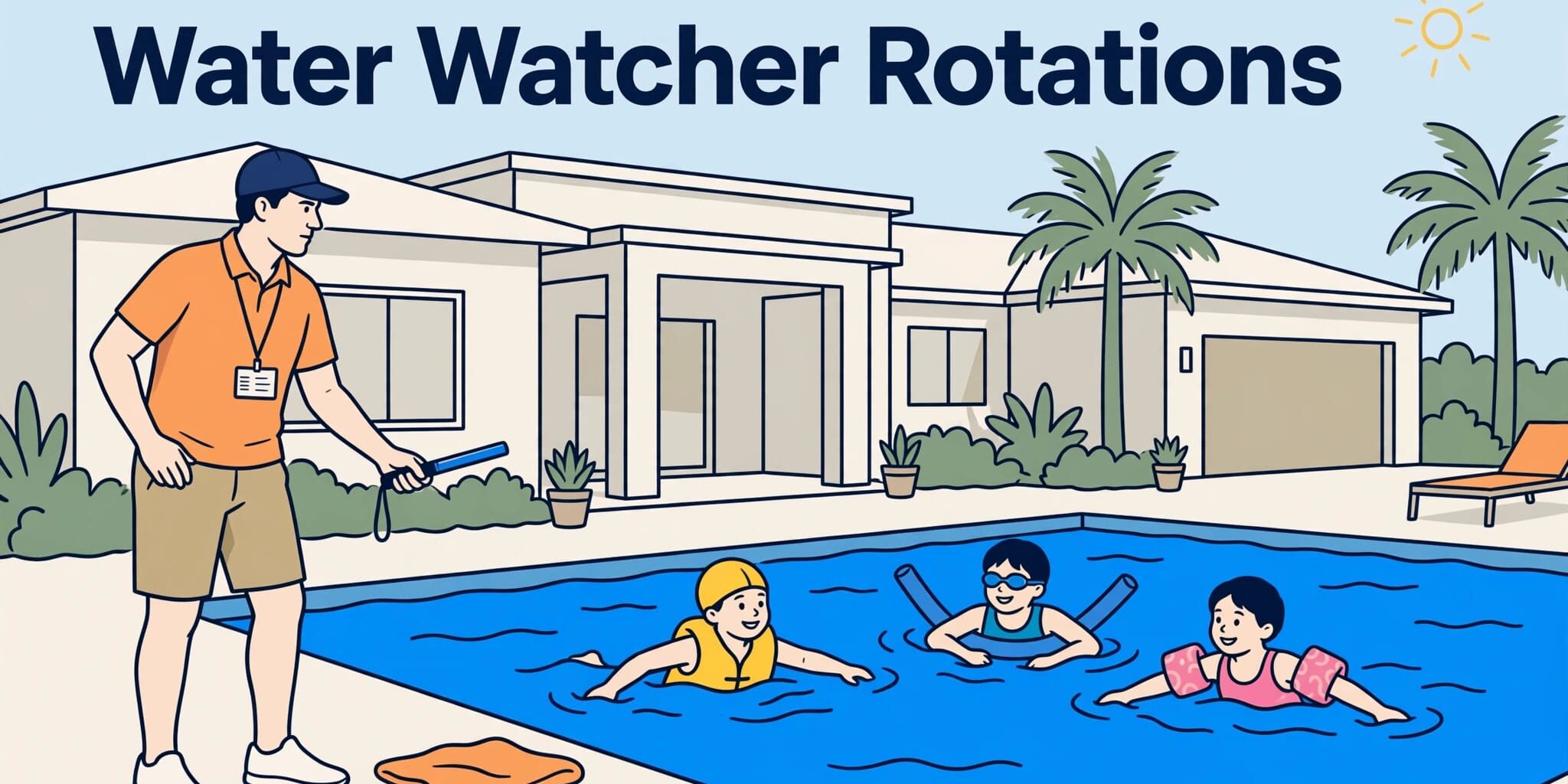
Busy Southwest Florida pool parties feel calmer when every adult knows who’s watching. A clear water watcher rotation gives one named adult responsibility for active supervision during each shift.
Guests can enjoy the gathering without guessing which designated adult has the next shift. This water watcher system keeps responsibility clear, while toddlers still need close, hands-on supervision. Every child needs attentive supervision around water.
Set the plan before the first swimmer enters the pool.
Give the Water Watcher One Clear Job
Choose an adult who can stay focused
The water watcher provides active supervision for children in and near the pool, without other duties competing for attention. The host chooses a responsible, sober adult who can swim and respond appropriately.
That adult keeps eyes on the swimming area and stays close enough to respond. Watching through a kitchen window doesn’t provide the same close supervision.
The CDC’s summer swim safety guidance warns against phone use, reading, alcohol, and other distractions during supervision.
Children don’t need to call for help before the watcher pays attention. The adult watches their movements continuously.
Let someone else handle the party
During pool parties, other adults handle grilling, greeting guests, serving drinks, and taking photos. Even a quick message pulls attention away from the watcher’s shift.
The watcher also avoids lengthy conversations with guests. A friendly explanation keeps things comfortable: the conversation can continue after the handoff.
A phone can stay nearby for emergencies, but social notifications should stay silent. This helps keep the shift distraction free and makes the whole gathering easier to manage.
Build a Water Watcher Rotation Before Guests Arrive
Set short shifts and name the backup
The American Red Cross gives 15-minute shifts in its water watcher instructions.
That provides a practical starting point, not a universal rule. Hosts should choose a supervision strategy before swimming begins.
A written rotation schedule names each watcher, the next watcher, and a backup. This water watcher system lets adults agree to their shifts before the party.
The host also explains where the watcher stands and which swimming area that adult covers.
Keep the schedule simple and visible
A paper schedule can sit beside the refreshments, away from splashes. Another adult manages reminders so the watcher doesn’t keep checking a clock.
A straightforward rotation can follow this pattern:
| Elapsed swimming time | Assigned watcher | Next watcher |
|---|---|---|
| First 15 minutes | Adult 1 | Adult 2 |
| Minutes 15 to 30 | Adult 2 | Adult 3 |
| Minutes 30 to 45 | Adult 3 | Adult 1 |
The schedule organizes responsibility, but the actual handoff controls when a shift ends.
Heat, glare, or tiredness can cause attention fatigue, so an earlier handoff or pause may be needed. When no suitable replacement is available, swimming stops.
Make Every Handoff Clear and Complete

A timer tells adults that a shift is ending. It doesn’t transfer responsibility.
The outgoing watcher keeps watching until the incoming adult arrives and accepts the job. A card or optional wristband serves as a visual identifier.
These identifiers help guests recognize the watcher, but they don’t supervise children. The adult’s attention does that work.
A reliable handoff follows four steps:
- The incoming watcher comes poolside and confirms readiness.
- Both adults count swimmers and identify each child’s location.
- The outgoing adult explains any special supervision needs or changes.
- The incoming adult accepts responsibility and takes the identifier.
A simple statement works well: “I have the pool now.” The outgoing adult waits for that clear acceptance before leaving.
A shift stays with the outgoing watcher until another adult accepts it, even after the timer sounds.
If the next watcher can’t be found, the backup steps in. If no adult can cover, stop swimming and bring everyone out of the water.
Bathroom breaks follow the same process. Nobody leaves a swimming group while assuming another guest will notice.
Match Supervision to Each Child and Pool Area
Keep infants and toddlers within reach
Infants and toddlers need touch supervision, with a capable adult within arm’s reach in or around water. The American Academy of Pediatrics recommends this close contact.
An adult across the deck can’t provide touch supervision. Neither can an older sibling acting as the toddler’s main caregiver.
The parent caregiver stays focused on the toddler, providing constant supervision even when a separate watcher covers the wider pool. Families should identify both roles before entering.
Parents also explain communication needs, sensory sensitivities, and behaviors that affect supervision. Simple information helps the next adult respond with confidence.
Check ledges, spas, and hidden corners
Southwest Florida backyards often include attached spas, tanning ledges, landscaping, and several patio entrances. Each feature can affect what a watcher sees.
Before swimming begins, the host walks the area and checks sightlines. Glare, pool toys, and crowded seating can hide a child’s position.
The watcher needs a clear view of the entire assigned swimming area. If that isn’t possible, the host restricts access or assigns another adult.
Each adult receives a clearly defined area. Nobody relies on a vague promise to watch the other end.
Likewise, a canal or dock at a waterfront home connects to open water and needs its own access plan. Pool supervision doesn’t automatically cover open water. Life jackets add protection, but they don’t replace supervision.
Protect the Moments Between Swimming Activities
Keep coverage during food and bathroom breaks
Food arriving often draws everyone’s attention toward the patio. Children may leave the pool at different times, then return while adults serve lunch.
The host should follow the established safety rules: swimming continues with an assigned watcher, or stops until coverage resumes.
If swimming stops, adults count children, confirm their locations, and secure pool access to help prevent supervision lapses. The watcher doesn’t leave simply because most swimmers have finished.
The same rule applies during birthday cake, present opening, bathroom trips, and guest departures. These ordinary moments deserve a clear assignment.
Parents should tell the watcher when a child leaves or returns. A quick update keeps the swimmer count accurate.
Restart with a fresh check
Before swimming resumes, the host names the watcher again. Adults confirm which children are entering and who needs touch supervision.
A previous assignment shouldn’t carry over by assumption after a long break.
Weather changes also need a clear response. At the first sound of thunder, everyone leaves the water and moves into substantial shelter.
The watcher remains responsible during the exit, while other adults guide children indoors. Pool access stays secure during the break.
After guests leave, the homeowner checks the water, gathers remaining toys, and closes the gate. The afternoon ends with a secure pool area.
Keep Pool Barriers Working During the Gathering
Active supervision protects children during swimming. Physical barriers help prevent access when nobody should be in the pool.
The CDC’s drowning prevention guidance recommends closely supervising children and fully enclosing pools with fencing.
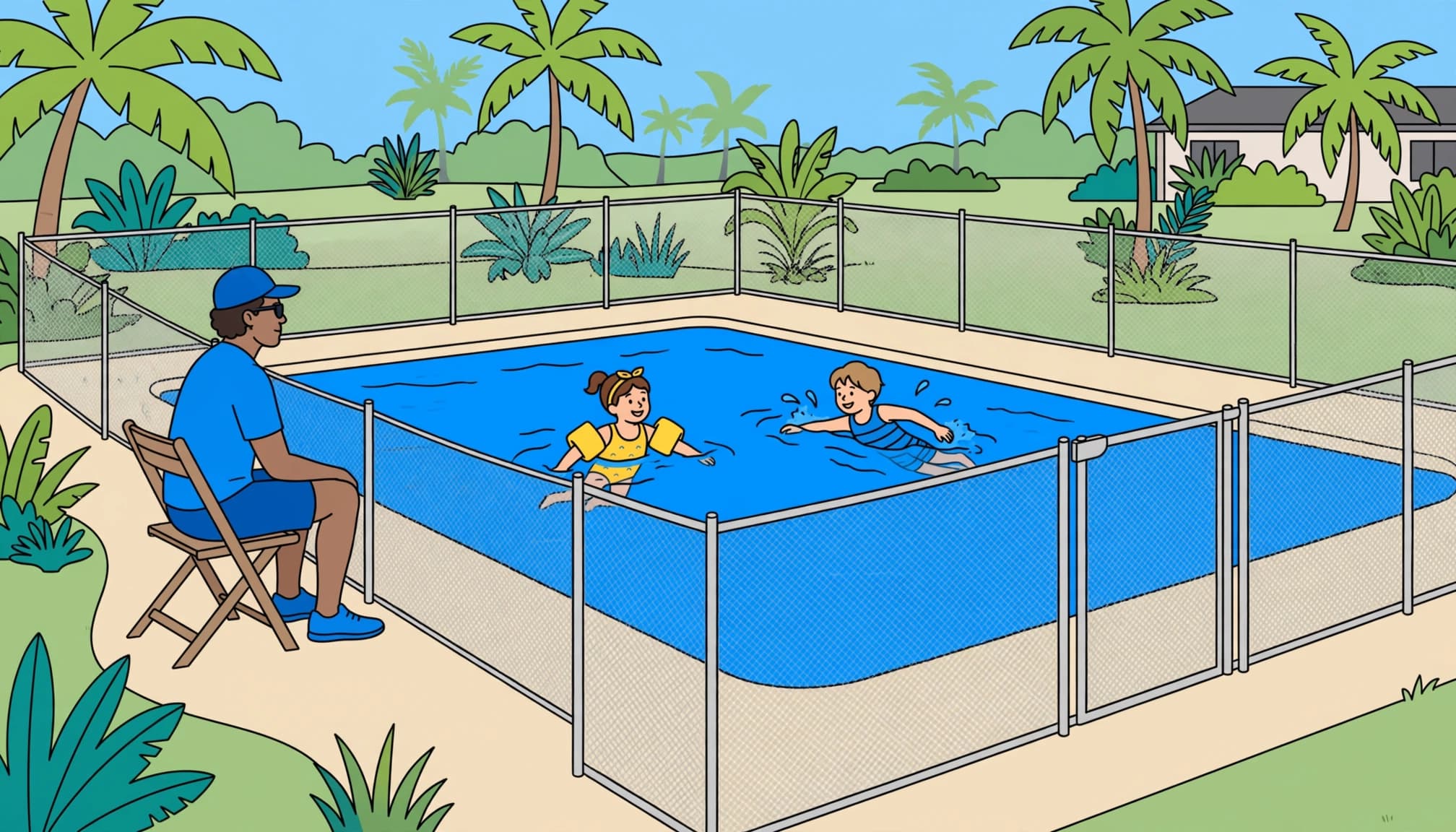
For pool safety, removable mesh fencing can be one of several layers of protection. Like other pool fences, it should stay in place when the pool isn’t in use. Its removable design shouldn’t become a reason to leave the pool open during entertaining.
Before guests arrive, the homeowner checks the barrier and gate. Chairs, coolers, and party decorations shouldn’t create climbing opportunities beside the fence.
Guests should understand that the gate stays closed between entries. Nobody props it open for convenience.
Swim lessons provide another safeguard. Alarms and flotation equipment are safety devices that add protection, but they don’t take over the watcher’s assignment.
Prepare for an Emergency Before Swimming Starts
The watcher needs to know where rescue tools and the emergency phone are located. Those items should remain accessible throughout the gathering.
The host should also keep the home’s address available for guests calling 911. Visiting relatives may know the neighborhood without knowing the exact address.
Before swimming, adults assign the emergency response: who calls 911 and who meets responders. At least one capable adult should know CPR.
The American Red Cross includes emergency skills in its water safety guidance. Families should learn CPR that includes rescue breaths.
A child drowning can happen quickly, so the watcher alerts others immediately if trouble develops. Another adult calls 911 and follows the dispatcher’s instructions.
Adults shouldn’t attempt a water rescue beyond their abilities. Preparation supports drowning prevention by giving families clear jobs when quick action matters.
Key Takeaways for a Calmer Pool Day
A dependable water watcher rotation rests on a few clear habits:
- A named, sober adult watches without party duties or phone distractions.
- Short shifts end only after another adult accepts responsibility.
- Toddlers stay within arm’s reach of a capable adult, while barriers prevent unsupervised access.
The host should also plan swimming breaks and check difficult sightlines before guests arrive. These small preparations make responsibility easier to understand.
Families can enjoy the afternoon with a clear plan already in place. That’s welcome peace of mind!
Common Questions About Water Watcher Rotations
Does a lifeguard remove the need for a watcher?
No. Families should continue active supervision even when a lifeguard is present.
At a shared community pool, the watcher focuses on the family’s children. Parents still provide touch supervision for infants and toddlers.
The same principle applies to children who have completed swim lessons. Swimming skills don’t remove the need for close attention.
What happens if too few adults can take shifts?
The host limits swimming or closes the pool until suitable supervision is available.
An unwilling, distracted, or impaired adult shouldn’t fill a roster space. If one adult also needs to supervise a toddler closely, the host adjusts swimming plans.
A smaller swimming group is easier to watch than an overcrowded pool. The gathering can continue with dry activities while adults arrange reliable coverage.
A Clear Rotation Supports a Safer Afternoon
A busy Southwest Florida pool day feels more comfortable when responsibility stays clear. Short shifts, complete handoffs, and close supervision give families a dependable routine.
A secure barrier supports that routine before swimming, during breaks, and after guests leave. Everyone can enjoy the gathering with fewer assumptions about who’s watching.
Questions or ready to get started? Call us at (941) 500-9484