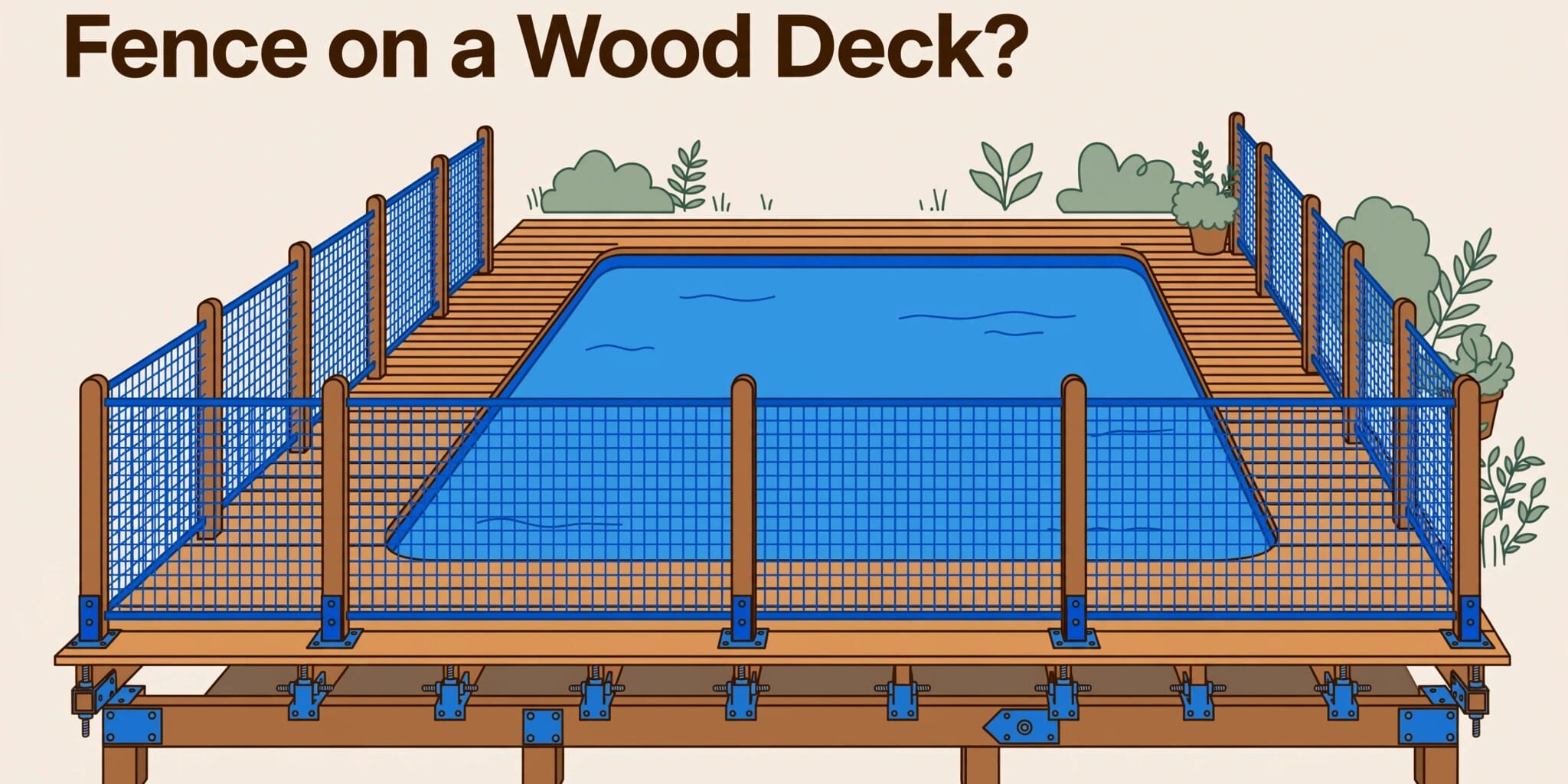
Yes, a removable mesh pool fence can work on a wood deck when the framing and anchoring system provide proper support. Deck boards alone shouldn’t carry fence tension without an approved design.
For families, that means keeping the attractive deck while adding a dependable barrier around the water. The right plan starts beneath the boards, before anyone drills.
Key Takeaways for Wood Deck Installation
- Sound framing and compatible anchors matter more than the deck’s appearance.
- Gate placement should allow reliable closing, latching, and everyday access.
- Concrete drilling instructions don’t automatically apply to wood.
- Removability doesn’t replace pool safety requirements or adult supervision.
What a Wood Deck Needs Beneath the Fence
Strong support below the boards
A removable mesh pool fence typically uses PVC-coated polyester mesh, such as Textilene, between aluminum or stainless steel poles. Some products describe their mesh as 340gsm. However, fabric weight alone doesn’t establish barrier performance.
The poles transfer mesh tension into their sleeves and supports. Thin boards, loose fasteners, and damaged framing can’t provide dependable support.
Check that the deck and framing are sound, without rot, damage, or loose connections. A suitable design may need blocking, reinforcement, or specialized mounting hardware beneath the deck. Composite boards also need support; their low-maintenance surface doesn’t make them structural anchors.
A wood deck isn’t suitable in every case. The mounting system, manufacturer’s guidance, and local requirements determine whether installation is appropriate.
A practical fence and gate layout
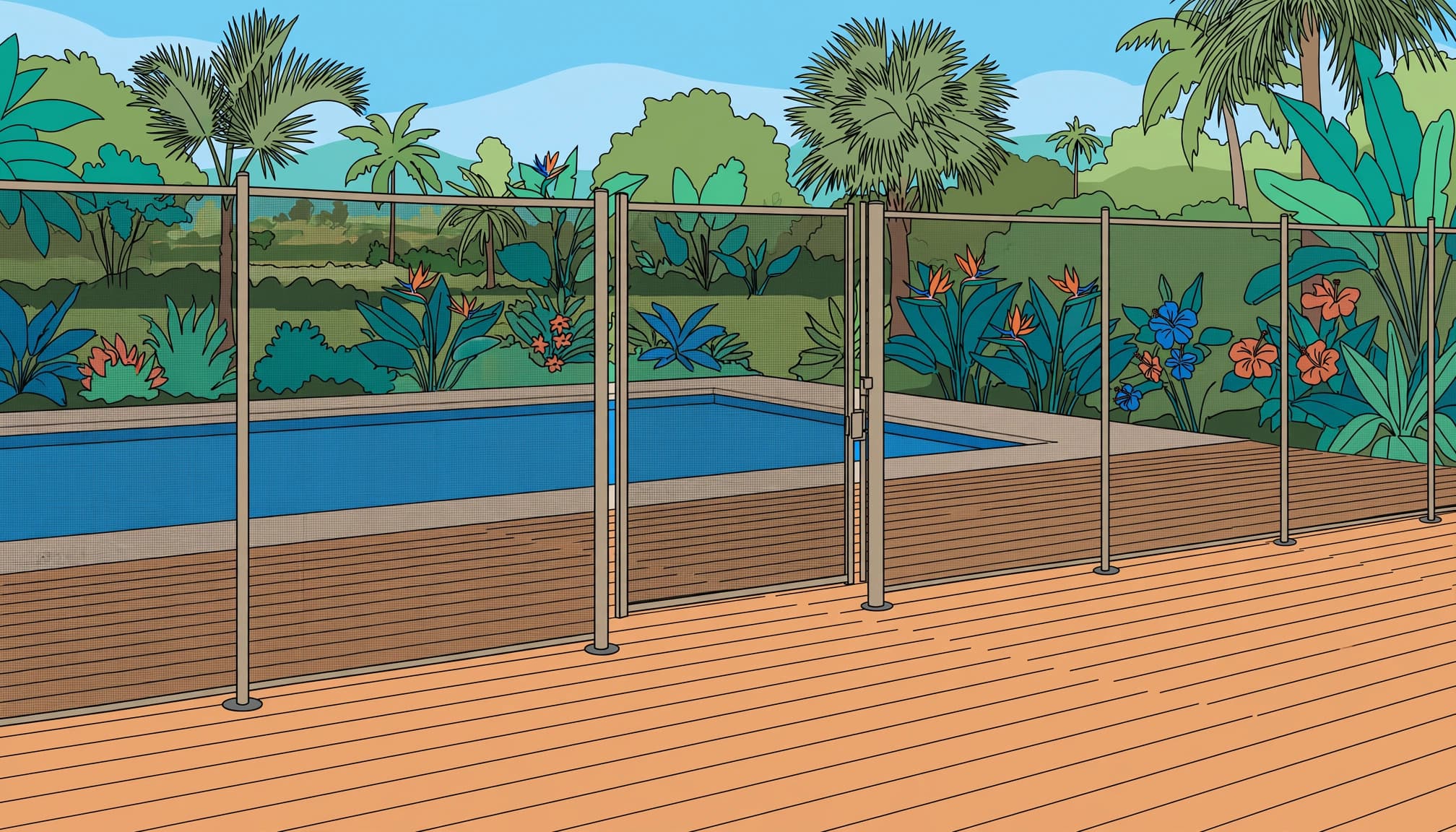
The fence should form a complete barrier without leaving access beside stairs, walls, or changes in deck height. Furniture and planters need separation so children can’t use them as climbing aids.
Setback recommendations differ. Poolguard gives 20 inches; Poolsafe recommends five feet and bonding provisions closer to water. Neither recommendation establishes a universal setback or electrical rule.
Professional planning should account for gate swing, walking space, drainage, and the actual supporting structure.
How Installation Works on a Wood Deck
A dependable pool fence installation follows a clear order. Measure and plan support before drilling.
- The installer maps the enclosure, gate opening, sleeve positions, steps, drains, and hidden utilities.
- The installer assesses the framing and adds support required by the selected mounting system.
- Compatible deck sleeves or mounts connect the poles to that support, following the fence system’s instructions.
- The installer tensions the mesh fence, completes connections, and tests the gate repeatedly.
Sleeve alignment matters. A loose or leaning pole can change mesh tension and gate alignment.
Concrete instructions may call for a hammer drill, a 1-1/8-inch masonry bit, and holes about four inches deep. Windscreen4less specifies a 1-3/8-inch bit for its sleeves.
Those tools and measurements aren’t universal wood-deck instructions. Wood installations require suitable tools and an anchoring design for the complete deck assembly. Follow the selected removable pool fence system’s instructions and applicable local requirements. Follow manufacturer specifications for pole spacing and hole depth.
Planning the deck and fence together also avoids drilling through finished boards before the underlying supports are ready.
Pool Fence Height, Gaps, and Gate Rules
ASTM F2286 sets design and performance requirements for removable mesh pool barriers. It doesn’t replace state or local building rules.
A removable fence can qualify as a primary barrier only where local rules accept it. The complete installation must qualify as a primary barrier and meet the rules for a pool safety barrier. Removability alone doesn’t make it an approved primary barrier.
Height and bottom clearance
Common fence height options include four and six feet. Florida’s residential pool barrier requirements set a minimum outside height of 48 inches. Some jurisdictions require 60 inches.
ASTM F2286 mesh guidance sets a maximum bottom clearance of one inch. The four-inch opening limit sometimes quoted for other barriers isn’t appropriate for the gap between mesh and deck.
Deck slopes and steps need attention. A straight-looking top edge can still leave an unsafe opening underneath.
Gate operation and latch placement
A self-closing gate must swing away from the pool and close without help. The self-latching gate must latch reliably.
The CPSC’s pool barrier guidelines use a 54-inch latch height benchmark, measured above the gate bottom. They also describe protective conditions for lower releases.
Florida focuses on keeping the release beyond a young child’s reach. One measurement alone doesn’t establish compliance for a self-latching gate.
The installer should test the self-latching gate from several positions. It should close completely and latch each time, without dragging across the boards.
What the Fence and Installation Can Cost
Retail kit prices provide a starting point, but they don’t include a custom wood-deck installation.
| Retail kit or section | Example price |
|---|---|
| 6-foot-high, 16-foot-long section | About $165.99 |
| 4-foot-high, 48-foot-long set | About $190 |
| 4-foot-high, 72-foot-long DIY kit | About $285 to $310 |
These examples cover different sizes and packages, so they aren’t direct comparisons. Kit prices may exclude gates, deck reinforcement, compatible mounts, labor, and permits, which can increase the total project cost.
Professional pool fence installation deserves consideration when framing access is difficult or the deck has multiple levels. A low kit price doesn’t confirm that an anchor location is supported.
Removal, Sleeve Caps, and No-Drill Alternatives
Compatible caps cover empty sleeves when a removable pool fence comes down. They keep debris out and leave a cleaner deck surface.
Removal and reinstallation time depend on fence length and layout. After reinstalling the mesh fence, test that the gate closes and latches.
Weighted bases and ground spikes may suit some installations, but they aren’t automatic substitutes for a mounting system approved for the deck and installation. Ground spikes require compatible soil, not unsupported deck boards. Follow manufacturer guidance and applicable safety requirements.
Some permanent conversions use L-brackets at pole bases, but brackets alone don’t confirm that the mounting system is approved for the deck and installation. Check manufacturer guidance and applicable safety requirements.
Frequently Asked Questions
Can a removable mesh pool fence be installed on any wood deck?
No. Deck boards alone shouldn’t carry fence tension, and the framing must be sound enough to support the selected mounting system. The design may require blocking, reinforcement, or specialized hardware.
Can I use concrete installation instructions on a wood deck?
No. Concrete drilling tools and measurements aren’t universal instructions for wood. Follow the fence system’s instructions and use an anchoring design suited to the complete deck assembly.
Does a removable mesh pool fence automatically qualify as a primary barrier?
No. Local rules must accept the complete installation as a primary barrier, and it must meet applicable pool safety barrier requirements. Removability alone doesn’t make it approved.
What should I check after reinstalling the fence?
Test the self-closing gate from several positions. It should close completely and latch each time without help.
A Strong Deck Makes a Dependable Barrier Possible
A wood deck can support a removable mesh pool fence with the right framing, anchors, and complete barrier layout. Reliable gate operation matters just as much as tight mesh.
Good planning protects the deck and supports peace of mind. Families gain convenient access without treating pool safety as an afterthought.
Questions or ready to get started? Call us at (941) 500-9484