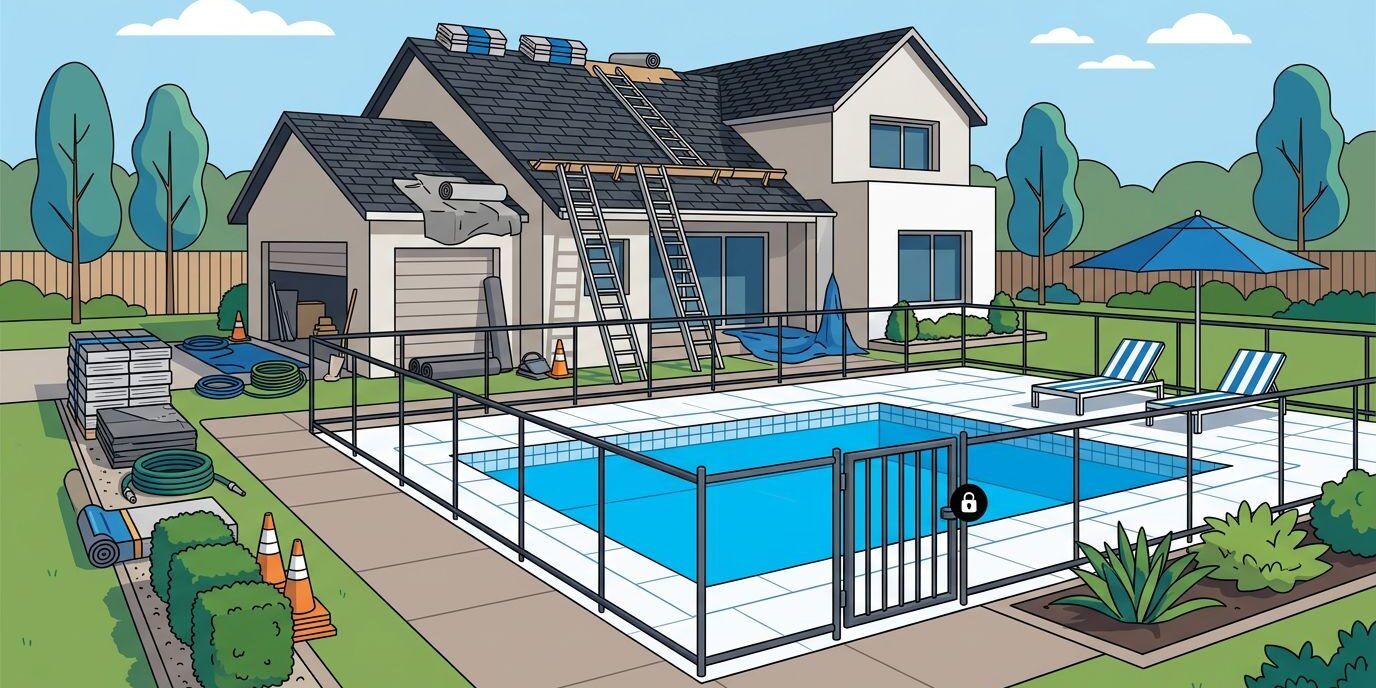
Roof replacement is noisy and messy, but even a small fence gap can become a serious pool safety problem. It can allow unsupervised access and contribute to accidental drownings. Good pool barrier protection keeps the pool separated while ladders, shingles, tarps, and workers move through the yard.
I never treat pool covers, a temporary construction fence, or adult supervision as replacements for a compliant barrier. Pool owners need a clear plan before the first roofing crew arrives, covering the fence, gate, pool deck, and every possible access point.
Key Takeaways
- Plan the roofing equipment route before work begins, keeping ladders, debris, tarps, tools, and material stacks away from the pool barrier and gate.
- Keep the pool closed during active roof work, and never treat a pool cover, temporary construction fence, or adult supervision as a replacement for a compliant barrier.
- If fence removal is unavoidable, remove only the smallest section needed and install a code-compliant temporary barrier with self-closing, self-latching gates before anyone leaves the property.
- Inspect the entire barrier, gate, deck, and surrounding area before reopening the pool, checking for gaps, loose posts, damaged mesh, climbable debris, and latch failures.
- Confirm local pool barrier rules and insurance requirements before the project, and save photos, permits, invoices, and repair records.
Pool Barrier Protection Starts Before the Crew Arrives
Pool owners can prevent expensive damage and unsafe access with a quick conversation with the roofing company. Walk the property with the project manager, identify the pool barrier, and plan the equipment route. Keep that route away from the pool barrier, and point out the gate, fence posts, and areas where shingles or broken tiles will be dropped.
Take clear photos of the entire pool barrier before work begins. Photograph the mesh pool fence, solid poles, gate latch, deck surface, and any existing wear. Test all self-latching gates before work begins, and confirm that each latch catches securely. If a post is already loose or the mesh has a small tear, write it down before the project starts. This gives you a useful record if the fence is damaged later.
I also ask the crew to keep these items away from the barrier:
- Ladders, roof jacks, and long boards should never lean against the fence.
- Shingles, nails, tools, and roof debris should not collect beside the mesh.
- Tarps and ropes should not be tied to fence posts or gates.
- Workers should never step over the barrier or use it as a handrail.
The best work path stays outside the pool area whenever possible. That supports pool safety because an open work path could give children or pets unsupervised access to the pool area. A ground tarp and debris chute can help keep materials away from the water and fence. The contractor should also keep trucks, dumpsters, and material stacks far enough away that they can’t strike the barrier or block the gate.
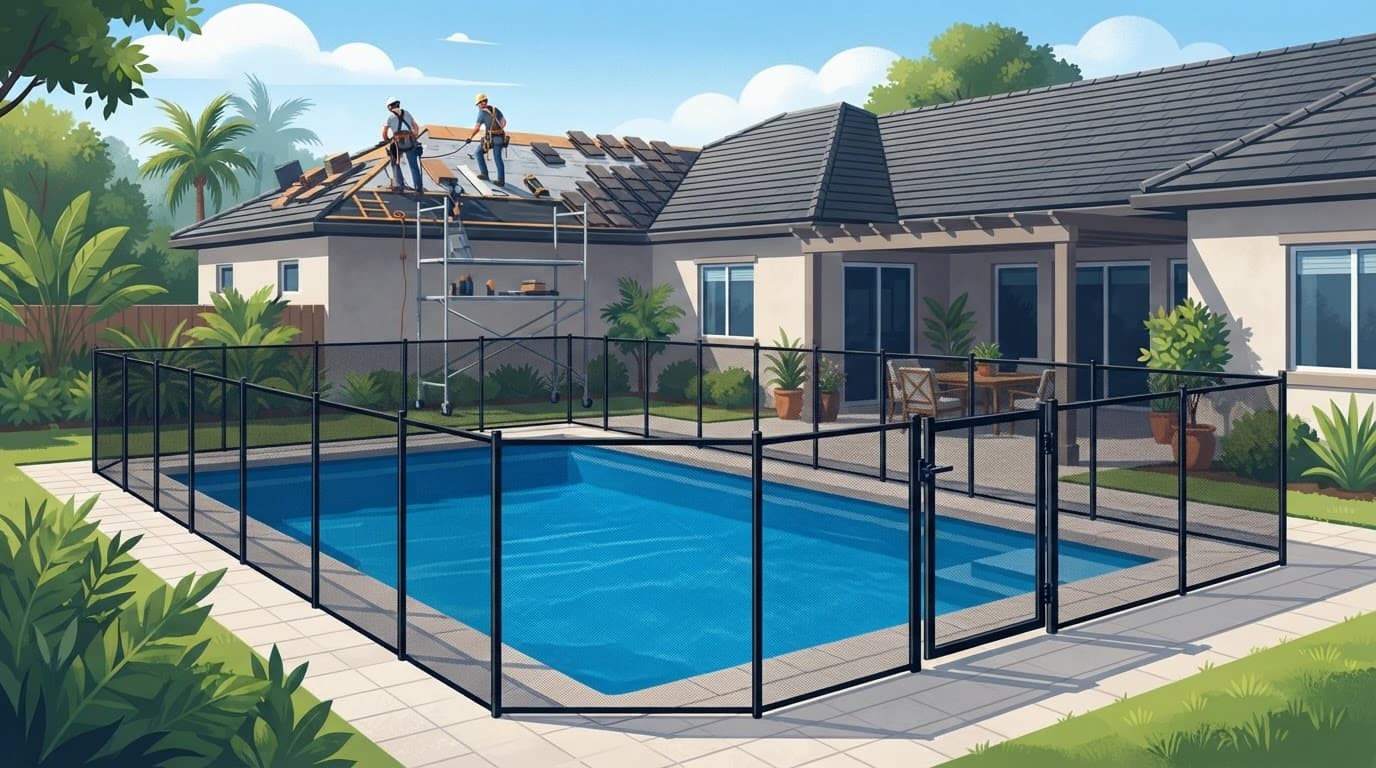
I keep the pool closed while roof work is underway. Children, pets, visitors, and workers shouldn’t enter the pool area during an active construction project, even when the fence looks intact.
Keep Roofing Equipment Away From the Fence
A mesh pool fence is strong when installed correctly, but ladders, shingles, or a worker’s weight can stretch its mesh. One careless contact can loosen a post, bend a fitting, or create a gap in the pool barrier.
The gate needs extra attention. Workers sometimes tie the self-closing gate open for convenience, but that defeats its purpose. It should stay closed whenever no one is actively passing through. Inspect self-latching gates, keeping latches clear of tarps, dust, tools, and loose materials.
Roof replacement also creates small objects that can become climbing aids beside the pool barrier. Buckets, boxes, lumber, ladders, and equipment should not sit beside it. The CPSC’s Safety Barrier Guidelines for Residential Pools, published by the consumer product safety commission, focus on preventing children from climbing over, crawling under, or passing through the barrier. That same thinking applies to a temporary worksite.
If the roofing team works close to the fence, ask for a defined exclusion area around the pool barrier. A few feet of clear space makes it easier to inspect the mesh and keeps tools from falling into the pool. It also gives the gate room to swing and latch properly.
A temporary orange construction fence may help control the work zone, but it isn’t automatically a child safety barrier. It may not provide adequate pool safety or prevent unsupervised access, and pool owners shouldn’t assume it meets pool code. If the permanent barrier must be moved, use another code-compliant safety barrier before anyone leaves the property.
When Pool Barrier Protection Requires Temporary Removal
Sometimes roof access, scaffolding, or material handling makes temporary fence removal unavoidable. Pool owners should have a written plan before the pool barrier comes down.
The safest option is often to remove only the smallest section needed for access. A qualified pool fence installer should handle a mesh pool fence or removable pool fence, protect its parts, and reinstall them when roofing ends. Avoid having the roofing crew pull out posts or cut mesh. A quick shortcut can turn into a full replacement.
The pool must remain inaccessible while any section is missing. That may require isolation fences around all four sides, creating a temporary pool barrier with a self-closing gate. Any additional access points should use self-latching gates, and the setup should stay clear of furniture, equipment, and climbable landscaping.
Isolation fences separate the pool from the house and the rest of the yard. This pool barrier design is safer than allowing a child to walk directly from a back door to the water. It also gives you one clear gate to check after workers leave.
For residential pools, the CPSC generally recommends a swimming pool barrier at least 4 feet high, with openings small enough that a young child can’t pass through. A common guideline is that openings should not allow a 4-inch sphere to pass. These measurements support basic pool safety, but local building codes can be stricter, so check with your city or county before approving a temporary arrangement.
Accidental drownings remain a serious risk for young children, who may reach the water quickly and silently. The CPSC’s drowning prevention guidance identifies drowning as the leading cause of unintentional death for children ages 1 to 4. A barrier supports child pool safety by slowing unsupervised access, but it can’t guarantee safety or replace active supervision.
Pool covers can help keep leaves and debris out of the water. Properly designed safety covers may serve as compliant pool covers when local rules allow them, but loose tarps aren’t safety devices. Safety nets can add another layer, but they don’t replace a compliant barrier.
Choosing the Right Barrier for a Roof Project
The existing barrier may be worth repairing, replacing, or temporarily removing based on its location and condition. Each material responds differently to ladders, falling debris, and roofing materials.
| Barrier type | What to watch during roof work |
|---|---|
| Mesh pool fence | Keep ladders, shingles, nail guns, and falling debris away from the mesh. Check for tears, loose poles, and stretched sections. |
| Iron fences | Check for bent rails from ladders or material carts, sharp edges, loose connections, and climbable decorative sections. |
| Glass barrier | Protect panels from ladders, grit, falling tools, and impact. Check for cracks and damaged fittings. |
A removable pool fence can be practical when a section needs to come down for access. A mesh pool fence offers good visibility and can be stored while the roof crew works. Before removal, review a verified life saver pool fence model’s specs, checking for memory-weave technology and a 100-year warranty only when documented. After reinstallation, inspect the posts of a verified life saver pool fence carefully, especially if the deck carried materials.
Metal barriers are fixed and sturdy, but they can bend when struck by equipment. Glass gives a clear view of the water, but a panel or fitting can be costly to repair after an impact. Consider the pool barrier’s impact resistance, pool layout, local rules, and distance from the roof work.
Pool owners shouldn’t choose based on appearance alone. For pool safety, I look for one that surrounds every side of the pool and has no easy footholds. It should stay tight at the bottom, and the pool barrier should include a gate that closes and latches without help.
Newer CPSC data also shows why a construction project isn’t a good time to relax your standards. Recent child drowning data reported 380 child drowning deaths among children younger than 15 in 2021, a reminder that accidental drownings remain a serious risk. The fence needs to work on the day the pool is quiet, not only after the roof is finished.
Reinstalling and Inspecting the Safety Fence
When roof work is complete, pool owners shouldn’t assume the barrier is sound because it looks fine. Roofing materials can land beyond the obvious work area. A post can shift under foot traffic, and a gate can stop latching after one small impact.
I follow a simple decision process: reopen only after inspection, otherwise keep the pool closed. Even when pool covers protect the pool during construction, I inspect the barrier and any temporary isolation fences before reopening:
- Walk the full fence line and inspect the pool barrier. For a mesh pool fence, look for torn mesh, bent poles, loose sleeves, and new gaps.
- Check that the bottom of the fence stays close to the deck or ground.
- Open the gate and test self-latching gates. They should close by themselves every time. If the installed product is a life saver pool fence, also confirm post security, mesh tension, and gate operation.
- Test the pool barrier’s latch from normal standing positions and check that it stays engaged.
- Remove nails, shingles, wood pieces, and other climbing objects near the barrier.
- Look at the deck around each post for cracks, chips, or damage from equipment.
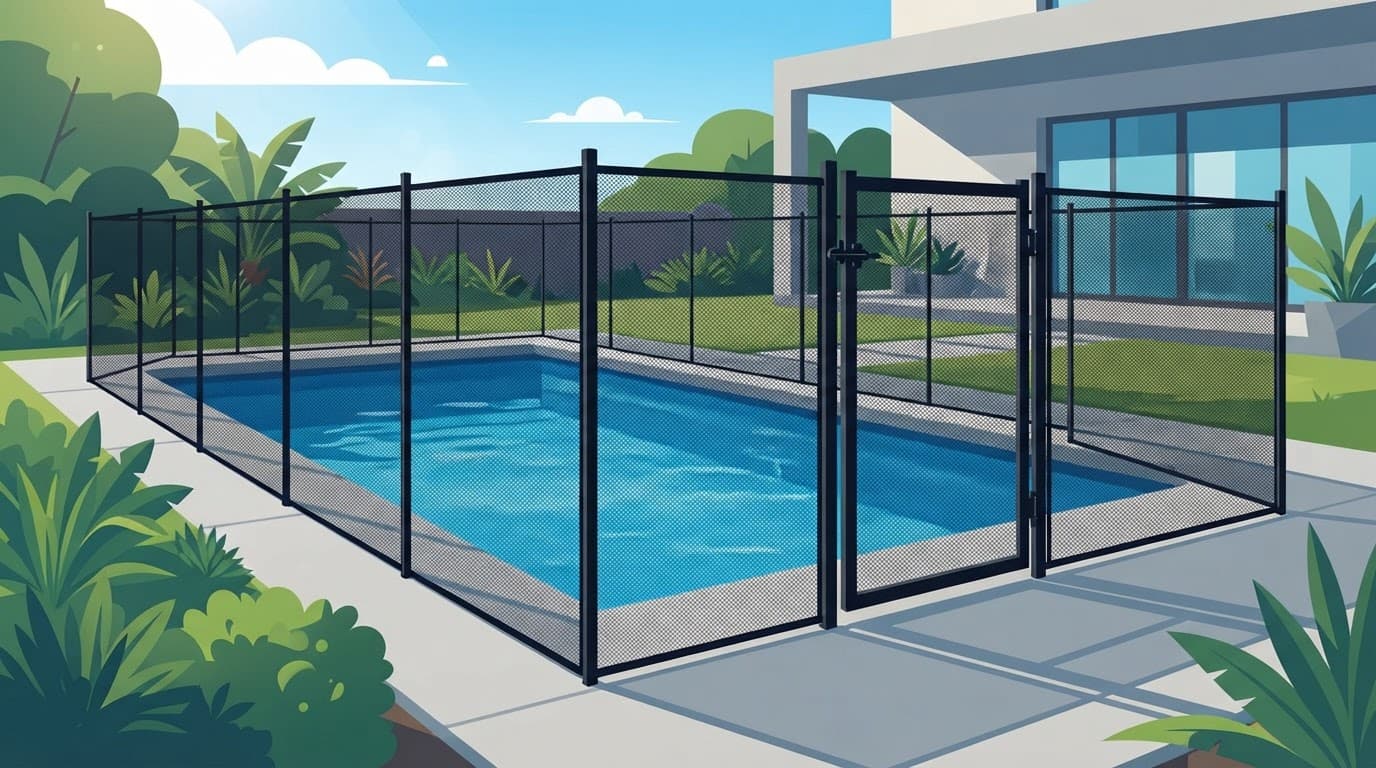
I keep children and pets away until every section passes inspection, then reopen the pool only when every item passes. This prevents unsupervised access and helps reduce accidental drownings. If anything feels loose, looks stretched, or fails the gate test, keep the pool closed until the pool barrier is repaired.
Save the before-and-after photos, roofing invoice, fence repair invoice, and any written communication with the contractor. Those records help when you need to discuss responsibility for damage or show your insurance company that the barrier was maintained.
Check Local Rules and Your Insurance Policy
Pool barrier laws vary by city, county, and state. Roof replacement doesn’t cancel those requirements, and a temporary opening may create a code problem. Maintaining pool safety helps reduce the risk of accidental drownings if roofing work creates unsupervised access.
Before work begins, pool owners should ask the local building department whether isolation fences can be used during removal. Confirm local pool safety regulations, including the required height, gate direction, latch location, opening size, and distance from the pool. In Southwest Florida, local permitting staff can explain which rules apply to your property and what temporary pool barrier must replace the fence.
Your insurance company may also want proof that the pool barrier is compliant. Some insurers offer a discount for approved pool safety features, while others use the information during underwriting or liability reviews. A compliant fence doesn’t guarantee a lower premium, so ask your agent how insurance requirements affect your policy before assuming your rate will change.
I recommend sending the agent updated photos after the fence is repaired or reinstalled. Keep the Life Saver Pool Fence installation paperwork and warranty information with your home records, and verify any written 100-year warranty before relying on it. If a roofing company damages the barrier, report it promptly and ask for repairs by a qualified fence professional.
If you’re planning roof work and want a Life Saver Pool Fence team to check the pool area first, you can Get a FREE Quote or contact our pool fence team to discuss the safest plan for your yard.
Frequently Asked Questions
Can a temporary construction fence replace a pool barrier during roof work?
Not automatically. An orange construction fence may control the work zone, but it may not meet local pool safety requirements or prevent unsupervised access. If the permanent barrier is moved, use a code-compliant temporary pool barrier instead.
Should the pool stay closed while the roof is being replaced?
Yes. Children, pets, visitors, and workers should stay out of the pool area during active construction, even if the barrier appears intact. Reopen the pool only after the barrier and gate pass a complete inspection.
What should I do if part of the pool fence must be removed?
Remove only the smallest section necessary, preferably with help from a qualified pool fence installer. Keep the pool inaccessible and install an appropriate isolation fence with a self-closing, self-latching gate before the barrier is taken down.
What should I inspect after roof work is finished?
Walk the entire fence line and check for torn mesh, loose or bent posts, new gaps, damaged fittings, deck cracks, and climbable debris. Test the gate to confirm that it closes and latches by itself every time, and keep the pool closed until any problem is repaired.
Do pool covers replace a compliant pool barrier?
No. Properly designed safety covers may provide an additional layer of protection where local rules allow, but loose tarps are not safety devices. A pool cover cannot replace a compliant barrier or active supervision.
Protect the Barrier Before Protecting the Roof
Roof replacement brings ladders, debris, workers, and constant movement into the backyard. A strong protection plan keeps those hazards away from the fence and limits unsupervised access to the water, reducing the risk of accidental drownings.
I always inspect the barrier before and after the project. If a section must come down, I replace it with a compliant temporary setup before anyone leaves. Pool barrier protection is not finished when the fence is standing again. It’s finished when every post is secure, every gap is closed, and the gate closes and latches on its own.
Contact Pool Fence of SWFL at (941) 500-9484, https://poolfenceswfl.com/ today!