A pool emergency can happen without a shout or splash. For Southwest Florida households, refreshing pool CPR means practicing rescue breaths, chest compressions, and a clear emergency plan.
Children drowning in pools may make no sound or splash, and preschoolers most often drown in swimming pools. Preparation brings confidence, but it never replaces close supervision or a secure barrier.
The first priorities are safe removal, immediate emergency help, and rescue breaths if the person isn’t breathing normally.
Key Takeaways for a Prepared Pool Household
- Drowning CPR uses rescue breaths and chest compressions, with compressions at 100 to 120 per minute.
- Every swimming pool session needs adult supervision from a named, focused water watcher and clear handoffs during breaks.
- Families should renew CPR training every two years and keep gates, alarms, and emergency supplies ready.
These pool safety habits work together. Effective barriers help prevent unsupervised entry, while practiced caregivers know how to respond when something goes wrong.
What Happens First During a Pool Emergency
A rescuer’s safety matters, too. An unsafe rescue can leave two people needing help.
- Remove the person safely. Use a reaching pole or flotation aid when possible. Only enter the water if the rescue won’t endanger you. Move the person onto a firm, flat surface before chest compressions.
- Check responsiveness and breathing. Tap and shout, then assess breathing for no more than 10 seconds. Occasional gasps aren’t normal breathing. Lay rescuers shouldn’t delay care to check for a pulse.
- Assign the emergency call. Another adult should call 911 on speakerphone while you begin care. The caller gives the address and explains what happened. Another available adult retrieves an AED.
- Begin CPR immediately. Trained responders give two initial rescue breaths, then start chest compressions. Continue cycles of 30 compressions and two breaths. Anyone unable to give breaths should follow dispatcher instructions and provide hands-only care.
- Keep helping until relieved. Continue until the person breathes normally, emergency responders take over, or continuing becomes unsafe.
An unresponsive person who breathes normally still needs 911 and continuous monitoring. Begin CPR if normal breathing stops.
The AAP’s drowning CPR guidance emphasizes rescue breaths because drowning usually begins with oxygen deprivation.
Refresh compression technique
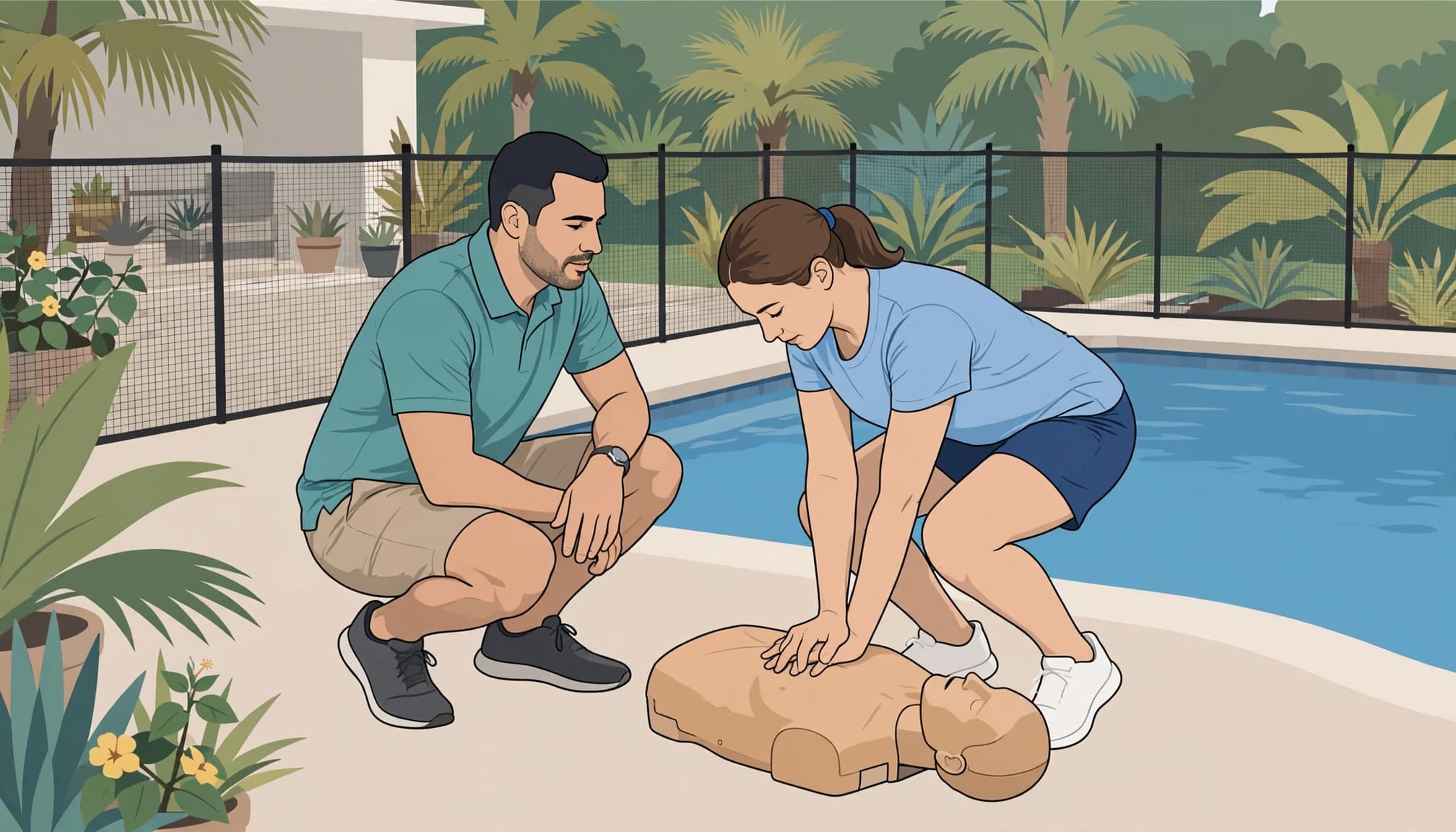
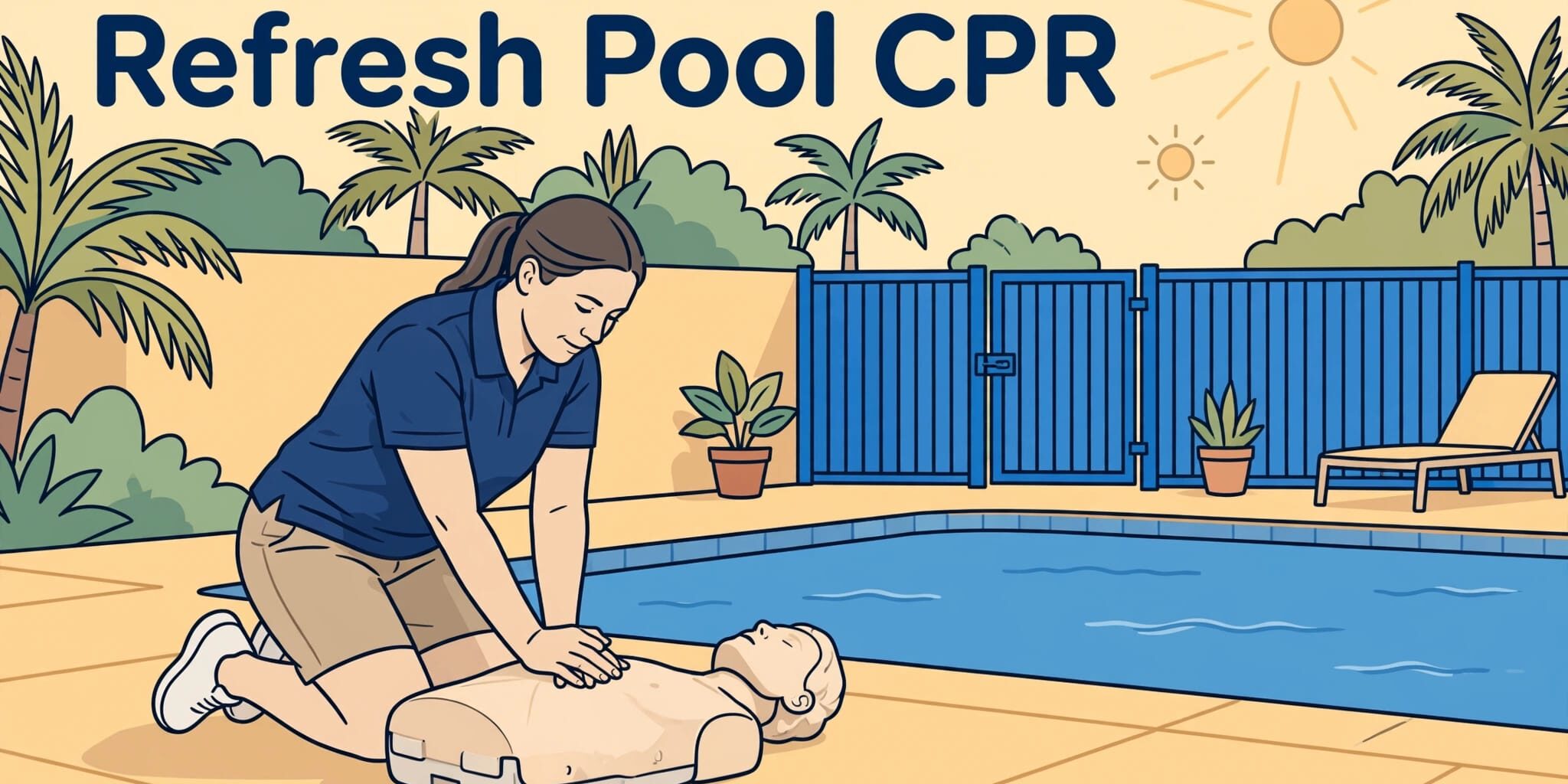
For pool CPR, place one hand’s heel on the lower half of an adult’s breastbone, centered on the chest. Place the other hand above it and interlace the fingers. Keep shoulders above the hands and elbows straight.
Perform 100 to 120 compressions per minute, allowing complete chest recoil. “Stayin’ Alive” offers a familiar rhythm near that range. Keep pauses short and avoid leaning on the chest between pushes.
The American Heart Association’s CPR guidance supports this rate and adult depth.
Compression depth changes with the person’s size.
| Person | Compression depth |
|---|---|
| Adult | At least 2 inches, avoiding depths beyond 2.4 inches |
| Child | About one-third of chest depth, approximately 2 inches |
| Infant | About one-third of chest depth, approximately 1.5 inches |
Hands-on instruction helps caregivers learn the pressure and placement for each age. A child’s size determines whether one or two hands work best.
Practice effective rescue breaths
Open the airway with a head tilt and chin lift. For adults and children, pinch the nose and seal over the mouth. Give each breath over about one second, watching for chest rise.
Avoid large, forceful breaths. If the chest doesn’t rise, reposition the airway before trying again.
A single rescuer generally performs CPR with 30 chest compressions followed by two breaths. Two appropriately trained rescuers may use 15 compressions and two breaths for children and infants.
Infant breathing and compression techniques need separate practice. A refresher class should include them whenever babies visit the home.
AED Skills and Care Until Help Arrives
Use the AED without delaying CPR
An AED analyzes the heart rhythm and provides a shock when needed. During drowning resuscitation, begin CPR with breaths before applying the AED.
Move the person out of the water. Dry the chest where the pads attach, turn on the AED, and follow its spoken instructions.
Nobody should touch the person during rhythm analysis or a shock. Resume CPR immediately when the device directs it.
Use pediatric pads when available for a child, following the device instructions. If pediatric equipment isn’t available, follow the AED’s instructions for the available pads.
Avoid delays and watch for returning breathing
Don’t hang the person upside down or press the abdomen to remove water. Those actions delay breathing support and compressions.
If vomiting occurs, turn the person onto their side and clear visible material. Then resume care promptly if normal breathing hasn’t returned.
If normal breathing returns, monitor continuously and follow the dispatcher’s instructions. Keep the person warm and never leave them alone.
Anyone who needed resuscitation after a pool emergency needs medical evaluation, even after appearing to recover. Rescue breaths alone count as resuscitation.
Refresh Training and Prepare the Emergency Station
Renew certification and practice between classes
CPR training is available through the Red Cross, American Heart Association programs, hospitals, and fire departments. For Southwest Florida caregivers, courses should cover adult, child, and infant skills, rescue breaths, and AED use.
Choose hands-on CPR training. Reading steps helps, but it doesn’t teach how chest recoil or effective breaths feel.
The Red Cross renewal guidance states that certification lasts two years. Families should renew every two years and review skills regularly between courses.
Parents, grandparents, and babysitters benefit from the same preparation. Practicing together also makes emergency responsibilities easier to understand.
Make the home plan easy to use
Build a practical pool safety plan. Keep a charged phone, reaching pole, flotation aid, gloves, and a breathing barrier accessible near the pool. Store supplies where children can’t misuse them.
A waterproof emergency sheet should show the home address, tell caregivers to call 911, and list the easiest pool access route. Caregivers should know who calls, who provides care, and who meets emergency responders.
Australian pool-sign guidance includes visibility from 3 metres, durable materials, and instructions to call Triple 000. Those details don’t establish Florida compliance. Southwest Florida emergency instructions need 911, and signs never replace training.
If a child goes missing, adults should check the pool immediately. This is a key drowning prevention step. A waterfront property’s plan also needs separate canal or dock precautions.
Give the Water Watcher One Clear Job
Assign focused, close supervision
Choose a responsible, sober adult who’s at least 18 years old. They maintain constant visual contact as part of active adult supervision and wear an identifying badge.
The watcher’s phone stays unused except for dialing 911. Cooking, scrolling, reading, and conversations compete with the job.
Infants, toddlers, and inexperienced swimmers need a capable adult within arm’s reach. A watcher across the deck can’t provide that close protection.
Before swimming, the host checks glare, floats, landscaping, and crowded seating. If one adult can’t see the assigned area, reduce access or assign another watcher.
The CDC’s drowning prevention advice supports close supervision and warns against relying on inflatable swimming aids.
Keep coverage during breaks and handoffs
Lunch, bathroom trips, and guest departures can interrupt a good plan. Swimming continues only with assigned coverage. Otherwise, everyone leaves the water and adults secure access.
Every handoff needs spoken acceptance. “I have the pool now” makes responsibility clear. Another adult’s presence nearby doesn’t count.
The watcher tracks children entering and leaving, including anyone returning after a snack. After a longer break, the host names the watcher again.
At the first thunder, everyone leaves the water for substantial shelter. Supervision continues through the exit, and the pool stays secured during the break.
Keep Barriers and Everyday Pool Rules Working
Maintain a dependable fence and gate
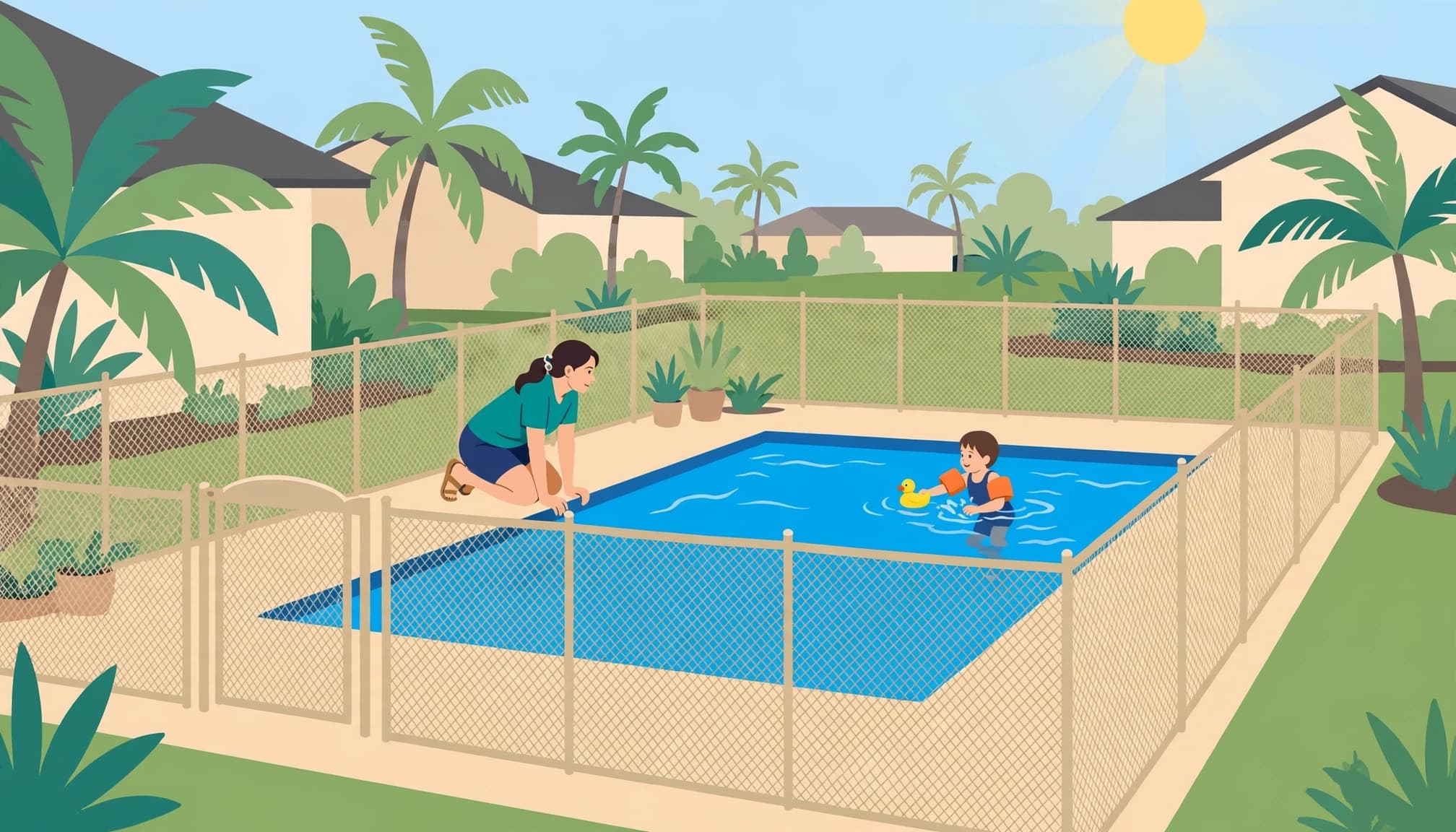
Florida’s residential swimming pool barrier standards require at least four feet of height on the outside. The barrier must prevent young children from crawling underneath, squeezing through, or climbing over.
Pool-access gates must open outward, close automatically, and have a self-latching lock. Four-sided isolation fencing separates the pool from the house and yard.
The Florida Department of Health’s drowning prevention resources explain residential pool safety laws.
Inspect the pool fence regularly for damage, gaps, or a gate that doesn’t latch. Never prop open a gate or pool-access door. Move furniture, planters, and storage bins away from climbable positions.
Address covers, drains, and tempting toys
Pool alarms and door or gate alarms add warnings. A properly fitted automatic safety cover adds protection when it meets safety standards. Keep gaps and standing water off covers.
Drain grates and covers must meet applicable safety standards. Stop swimming if a cover breaks or goes missing. A licensed pool contractor should repair the system.
Floaties aren’t dependable protection. A properly fitted flotation device should carry its U.S. Coast Guard approval label inside.
Children should enter feet first. They shouldn’t dive unless water measures at least nine feet and the pool permits diving. Depth alone doesn’t make diving safe.
After use, empty and stow portable or blow-up pools. Never leave a small child alone nearby. Remove tempting toys and secure access after swimming, storms, parties, and service visits.
Common Questions About Drowning CPR
What if the only adult is alone?
An adult with a phone should call 911 on speaker and begin chest compressions without leaving the person. Follow the dispatcher’s instructions.
Without a nearby phone, a lone rescuer should give about two minutes of care, including rescue breaths, before leaving to summon help. Hands-on training should cover this situation.
Can someone help without current certification?
Yes. A bystander shouldn’t wait for a certification card before calling 911 or helping. Dispatchers can guide the response.
Rescue breaths are important after submersion. If someone can’t give them, chest compressions are better than doing nothing. Training builds confidence before an emergency.
A Clear Plan Brings Real Peace of Mind
A quiet pool emergency needs a practiced response. Safe removal, 911, CPR with breaths, and prompt AED use give caregivers clear jobs.
Regular refreshers help families stay ready. Focused supervision and secured barriers support that preparation before anyone needs rescue.
Questions or ready to get started? Call us at (941) 500-9484