A rescue ring only helps if you can grab it before entering the swimming pool. That is why pool rescue equipment needs a clear, fixed home beside the pool.
Many families keep this safety equipment in the garage or store medical supplies inside the house. I don’t recommend either choice. A few extra steps can cost precious time.
I prefer a simple setup: coordinate safety tools by securing the fence, keeping the rescue station within reach, and protecting medical supplies from sun and rain. Safety starts with a clear barrier around the water.
Key Takeaways
- Keep pool rescue equipment in a visible, fixed rescue station beside the pool, with access possible without entering the water or unlocking a shed.
- Use a four-foot residential pool fence with a self-closing, self-latching gate, and keep furniture, toys, and other footholds away from the barrier.
- Store a USCG-approved Type IV ring buoy with its floating throw rope, a shepherd’s crook, and properly sized life jackets where adults can grab them quickly.
- Keep first aid supplies and any AED dry, shaded, weather-protected, and easy to find, while checking alarms, drain covers, and all rescue gear every month.
Start With the Pool Safety Fence
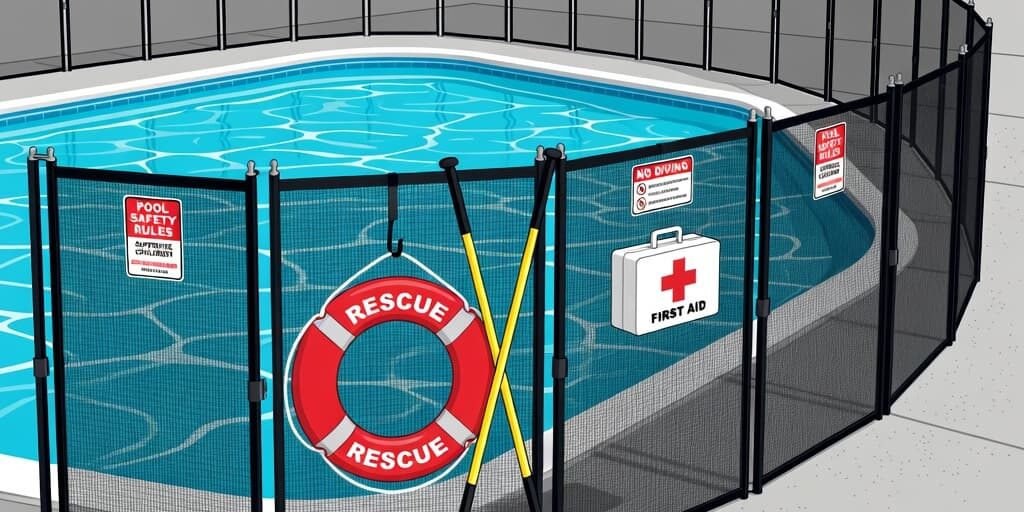
A pool safety fence is one of the most important safety tools. Rescue gear is the backup plan, while the fence helps stop unsupervised access before an emergency begins.
A residential fence should usually stand at least four feet high. It should surround all sides of the pool and include a self-closing, self-latching gate. Local safety regulations can vary, so check your city or county requirements before installation.
I like black mesh pool fences because they provide a strong barrier without making the backyard feel closed in. The mesh also lets adults see the pool area clearly from nearby spaces.
Keep the gate latch high enough to prevent easy access by young children. However, adults and caregivers should reach it quickly during normal use. Never place furniture, planters, toys, a pool skimmer, or rescue gear against the fence.
A fence prevents access, but it must never become a storage wall that gives children a foothold.
Safety pool covers add another layer when the pool sits unused. Look for an ASTM F1346-certified safety cover that fits the pool correctly. Keep the cover installed according to its instructions, but never treat it as a replacement for fencing or supervision.
Door and gate alarms can alert you when someone enters the pool area. They work best with a physical barrier, not instead of one. If you need help choosing a black mesh barrier for your yard, Get a FREE Quote.
Where to Keep Your Pool Rescue Station
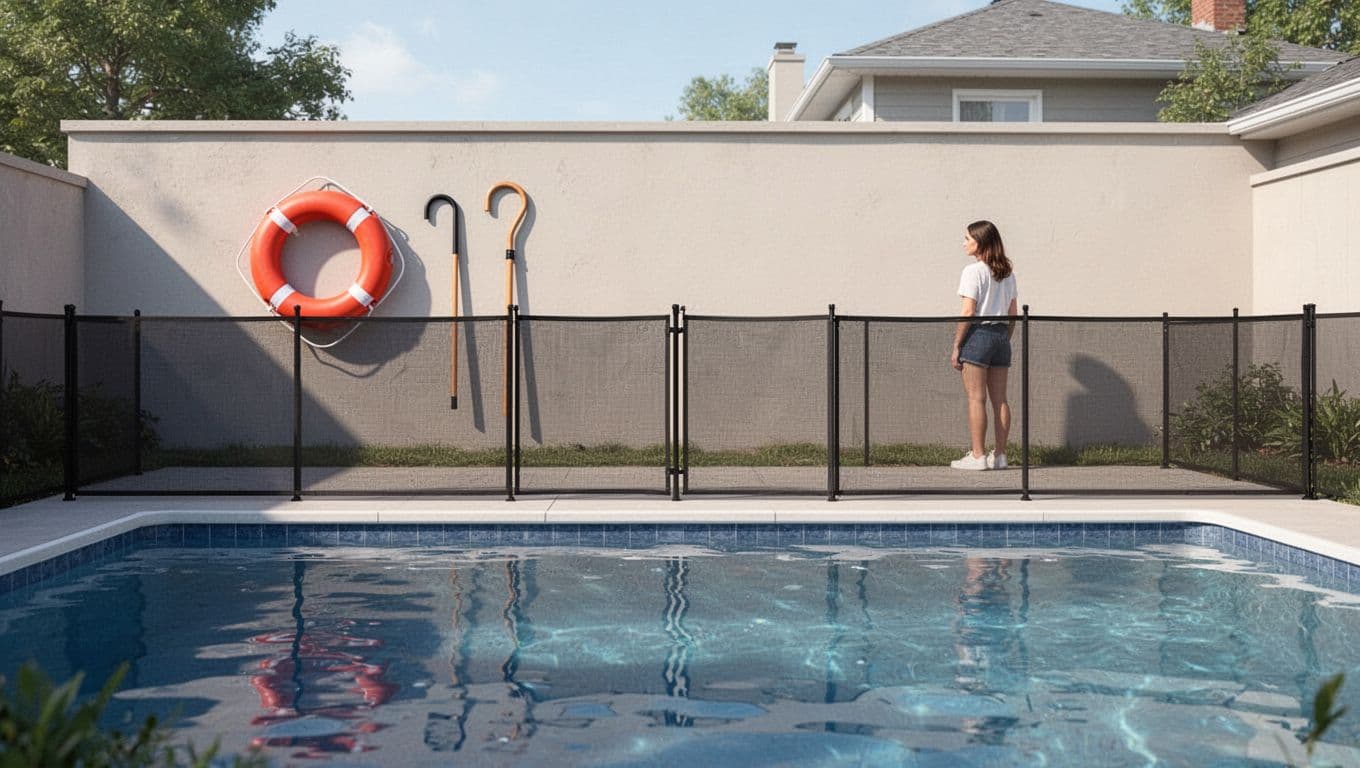
The best rescue station sits near the pool, stays visible, and remains reachable without entering the water. Its rack holds essential emergency equipment, and each item serves as one of the nearby safety tools. I would place it on a sturdy wall, post, or approved mounting point beside the pool deck.
The location should allow an adult to grab equipment from outside the fenced area when possible. You shouldn’t need to unlock a shed, walk through the house, or climb over the fence.
Keep the station away from direct spray, lawn equipment, chemicals, and children’s play areas. Store the pool skimmer with separate maintenance supplies, not on the rescue rack. Also, avoid anything that blocks the path to the gate. A clear route matters when someone is shouting for help.
Store the life ring with its throw rope
A USCG-approved Type IV ring buoy is a practical choice for most home pools. Also called a life ring or lifebuoy, it should have an intact approval label and a buoyant design intended for emergency use.
Common home versions measure about 20 to 30 inches across. Choose a size that adults can throw and hold comfortably. The buoy should have a grab line around its outside edge.
Attach a floating throw rope that reaches the pool from the rescue station. Many residential setups use a 30-to-60-foot rope. Follow the ring buoy manufacturer’s instructions and local requirements.
Store the rope in a loose coil or rescue rope bag. Don’t tie tight knots into it. Sun exposure can weaken rope, so inspect it regularly for fading, stiffness, fraying, or broken strands.
A ring buoy belongs on an open wall hook or rescue rack. It shouldn’t sit under a towel, inside a deck box, or behind a locked door.
Mount a shepherd’s crook where it stays easy to grab
A shepherd’s crook, also called a life hook, gives you reach from the pool deck. It can help you pull a struggling swimmer toward the wall without jumping into the water.
Choose a long pole made from fiberglass or another nonconductive material. Common residential rescue poles measure 12 to 16 feet. Keep the hook secured on a visible bracket, with the end facing away from walkways.
The hook should never replace a flotation device. A person can slip beneath the surface quickly, and a pole only helps when you reach the swimmer in time.
I recommend learning basic rescue technique before an emergency happens. Extend the pole toward the swimmer’s upper body or hand. Avoid striking, snagging, or pulling from the neck.
A rescue tube can help trained swimmers or caregivers provide flotation support. Life vests belong nearby in a dry cabinet or on wall hooks. Choose properly sized, USCG-approved life jackets for children who use them.
Use a spineboard only within a trained commercial or responder plan, such as one used at an aquatic facility or by trained responders at home. Most homeowners don’t need a spineboard or head immobilizer. Buying equipment you don’t know how to use can create confusion during a crisis.
Keep First Aid Supplies Dry and Close
A waterproof first aid kit should sit near the swimming pool exit, not in a bathroom cabinet across the house. I prefer a bright, sealed container on a shaded shelf or inside a weather-protected cabinet.
The kit should open quickly and stay organized. Include supplies for small cuts, scrapes, burns, and basic emergency care:
- Nitrile gloves and a CPR mask or face shield with a one-way valve.
- Sterile gauze, adhesive bandages, medical tape, and antiseptic wipes.
- Trauma shears, tweezers, a cold pack, and burn dressings.
- Saline eye wash and a clean cloth for rinsing.
- A waterproof card with the home address and emergency contacts.
Together, these supplies are practical safety tools for minor injuries and basic emergency care.
Do not leave medication, aerosol products, or heat-sensitive supplies in direct Florida sun. Check expiration dates during your monthly safety review. Replace anything wet, opened, crushed, or missing.
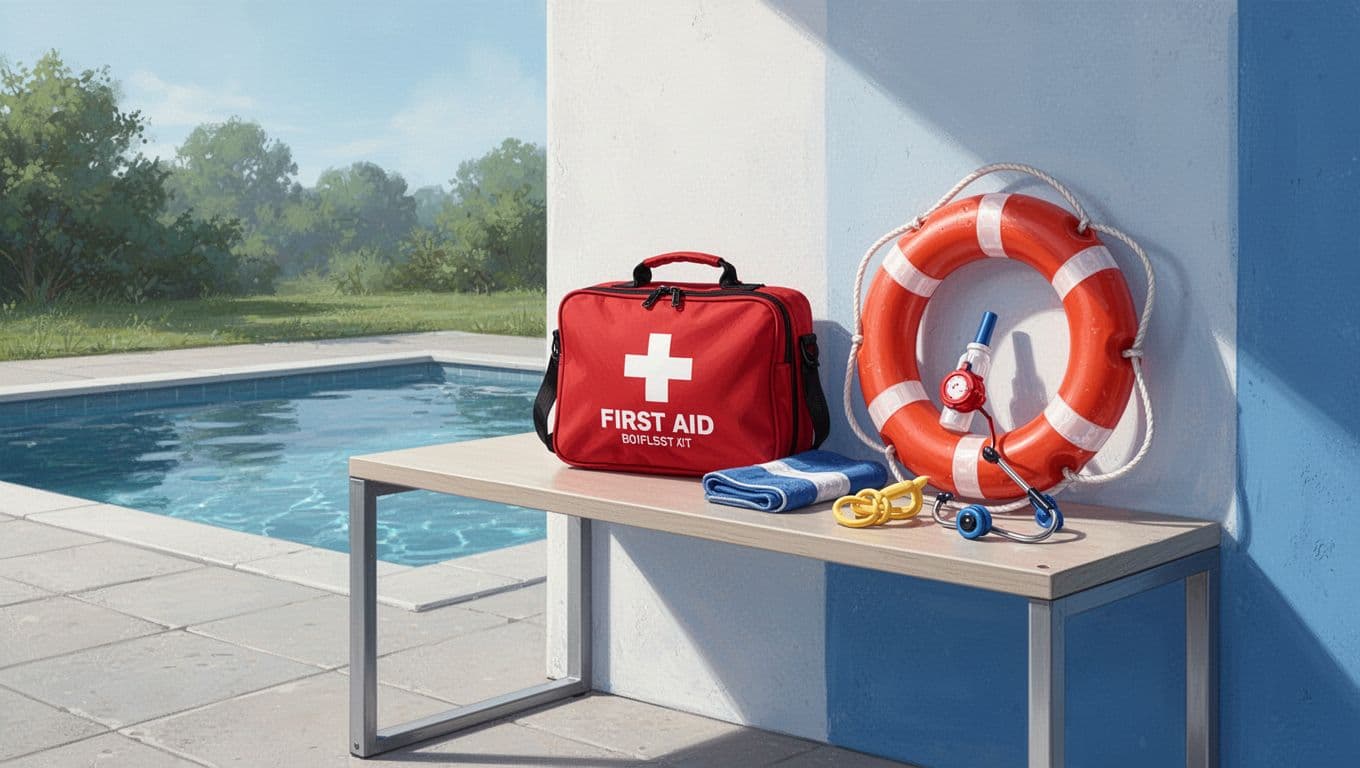
An automated external defibrillator may make sense for homes hosting large gatherings or short-term renters. It may also help households with older adults, known cardiac risk, or families sharing a pool.
Store an AED in a weather-protected, visible location near the pool. Avoid direct sun, high heat, standing water, and locked storage that delays access. Follow the device’s temperature and maintenance requirements.
Call emergency services first during a serious incident. A spineboard is specialized equipment, not a general first aid supply; it cannot replace that call or beginning CPR. Begin CPR if needed, then follow the AED’s voice prompts. A CPR class gives caregivers much more confidence with every part of this response.
Add Alarms and Check the Pool’s Drain Covers
Pool alarms offer another warning when someone enters the water. A door or gate alarm alerts you when access opens. A surface-wave alarm detects movement across the water’s surface.
A subsurface motion sensor detects underwater movement below the surface. These systems work differently, so read the manufacturer’s coverage limits before choosing one.
Keep the alarm receiver inside the house where adults can hear it. Test pool alarms according to their instructions. Check batteries after storms, power interruptions, and long periods without use.
Alarms can trigger from pets, rain, water features, or strong winds. Adjust the system carefully, but don’t turn it off because of nuisance alerts. A quiet alarm provides no protection.
Alarms and compliant drain protection are separate safety tools that work together, but neither replaces supervision.
The pool’s suction system needs attention, too. Check the pool skimmer basket separately, and empty it as needed. This check doesn’t evaluate entrapment protection.
The Virginia Graeme Baker Pool and Spa Safety Act sets federal requirements for public pools and spas. Private-home requirements can depend on local rules and the equipment installed.
Use compliant anti-entrapment drain covers that fit the drain correctly. Never remove a cover while the pump runs. Replace cracked, loose, missing, or outdated covers through a qualified pool professional.
Drain covers aren’t rescue tools, but they help prevent a serious underwater hazard. I include them in every pool safety inspection because small equipment problems can create large risks.
Use a Simple Monthly Safety Check
Once each month, I would inspect all safety tools and review every safety layer around the pool. Choose the same day each month so the task doesn’t disappear from your calendar.
- Open and close the fence gate several times. Confirm that it closes and latches without help.
- Inspect the ring buoy, throw rope, mounting hook, rescue pole, and life jackets.
- Test door, gate, surface-wave, and subsurface alarms according to their instructions.
- Open the first aid kit and replace expired, wet, dirty, or missing supplies.
- Inspect each drain cover for cracks, movement, missing screws, or poor fit.
- Remove toys, chairs, tools, and planters that could help a child reach the gate.
- Show the rescue station to grandparents, babysitters, guests, and other caregivers.
After a storm, inspect the fence, gate, alarm, rope, and storage cabinet again. Heavy rain and wind can move equipment, damage latches, clog the pool skimmer, and fill outdoor containers with water.
Every pool owner should teach caregivers where the phone, rescue station, and medical supplies are located. They shouldn’t waste time looking for specialized equipment, such as a spineboard, unless a trained response plan specifically calls for one.
If you want a professional opinion about your barrier placement, contact Pool Fence SWFL for a local safety consultation.
Frequently Asked Questions
Where should pool rescue equipment be stored?
Store it in a visible rescue station beside the pool, preferably where an adult can reach it without entering the water or unlocking a door. Keep the path to the equipment clear and protect it from sun, rain, chemicals, and lawn equipment.
What equipment should a home pool rescue station include?
A practical station should include a USCG-approved Type IV ring buoy with a floating throw rope and a shepherd’s crook. Properly sized life jackets, a waterproof first aid kit, and other equipment may also be useful depending on the household and its training.
Should rescue equipment be kept inside the pool fence?
Equipment should be reachable from outside the fenced area when possible, so an adult does not need to enter the pool enclosure before responding. Never use the fence as a storage wall or place items against it where children could gain a foothold.
How often should pool rescue equipment be checked?
Inspect the rescue station, rope, ring buoy, rescue pole, life jackets, alarms, first aid supplies, and drain covers at least once a month. Recheck them after storms and replace anything that is damaged, wet, expired, frayed, or missing.
Does pool rescue equipment replace supervision or fencing?
No. Rescue gear is a backup layer, while a compliant fence, locked gate, alarms, safety covers, and active supervision help prevent emergencies from happening.
Keep Every Safety Layer Within Reach
The right pool rescue equipment won’t help if it stays locked in a garage or buried inside a deck box. Place the lifebuoy and its attached line where an adult can reach them quickly, and mount the shepherd’s crook nearby. Keep medical supplies sealed, shaded, and easy to find, so this organized setup keeps the rescue gear ready.
A black mesh pool safety fence with a self-closing, self-latching gate should surround the pool. Alarms, safety covers, a checked drainage system, and caregiver training add more protection. Most residential households don’t need a spineboard unless trained responders have a specific plan for it.
I feel much better when every item has a clear place and every adult knows that place. A few minutes of monthly checking can keep your pool area ready for the moment you hope never comes.