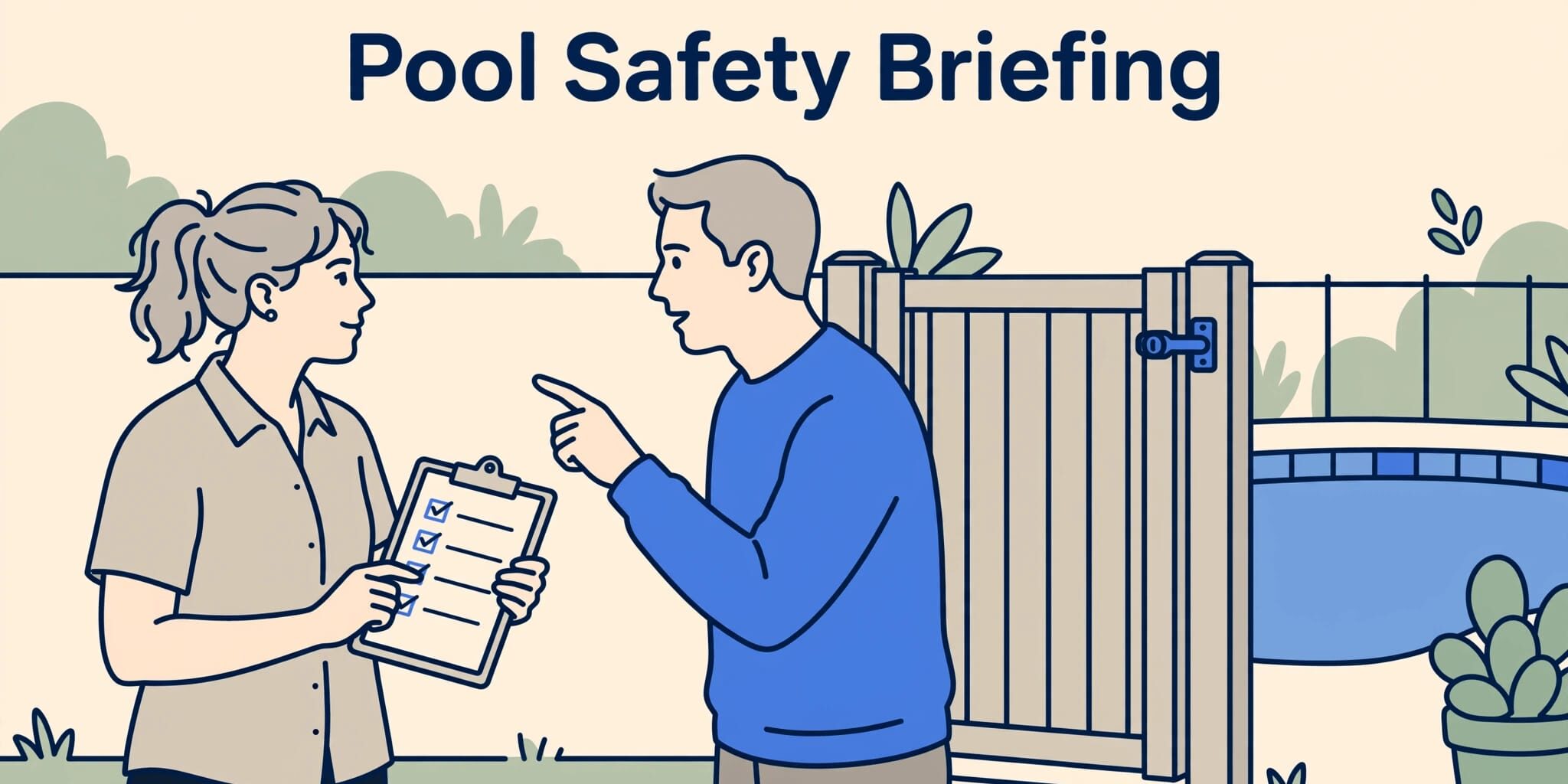
The most helpful water safety conversation happens before a parent walks out the door. A babysitter pool safety briefing gives the caregiver clear rules that limit unsupervised access and an emergency plan.
It also gives parents peace of mind, because the sitter knows exactly what the family expects. Even an evening without swimming needs this conversation when a backyard pool sits nearby.
Ten focused minutes should cover permission, barriers, supervision, emergency readiness, and a final check of the sitter’s understanding.
Key Takeaways
- Discuss pool permission, swimming conditions, and the caregiver’s readiness before the parent leaves; if anything is unclear, keep swimming off the schedule.
- Walk every route to the pool and demonstrate how barriers, gates, alarms, doors, and other access protections work.
- Assign one sober caregiver to actively supervise, and make sure handoffs and interruptions never leave children unattended near the water.
- Review each child’s needs and the emergency plan, including the home’s address, phone, rescue equipment, and when to call 911.
- Before leaving, have the sitter demonstrate key safety steps; after swimming, account for every child and restore the pool’s access protections.
Set Clear Permission Before the Parent Leaves
Ten minutes refreshes a prepared caregiver’s plan. It doesn’t replace training, repairs, or a longer conversation when something remains unclear.
Decide whether swimming is allowed
Parents should give a clear answer before leaving: swimming is allowed under agreed conditions, or the pool stays off-limits. Children shouldn’t negotiate a different answer after the parent leaves.
Permission should cover who may swim, where swimming may happen, and whether another adult must attend. A backyard pool, hot tub, and nearby canal each need attention.
The CPSC’s drowning prevention guidance covers home pools, spas, and hot tubs. Families should include every water feature the children could reach.
Confirm the sitter feels ready
Parents should ask about swimming ability, water supervision experience, and CPR training before approving pool time. The sitter should also feel comfortable enforcing the family’s rules.
A caregiver can decline swimming without disappointing the family. That honest answer deserves support!
If several children need close attention, parents should confirm whether the sitter can manage everyone safely. When the arrangement doesn’t work, indoor play is a good choice.
Finally, parents should leave enough time for questions. A rushed goodbye shouldn’t leave the caregiver guessing about an important rule.
Minutes 1 and 2: Walk Every Pool Access Route
The parent and sitter should walk the actual routes children could take. A quick explanation inside the kitchen can miss an open patio door or loose fence section.
Check the removable mesh fence and gate
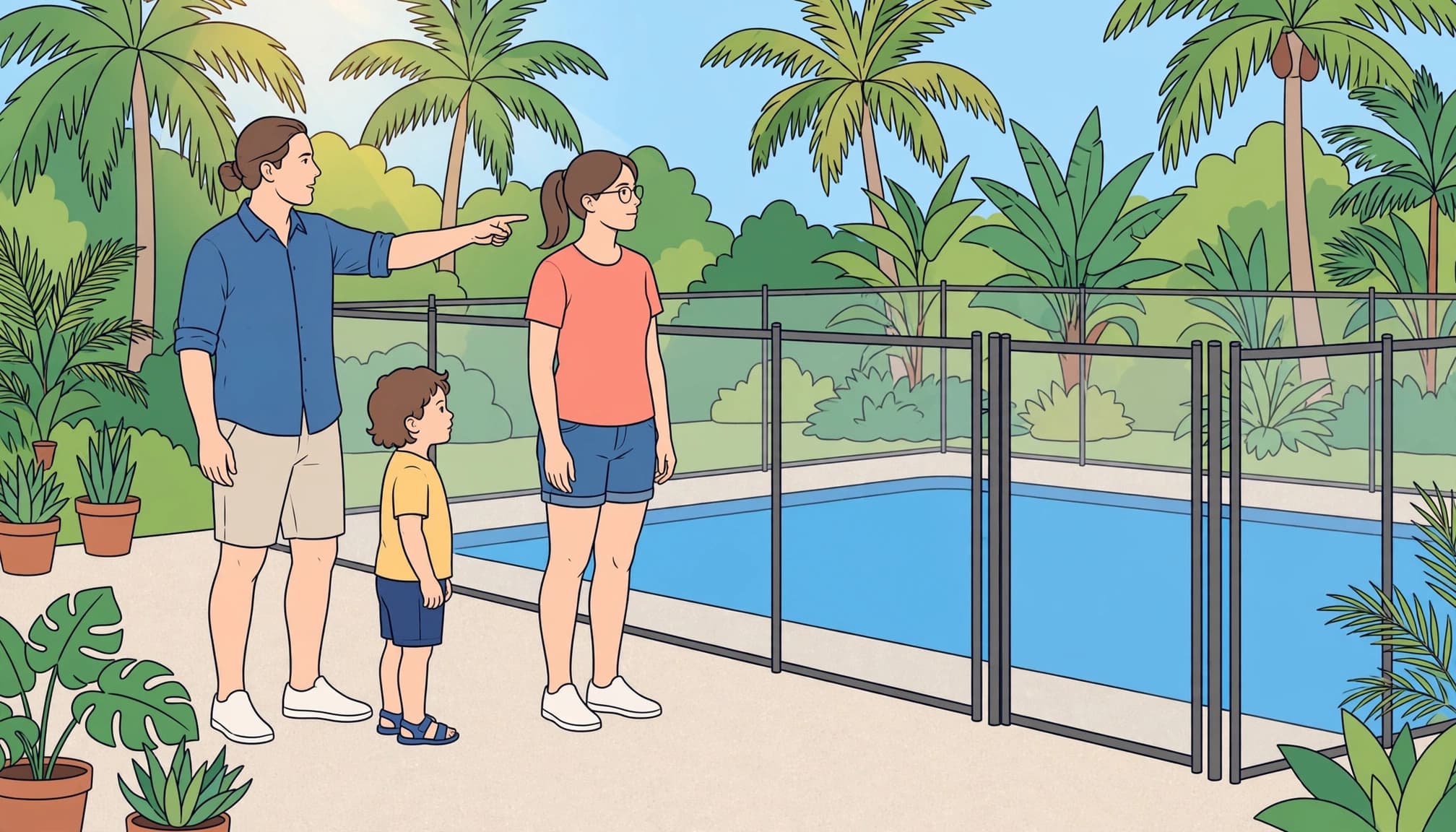
A four-sided safety barrier separates the swimming pool from the house and surrounding play areas. A removable mesh safety fence provides that separation while keeping the water visible.
The parent should show the sitter how the self-closing gate opens, closes, and latches. Together, they should confirm that it closes and latches without an extra push.
Nobody should prop the gate open. Chairs, coolers, planters, and toys should also stay away from the fence.
The CPSC’s residential pool barrier guidelines address barrier design and access control. Homeowners should confirm their property’s requirements with the local building department.
Demonstrate the other access protections
Parents should demonstrate any installed pool alarms, including a door alarm if one is installed, and explain what the sitter should do when one sounds. An alert needs an immediate response, not an assumption that another adult heard it.
The briefing should also cover secured doors, windows, and any safety cover. A regular pool cover shouldn’t count as an approved safety cover.
For above-ground pools, parents should explain how they secure ladders and steps when nobody supervises swimming. These protections support the fence and caregiver, but they don’t replace focused supervision.
Minutes 3 and 4: Name the Person Watching
A clear assignment prevents a common misunderstanding: several adults nearby, but nobody taking responsibility for the water.
Give supervision one clear owner
One named, sober caregiver should actively watch the children during pool time. The sitter should understand that supervising means staying attentive throughout the swim.
The CDC’s drowning prevention guidance recommends close supervision whenever children are near water. Parents should discuss the supervision each child needs, including any touch supervision expectations.
Phones, social media, reading, and unrelated chores should wait. The emergency phone can stay nearby without becoming entertainment.
A quick message, snack preparation, or conversation can interrupt otherwise caring supervision. The concern is the break in attention, even when the adult remains close.
The sitter should also know which children need help entering, exiting, or following directions. Those needs affect whether pool time is manageable.
Explain bathroom breaks and handoffs
The sitter shouldn’t leave children swimming while answering the door or stepping inside. If no prepared adult can take over, everyone leaves the water together.
A replacement watcher must clearly accept responsibility before the original caregiver steps away. Simply having another adult on the patio doesn’t complete the handoff.
A supervision handoff happens when the next caregiver accepts responsibility, not when another adult arrives nearby.
An older sibling shouldn’t become the backup watcher. Parents should explain how the sitter can manage bathroom trips and other interruptions without leaving children behind.
Minutes 5 and 6: Set Rules for Each Child
Children bring different abilities, habits, and comfort levels to the pool. The briefing should describe those differences plainly.
Share skills and individual needs
Parents should describe each child’s current swimming skills and ability to follow directions. Attending swimming lessons doesn’t permit independent swimming.
The American Red Cross’s home pool safety guidance recommends several protections, including barriers, life jackets, and close supervision. Families should explain how those protections fit their children’s needs.
If a child uses a life jacket, parents should identify the correct one and demonstrate its fit. Inflatable toys shouldn’t become the sitter’s safety plan.
Parents should also share communication needs, sensory concerns, or wandering habits. Familiar instructions help the caregiver respond consistently and kindly.
Keep the rules simple and dependable
Parents should set clear rules for walking on the deck, feet-first entry, and staying away from drains. The sitter should repeat those rules before anyone enters.
Children shouldn’t enter without the caregiver’s permission. Rough play, breath-holding contests, and pushing belong outside the family’s approved pool activities.
Parents should identify the steps and usual exit route. However, the sitter shouldn’t introduce new swimming challenges during a babysitting visit.
Thunder, poor water visibility, fatigue, or damaged equipment should end pool time. Children may object, but the caregiver should have the parent’s full support.
Minutes 7 and 8: Review Emergency Readiness
Parents should review the emergency setup before anyone needs it. Knowing where everything is removes unnecessary searching.
Make the address and phone easy to find
The sitter should have a charged phone and the home’s exact street address. Parents should share gate codes, access instructions, and their contact numbers.
The caregiver should know how emergency responders can reach the backyard. Locked entrances or unfamiliar side paths shouldn’t come as surprises.
If a child goes missing, the sitter should check the pool immediately and call for help. Parents should discuss other nearby water, including canals or ponds.
For an unresponsive child or abnormal breathing, the sitter should call 911 and follow dispatcher instructions. Contacting a parent shouldn’t delay emergency help.
Confirm equipment and training
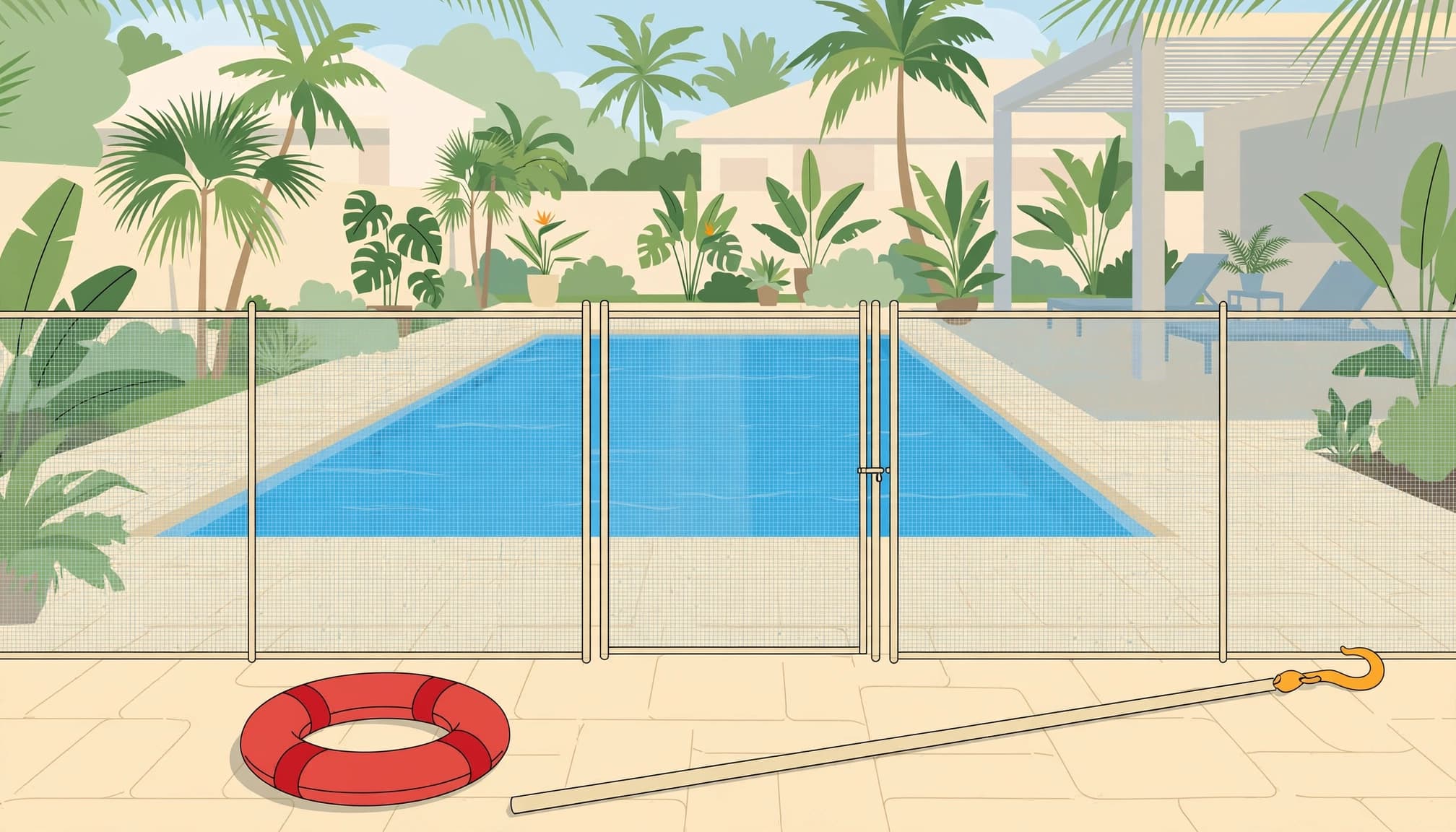
Before leaving, the parent should show the sitter the rescue ring, reaching pole, and first-aid supplies, together called rescue equipment. They should confirm the sitter understands how to use it and has appropriate rescue training.
Equipment should remain accessible without creating climbing opportunities beside the fence. A reaching pole shouldn’t become something a child can use to defeat the barrier.
The briefing can’t teach CPR. Families should arrange recognized CPR and first-aid training before assigning a caregiver responsibility for swimming.
A caregiver shouldn’t attempt a rescue beyond their training or put themselves in danger. Parents should create an emergency response plan that matches the sitter’s abilities.
Emergency readiness deserves an unhurried conversation. If questions remain after ten minutes, the discussion should continue before parents leave.
Minutes 9 and 10: Have the Sitter Demonstrate
A friendly nod doesn’t show whether the sitter understands the gate or emergency plan. A short demonstration makes the handoff much clearer.
Parents can use this final sequence:
- The sitter explains whether swimming is allowed and names any conditions.
- Next, the caregiver opens the gate, lets it close, and checks the latch.
- The sitter identifies the emergency phone, written address, and available rescue equipment.
- Then, the caregiver explains how children leave the water during bathroom breaks or other interruptions.
- Finally, the sitter describes when to call 911 and how to help responders reach the pool.
Parents should correct misunderstandings before leaving. They should also invite the sitter to call with questions instead of guessing.
If the gate doesn’t latch or the caregiver can’t explain the plan, swimming stays off the schedule. An alternative activity keeps the afternoon enjoyable.
The briefing can finish with one clear agreement about pool access. Both adults should understand the same permission, boundaries, and responsibilities.
A written reminder helps, too. It should match the conversation and stay somewhere the sitter can find quickly.
After Swimming: Secure the Pool Again
Pool time ends after every child leaves the water and the caregiver restores the access protections. Dry towels alone don’t complete the routine.
The sitter should account for every child before gathering equipment. Children shouldn’t remain poolside while the caregiver carries supplies inside.
Toys should leave the water because they can attract children back toward the pool. However, cleanup shouldn’t distract the sitter from the children.
Next, the caregiver should confirm that the mesh safety fence remains in place and the gate closes and latches. The sitter should restore pool alarms or other protections exactly as the parent demonstrated.
Removable fencing should stay installed during babysitting. Its removable design isn’t permission to leave the pool accessible.
Parents should hear about latch trouble, damaged mesh, or confusing access routes when they return. Those concerns need attention before the next visit.
Homeowners can schedule a pool fence consultation when barrier problems need professional attention. Families planning installation can Get a FREE Quote by phone or email.
The next caregiver should receive updated instructions after any repairs or changes.
Frequently Asked Questions
What should a babysitter pool safety briefing cover?
It should cover whether swimming is allowed, how children can access the pool, who is responsible for supervision, each child’s needs, and the emergency plan. The sitter should demonstrate that they understand the rules before the parent leaves.
Can children swim if they have taken swimming lessons?
Swimming lessons do not mean children can swim independently. Parents should explain each child’s current skills and needs, and the caregiver should provide the agreed close supervision.
What should the sitter do if they need to leave the pool area?
The children should leave the water with the sitter unless a prepared adult clearly accepts responsibility for supervising them. Another adult’s presence nearby does not count as a handoff.
When should the sitter call 911?
For an unresponsive child or abnormal breathing, the sitter should call 911 and follow the dispatcher’s instructions. Calling a parent should not delay emergency help.
What should happen after swimming ends?
The sitter should account for every child, remove toys from the water, and restore the fence, gate, alarms, and other protections as the parent demonstrated. Any latch trouble or damage should be reported to the parents.
A Clear Plan Brings Real Peace of Mind
A dependable babysitter pool safety briefing leaves the caregiver with clear permission, working access protections, and an emergency plan. Parents can feel more confident when the sitter demonstrates those responsibilities before they leave.
The strongest reassurance comes from consistent safety measures: focused supervision, a secure gate, and questions answered without rushing. Ten minutes can establish those expectations, while training and regular maintenance support them afterward.
Questions or ready to get started? Call us at (941) 500-9484