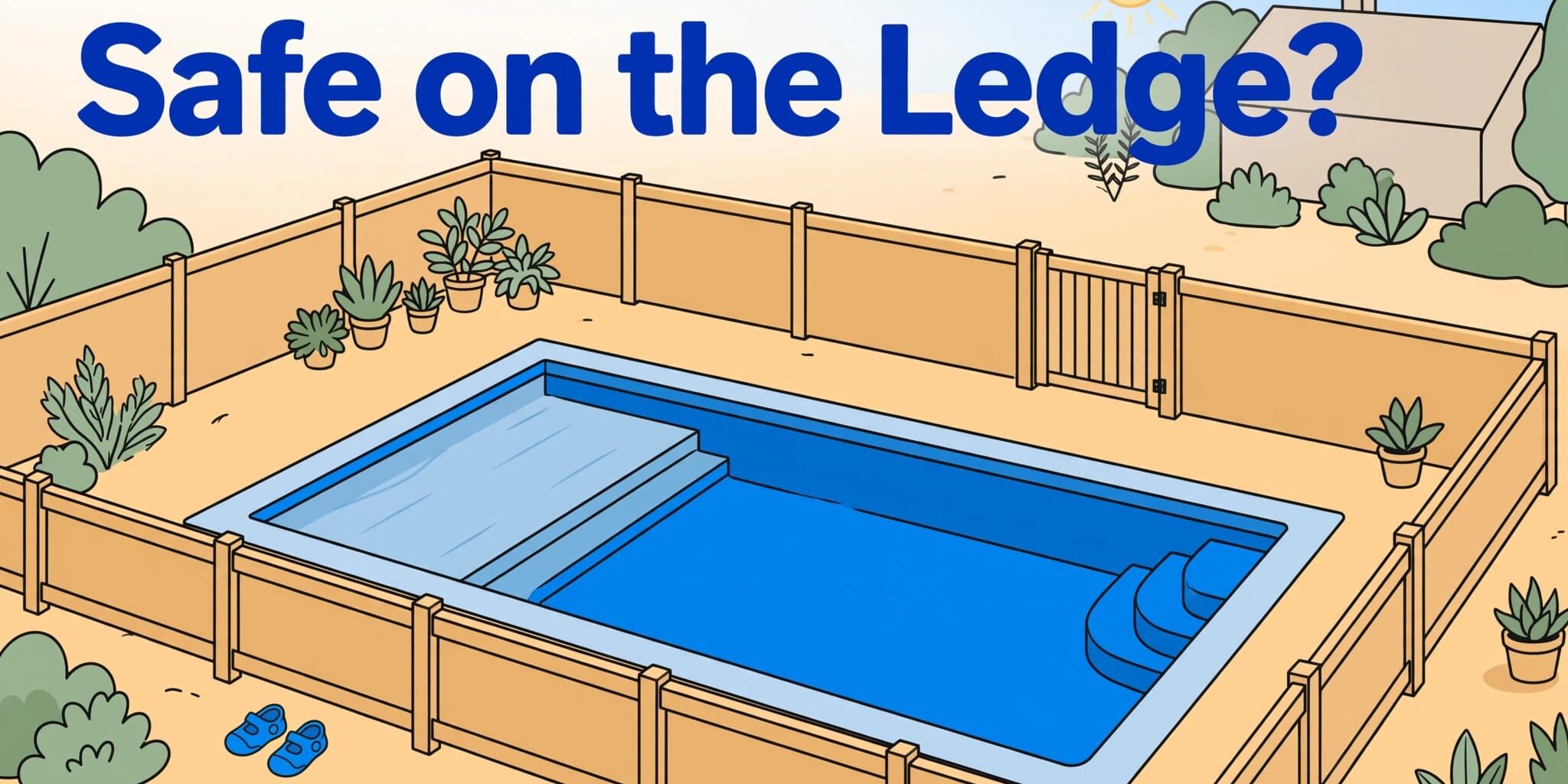
A tanning ledge can look like the perfect place for a toddler to splash. But shallow water still carries drowning risks.
For homeowners, close supervision and a secure barrier are the foundation of toddler pool safety. A ledge needs the same protection as the rest of the pool, starting before a child reaches the water.
Key Takeaways
- For toddler pool safety, keep an adult within arm’s reach; a shallow ledge never makes unsupervised play safe.
- Four-sided fencing helps prevent unsupervised access, while alarms provide another warning.
- Swimming lessons, suitable flotation, CPR training, and accessible rescue equipment support those first layers; floaties never replace adult supervision.
Why a Shallow Tanning Ledge Still Needs Protection
A tanning ledge is a shallow shelf for lounging, not a separate children’s pool. A toddler can slip, fall forward, or move toward the edge where deeper water begins.
An infant or toddler can drown in as little as 1 inch of water. Young children may struggle to lift their faces after falling, even when the water seems shallow.
The CDC identifies drowning as the leading cause of death for children ages 1 to 4. Drowning can happen quickly and without shouting or obvious splashing.
That makes the ledge’s appearance misleading. Comfortable seating and shallow water don’t remove the need for adult attention.
Toddler Pool Safety Starts With a Secure Barrier
Fence the Entire Pool, Including the Ledge
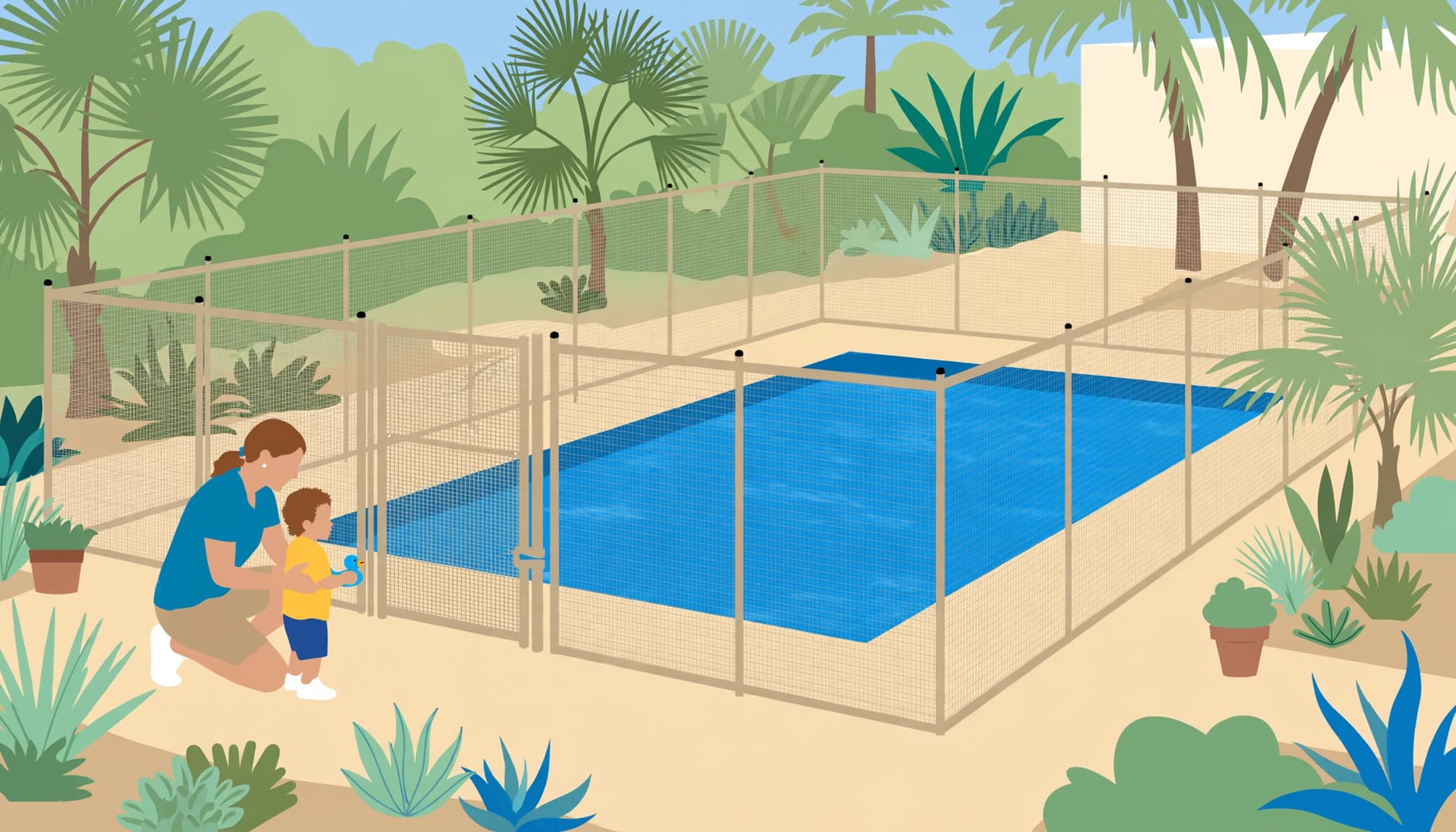
A pool fence should stand at least 4 feet high and surround the water on all four sides. Openings must prevent children from squeezing through.
Install a self-closing gate that latches automatically, with the latch beyond children’s reach. A property-line fence may still leave an open route between the house and pool.
According to NDPA’s barrier guidance, four-sided isolation fencing reduces drowning risk by 83% compared with three-sided perimeter fencing.
Removable mesh fencing keeps the water visible while creating separation. Homeowners can ask about removable mesh fencing fitted around the pool and ledge.
Keep Gates Clear and Add Alarms
Chairs, planters, coolers, and storage bins can become climbing steps. Keep them away from the fence, along with large toys.
Test the gate’s closing and latching action daily. Check it again after storms, repairs, or fence removal and reinstallation.
Door, window, and gate alarms warn when someone opens an access point. Pool-entry alarms may warn after a child reaches the water.
However, alarms need someone to hear and respond. They can’t physically block access, so they belong alongside a fence rather than replacing it.
Close Supervision Comes Before Water Play
Keep a Toddler Within Arm’s Reach
The AAP recommends touch supervision for beginning swimmers. An adult stays within arm’s reach, including while a toddler plays on the ledge.
Watching from a lounge chair across the patio doesn’t provide that protection. That distance is too far for effective supervision.
Designate one Water Watcher who focuses only on the children. Phones, reading, and conversations can wait.
Rotate that role every 15 to 20 minutes. Each change needs a clear handoff, so everyone knows who has responsibility.
If the watcher needs to leave, another adult takes over first. Otherwise, water play ends.
Add Swimming Skills Without Relaxing Supervision
Swim lessons help children build useful skills. Finding the wall, reaching the steps, and practicing safe exits all matter.
A review of aquatic skills research reports that formal lessons are associated with an 88% lower risk for children ages 1 to 4. That finding doesn’t make any child safe from every water hazard.
Water wings, noodles, and inflatable floaties aren’t substitutes for a properly fitted, U.S. Coast Guard-approved life jacket. Inflatable toys can deflate or slip away, and they may give adults false confidence.
Even an approved life jacket doesn’t replace an adult within arm’s reach. The same supervision rule applies on the shallow shelf.
A Simple Routine Before and After Every Swim
Before swimming, an adult should inspect the deck, ledge, gate, water, and drain cover. Move loose toys out of walking paths and keep the deeper-water edge in view.
Keep children away from drains and suction outlets. Never use a pool or spa if the drain cover is loose, broken, or missing.
When swimming ends, remove floaties and other tempting toys from the water, then close the gate. Nobody should prop it open while carrying towels or cleaning up.
A properly secured safety cover adds protection when the pool closes. Loose tarps don’t provide the same protection.
Empty small inflatable and portable pools immediately after every use. Their smaller size doesn’t remove the drowning risk.
Keep CPR Skills and Rescue Equipment Ready
Families can learn infant and child CPR through the American Red Cross or local hospitals. Hands-on training teaches rescue breaths and chest compressions.
Caregivers should know the home’s address and how to call 911. Visiting grandparents and babysitters need the same information.
Keep a phone, rescue hook, ring, and first-aid supplies accessible to adults. Equipment shouldn’t sit against the fence where a child could climb it.
Preparedness brings reassurance because the essentials are already in place. It supports prevention rather than waiting until something goes wrong.
Common Questions About Tanning Ledge Safety
Can a Toddler Play on the Ledge Alone?
No. A toddler needs an adult within arm’s reach throughout water play. Familiarity with the pool doesn’t change that rule.
Does a Screened Lanai Replace a Pool Fence?
A screen enclosure doesn’t automatically provide four-sided pool isolation. Doors may still give a child a direct route to the ledge.
A Safer Ledge Starts Before the First Splash
A shallow shelf deserves the same layered protection as deeper water. A closed barrier and focused supervision give families a stronger foundation for safer pool time.
Families planning pool safety fence installation can Get a FREE Quote by phone or email.
Questions or ready to get started? Call us at (941) 500-9484