A pool can look perfect and still leave a family feeling uneasy. A child, grandchild, or curious dog only needs one unguarded moment near the water.
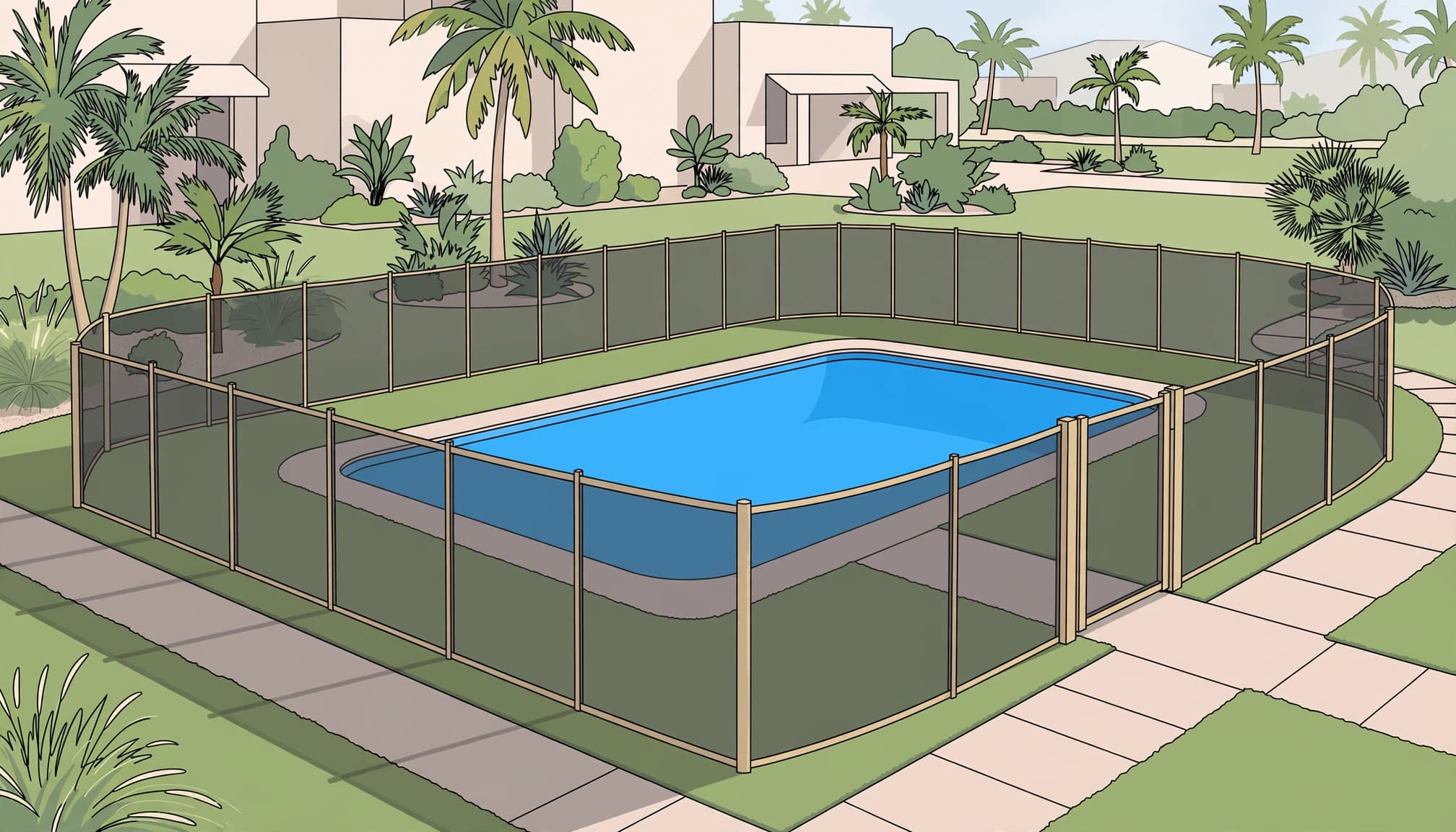
Artificial turf preserves backyard aesthetics while a mesh pool fence creates a visible boundary. As a pool safety fence, it separates the water from the rest of the yard and serves as a pool security fence and practical pool guard. This added layer supports child safety, but it doesn’t replace attentive adult supervision.
Artificial turf changes anchoring and drainage planning, not the need for pool safety. A strong layout starts with the yard beneath the grass, and no barrier takes the place of supervision.
Key Takeaways
- Artificial turf is not a structural base for a removable mesh barrier; supports must anchor into concrete, compacted aggregate, or another stable surface below.
- Plan the fence route, gate location, drainage, utilities, furniture, and pool equipment before cutting or drilling through the turf.
- Compare mesh visibility, pet resistance, pole construction, connections, gate design, warranty, and documented safety performance before choosing a system.
- Measure the complete enclosure route with string, including curves, gates, surface transitions, and access areas, before ordering fence sections.
- Follow Florida and local pool-barrier rules, inspect the mesh and supports regularly, and remember that a pool safety fence never replaces active adult supervision.
Artificial Turf Needs More Than a Surface-Level Plan
Artificial turf feels clean, soft, and low-maintenance. However, it isn’t a structural base for a mesh pool fence by itself.
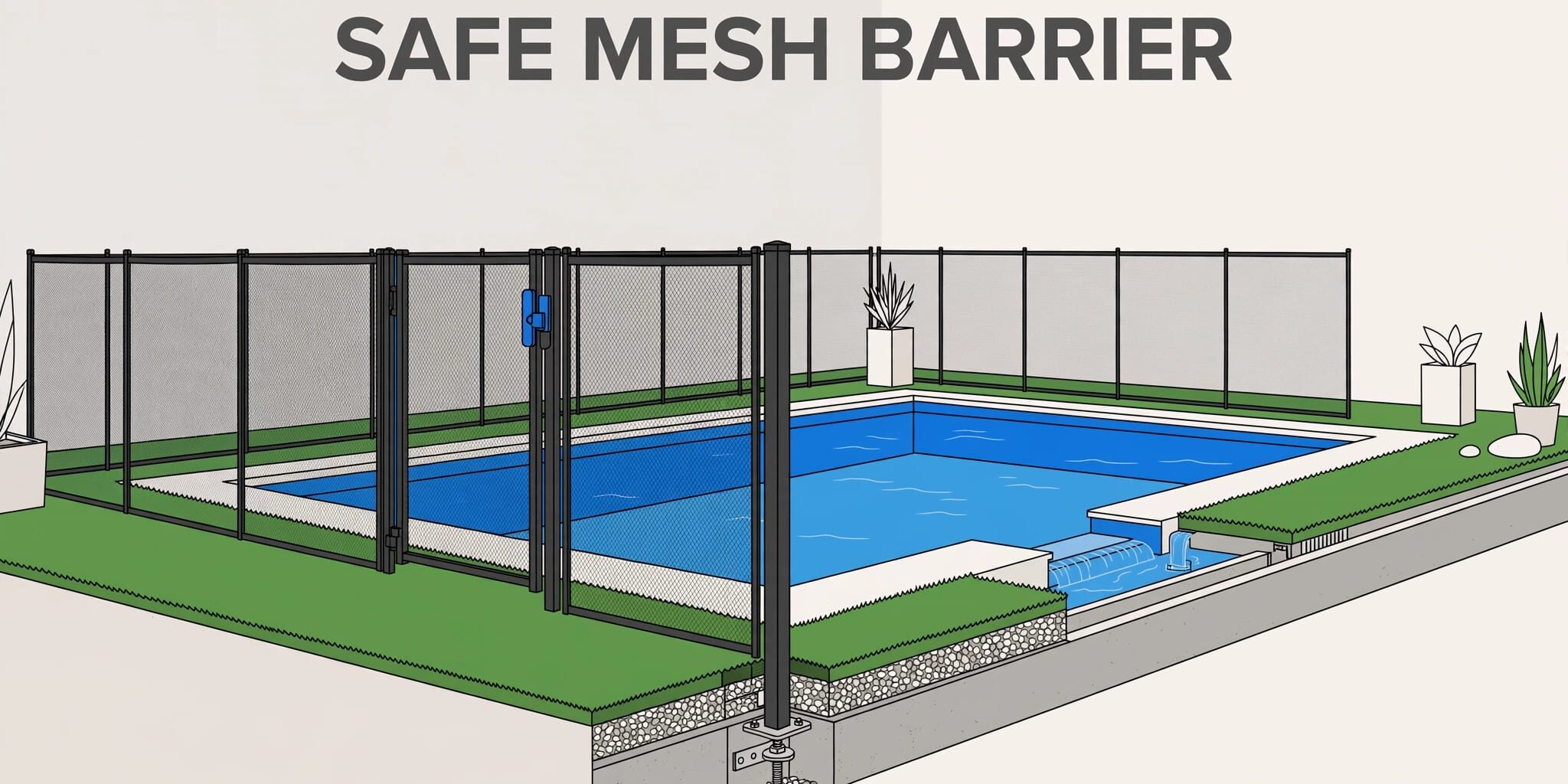
A barrier needs supports that hold firm under tension. Before any holes are cut, the installer should identify the turf backing, aggregate, pavers, irrigation lines, and existing drainage path.
The backing material matters most
Some turf sits over compacted aggregate. Other yards have concrete, pavers, or a mixed surface near the pool deck.
Each surface needs a different installation plan. Openings should stay neat, avoid trapping water, blocking runoff, or destabilizing the turf. Deck sleeves may pass through the turf and terminate in concrete or another stable base. Ground-set supports may fit another area. The turf fibers and backing should never carry the load alone.
A careful installer parts the turf only where needed, keeping openings neat. They secure supports in a stable base, so it takes the tension instead of the turf fibers or backing. A properly anchored pool guard should look neat, tight, and intentional.
Plan the fence line before turf installation
The easiest time to think about a fence is before new turf goes down. Planning sleeve locations and the fence route early can reduce visible repairs.
Still, a finished lawn can usually accommodate a removable fence.
Homeowners should look at pool steps, screen doors, outdoor kitchens, and furniture. The fence needs a clear path around the water. It also needs enough room for adults to walk comfortably outside the fence.
Artificial turf can hide a poor anchor choice. A secure fence depends on the base below it.
Choosing Removable Mesh Barriers for Pool Safety
Not every mesh pool fence is built the same. Families should compare visibility, fabric, support construction, gate design, warranty, and documented safety performance before deciding.
The best choice fits the pool layout and the people who use the yard. A toddler and a large dog can create different demands, so the right pool guard should account for both.
Standard safety mesh or pet-resistant mesh?
The standard weave gives homeowners a clear view into the pool area. It is designed to resist weather and discourage climbing. For Florida yards, UV-resistant mesh can help limit fading during prolonged sun exposure and long-term outdoor use.
The tighter, stronger weave can suit homes with energetic dogs that scratch, lean, or push against barriers. It may reduce visibility slightly, but many pet owners feel the added durability is worth the trade.
Both options need regular checks. Mesh should stay taut, and poles and connections need regular inspection. Loose fabric or a damaged edge needs attention right away.
Look closely at poles and connections
Durable removable fence systems often use aluminum poles with reinforced internal cores. Manufacturers may describe poles as marine-grade aluminum, PVC-core, or quad-core, while connections may include stainless steel hardware. Verify the actual construction instead of relying on marketing language.
Individual runs commonly span 12 or 15 feet, while pole spacing often falls near 36 inches. A residential pool-barrier guide describes supports no more than 40 inches apart.
The exact system matters more than a sales label. Homeowners should request documentation showing whether the specific system is ASTM certified or tested to the applicable ASTM standard. They should also confirm that its layout can meet local rules.
Measure the Pool Area Before Ordering Fence Sections
A few extra minutes with a measuring tape can prevent a frustrating surprise later. Curves, tanning ledges, raised planters, pool equipment, doors, and narrow walkways all affect the final footage.
String is a simple, helpful tool when planning around artificial turf. Use it to map the actual route for the planned mesh pool fence before anyone drills or cuts turf.
Use string to map the full route
Run string along the proposed enclosure line. On artificial turf, follow every turn, curve, and change in surface.
Measure that route, not just the pool’s straight sides. Record curved sections and unusual dimensions for custom lengths. Add the gate opening to the sketch, then mark doors, gates, pool equipment, and anything that could block the path.
This quick exercise also shows whether the planned line creates a continuous, usable pool guard with room for chairs or a grill. Furniture should stay outside the protected zone and away from places a child could climb.
Give the gate a practical location
The self-latching gate should sit where adults naturally enter the pool area. A gate tucked behind patio furniture becomes annoying fast.
It should swing freely and close without help. Check gate alignment after installation, then confirm it closes and latches consistently. Families also benefit when the gate is visible from the house. That simple detail makes daily checks easier.
The CPSC’s home-pool barrier guidance is a helpful reference while planning the layout. Local building departments can confirm address-specific requirements.
Installing a Mesh Fence Through Artificial Turf
Artificial turf should look good after installation, not chopped up or pulled tight around loose supports. A mesh pool fence protects the pool while keeping the finished surface neat. A pool safety fence needs careful placement and the right equipment.
A professional should inspect the turf, its backing, and the supporting base. They should check drainage paths, locate nearby utilities, and mark the route before cutting or drilling.
Make clean openings only where supports must pass through the turf. Each opening should line up with a stable base below.
Deck sleeves create the removable connection
Most removable systems use sleeves set into a stable surface. The poles slide into these sleeves, and caps can cover the openings when the fence comes down.
Concrete pool decks often need a core-drill anchor to secure sleeves. Turf may need small, clean openings that line up with the stable base below. Pavers require extra care because movement can affect alignment.
Some systems use poles made from marine-grade aluminum, while others use different compatible materials. After removal, open deck sleeves can be covered with deck plugs or compatible caps.
This tension-based system relies on consistent tension around the enclosure. Individual fence sections pull against one another until the full enclosure forms a secure loop. A wall anchor can close the loop where the fence meets a home wall or another approved structure.
Check the finished mesh around the full route. It should remain evenly tensioned, without loose areas or stressed turf. Follow the manufacturer’s installation guide for sleeve depth, spacing, tension, and removal. A qualified professional should complete a final pool guard inspection before the area is used.
Price depends on the layout, not only footage
Linear footage matters, but it isn’t the whole story. Turf condition, drainage, surface transitions, access, and curves can all affect labor. A straight rectangle costs less work than a curved pool with several surface changes.
| Cost factor | Why it affects the quote |
|---|---|
| Total fence length | More footage requires more mesh panels and supports. |
| Gate count and hardware | Each gate adds materials, hardware, and alignment work. |
| Turf, drainage, and base condition | Unstable backing, drainage concerns, or difficult preparation can add time. |
| Curves and surface transitions | Custom angles, pavers, and elevation changes need more measuring and fitting. |
| Site access | Tight work areas, landscaping, and obstacles can increase labor. |
A clear written quote should explain the proposed fence line, gate placement, installation surface, and preparation work. Homeowners should obtain a written quote from a qualified local professional before changing new turf or a pool deck.
Height, Gates, and Florida Pool Barrier Rules
A pool security fence should add another level of protection, not replace supervision. It can serve as a pool guard, but adults still need eyes on children around water.
In Florida, fencing must meet a legal baseline. Local jurisdictions may add their own requirements.
Start with the legal minimum
Florida’s pool barrier statute says a barrier must stand at least four feet high on the outside. It also restricts gaps and openings that could allow access.
Many mesh pool fence systems come in four-foot and five-foot heights. These fence heights may suit a particular yard, dog, or local requirement, but four feet isn’t universal approval. Confirm the final height, gaps, gate behavior, and placement with the local building department before installation.
A home association may also have rules about visible fencing, so verify applicable safety standards with state, county, municipal, and HOA authorities. Artificial turf makes a mesh barrier less visually heavy, which many homeowners appreciate.
Test the self-latching gate every time
The gate is the busiest part of the fence. It deserves a simple test after installation and after every adjustment.
Open the gate fully. Let it close on its own. Then confirm that the latch catches and stays latched.
The CPSC drowning-prevention toolkit also recommends self-closing, self-latching gates with latches beyond a young child’s reach. If the gate drags or misses the latch, it needs adjustment before the pool is used.
Taking Down and Storing a Removable Fence
Removable mesh barriers give homeowners flexibility without making safety routines optional. A mesh pool fence can clear the yard for a party, landscaping project, or off-season storage.
Still, removal should never become casual. Temporary fencing isn’t an acceptable substitute while the pool remains accessible. Restore the system before children or pets return, since it serves as a pool guard only when set up as designed.
Removal is simple with the right routine
A basic, straight fence line may come down in minutes. Gates, tight curves, and wall supports can take longer.
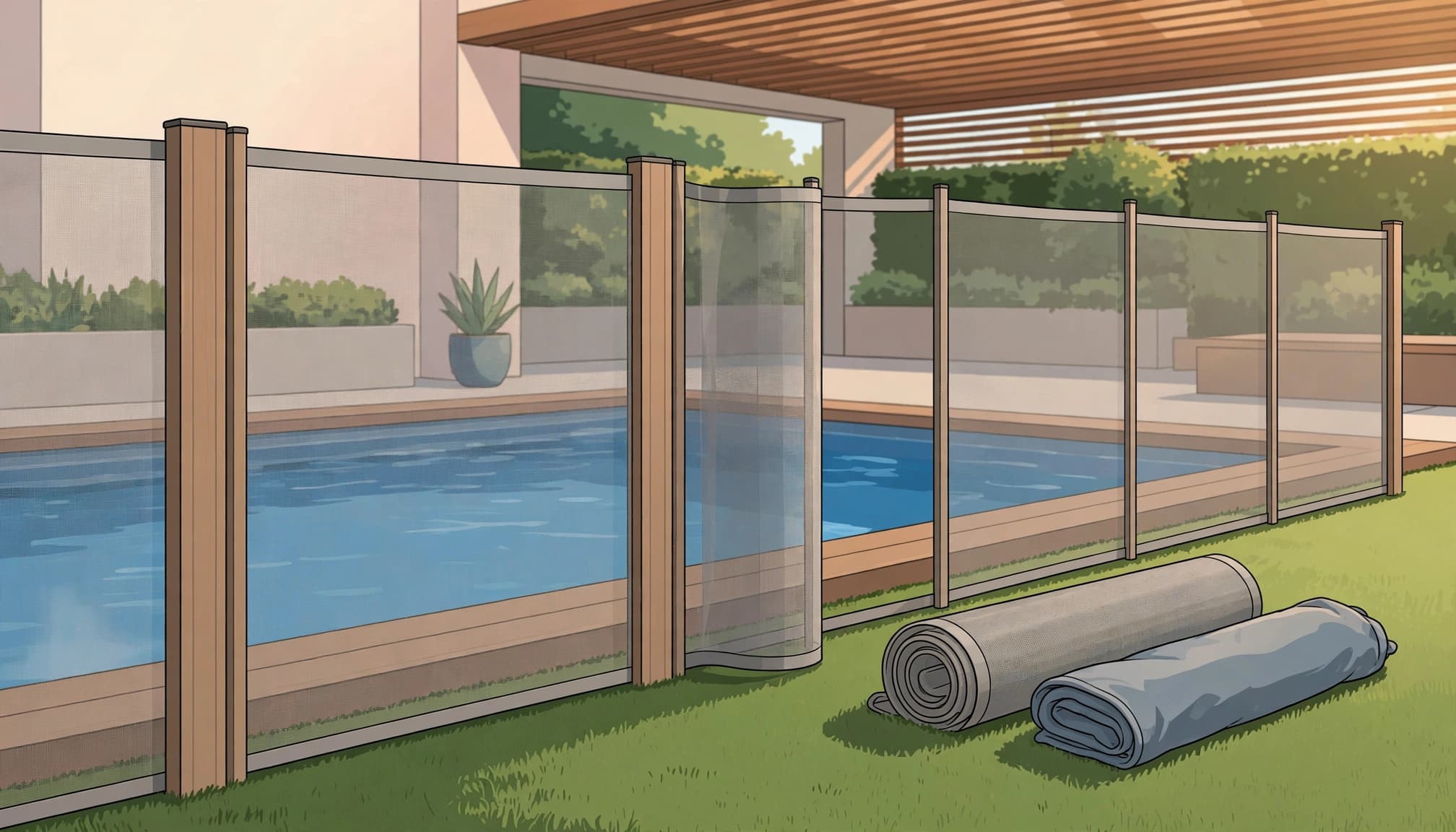
Adults should release the tension carefully, then lift each panel from its sleeve. They should avoid dragging mesh across rough deck edges, artificial turf seams, or debris. Replace sleeve covers after removing the poles, and keep drainage openings around the sleeves clear.
Clean each panel and let the material dry completely. Store the clean, dry panels in a protected, ventilated area. Damp mesh can develop mildew or unpleasant odors in a closed storage bag.
Small problems need fast fixes
A sagging section often means the system lost tension or a support shifted. A gate that won’t latch may need hinge adjustment, an alignment check, or a clear path beneath its swing.
Homeowners should inspect for torn mesh, cracked caps, loose sleeves, and mildew. Florida sun, UV exposure, pool chemicals, and daily debris can wear down outdoor material.
For repairs or a layout review, homeowners should consult a qualified local professional. A quick inspection can help restore peace of mind.
Frequently Asked Questions
Can a removable mesh barrier be installed over artificial turf?
Yes, but the turf itself should not carry the fence tension. Clean openings should align with sleeves or supports anchored in concrete, compacted aggregate, or another stable base below the turf.
How should I measure for a removable mesh pool fence?
Use string to trace the complete planned enclosure, including curves, turns, surface changes, and the gate opening. Measure the string route rather than only the pool’s straight sides, and note doors, equipment, furniture, and narrow walkways.
What gate features should a pool safety fence have?
The gate should swing freely, close without help, and latch consistently. It should also be placed where adults naturally enter and remain visible from the home when possible.
Does a four-foot mesh fence always meet Florida pool-barrier requirements?
Four feet is a common minimum height, but it does not guarantee approval for every property or layout. Confirm the required height, openings, gate behavior, placement, and any additional county, municipal, or HOA rules with the local building department.
How should I store a removable mesh barrier?
Release tension carefully, lift the panels from their sleeves, and avoid dragging them across rough surfaces or debris. Clean and dry the mesh completely before storing it in a protected, ventilated area, and replace sleeve covers after removal.
A Safer Pool Area Still Looks Like Home
Artificial turf and pool safety can work beautifully together when drainage, a stable base, and careful layout come first. With a solid foundation, removable mesh barriers add protection without overwhelming the backyard, especially when gates operate smoothly and stay properly latched.
Regular maintenance and active supervision remain essential. Lightweight mesh fencing keeps the view open, preserving backyard aesthetics and helping the space still feel like home.
Questions or ready to get started? Call us at (941) 500-9484.