Florida’s pool fence collects more than leaves. Humidity and pollen settle into mesh quickly. Add sunscreen, algae, rainwater, and pool chemicals, and the barrier can look tired fast.
Florida pool owners often clean a removable pool barrier after storms, pollen, and heavy pool use. A hose, gentle cleaner, and non-abrasive brush usually handle the job. This simple routine supports pool fence maintenance, but the order matters.
Key Takeaways
- Rinse a removable mesh pool fence after major storms, and wash it every four to eight weeks during rainy or high-pollen periods.
- Use a garden hose, mild soap, warm water, and a soft sponge or brush. Avoid bleach, ammonia, solvents, abrasive tools, and pressure washers unless the manufacturer approves them.
- Clean one section at a time, rinse thoroughly, and let every seam and fold dry completely before rolling or storing the panels.
- Inspect the mesh, gate, poles, hardware, and deck sleeves after cleaning. Sagging, torn mesh, broken stitching, bent poles, cracked sleeves, or gate problems may require repair or replacement.
- A clean fence must still meet safety needs, including secure tension, a self-closing and self-latching gate, and a barrier that prevents young children from passing underneath, through, or over it.
How to Clean Mesh Pool Fence Sections Safely in Florida
Florida’s heat and heavy rain call for a gentle routine. A simple pool fence maintenance routine starts with rinsing after major storms. During rainy or high-pollen months, a soap wash every four to eight weeks is a practical starting point.
Gather supplies that won’t scratch the mesh
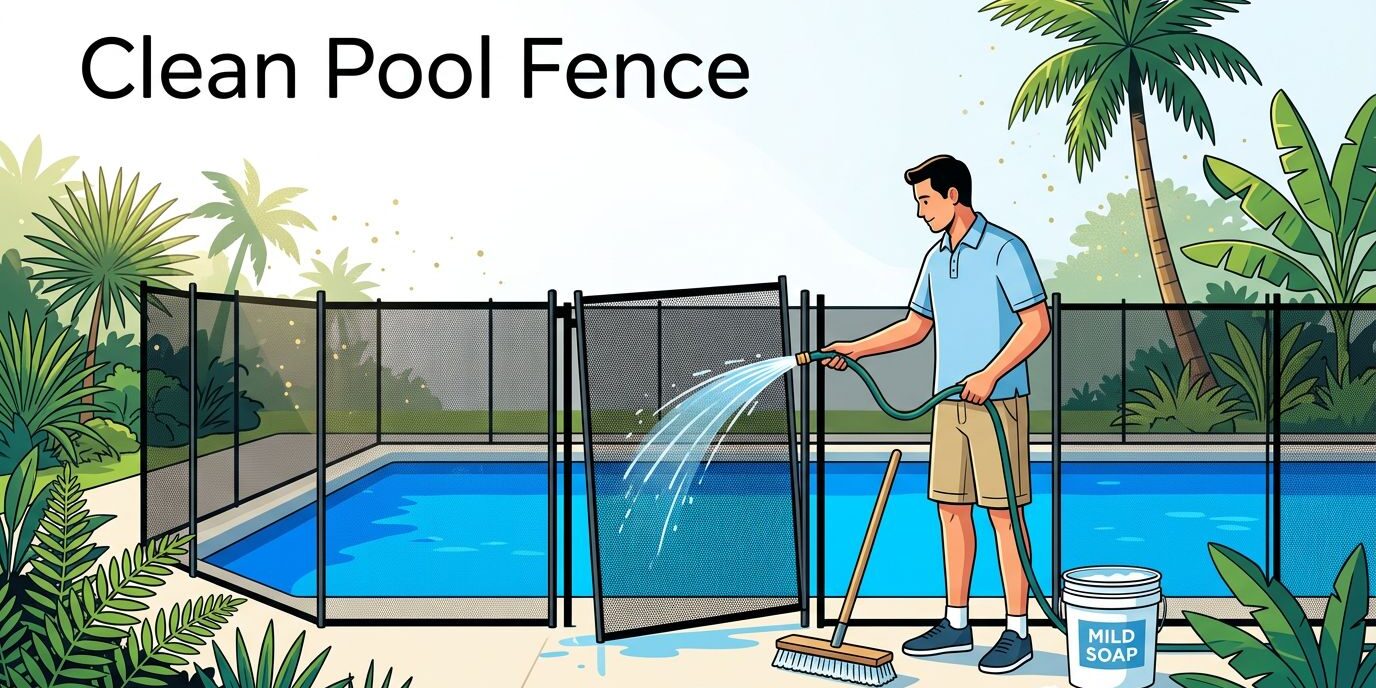
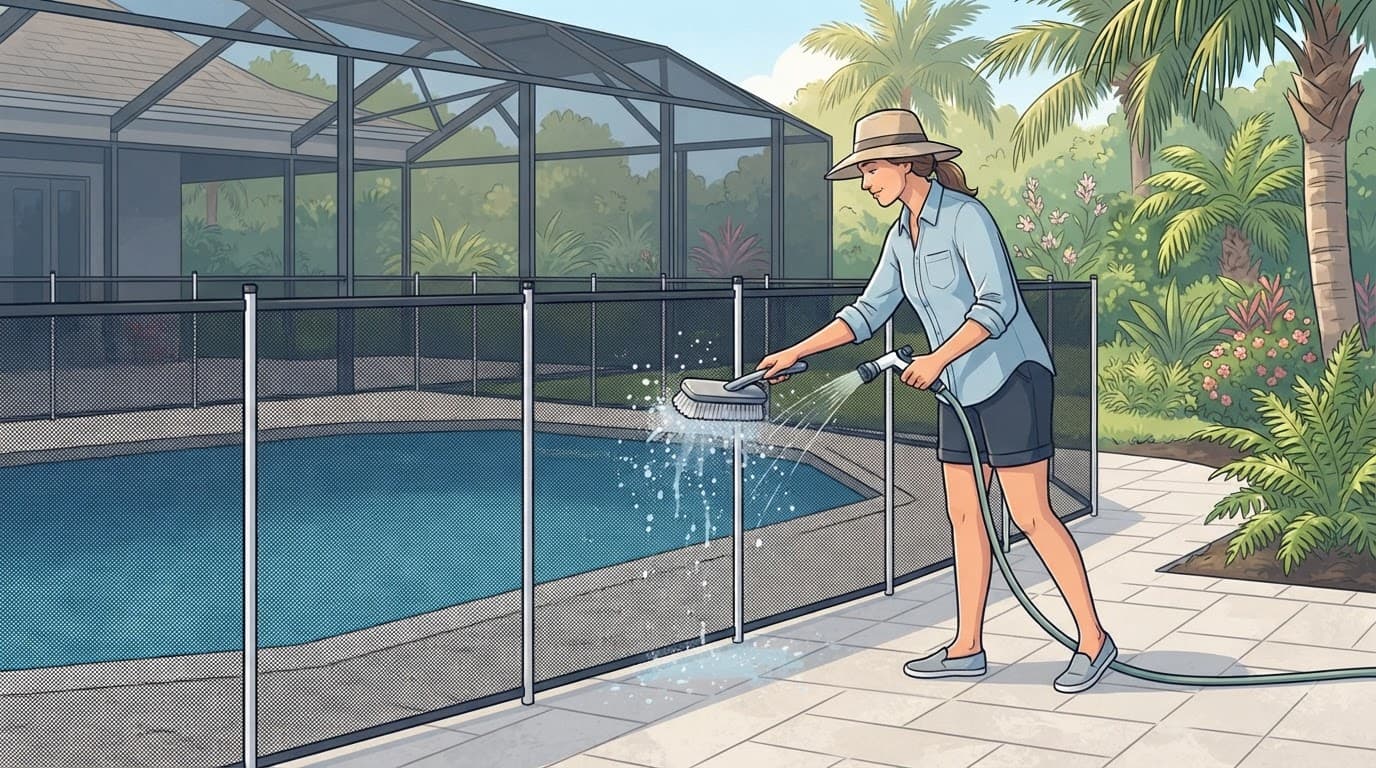
The safest setup is basic: a garden hose with a gentle spray, warm water, mild soap, a soft sponge, and a soft brush. The hose removes loose debris, while the other supplies handle the wash.
Many systems use PVC-coated fabric, so the manufacturer’s care instructions come first. Bleach, ammonia, solvents, and other harsh chemicals may damage the mesh. Abrasive cleaners, abrasive pads, wire brushes, and pressure washers can harm its protective coatings. Pressure can also push water into sleeves and loosen a carefully set barrier.
Wash one section at a time
- The homeowner should close and secure the gate before cleaning. Children and pets must stay away from the pool area.
- Rinse the fence from top to bottom. This removes sand, pollen, leaves, and dried pool residue.
- Mix a small amount of mild soap into warm water. Extra soap creates residue and attracts fresh dirt.
- Dip the soft brush or sponge into the solution. Scrub gently in horizontal passes, working downward.
- Finish each section before moving to the next. This keeps dirty, soapy runoff from drying below.
- Rinse every panel with clean water. Pay attention to hems, seams, pole connections, and the bottom edge.
- Let the mesh dry fully before rolling or reinstalling it. A towel removes surface water, but airflow must finish the job.
Choose the Right Fix for Each Fence Stain
Not every mark needs stronger soap. The stain usually tells the homeowner what to try next.
| Stain | Safe first choice |
|---|---|
| Dirt or pollen | Hose rinse, then mild soap |
| Sunscreen or chemical film | Warm water, gentle soap solution, and an extra rinse |
| Tree sap | Dampen, soften, then lift gently with a soft cloth |
| Light mineral deposits | Diluted white vinegar after a hidden spot test |
| Green algae | Remove debris, rinse, then use a gentle soap solution and a soft brush |
For light scale, use one cup of white vinegar in one gallon of warm water. Spot test first, then rinse the mesh thoroughly. Stubborn stains, including tree sap, may need several gentle passes instead of aggressive scrubbing.
Commercial degreasers, scale removers, and pool chemicals don’t belong on the fabric without manufacturer approval. A tile-safe product can still harm fabric protective coatings. Never mix vinegar with bleach or another cleaner. Persistent stains need installer-approved treatment.
Remove and Store Panels Without New Damage
A removable mesh pool fence is convenient during landscaping, repairs, storms, or extended travel. Southwest Florida homeowners often leave barriers installed through winter because pools see regular use.
Remove panels in the same order
Photograph each span and identify the poles, deck sleeves, hooks, and hardware before removal. Follow the system’s release method, and never yank one corner.
Keep poles, hooks, and hardware together. Mark panel order if reinstallation requires it. Small parts disappear quickly on a busy pool deck.
Before reinstalling, clear and check the deck sleeves for grit or standing water. Return every panel to its original span. Proper tension keeps mesh straight and firm without pulling excessively at the connections.
Before storage, inspect for loose poles and damaged hardware. Never drag wet panels across concrete. Grit can cut the mesh, compromise its structural integrity, and collect inside folds.
Dry completely before rolling
Florida air is humid, so touch-dry isn’t enough. Lay the mesh flat or hang it loosely in shade with steady airflow. Avoid direct midday sun during extended storage to limit UV damage.
Check every seam and fold after several hours. If any area feels cool or damp, leave it open longer. Complete drying is part of routine pool fence maintenance before winter storage, and it helps discourage mold and mildew.
Roll panels loosely only after every seam and fold is fully dry. Store them off concrete, away from chlorine, fertilizer, sharp tools, and standing water. A breathable storage bag is safer than a sealed plastic container.
Use Pool Fence Maintenance to Protect Safety
Cleaning makes damage easier to spot, but a mesh pool fence still needs regular inspections. The gate, mesh tension, poles, and sleeves all matter.
Florida’s residential barrier rules require a residential pool barrier to be at least four feet high on the outside. The safety barrier must also block openings that allow a young child to crawl under, squeeze through, or climb over.
For pool safety, the CDC’s drowning prevention guidance also recommends a four-sided fence at least four feet high.
A review of pool fencing research connects secure, four-sided barriers with reduced unintended access by young children.
A fence can look clean and still fail a safety check if the gate stops latching.
Check tension, gate action, and sleeves
Inspect each span at eye level after the mesh dries. Look for sagging, loose edges, stretched openings, gaps near the deck, and signs that the mesh lacks proper tension.
Open the gate halfway and release it. Its self-closing hinge should close the gate fully and engage the latch without a push. The release point must stay out of a young child’s reach.
Check for bent or loose poles, and inspect deck sleeves for cracks, movement, or lifted edges. Improper tension can weaken the barrier. If a deck sleeve shifts, don’t move it back or tighten hardware without the system instructions.
A silicone-based spray may help the hinge, but it must stay off the mesh and have manufacturer approval.
Know when cleaning isn’t enough
Frayed mesh, broken stitching, torn binding, bent poles, cracked sleeves, and rust and corrosion need attention. A mower or trimmer can cause mesh pool barrier damage in a flash, so inspect the barrier after any yard work before the next swim.
Cleaning can’t restore structural integrity or correct this damage. A repair, replacement panel, or full fence replacement may be necessary. Homeowners can contact Pool Fence SWFL for guidance, professional maintenance, or a local estimate.
Frequently Asked Questions
How often should I clean a removable mesh pool fence in Florida?
Rinse the fence after major storms and wash it every four to eight weeks during rainy or high-pollen periods. Heavy pool use, sunscreen, algae, and visible residue may call for more frequent cleaning.
What cleaner is safe for mesh pool fencing?
Use warm water with a small amount of mild soap, along with a soft sponge or brush. Avoid bleach, ammonia, solvents, abrasive cleaners, wire brushes, and pressure washers unless the manufacturer specifically approves them.
Can I use vinegar to remove mineral deposits?
Diluted white vinegar may help with light mineral deposits after a hidden spot test. Use one cup of vinegar in one gallon of warm water, then rinse the mesh thoroughly and never mix vinegar with bleach or another cleaner.
How should I store removable pool fence panels?
Let the panels dry completely, including every seam and fold, before rolling them loosely. Store them off concrete in a breathable bag, away from chlorine, fertilizer, sharp tools, standing water, and extended direct sunlight.
When does a mesh pool fence need repair or replacement?
Frayed mesh, broken stitching, torn binding, bent poles, cracked sleeves, corrosion, sagging, and gate-latching problems need attention. Cleaning cannot restore structural integrity, so contact the installer when damage affects the barrier’s security.
A Clean Fence Should Still Be a Dependable Fence
Florida’s sun, humidity, and storms make simple care a smart habit. Rinse away grit, use gentle soap solution, scrub softly, and let every panel become completely dry.
A well-maintained mesh pool fence should look clear and stay secure. Regular inspections catch sagging mesh, worn hardware, and gate problems before they become bigger concerns. Use the steps above as a pool fence maintenance checklist when you rinse, wash, dry, store, and inspect each panel.
If the barrier needs repair or new installation, homeowners can contact a local pool fence company. A quick professional check can bring back confidence and peace of mind.