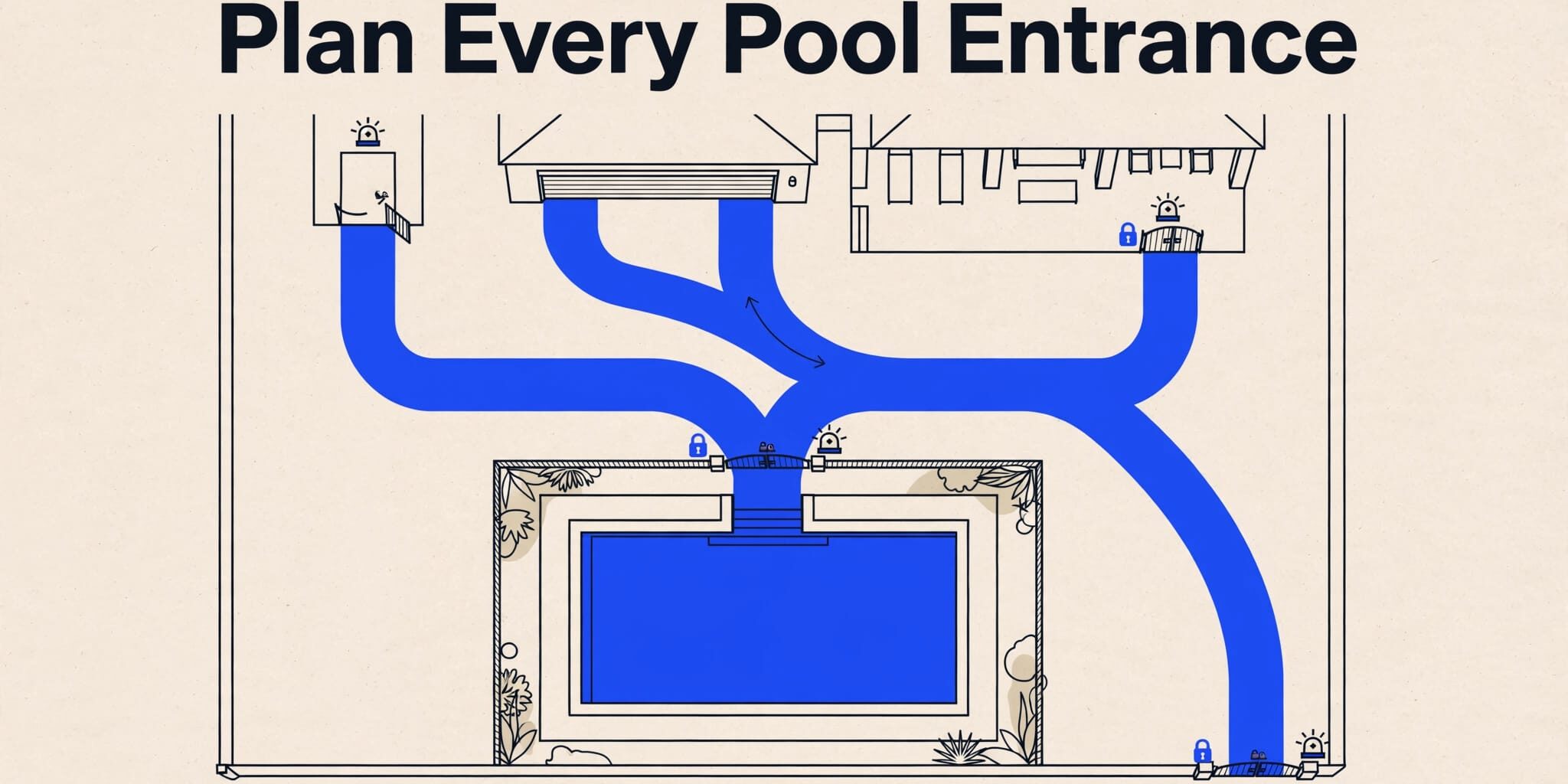
A swimming pool can have several ways in, but safety depends on coordinating every route. Side doors, lanai openings, garage passages, and yard gates may all lead to the same water.
A clear pool access plan coordinates those routes, including doors, gates, pathways, locks, alarms, supervision points, emergency access routes, and routine checks. It brings real peace of mind by helping homeowners control access before a child, pet, or visiting guest finds an open path.
The goal isn’t to make the backyard feel closed off. It’s to keep access simple, visible, and controlled through everyday routines.
Key Takeaways
- A strong pool access plan identifies and coordinates every route to the water, including doors, gates, lanai openings, garage passages, and temporary openings.
- Most homes should have one clear, supervised entrance for everyday pool use while alternate routes remain secured and emergency access stays clearly defined.
- Self-closing, self-latching gates, secure doors, alarms, visible pathways, and regular checks add layers of protection, but none replaces active adult supervision.
- Pool safety barriers control access to the water, while beach entries, pool lifts, and pool stairs address accessibility needs and do not replace child-safety measures.
- Review the plan after renovations, landscaping, new furniture, repairs, gatherings, or changes in family and pet needs.
Why Multiple Entrances Change Pool Safety
One entrance is easy to watch. Four entrances are a different story.
Many homes have a main patio door, a side gate, a garage door, and a rear bedroom exit. The patio door may be left unlocked, while the side gate may not latch. A service worker may use the garage passage, and the bedroom exit may create an unnoticed route. Children don’t need much time to slip through one.
A strong pool access plan looks at the whole property, not only the pool itself. It answers a basic question: who should enter the pool area, where should they enter, and what stops everyone else?
The routes families often forget
Homeowners usually remember the big sliding glass door. However, smaller routes deserve the same attention.
A screened-lanai opening, laundry-room door, pet door, or side yard may provide another route. Temporary openings during repairs can change the usual boundaries, while a garage passage or gate between the driveway and backyard can create access.
Service visits add another layer. Pool technicians, landscapers, delivery drivers, and guests may use routes that aren’t part of daily family routines. Emergency access also needs a clear plan, so adults know which secured route to use and how to open it quickly.
A routine walk-through can catch unlocked doors, loose latches, and temporary openings before they become normal.
Every practical route must be identified, secured, and checked for the plan to work.
A pool barrier is one important layer
No single product replaces adult supervision. Door alarms and reliable locks can support the plan, but they shouldn’t replace an attentive adult. Still, a proper barrier creates time and distance between a child and the water.
The U.S. Consumer Product Safety Commission recommends pool access gates that open away from the pool. Gates should also be self-closing, self-latching, and lockable. Adults should know how to release them quickly in an emergency.
Map Every Route Before Choosing a Barrier
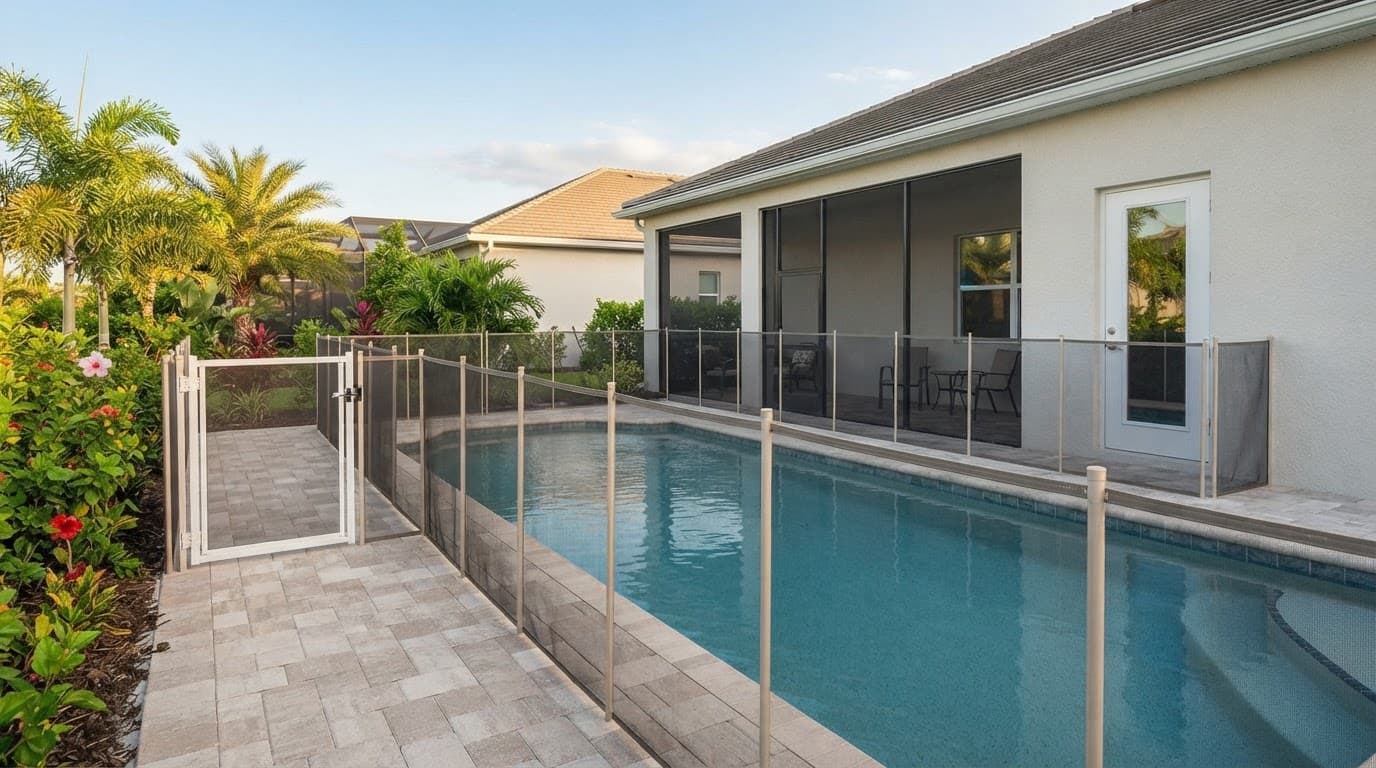
The best place to start a pool access plan is with a slow walk around the property. Homeowners should stand at every door, gate, and walkway that could lead toward the pool.
Then, they should picture the home during normal life. The map should reflect its actual pool design and daily routines. Kids come in from school. Grandparents visit. Pets head outside. Someone carries groceries through the garage. These moments reveal where the real risks are.
Make a simple entrance inventory
A quick written list keeps the plan clear. Record every access point, its controls, and who may need to use it.
Note whether each route is locked, alarmed, supervised, used by guests or service workers, or needed for emergency access.
- Exterior doors that open toward the pool or pool deck should be listed, along with their lock or alarm status.
- Side-yard gates and lanai openings should be checked for daily use and supervision.
- Paths from a garage, dock, beach area, or detached structure should be included.
- Openings created during yard work or repairs should have a temporary safety plan and clear supervision.
Homeowners don’t need a complicated blueprint. A simple map can show the designated pool entry, secured routes, and emergency access without creating an unsupervised shortcut.
Choose the normal way in
Most families need one easy, dependable way to enter the pool area for everyday, supervised use. That entrance should feel natural for adults, but difficult for a young child to use alone.
For many homes, that means one self-closing gate along the main patio or walkway. Other routes can stay secured, with planned access for household members and emergency responders.
Position an interior pool barrier where it controls water-facing routes. The boundary should preserve visibility across the water, patio, and garden.
Give the Main Gate a Real Job
A gate should never become a decoration at the edge of a fence. It needs a clear role in the family’s everyday routine.
The main gate is the controlled point of entry. Everyone should know it is the way into the pool area. That simple habit cuts down on confusion.
One adult should be responsible for managing the entrance during swimming. Decide when the gate must stay locked, and make that expectation clear to children and guests.
A gate shouldn’t block a designated emergency path. If an emergency route passes through the pool area, set a clear procedure for using it without leaving the gate unsecured during normal use.
Put the gate where adults already walk
The best gate location follows the way adults naturally approach the pool. A gate hidden behind furniture or placed across an awkward path may get bypassed.
Families should think about:
- Where towels, toys, and snacks usually come from.
- Which door adults use when they supervise swimming.
- How guests reach the pool without wandering through the yard.
- Whether the gate stays visible from main living areas.
- Who will show guests the correct route when they arrive.
A good location makes safe behavior easier. It doesn’t ask people to take the long way every time.
Check the gate after installation
A self-closing, self-latching gate needs a quick check often. It should close fully from several open positions, and the latch should catch without lifting or pushing the gate.
Test the lock as well. Check the hinges and posts for looseness, then look for toys, furniture, planters, coolers, or landscaping that could help someone climb or change the gate’s swing.
Repeat the check after parties, storms, repairs, and periods of frequent use. These events can affect the gate even when damage isn’t obvious.
Homeowners should also keep the gate locked when the pool isn’t in use. A child-safe barrier works best when the family treats it as part of the daily routine.
Use a Pool Access Plan That Fits the Home
Every backyard has its own shape. Some pools sit just outside a lanai. Others have wide decks, outdoor kitchens, boat docks, or several sliding doors.
The home’s pool design affects which routes people use most. Patio doors, screened-lanai openings, garage passages, side-yard gates, and pathways to a cabana or outdoor kitchen may all reach the pool area.
Each route needs a defined status. It can be a normal supervised entrance, a secured alternate route, or an emergency-only route. This keeps the access plan clear during everyday use and gatherings.
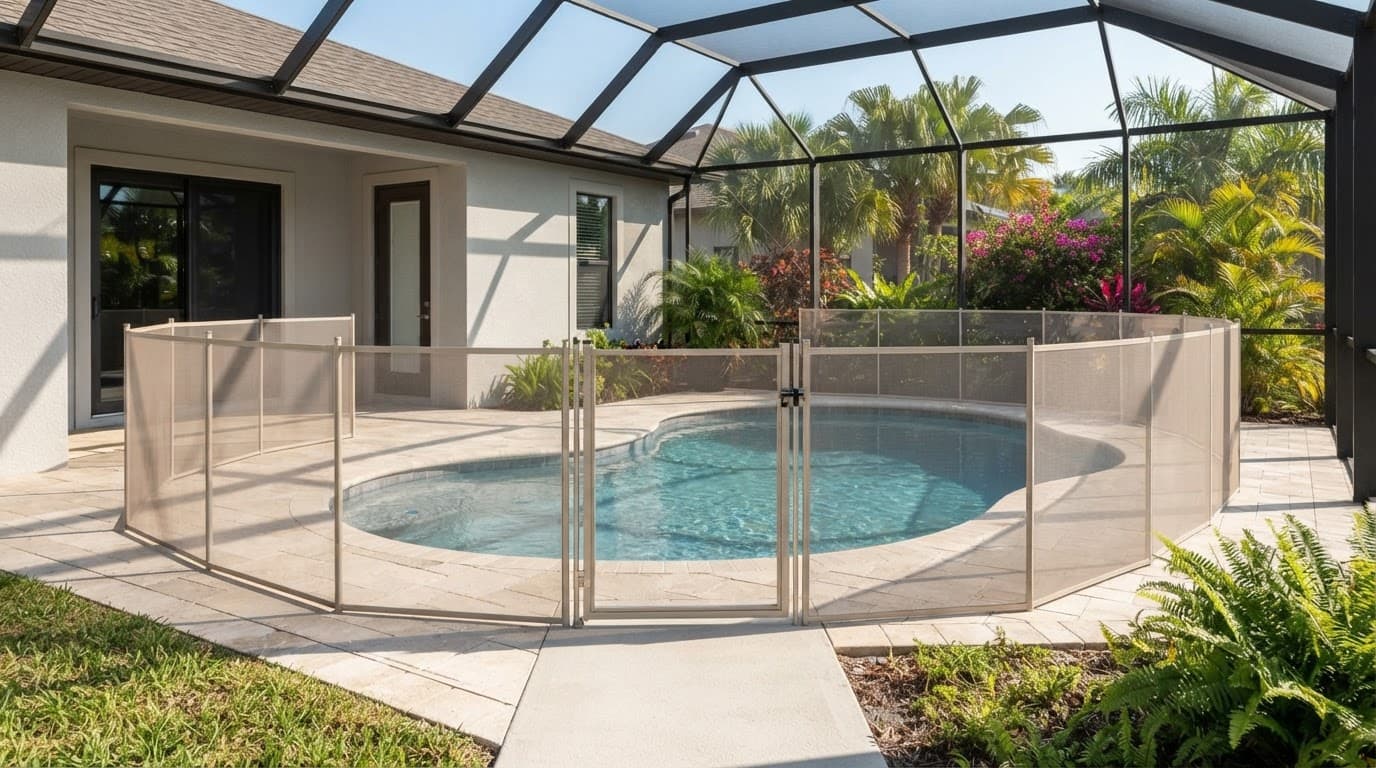
An interior barrier keeps the view open
An interior barrier creates a dedicated safety zone around the pool. It can separate the water from the house, lawn, and outdoor entertaining areas.
A well-placed barrier preserves sightlines across the backyard. It also creates time and distance before someone reaches the water. That extra layer supports active adult supervision without replacing it.
Unlike relying only on the home’s perimeter, an interior barrier adds protection when someone opens an exterior door. It creates another boundary before a child reaches the water.
Doors still need attention
A pool barrier and secure doors work better together. Exterior doors should stay closed and locked when they aren’t in use.
Door alarms can alert adults when a child opens a protected exit. High locks and self-closing door hardware may also help, depending on the home and local requirements.
Homeowners should never prop open a pool-facing door during a party. It may feel convenient for a few minutes. It also removes one layer of protection.
These controls support supervision, but no device replaces an attentive adult. Review each route before gatherings, then keep emergency-only access clear and secured as planned.
Pool Safety Barriers and Accessible Entry Are Different
A pool safety barrier controls who can reach the water. An accessible means of entry helps a person get into and out of the pool.
These are separate needs. A beach entry, pool lift, or pool stairs doesn’t replace a child-safety barrier. Likewise, a removable mesh fence isn’t an accessible pool entry system.
An accessible entry doesn’t replace controlled doors, gates, locks, alarms, supervision, or emergency procedures. Mark the accessible means of entry, shallow areas, and pool lift on the access map. This prevents anyone from mistaking these features for an unsupervised route.
Private homes and ADA requirements
Most private residential pools aren’t covered by the federal ada requirements that apply to public accommodations. Those rules generally address public accommodations and government facilities, not ordinary residential use.
Covered public facilities, shared properties, municipal facilities, and some lodging settings may have different obligations under the 2010 standards, including program accessibility. The ADA’s pool accessibility requirements explain that larger covered pools generally need two accessible entry options. Smaller covered pools generally need one, such as a lift or sloped entry.
Depending on the property, a municipal swimming pool or hotel pool may need to consider accessible entry features. Existing public pools may face barrier removal duties when changes are readily achievable and separate program accessibility duties. Property owners with public or shared pool access should check current rules for their property type and seek qualified accessibility guidance.
Beach entries, tanning ledges, and pool lifts
A beach entry, also called a zero entry, slopes gradually into the water. This design may qualify as an accessible sloped entry when it meets applicable requirements.
A beach entry and a shallow lounging shelf may look similar, but each is a separate shallow-water design consideration. A tanning ledge is a shallow shelf for lounging, not a full gradual route into deeper water. A tanning ledge isn’t automatically an accessible entry.
A pool lift transfers a swimmer from deck level into the water. The U.S. Access Board’s pool guidance lists lifts and sloped entries among accepted accessible options. Safe placement matters, and this feature doesn’t replace child protection or the surrounding barrier.
Fiberglass pools, gunite pools, and vinyl liner pools offer different construction choices, but surrounding access routes still need to be controlled. Homeowners should choose the entry style for their family’s comfort, mobility, and pool use. A wading area should appear on the access map, while barriers control unsupervised access around every pool type.
Plan for Guests, Pets, and Busy Days
The safest plan is easy to follow when life gets loud. That includes birthday parties, holiday weekends, sleepovers, and afternoons with several adults nearby.
Before visitors arrive, assign one adult to oversee pool access. That person confirms the designated door or gate, checks that alternate routes are secured, and stays responsible for knowing where children are.
Guests may arrive through a garage, side gate, or lanai. Adults should close and lock each route behind them, even during a quick trip inside.
A pool area can feel like the center of the fun. It still needs one person who knows when the gate is closed, where children are, and when swimming is over.
Set simple rules before visitors arrive
Families don’t need a long speech. A few clear rules work better.
Adults should close and lock the gate or door behind them every time. Young children should never play near an access point. Pool toys should be removed from the water and kept away from doors and gates after swimming ends.
Door alarms and gate alarms may provide an extra alert where appropriate. They support the plan, but they never replace active adult supervision.
Pets need the same consideration. A curious dog can push through an open door or follow a guest toward the pool. A clear pool boundary helps keep pets where they belong.
Busy gatherings also need a brief emergency plan. Adults should know who will call for help and who will reach the water safely if needed.
Keep the barrier area clear
Outdoor furniture should stay away from the fence, doors, and gates. Chairs, storage bins, and large planters can create access points nobody planned for.
Before each gathering, check that latches work and doors remain closed. Check alarm batteries, pathway obstructions, barrier gaps, loose posts, and sagging mesh.
Look for changes caused by furniture, landscaping, or uneven deck areas. Small problems are easier to fix early.
A quick walk around the barrier before a gathering can make a big difference. It takes only a minute, and families will feel better once it is done.
Update the Plan When the Backyard Changes
Backyards change over time. Renovations, new furniture, outdoor kitchens, landscaping, new doors, and new gates can create a new route to the water. Changing family needs, such as a new puppy or crawling grandchild, can change the safety picture overnight.
The pool access plan should change with the home. After each change, complete a fresh route inventory and walk every path again. Check door locks, alarm coverage, gate closure, pathway visibility, emergency access, and whether supervision points still provide a clear view.
During installation time or a temporary repair, keep access controls in place and maintain a safe temporary barrier. A new gate location, door alarm, or adjusted fence section may solve a problem before it becomes stressful. It is always better to notice a gap during a calm afternoon.
If the property’s configuration or applicable requirements are unclear, review the layout with a qualified local professional.
Frequently Asked Questions
What is a pool access plan?
A pool access plan is a clear system for controlling every route to the swimming pool. It identifies doors, gates, barriers, locks, alarms, supervision points, and emergency access procedures.
How many pool entrances should a home have?
A home may have several physical routes, but it should usually have one designated entrance for everyday, supervised pool use. Other doors and gates should remain secured unless they are needed for planned or emergency access.
Does a pool barrier replace adult supervision?
No. A pool barrier creates time and distance between a child and the water, but active adult supervision remains essential whenever the pool is in use.
Is a pool lift or beach entry part of the safety barrier?
No. A pool lift, beach entry, or pool stairs provides an accessible means of entering or leaving the water, while a safety barrier controls unsupervised access. These features address different needs and should be shown separately on the access map.
When should a pool access plan be reviewed?
Review the plan after renovations, landscaping, repairs, new doors or gates, furniture changes, and busy gatherings. It should also be updated when family or pet needs change, such as when a crawling grandchild or new puppy is introduced.
A Clear Plan Brings Real Peace of Mind
Multiple pool entrances don’t have to create constant worry. Identify one entrance for everyday use, then lock and monitor alternate doors and gates.
A secure setup around the swimming pool needs a removable mesh barrier and visible pathways. Test working alarms, and make sure everyone understands the emergency-access procedure.
Active adult supervision still matters whenever the water is in use. Check doors, gates, alarms, and barriers after backyard changes or busy gatherings.
Questions or ready to get started? Call us at (941) 500-9484.