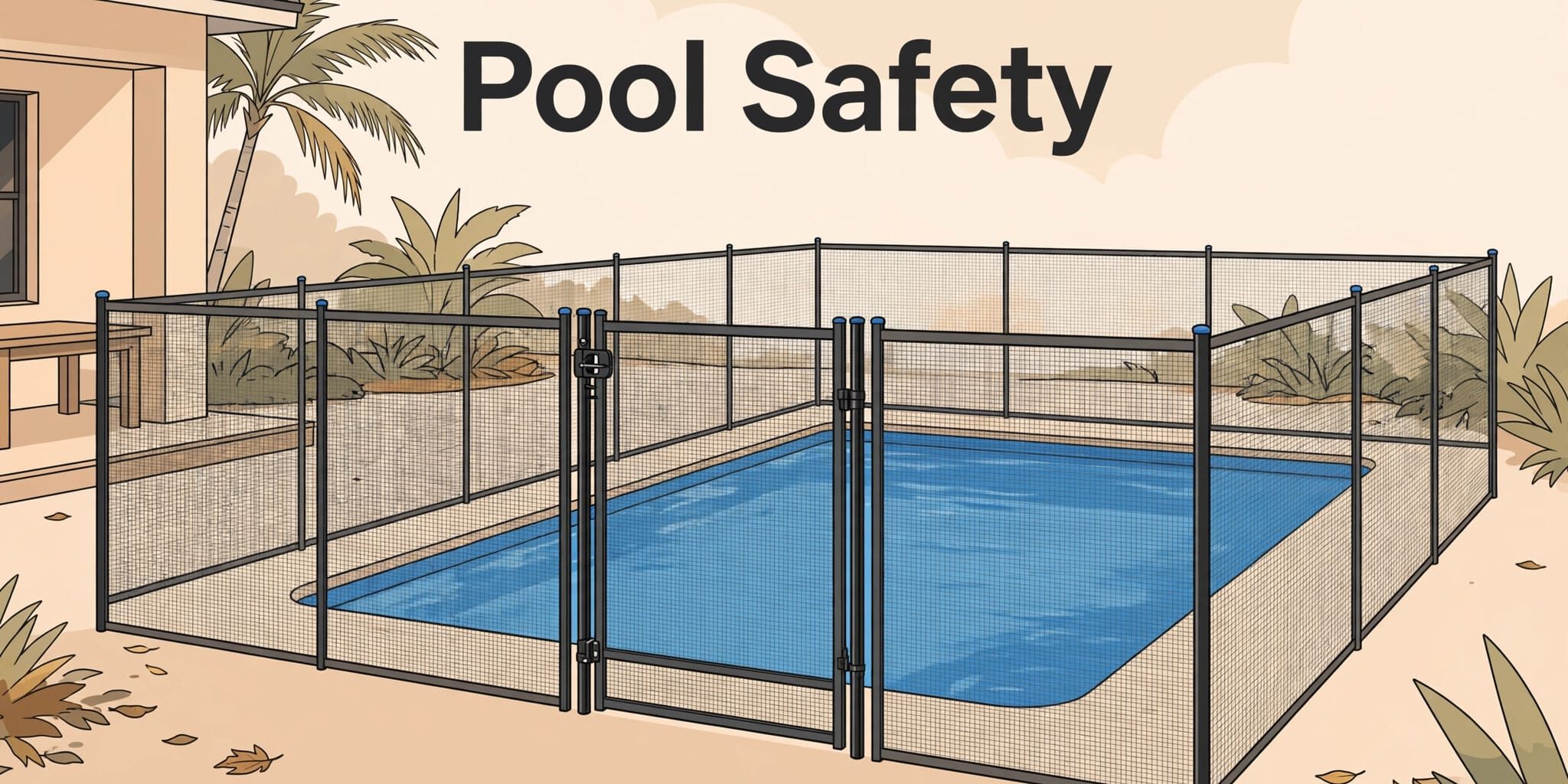
An empty Florida home can still have a busy backyard. While snowbirds are away, service crews, neighbors, guests, and storm teams may visit. Pool safety for snowbird homes starts with a secure barrier and local help.
When seasonal living means an extended absence, keep access controlled, maintain the pool, and give a local contact clear instructions. Start with a close look at the barrier.
Key Takeaways
- A vacant home still needs a secure pool area because other people may enter the property.
- A removable mesh fence helps only when every panel stays in place and the gate latches reliably.
- Pool service and a local contact should know who handles water, equipment, storm damage, and access.
- Before departure, homeowners should test the gate themselves and confirm every scheduled visit.
Why an Empty Florida Home Still Needs a Pool Plan
The yard may not stay empty
Snowbirds often picture a locked house and an unused pool. In practice, workers, neighbors, or visitors may still enter the yard of a vacant home. A pool technician might check the pump. A neighbor might bring in a package after a storm. Family could visit for a weekend.
Each visit changes who has access to the water. Children and pets may arrive with visitors, too. A safety plan should account for those ordinary moments, not only planned swim days.
The barrier must work between visits
Home security cameras can show that someone entered the yard. An alarm or security system can’t keep that person away from the pool. A service schedule or a neighbor’s promise to check in can’t replace a physical barrier, either.
A physical barrier limits access even when nobody is watching. A review of pool fencing and child drowning prevention describes pool fencing as a way to separate young children from the water. That separation matters at a seasonal home, where visitors may not know the family’s usual rules.
Pool Safety for Snowbird Homes Starts at the Fence
Know which safety feature applies
Applicable safety-feature and barrier requirements can vary by pool and location. Check current state and local requirements for your property before you leave.
A removable mesh fence can serve as one of several possible preventative barriers, but it isn’t required at every snowbird home. If you rely on one, check the finished installation rather than assuming any mesh panel will do. Requirements may address barrier height and how pool-access gates open, close, and latch. County, city, and HOA rules may also apply.
The Consumer Product Safety Commission’s pool barrier guidelines offer a helpful way to examine gate placement and access. A local installer can help you review the layout and verify current requirements before travel.
Keep the mesh in place
Removable fencing gives a family flexibility during everyday use. Before a long absence, make one rule clear: every required panel goes back into its anchor.
The mesh should feel tight. Posts should sit securely, with no easy path under or around the fence. Keep chairs, planters, toys, and storage bins away from it. Children can use these items to climb.
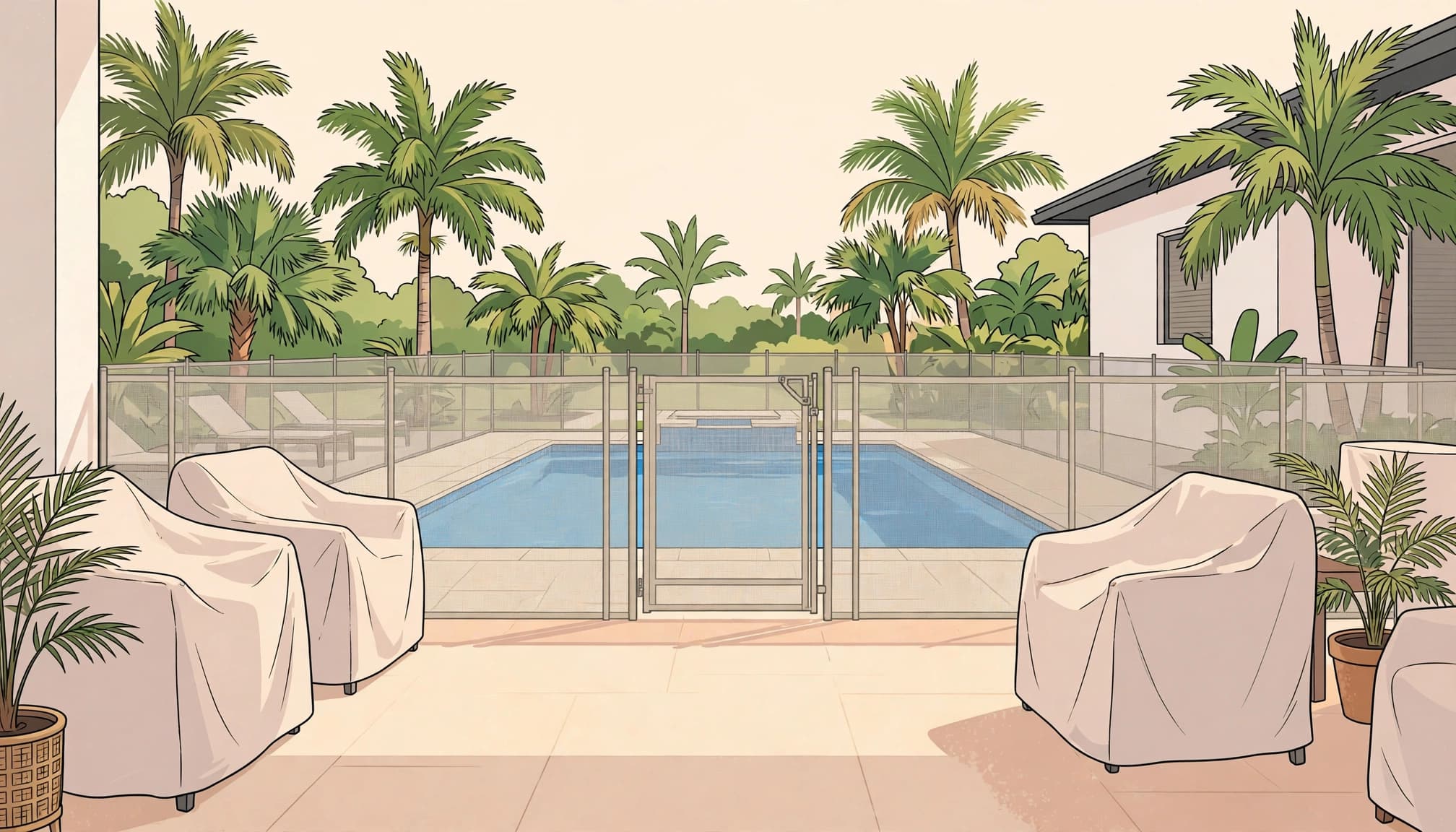
Clear-view mesh also lets a local contact see across the pool area. That open view is welcome, but the closed, working gate does the harder job.
Give the Gate and Every Access Point a Real Test
Let the gate close without help
The gate gets used more than any fence panel. It deserves a test right before the owners leave.
Open it fully, then let go. Watch it swing shut and confirm the latch catches. Repeat the test from a partly open position. If the gate drags, sticks, or needs a final push, arrange an adjustment before departure. A gate that latches most of the time isn’t dependable enough.
Ask the pool service crew to close and check it after every visit. One person should also know whom to call if the gate stops working.
Walk the paths people actually use
Start at the house, then follow the route a guest or worker would take to the pool. Check doors, side-yard access, and any opening near a screened lanai. A screen enclosure alone shouldn’t be assumed to meet pool barrier rules.
Make sure workers can reach equipment without propping open the safety gate. Keep keys and access instructions limited to people who need them. If family will use the home, tell them how the gate works before they arrive.
Keep Water and Equipment Under Regular Care
Agree on the service visits
Florida heat and rain don’t pause when owners travel north. Leaves can block baskets, water levels can change, and equipment can develop problems between visits.
Before leaving, homeowners should arrange a pool service schedule as part of preparing the Florida home for an extended absence. This home maintenance plan should cover water testing, cleaning, skimmer baskets, circulation, and equipment checks. It should also identify who authorizes repairs and how the service crew reports problems.
A clear report is more useful than a vague “pool looks fine.” Homeowners can ask for notes or photos if a gate, pump, or water issue needs attention. They should also confirm that the technician will relatch the gate before leaving.
Leave the system on an agreed plan
Turning off the pump or draining the pool shouldn’t be a routine snowbird departure step. The service provider can recommend an operating schedule suited to the pool, equipment, and season. Homeowners should also confirm how the company will handle a power outage or equipment failure.
Florida’s Department of Environmental Protection advises draining pools only when necessary. If a repair requires draining, the service provider should follow applicable discharge guidance. Until then, regular care is the better plan.
Prepare the Yard for Storms Without Leaving a Gap
Clear loose items before departure
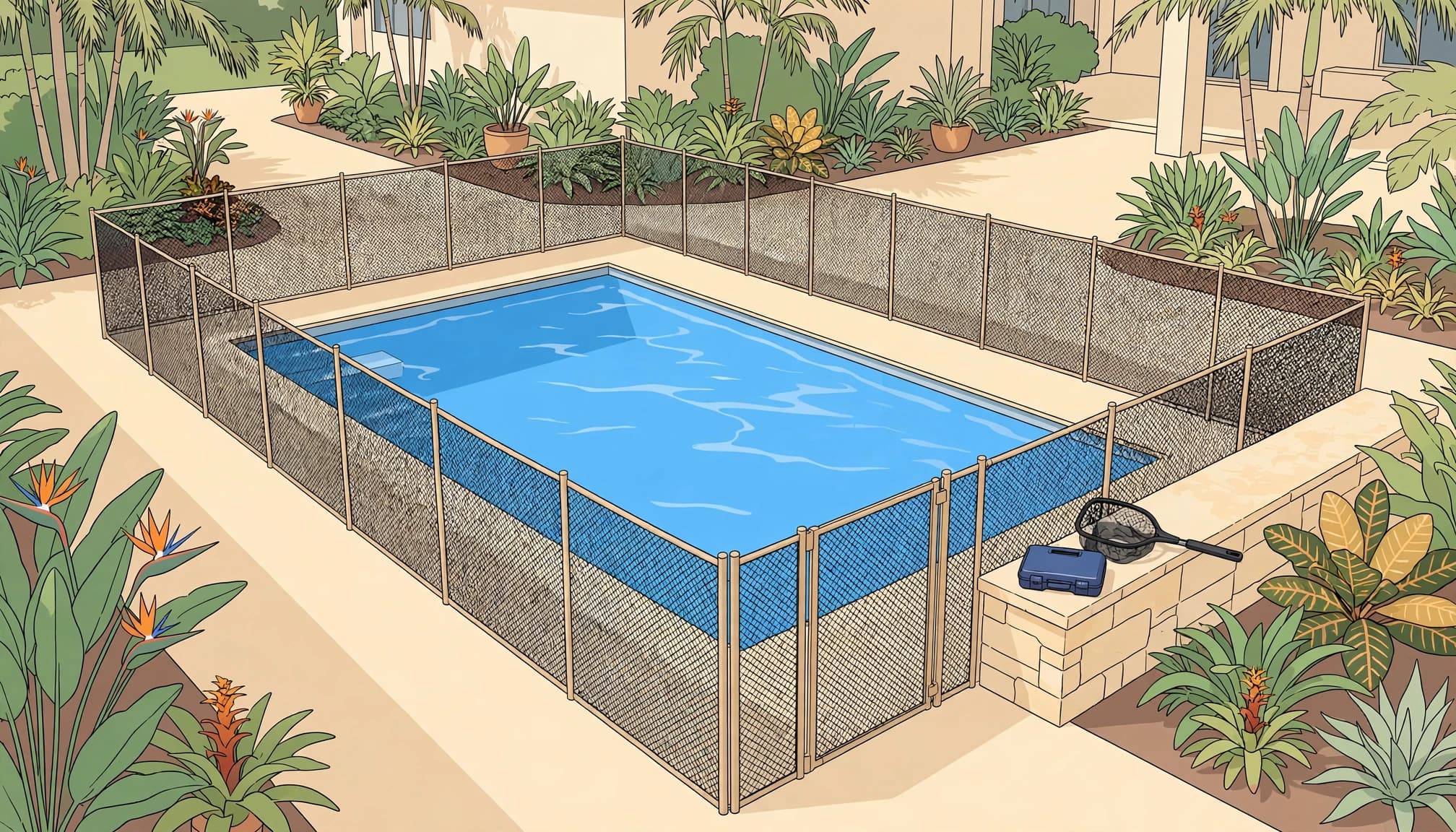
Regular yard maintenance makes the first storm check easier. Put away pool toys, loose cushions, and lightweight furniture. Move climbable items away from the mesh fence instead of stacking them beside it.
Trim vegetation that presses against the fence or hides the gate. Check that nearby branches won’t interfere with its swing. Make sure irrigation near fence anchors doesn’t soften the ground, and keep the equipment accessible to the pool service crew.
Plan for inspection after bad weather
Wind and flying debris can damage mesh, shift a post, or affect the latch. A pre-departure test can’t replace a check after a storm.
Ask a local contact to conduct a property inspection once conditions are safe. They should look for torn mesh, loose sections, and a gate that won’t close. If they find damage, they should keep visitors away from the pool and contact the installer. A temporary patch shouldn’t stand in for a sound barrier.
Choose a Local Contact Who Can Act
Give one person clear authority
A helpful neighbor can be a trusted local contact, while a property manager can provide property management support. Neither is automatically required for every seasonal home. What matters is whether that person can reach the property and contact the right service providers.
Share the pool company’s number, the fence installer’s details, and instructions for urgent repairs. Decide in advance which expenses need owner approval. Confirm who will check the property after a storm and who will meet a technician if access becomes a problem.
Set rules for guests and rentals
For seasonal residents, clear guest instructions are an important part of seasonal living. Share the pool rules with friends or family before handing over the keys. The gate stays shut and latched. Children need active adult supervision near water, even with a fence in place.
Owners considering short-term rentals should first verify applicable local requirements, HOA terms, and insurance conditions. They also need a reliable way to explain the barrier and gate to every guest. Pool safety for snowbird homes gets harder when nobody knows who last used the yard.
Make One Final Walk Before Leaving
A final walk catches the small problems that phone calls can’t fix. It should happen after the last planned gathering or yard job, when everything is back in its usual place.
- Walk the full fence line. Check mesh, posts, anchors, and gaps near the deck.
- Test the gate from fully and partly open positions. Confirm the latch holds each time.
- Clear furniture and toys from the fence. Secure other loose yard items.
- Confirm pool service dates and make sure the crew knows the gate routine.
- Share access details and emergency contacts with the local contact.
If the barrier needs repair, homeowners should arrange it before leaving. For a layout that fits the pool and provides a reliable gate, they can request a free pool fence estimate. Those planning an installation before their next trip can also Get a FREE Quote.
Check the Pool Again When Returning to Florida
After months away, seasonal living means the first visit should be a walk around the pool, not a swim. Use an arrival checklist to inspect the removable mesh fence for storm damage or loose sections. Check for shifted posts or items against it, then test the gate before children or pets enter the yard.
Next, review the pool service notes and ask about any equipment trouble. Check the water and arrange service if it looks cloudy or the system isn’t working normally. Wait for the pool professional’s assessment before using a pool with an unresolved problem.
That careful return feels much better than discovering a stuck gate while guests are already on the patio.
Frequently Asked Questions
Should snowbirds take down a removable mesh fence while away?
They shouldn’t take it down simply because the home will be empty. Service crews, guests, and other visitors may still enter the yard. If the fence is part of the home’s safety plan, it should remain properly installed. Any planned removal needs another appropriate safety arrangement.
Does a snowbird need a property manager for pool safety?
A property manager can coordinate visits and repairs, but a homeowner may use a trusted local contact instead. That person needs clear instructions and dependable access. Pool maintenance still belongs with a qualified service provider.
Can a pool cover replace a fence in Florida?
Florida law includes an approved safety cover among its safety-feature options for applicable residential pools. An ordinary debris cover shouldn’t be treated as an approved safety cover. Homeowners should confirm which requirements apply to their pool before changing any existing barrier.
A Safer Departure Starts With a Working Gate
A quiet backyard still needs protection. The most important departure check is the barrier that stays in place after everyone leaves.
A secure mesh fence, a gate that latches every time, and dependable local help give snowbirds a practical plan. That brings real peace of mind when Florida is far from home.
Questions or ready to get started? Call us at (941) 500-9484