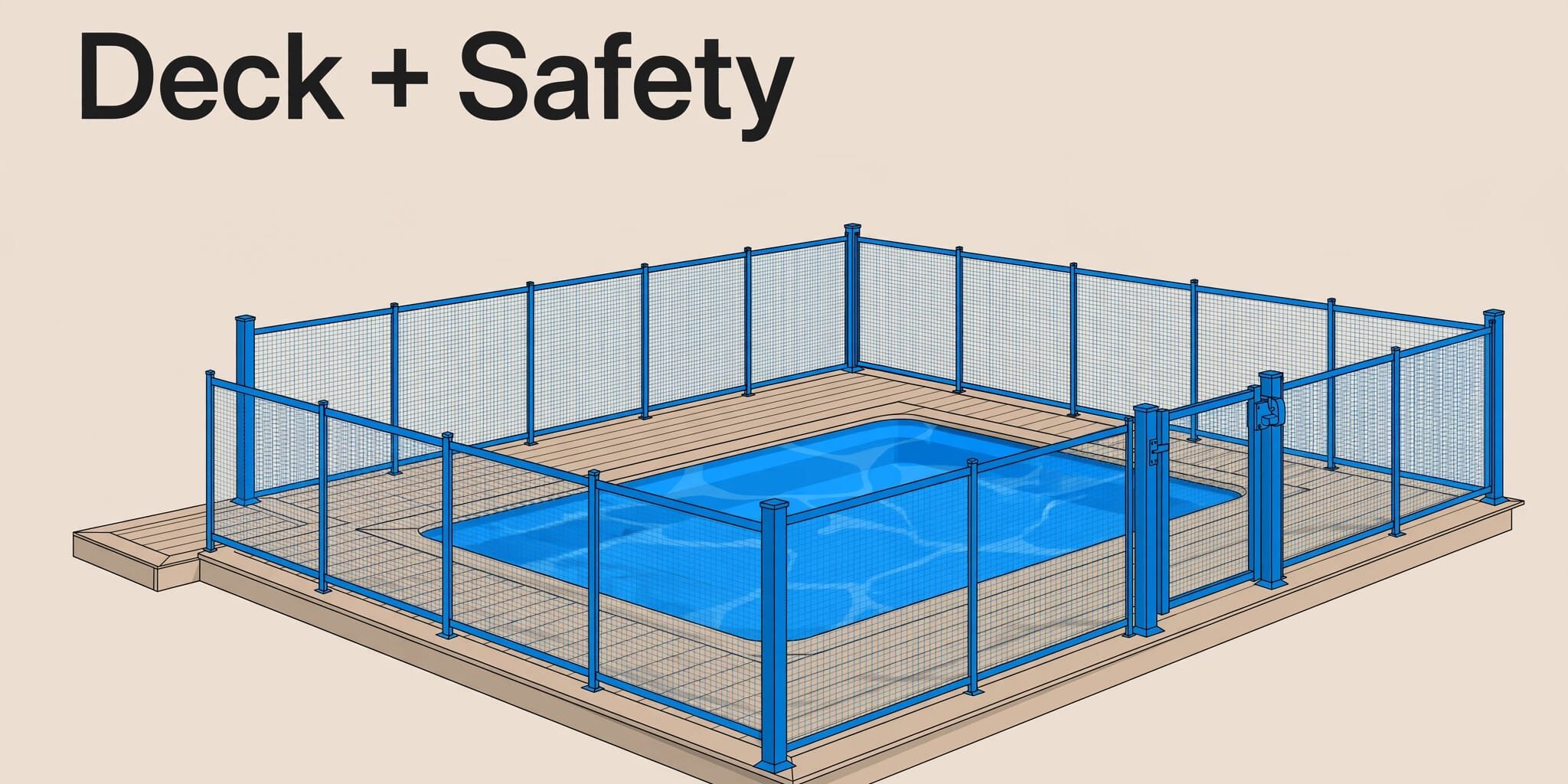
A beautiful pool deck can still leave parents worried about an open path to the swimming pool. Peace of mind takes more than attractive boards. The barrier should fit the finished surface, gate, and family’s routines.
The good news is that both projects can work together. When homeowners plan pool decking and a removable mesh fence at the same time, they can avoid awkward gate placement and costly changes later.
Key Takeaways for Poolside Planning
- Composite decking offers a low-maintenance alternative to wood, but heat and wet traction vary by product.
- A removable mesh fence needs sound support beneath its posts. Deck boards alone shouldn’t carry fence tension without an approved design.
- Gate placement matters as much as the fence line. The gate should close and latch reliably during everyday use.
- Local officials must confirm barrier and permit requirements before installation begins.
The strongest plan treats the deck and fence as one backyard project. That makes room for safe access, good drainage, and a clean finished look.
How Composite Pool Decks Handle Poolside Wear
Less upkeep than a wood deck
A traditional wood deck can look wonderful beside a pool. Splashes, sun, and foot traffic mean natural wood may need regular care. It may require cleaning, sanding, staining, or sealing as it ages.
Composite decking appeals to families who want a low maintenance option and fewer weekend chores. Trex says its boards don’t need sanding, sealing, or refinishing in its deck materials overview. Homeowners should still check the care instructions for the product they choose.
Composite isn’t maintenance-free, and some boards are water-resistant, though performance varies by product. Sunscreen spills, leaves, and pool chemicals still need attention. Ask how the product performs around rot and mould. Skipping recurring refinishing work still feels like a welcome change.
A comfortable surface needs more than durability
Concrete, stone, and ceramic tile can each create a handsome pool surround. Each feels different under wet feet and strong sun. Composite boards offer another option, with a softer-looking finish and several textures and colors.
The framing and drainage underneath matter, too. Water needs a clear route away from the deck, and the structure must suit the pool setting. A good board can’t fix a weak frame or standing water near a gate.
For above ground pools, deck height also affects how people enter the water. Steps, ladders, and access points belong on the first drawing, not in a last-minute adjustment.
Compare the Boards Before Choosing a Color
Three brands, three different questions
TimberTech, MoistureShield, and Trex give homeowners useful places to start. Their names alone won’t tell a family how different pool deck materials will feel on a particular deck.
| Decking option | What to ask about | Poolside decision |
|---|---|---|
| TimberTech Advanced PVC | Board construction, surface feel, and heat in full sun | Compare samples where bare feet will walk |
| MoistureShield with CoolDeck Technology | Heat-absorption claims and available colors | Check the exact product line and finish |
| Trex composite decking | Care instructions and installation requirements | Confirm the chosen board suits the planned layout |
TimberTech Advanced PVC is described as capped polymer decking in its pool deck material guide. It differs from wood-plastic composite products. Some options are wood composite decking, also called wood plastic composite, while others use PVC decking or capped composite decking. Ask manufacturers about construction, including whether a board has a solid core, and compare specifications rather than assuming all pool decking is alike.
Ask for samples that can get wet
A small sample tells more than a polished catalog photo. Set boards outside, let them warm in the sun, and check them when wet. That simple comparison helps narrow down colors and textures for pool decking.
A sample won’t replace product specifications or local approval. It can help a family compare a board’s feel with natural wood and notice whether a darker option gets uncomfortable near a favorite seat or gate. That’s a practical detail worth catching early.
Heat and Wet Traction Deserve Their Own Check
Full sun changes the barefoot experience
Southwest Florida sunshine can make any exposed pool surround uncomfortable. Sun exposure affects how comfortable composite decking feels, even when boards are water-resistant. Color, product design, shade, and time of day all play a role.
MoistureShield says boards with cool deck technology absorb up to 35% less heat than standard wood-plastic composites in its product comparison. That’s the manufacturer’s comparison, not a promise that a deck will stay comfortable at noon.
TimberTech also describes heat-conscious designs in its decking heat guide. Ask about a heat-resistant design and UV protection, then request samples of the exact colors under consideration. Check shade plans before placing the final order.
No deck surface eliminates slipping
Pool water, sunscreen, and algae can change how a surface feels underfoot. Textured boards may feel reassuring, but no decking should be called slip-resistant without product-specific evidence.
Ask manufacturers for product-specific wet-traction test information, including slip resistance and moisture absorption. Ask how the surface performs after routine cleaning, too. Around steps and the gate, sound drainage and good lighting matter alongside board choice.
Draw the Fence Line Before the Deck Goes Down
Leave a clear route around the water
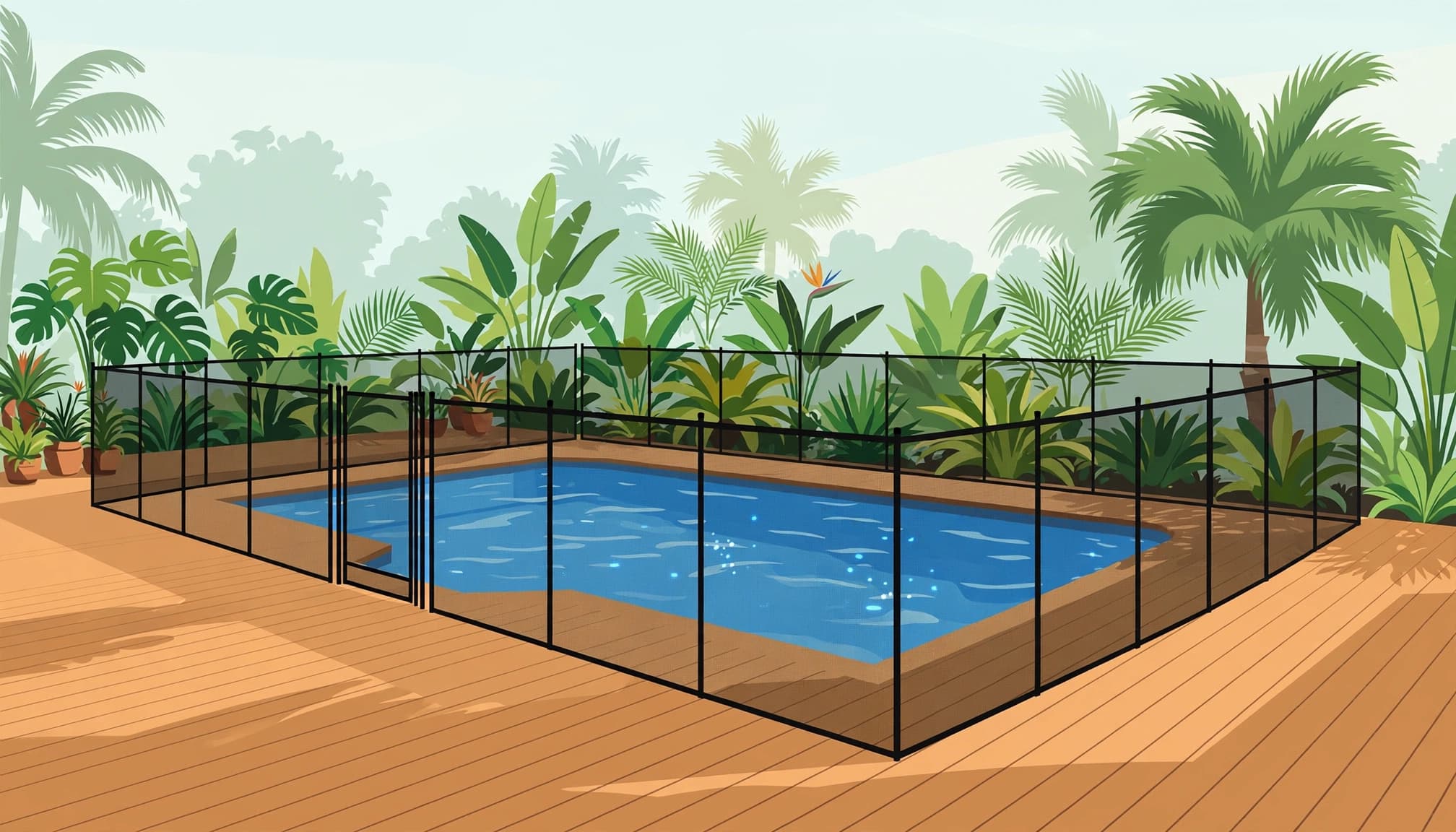
A removable mesh barrier should separate the pool from everyday yard traffic. Plan around doors, seating, steps, and pool equipment before mapping the fence route across the pool surround.
The walking path shouldn’t narrow at a corner. Pool cleaning equipment needs room, and adults need an easy way through the gate. Keep furniture and planters far enough away that children can’t use them to climb.
A family may love the open view through mesh. It helps with supervision, but doesn’t replace an adult watching children near water.
Give the gate its best location
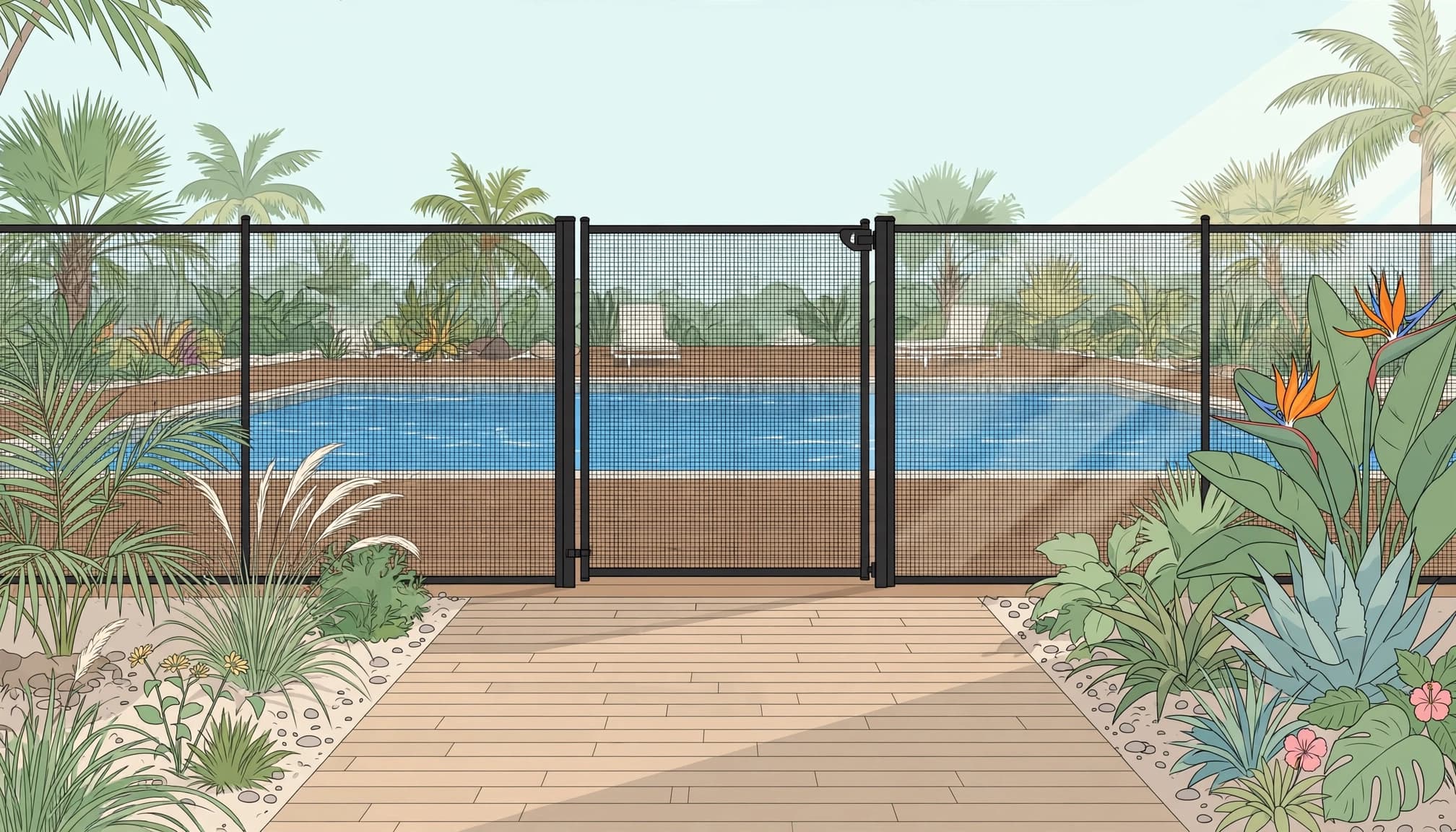
Place the gate where adults naturally enter the pool area. Its swing needs clear space, and the ground beneath it should drain well. Standing water near the threshold can interfere with smooth operation.
The CPSC’s home pool barrier guidelines explain key barrier and gate considerations. Florida and local requirements still apply to each installation. Before work starts, confirm the proposed height, openings, gate details, and permits with the relevant building department.
A beautiful deck doesn’t make up for a gate that needs a push to latch.
Make the Deck and Fence Installers Work From One Plan
Confirm what supports each post
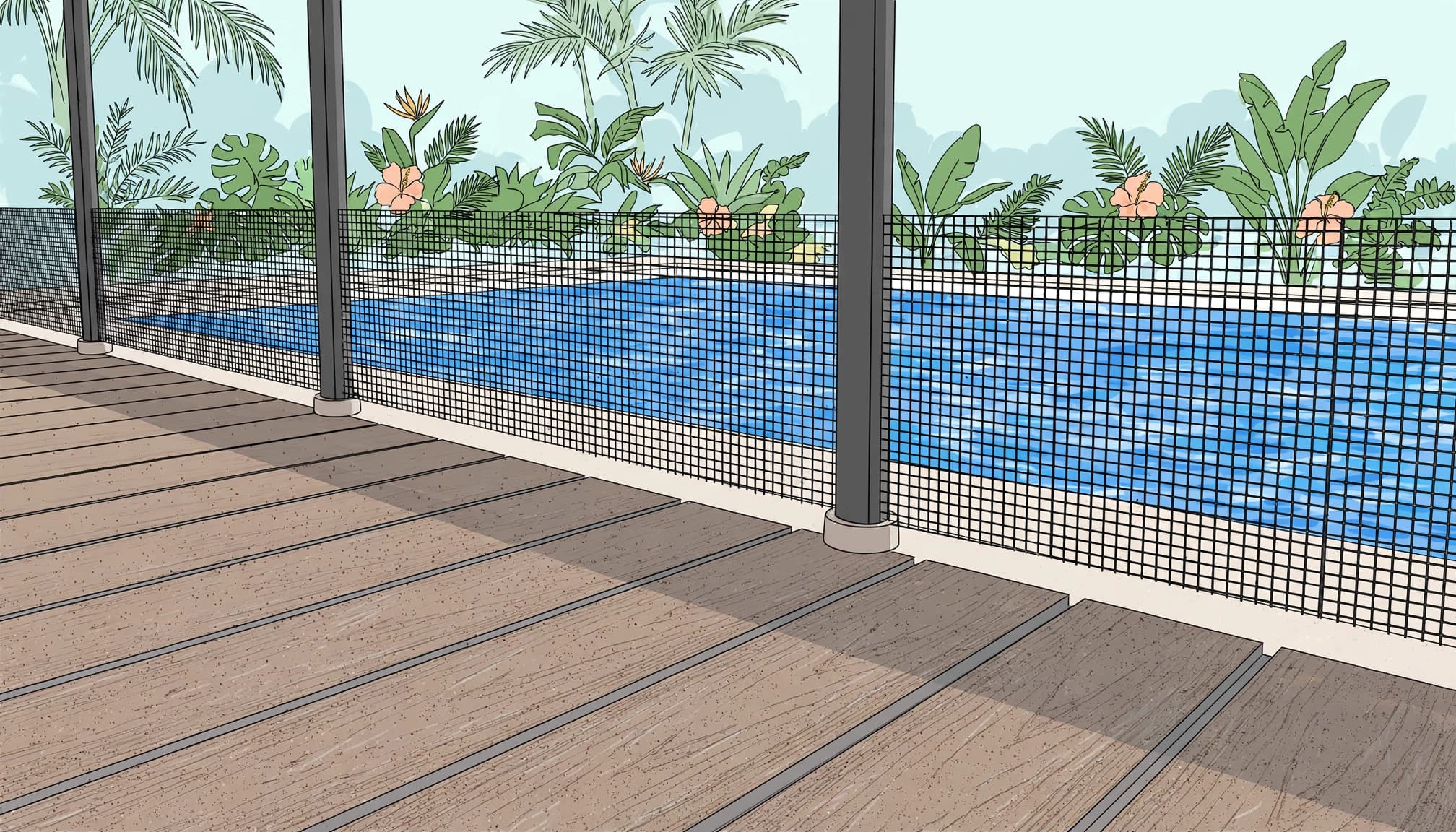
A mesh fence pulls against its posts when installers tension the panels. Before anyone drills, the deck and fence installers should agree on the fence route and support beneath it.
Composite decking sits above framing. An installer must identify an approved anchoring method for the complete deck assembly. Sleeve locations also need clearance from board edges, drains, pool coping, and hidden utilities.
Manufacturer instructions determine the fence system’s spacing and anchoring details. The decking maker’s instructions govern board installation. Neither crew should assume the other has already solved those questions.
Choose DIY work with care
An experienced homeowner may feel comfortable building a straightforward deck. A removable barrier adds another set of checks: stable anchors, even mesh tension, a complete fence line, and a dependable gate.
Curves, narrow walkways, raised sections, and nearby drains make the work harder. Above-ground pools may need a different barrier attachment plan than inground pools with a deck. Professional assessment makes sense when the supporting structure isn’t clear.
During construction, families also need a plan for pool access. A work zone barrier shouldn’t be mistaken for an approved child-safety barrier. The pool must remain protected whenever the permanent fence is incomplete.
Budget for the Whole Pool Area
Ask for an itemized deck estimate
Composite decking boards are only part of a deck quote. Framing, ground preparation, drainage work, steps, fasteners, and finishing details can change the total. Removing an old surface may add work, too.
Homeowners should request quotes based on the same drawing and board choice. That makes bids easier to compare and shows whether a contractor included the gate approach and support beneath fence posts.
There isn’t one honest price for pool decking. Size, existing conditions, product selection, and access all affect the job. Pool deck kits may simplify purchasing, but verify their suitability, framing requirements, and included components.
Include the barrier in the first conversation
A separate fence quote should identify the route, gate location, and planned anchoring method. Compare it with the deck drawing before either installation begins.
Coordinating plans early is often much easier than changing a finished deck.
Keep the Finished Deck and Barrier Ready
Follow the board maker’s care directions
For composite decking, follow the board maker’s care directions. Clear leaves, rinse away ordinary debris, and clean spills as recommended. Don’t assume harsh cleaners or pressure washing are safe for every product.
Check the area beneath the deck, too. Blocked drainage can leave water near the gate or under the structure. Follow product and framing care instructions to address possible rot and mould. After a storm, check low spots for standing water.
Give the gate a regular test
A removable mesh fence only helps when every section sits correctly. Check for loose posts, damaged mesh, and gaps along the bottom. Then open the gate and make sure it closes on its own.
If it sticks or fails to latch, repair it before relying on it. Store fence panels removed for approved maintenance carefully, and reinstall them promptly. Removability is convenient, but the pool still needs protection whenever children could reach it.
Frequently Asked Questions
Can a removable mesh fence go through composite decking?
It may work when the complete deck assembly has an approved support and anchoring plan. Installers shouldn’t treat the surface board alone as a dependable anchor. The decking and fence manufacturers’ instructions must fit the proposed layout.
Does a four-foot fence always meet pool rules?
No single measurement guarantees approval for every property. Barrier placement, openings, gate operation, and local rules all matter. Homeowners should confirm current requirements with their building department before ordering materials.
How long will a composite pool deck last?
That depends on the board, framing, installation, exposure, and care. A warranty can help homeowners compare products, but its terms vary. Stone and tile have different repair needs, so a simple lifespan promise wouldn’t tell the full story.
A Deck That Looks Good and Feels Thought Through
The best pool area lets the family enjoy the water without wondering whether the gate will latch. Composite pool decks reduce some wood-deck upkeep, while a well-planned mesh barrier adds a clear boundary.
Plan the support and gate before the boards go down. That one decision can make the finished space easier to use and easier to trust.
Questions or ready to get started? Call us at (941) 500-9484