
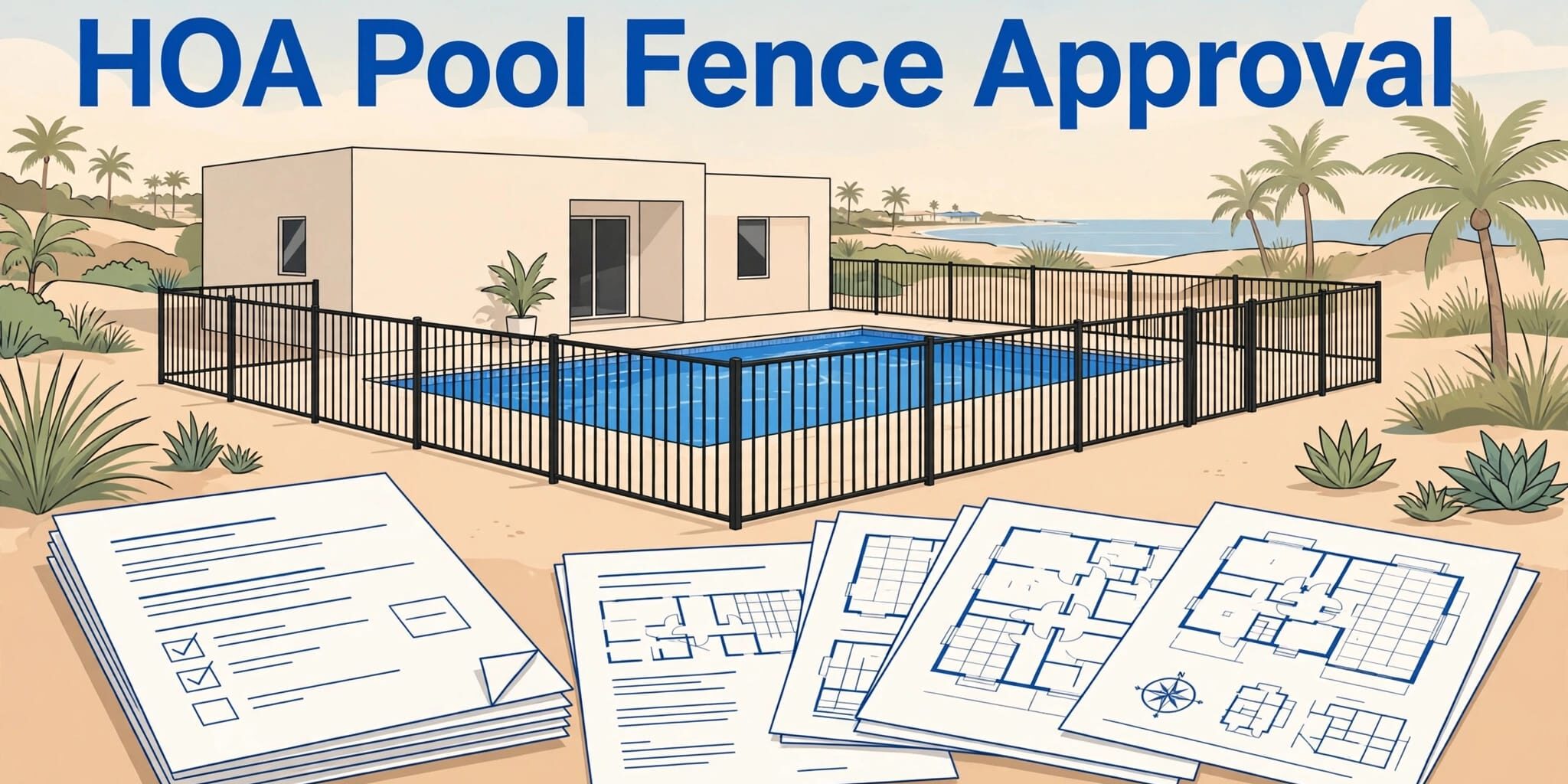
A pool fence can make a family feel better about the backyard, but getting association permission isn’t always simple. The rules may not become clear until someone asks.
For Southwest Florida homeowners, start by checking community rules and local pool requirements. A clear plan sent to the right people early can prevent frustrating delays.
Find the rules before choosing a fence
The HOA’s architectural review process should start with a document, not a guess. A neighbor’s fence may look like the perfect example, but that doesn’t mean the same design will receive approval today.
Ask for the documents that control the decision
Homeowners should request the declaration, current architectural guidelines, application form, and any pool-specific standards. They should also ask who reviews requests, such as a design review board, the board, or both.
Florida’s architectural control law for HOAs addresses the association’s authority to review improvements. Its role depends on the declaration and authorized community standards. That makes the written rule especially important when someone hears, “Fences aren’t allowed.”
A helpful question is: “Which recorded covenant or published standard applies, and what fence materials and appearance are permitted, including vinyl fencing?” It keeps the conversation polite and focused.
Check the review process and timing
The homeowner should ask when the committee meets, how it wants to receive plans, and what the submission checklist requires. Some communities may want an application before a building permit submission. Others may ask for permit information as part of the review.
The response deadline matters when a new pool is nearing completion. HOA approval and local permits are separate steps, so homeowners should confirm the applicable covenant, submission checklist, deadline, and written decision before work begins. They shouldn’t assume silence means approval.
If the property sits in a gated community or has shared walls, there may be extra questions about access. Asking early is easier than changing a finished plan.
How Florida pool safety rules fit with local code review
Pool fence HOA approval and Florida pool safety compliance address different questions. The association reviews the proposed change under its rules. The local building authority checks applicable code and permit requirements.
A new pool needs an approved safety feature
Under Florida’s residential pool safety options, some new residential pools need at least one qualifying safety feature before receiving a certificate of completion. Requirements can vary by pool type and local jurisdiction.
A compliant enclosure is one option. Certain alarms, home-access protections, and automatic pool covers may also qualify, but verify their eligibility with your local building authority.
Families often want a physical barrier because it separates everyday yard activity from the water. Children, visiting grandchildren, and pets can make that separation feel especially important.
The local building authority can confirm which pool safety laws and pool barrier requirements apply, and how the state safety law affects your project. These compliance guidelines don’t automatically settle an association design dispute.
A barrier must work as a barrier
Florida’s residential pool barrier rules may include a four-foot minimum height, measured on the outside. Height restrictions and other requirements depend on the pool and applicable jurisdiction. The rules also address openings, climbing access, and gates that open away from the pool, close, and latch automatically.
A fence around the lot isn’t automatically enough. It may leave a route from the house or patio to the water. Review every access point in the proposed layout.
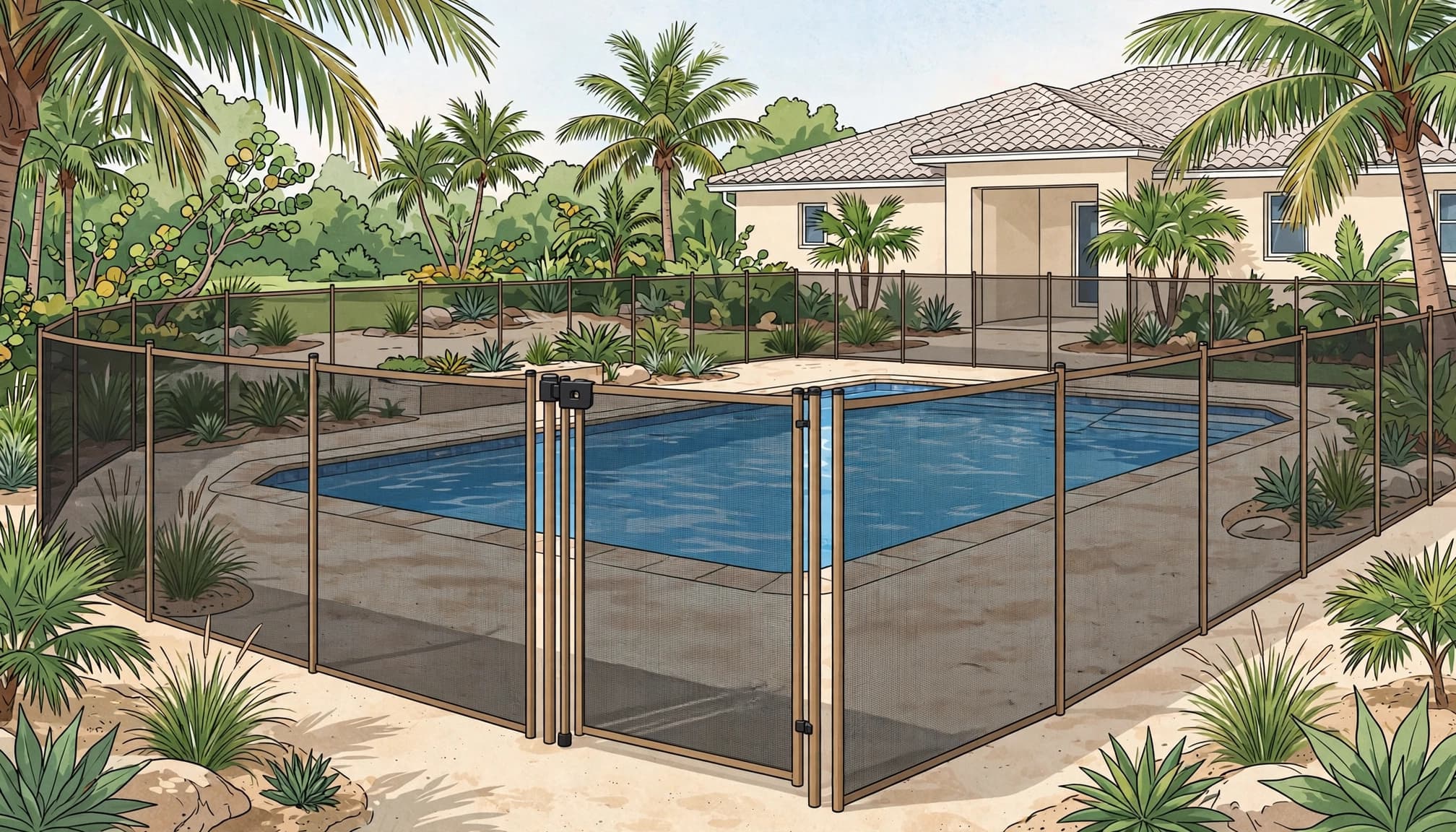
Alt text: pool fence HOA approval for a removable mesh barrier beside a residential pool.
Ask what the HOA will review
A homeowner can save time with a short conversation before submitting the formal application. The goal is a clear picture of what the committee expects, including details that may not appear on the form.
Confirm placement, appearance, and gate preferences
The committee may review height restrictions, color, visibility, gate location, and distance from property lines. Ask for property-line and appearance rules in writing, including any limits near easements or shared areas. If your community has a design review board, ask how it evaluates community standards and visual appeal.
Homeowners considering a removable mesh pool fence should ask whether it follows the same architectural review process as other exterior improvements. “Removable” doesn’t automatically mean “exempt from review.” Small deck anchors can still change the property, and HOA documents may require approval.
Color is worth asking about directly. A sample of the proposed mesh and posts gives reviewers something real to consider. Ask which fence materials are allowed, including whether vinyl fencing is permitted. No homeowner should assume that a popular-looking color has community approval.
Ask which changes need another review
A committee might approve one layout but object to a later gate move. Before ordering materials, the homeowner should ask what happens if field measurements call for a change.
This comes up around curved pools, raised decks, screen doors, and narrow side yards. The best gate design on paper may be awkward in daily use. A quick question now can spare the family a second round of waiting.
Approval for a fence design may not cover a different gate location. The final layout should match the plan the HOA reviewed.
Give the committee a plan it can understand
A complete application makes the decision easier. It shows the committee considered safety, community appearance, and applicable compliance guidelines. For pool fence HOA approval, a simple sketch may leave too many questions unanswered.
Show the full route around the pool
The submitted site plan should show the pool, house, deck, proposed barrier, and each gate. It should mark nearby doors, screen entries, and paths people use across the yard.
The drawing should identify property lines and any known utility easement that may affect placement. Photos from several yard angles help reviewers picture what neighbors may see. Clear photos beat a long explanation.
A professional site visit can catch trouble spots before anyone submits the plan. Slopes, planters, equipment pads, and patio furniture can affect access and fence placement.
Include product and gate details
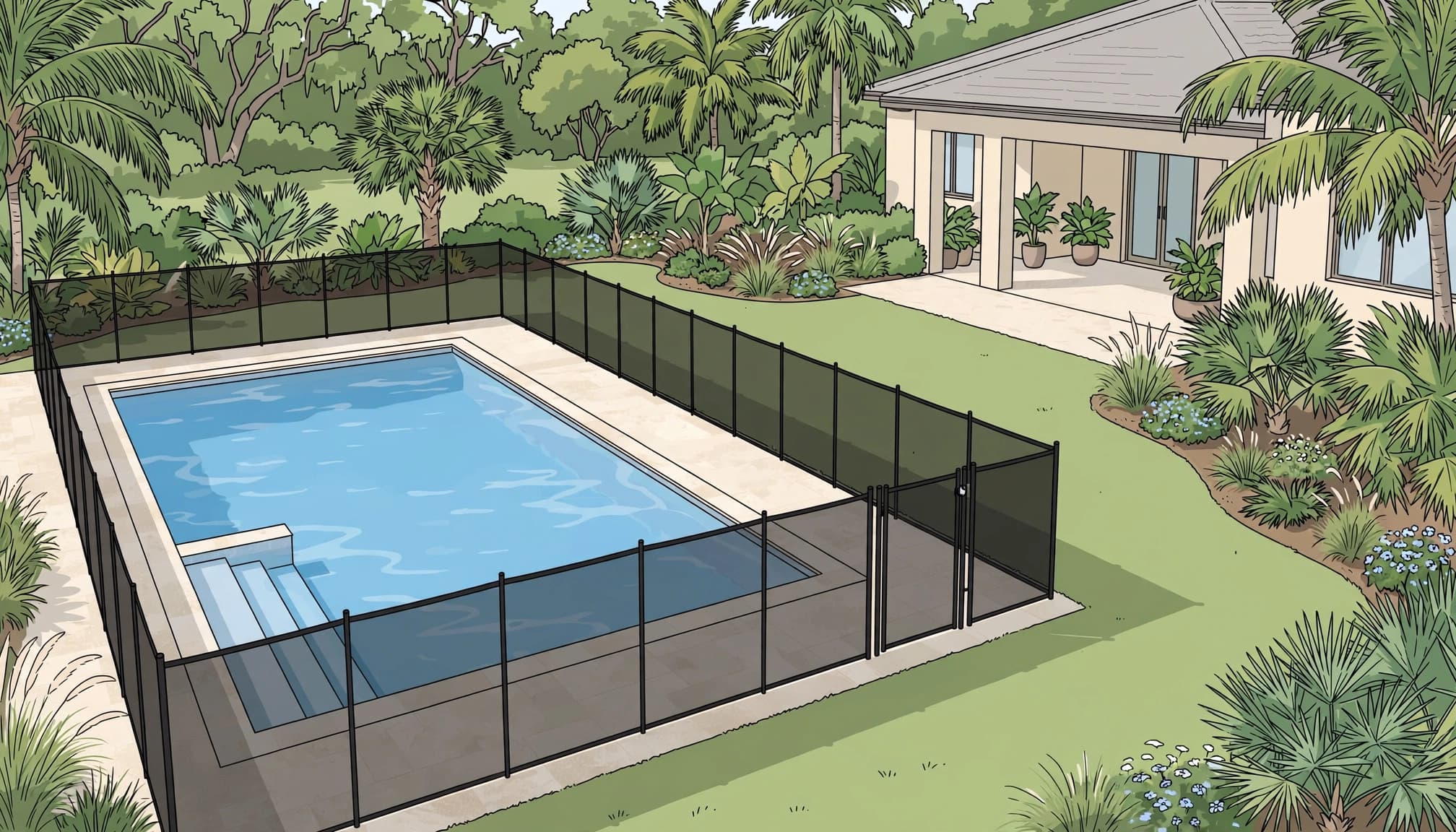
The submission should list the mesh height, color, post finish, gate design, and deck anchors. A product sheet and color sample make the fence materials easier to review and help show how the design will support visual appeal.
Homeowners should explain that each gate will be self-closing and self-latching. Ask the installer how the layout will handle ground gaps and changes in deck height, then recheck the site plan against field measurements, including property lines.
A contractor can help prepare a plan that matches the real yard and the intended installation. That personal attention feels reassuring when a family needs both a good-looking result and a dependable safety layer, such as a removable mesh pool fence.
If the HOA says no, ask what can change
A denial is disappointing, especially when the fence is meant to protect children. The best next move is a calm, written request for the reason. That gives the homeowner something useful to work with.
Get the exact reason in writing
The homeowner should ask which community standards or compliance guidelines the design failed to meet, and which part of the plan caused concern. Was it the fence location, material, color, height, or gate? Each answer points toward a different revision.
They should keep the application, drawings, committee response, and later messages together. If the community has a design review board or an appeal or reconsideration process, its governing documents should explain how to proceed.
A permanent fence dispute may call for a different solution than a mesh fence dispute. A new placement or approved finish might address the HOA’s concerns about appearance or property values. Any revised design still needs local safety review.
Send a respectful reconsideration request
A short note can keep the conversation moving without turning it into an argument:
Thank you for reviewing the proposed pool fence. Please identify the covenant or published standard behind the denial. The homeowner would welcome guidance on a layout or finish the committee can approve. The revised plan will also go to the local building authority for safety review.
If the HOA’s position seems to conflict with a required safety measure, homeowners should seek property-specific legal advice. They should also ask the building department which safety options meet the pool’s requirements.
Neither a verbal disagreement nor a pending appeal makes an unapproved installation a safe bet.
Keep association authorization and local permits on separate tracks
Southwest Florida isn’t covered by one permitting office. A home in Fort Myers, Cape Coral, Naples, or Port Charlotte may face different local reviews. The city or county with jurisdiction determines permitting and code requirements, so contact its building department.
The questions are straightforward: Are separate building permits required for this fence? What drawings does the office need? Will an inspection be required? For a new pool, when must the safety feature be ready for final inspection?
Requirements may vary by pool project, barrier, and property lines. Ask the local authority which compliance guidelines and pool regulations apply to your specific plan. Written authorization from the association, local permits, and safety and code compliance are separate checks.
Installing first can create an expensive problem. The association may require changes to work that violates its rules. The local authority may also require corrections before accepting a safety feature. Waiting for clear answers protects your family’s time and budget.
For help planning a removable mesh layout, homeowners can request a free pool fence estimate. A site-specific plan gives both reviewers and the family a better starting point.
Key takeaways for homeowners
- Ask the HOA for the actual fence rule, application requirements, and review timeline before selecting a design.
- Check Florida safety requirements and local permit rules separately. Association sign-off doesn’t replace either one.
- Submit a site plan, yard photos, product details, and the proposed gate location.
- If the committee denies the request, ask for the written reason and a workable path to reconsideration.
A little preparation can make the process feel much easier. More importantly, it helps the family choose a barrier that works in the yard every day.
Frequently asked questions
Can an HOA ban a pool safety fence?
There isn’t one answer for every community and pool. The homeowner should check the governing documents, the stated reason for any denial, and applicable pool barrier requirements. Verify local safety rules, too. If those requirements appear to clash, property-specific legal advice can help.
Does a removable mesh pool fence need HOA approval?
It may. Removal capability doesn’t automatically exempt a fence from review. The safest approach is to ask the HOA in writing before installation, even when the fence uses small deck anchors.
What if the fence goes in before approval?
The homeowner may face an HOA demand to change or remove unapproved work. Local permit or inspection issues may also delay acceptance of the barrier. Written approval and permit answers should come first.
A safer plan starts with clear answers
The nicest part of a pool fence is the peace of mind it can bring. That feeling starts before installation, with a clear HOA response and a layout the local authority can review.
Homeowners who have those answers can Get a FREE Quote for a mesh fence that fits their pool and daily routine.
Questions or ready to get started? Call us at (941) 500-9484