A pool beside a canal or retention pond gives a Florida backyard an open, beautiful view. It also creates another route toward open water that many families don’t expect.
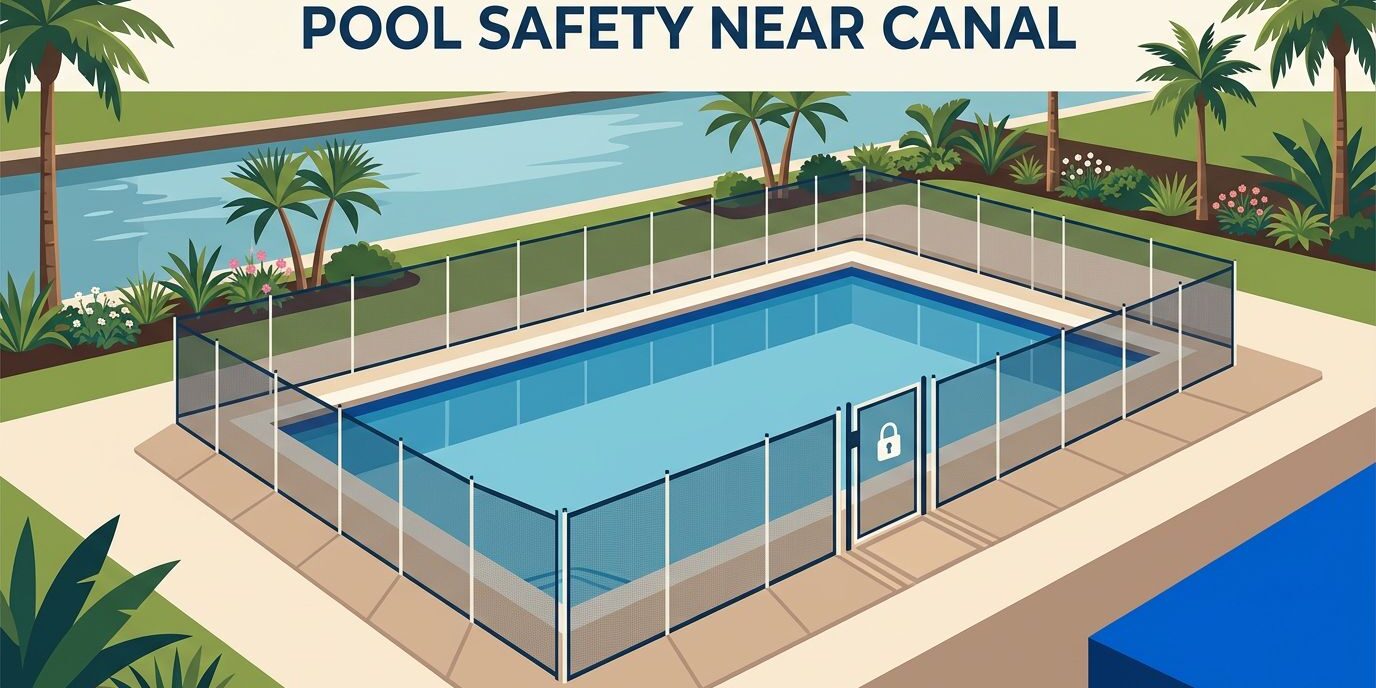
For homeowners planning pool safety near canal properties, start with one clear boundary. A removable mesh fence controls access to the pool, while separate habits protect the waterfront.
A canal edge never replaces a compliant pool barrier. The right layout, gate, and daily routine bring relief without blocking the backyard view.
Key Takeaways
- A canal, retention pond, or lake does not replace a compliant pool barrier. The barrier should surround the pool rather than sit only along the property line.
- A professionally installed removable mesh fence with a self-closing, self-latching gate can protect the pool while preserving the backyard view.
- Pool access and canal access should have separate boundaries, locked gates, and clear daily rules for children, pets, guests, and caregivers.
- Keep furniture, toys, floats, and other climbable items away from the fence, and inspect the barrier and gate after storms or yard work.
- Waterfront equipment, docks, seawalls, pumps, and wiring need separate safety checks, including qualified electrical inspections where needed.
Two layers of protection for canal-side homes
A pool and a canal create two separate water hazards. The pool sits inside the home’s daily living space.
The canal or pond is open water beyond a lawn, seawall, dock, or open side gate. These adjacent waterways may include water control structures for flood control, so they need distance and restricted access.
The pool needs an approved barrier around its perimeter, while the waterfront needs clear boundaries, locked access points, and safe habits. That separation is the foundation of canal safety.
A child can leave through a side gate, pass behind patio furniture, or follow a path around the pool. A secure fence reduces that opportunity before an adult notices movement.
On a waterfront property, protection depends on where the barrier sits, not only where the property ends. A rear property line beside water does not isolate the pool.
A fence along the seawall may protect the property edge. It may still leave access from the home or side yard.
A canal is another water hazard, not a substitute for the pool barrier.
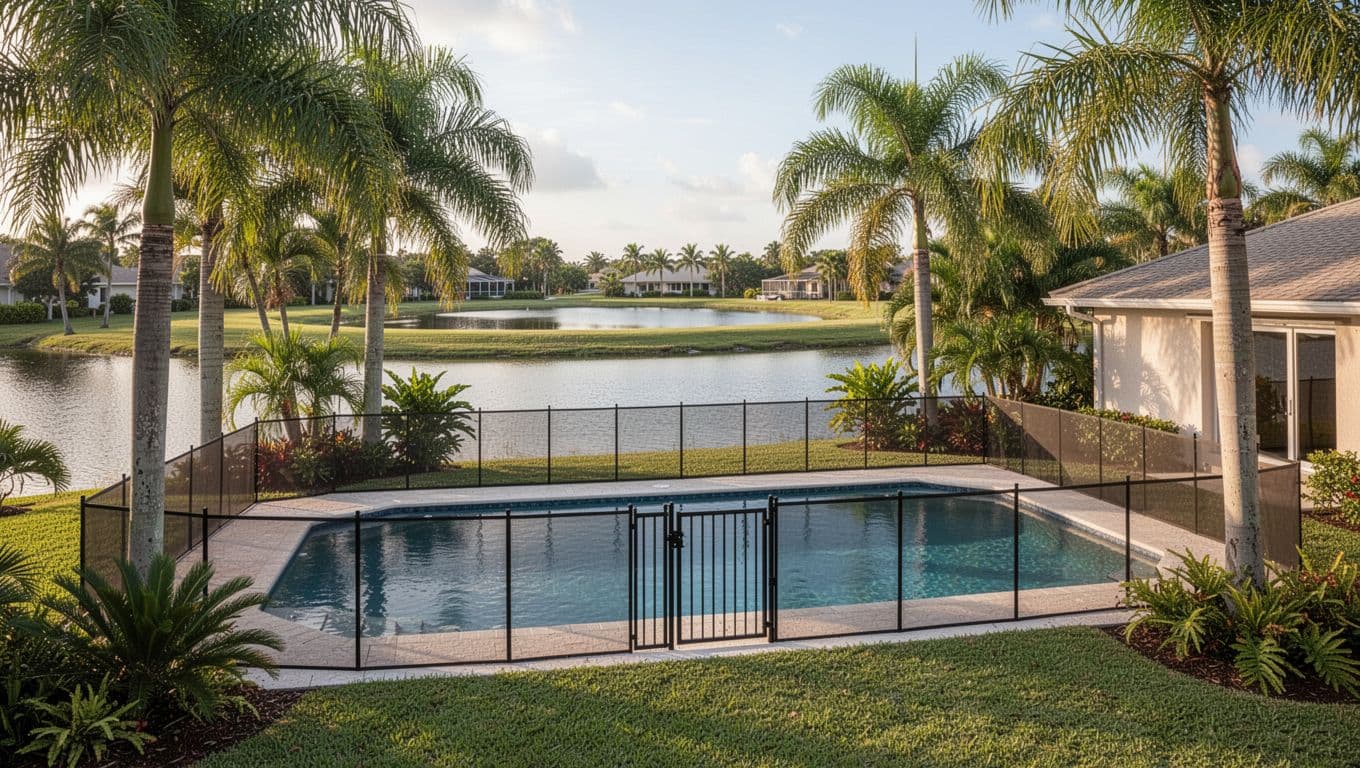
Florida rules for a pool beside a canal
Florida’s Residential Swimming Pool Safety Act sets requirements for access to residential swimming pools. Homeowners can read Florida’s residential pool safety law before scheduling work.
The statute does not create an exemption for pools beside adjacent waterways, including retention ponds, lakes, drainage canals, or irrigation canals.
Florida Statute 515.27 requires a new residential pool to have at least one approved safety feature before final inspection. The listed safety devices include a barrier, an approved safety cover, direct-access alarms, self-closing doors, or a pool alarm.
A barrier remains the clearest choice for families beside a canal. Homeowners should plan it around the pool, not only the property line.
Drain covers and suction entrapment risks require separate pool-equipment checks. These checks are not alternatives listed in section 515.27.
Electrical shock drowning is a separate concern around pools, docks, and waterfront equipment. Barrier compliance does not replace electrical precautions or inspections.
The barrier must surround the pool
Under section 515.29, a barrier must stand at least four feet high on the outside. It must block access and avoid gaps, openings, or protrusions.
Those features cannot allow climbing, crawling, or squeezing through. Florida places the barrier around the pool perimeter.
A qualifying yard wall or fence may form the enclosure when it meets every requirement. That distinction matters on waterfront lots.
A fence along the canal property line can leave the pool exposed from the house or side yard. Homeowners can review Florida’s barrier requirements with the local building department and installer.
They should confirm the current building code and inspection expectations before installation.
Gates deserve careful attention
A pool gate should swing outward, away from the water. It should close and latch without help after someone passes through.
Florida requires the release hardware on the pool side, beyond a young child’s reach. The latch cannot sit low enough for a child to reach through the mesh.
Gate placement also matters when the canal side has a dock, walkway, or backyard entrance. A professional installer should test the swing, closing action, and latch before leaving.
Start with a waterfront access review
Before an installer measures anything, homeowners should walk the property at a child’s height as a practical water safety step. That doesn’t mean entering unsafe areas.
It means identifying every door, gate, path, and object that leads toward the pool or canal. Note docks, seawalls, landscaping, and grade changes, since each can shape the easiest access route.
Find the routes adults miss: practical safety tips
Homeowners should check lanai doors, side gates, service gates, dock paths, canal-bank routes, pool equipment, and open areas beside the home. They should also note steep slopes near seawalls, changes in grade, and landscaping that could create a shortcut.
Patio chairs, storage bins, floats, and ladders should stay away from the planned fence line. These small changes make the barrier easier to monitor every day.
The installer should see the actual property during the site visit, not merely draw a fence at the property line. Clear information helps the team plan around screens, landscaping, pool drains, seawalls, docks, and grade changes.
Separate pool access from canal access
Most homes need one clearly controlled route into the pool area. Canal access may need a different locked gate, especially near docks or seawalls.
Keeping those routes separate helps caregivers know which opening deserves attention. That arrangement also protects the pool boundary when someone visits the waterfront.
Choosing a removable mesh fence
Removable mesh safety fences suit many Florida pools because they create a visible boundary without closing off the yard. Quality mesh stays transparent, so caregivers can quickly see the water, deck, and gate.
Professionally installed systems can follow curved decks, raised pools, screened lanais, and narrow spaces. That flexibility helps when the canal sits close to the home.
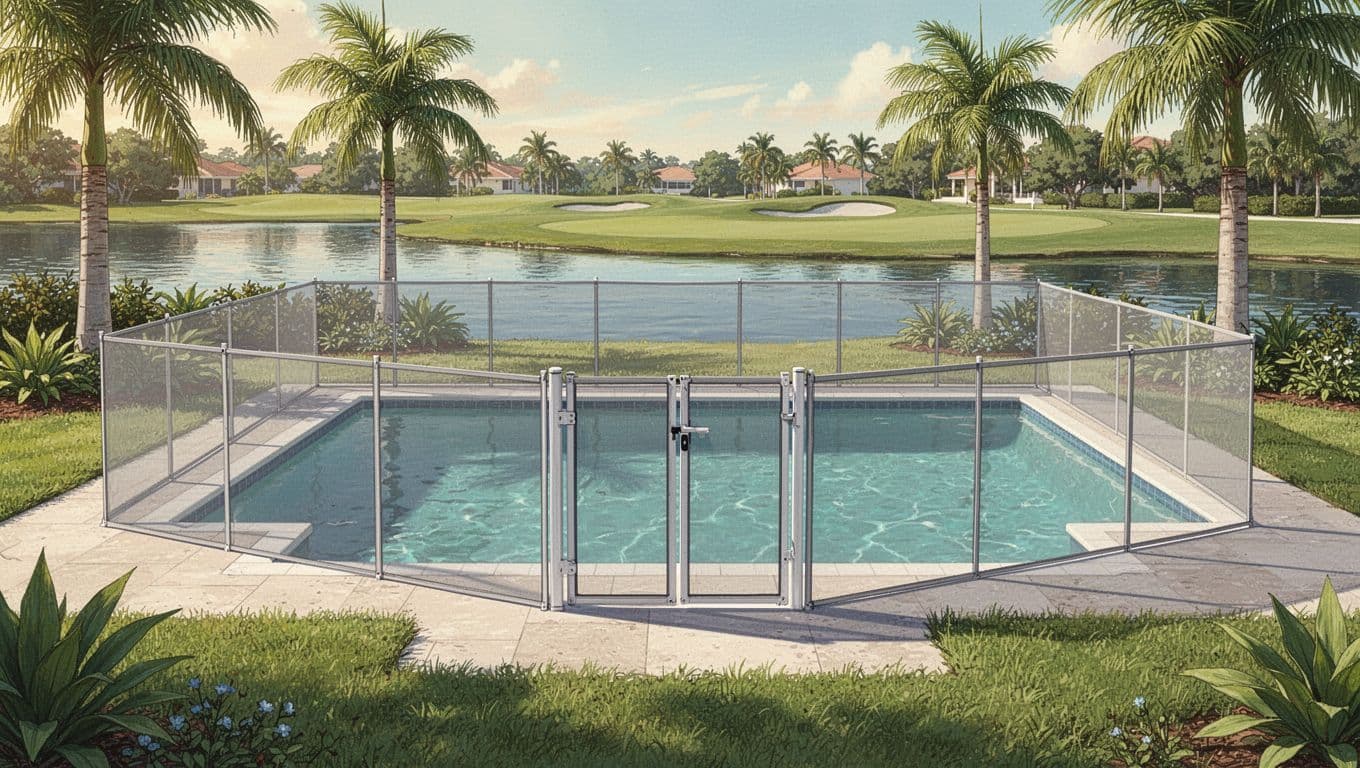
Plan the fence around the actual pool
Installers should measure the pool deck, steps, raised walls, ladders, screens, and access points. Each detail can change the fence line.
The barrier should leave enough deck space for safe movement and gate operation. It shouldn’t leave a convenient gap beside a wall, planter, or screen enclosure.
Furniture, toys, and planters should stay away from the fence. Anything climbable can turn a four-foot barrier into an easier route.
On a canal-facing lot, a custom layout may protect the pool without fencing the entire yard. That keeps the water view open and gives caregivers a clear sightline.
Choose the right gate
A self-closing, self-latching gate is more than a decorative extra. It’s the part families use every time they enter the pool area.
Families should watch the gate close fully during the estimate. Then they should test the latch from both sides without forcing the hardware.
One well-placed gate often provides better control than several convenient openings. Large properties may need separate access points for maintenance.
Each opening needs the same reliable closing action. That small detail brings a lot of peace of mind.
Daily habits protect children, pets, and guests
Fencing handles unsupervised access, but it cannot watch a child or pet. Canal safety starts with a routine that gives every gate and door a clear rule.
Keep the pool area boring to climb
Chairs, coolers, floats, and toys should not sit against the mesh. Children often follow whatever makes reaching water easier.
Keeping the deck clear also helps adults spot a gate left open. Doors leading outside should stay secured during visits, parties, and rentals.
Pool alarms and door alarms are additional safety devices. They don’t replace the barrier or active supervision needed for drowning prevention. No single safety feature should carry the whole responsibility.
Give pets and waterfront access their own plan
Dogs can push through an open gate, chase wildlife, or slip toward open water. A separate yard gate protects pets.
Keep supervised children within sight near docks, seawalls, canal edges, water control structures, and fast-moving water.
Dock ladders, seawalls, and pond edges need their own rules. Stay out of the water if dock lighting, pumps, or wiring looks damaged, because electrical shock drowning can result.
Have a qualified electrician inspect shore power and the ground fault circuit interrupter. Life jackets belong near docks and boats, not buried in a garage.
Caregivers should know which doors lead to the pool, canal, and pond. During parties, visits, or rentals, designate one adult as the water watcher.
Share a simple emergency response plan with grandparents, babysitters, and guests. Swim lessons add readiness, but they don’t replace barriers or supervision.
What professional installation should include
A good installation begins with a site visit, not a standard drawing. The installer should inspect the pool shape, deck material, screen enclosure, yard grade, landscaping, and canal access.
For Southwest Florida properties, custom fence sizes and gate positions can make a difference. Many homeowners prefer a one-day installation, so their family can quickly return to its normal routine.
Removable mesh panels can come down when the pool area needs work or an event. Afterward, the installer should show homeowners how to operate and inspect the gate.
Pricing questions should cover fence length, deck drilling, number of gates, and waterfront layout. Each property differs, so a reliable quote should follow the completed measurements.
Homeowners can Get a FREE Quote for a custom removable mesh fence installation. For scheduling, they can request a free pool fence estimate with the Southwest Florida team.
Manufacturer and workmanship warranties should appear in writing. This detail gives families confidence after installation.
Ask about deck and gate details
Homeowners should ask how installers handle pavers, concrete, deck drains, returns, and uneven deck areas. They should review gate swing, latch height, and fence distance before work starts.
Homeowners should also ask how the mesh comes down and goes back up. The local team should explain what the warranty covers and how service requests work.
Clear answers prevent surprises later. A friendly, reliable installation team should make every part easy to understand.
Inspect the barrier after storms
Southwest Florida weather tests every outdoor safety feature. Wind, heavy rain, landscaping growth, and deck work can change the setup.
Check the fence after weather and yard work
After a storm, adults should check each post, mesh panel, anchor, and gate. Loose soil, standing water, or shifted deck material can affect alignment.
Tree trimming and pressure washing can also damage or loosen parts. Any gate that drags or fails to latch needs prompt attention.
Professional service can correct fence problems before the next family gathering. Keep damaged dock lighting, pumps, or wiring out of service, and have a qualified electrician inspect them to reduce the risk of electrical shock drowning. Stay away from storm-damaged water control structures, and have a qualified professional assess the area before anyone approaches it.
That’s a big relief for busy families!
Keep the view and boundary clear
Transparent mesh makes supervision easier, but tall plants can hide a gap or open gate. Trim growth near the barrier and keep pool equipment from creating a climbable step.
Canal-side landscaping should not guide children toward the water. Good visibility gives caregivers more time to notice movement.
Clean, open sightlines also help grandparents and guests understand the pool boundary. The fence should look simple, clear, and easy to respect.
Frequently Asked Questions
Does a canal replace a pool safety fence?
No. Florida’s pool safety requirements still apply to pools beside canals, retention ponds, lakes, and other waterways. The barrier should surround the pool and control access from the home, side yard, and waterfront.
Where should a pool fence go on a canal-side property?
The fence should follow the actual pool perimeter and account for steps, raised walls, screens, landscaping, and access points. A fence placed only along the canal property line may leave an open route from the house or side yard.
Is a removable mesh fence suitable for a pool near a canal?
A professionally installed removable mesh fence can create a visible boundary without closing off the backyard view. The system should include a reliable self-closing, self-latching gate and a layout that avoids convenient gaps or climbable objects.
What daily habits improve safety near a canal?
Keep pool and waterfront gates secured, remove furniture and toys from the fence line, and keep children within sight near docks, seawalls, and canal edges. Designate a water watcher during gatherings, and give pets their own supervised access plan.
How often should a pool fence and gate be inspected?
Check the posts, mesh, anchors, and gate after storms, heavy rain, landscaping, pressure washing, or deck work. Repair any loose parts or gate that fails to close and latch before the pool area is used.
A safer plan for waterfront backyards
Canal and retention pond homes need a pool barrier designed around the pool, not the property line. The best setup uses a professionally installed removable mesh fence, a reliable self-closing gate, and consistent waterfront habits.
Florida’s rules provide the baseline, while thoughtful placement gives families everyday peace of mind. For families considering pool safety near canal properties, planning starts with one simple question.
Can every child, pet, and guest reach water without an adult noticing? When the barrier, gate, and waterfront routine work together, they create a complete canal safety plan.