A fence can look simple when the work is finished. This pool fence installation guide explains why details under and around the deck matter just as much.
A proper pool safety fence creates a clear boundary between loved ones and the water. Around Southwest Florida deck drains, drainage, cleaning access, anchoring locations, and the final fence route must work together.
Families deserve a fence that feels secure, looks clean, and supports pool safety every single day.
Key Takeaways for a Safer Pool Deck
- Map the full fence route before drilling near drains, steps, pavers, equipment, or access doors. Confirm local requirements and permits first.
- Keep deck drains open and easy to inspect. Protect water flow, and leave room for cleaning around each drain after installation.
- Florida barrier rules cover height, openings, and gate operation. They don’t set one universal drain clearance, so verify the approved layout locally.
- Concrete, pavers, and travertine need different drilling and anchoring plans. Repair cracks or loose surfaces before securing the fence.
- A self closing gate needs a clear swing path. Keep the gate section free of drains, furniture, and stored items, then test the latch regularly.
- If you’re considering pool fence DIY, don’t drill until the drain route, surface condition, and local requirements are confirmed. Inspect the barrier after storms to maintain pool safety.
Why Deck Drains Change Pool Fence Planning
Southwest Florida rain can arrive fast. A pool deck drain helps move storm runoff away from walking areas, doors, and the pool edge.
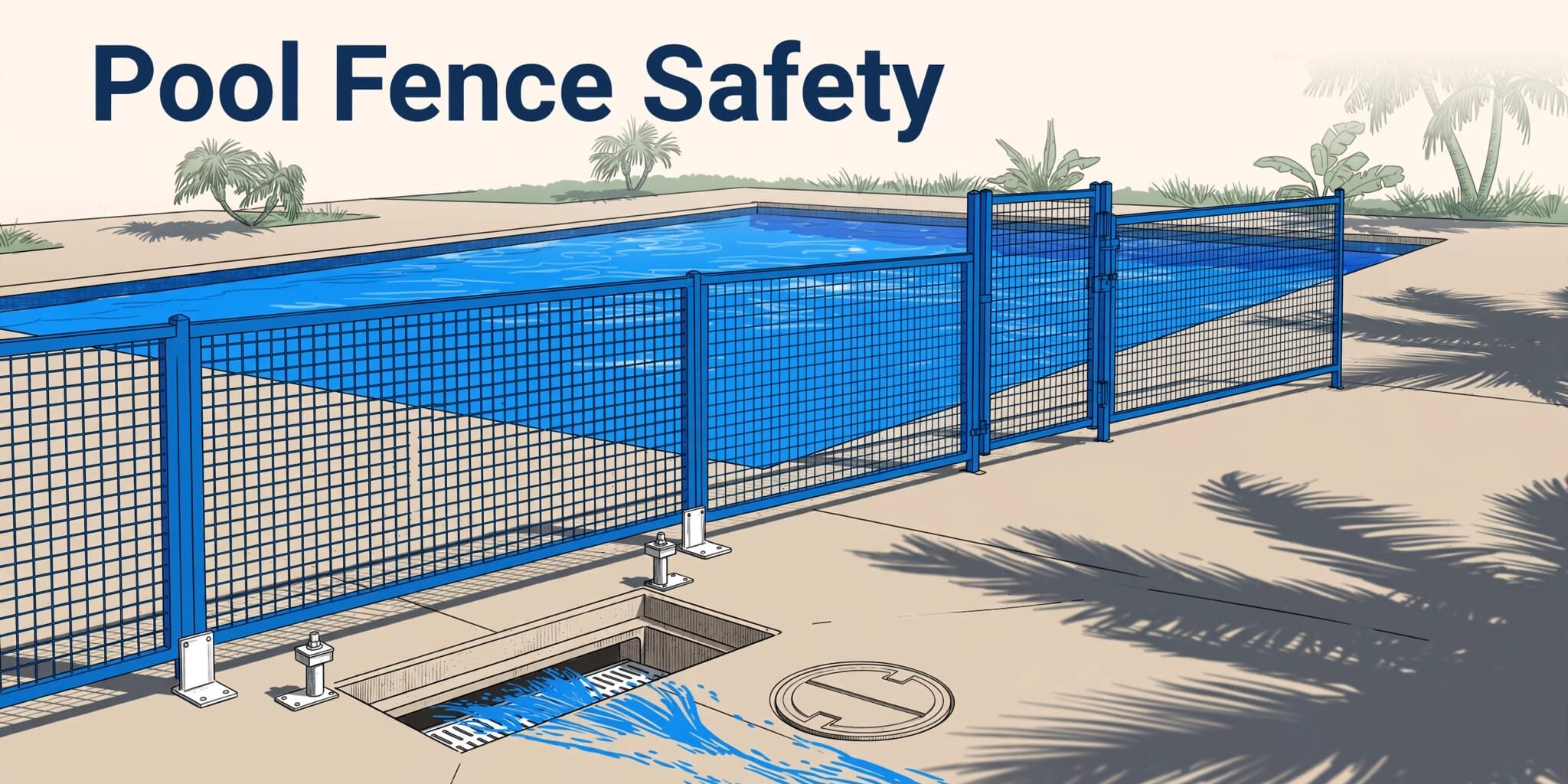
The pool fence layout cannot cover, block, or make that drain difficult to clean. The mesh barrier should follow the pool safely while keeping the drainage path clear.
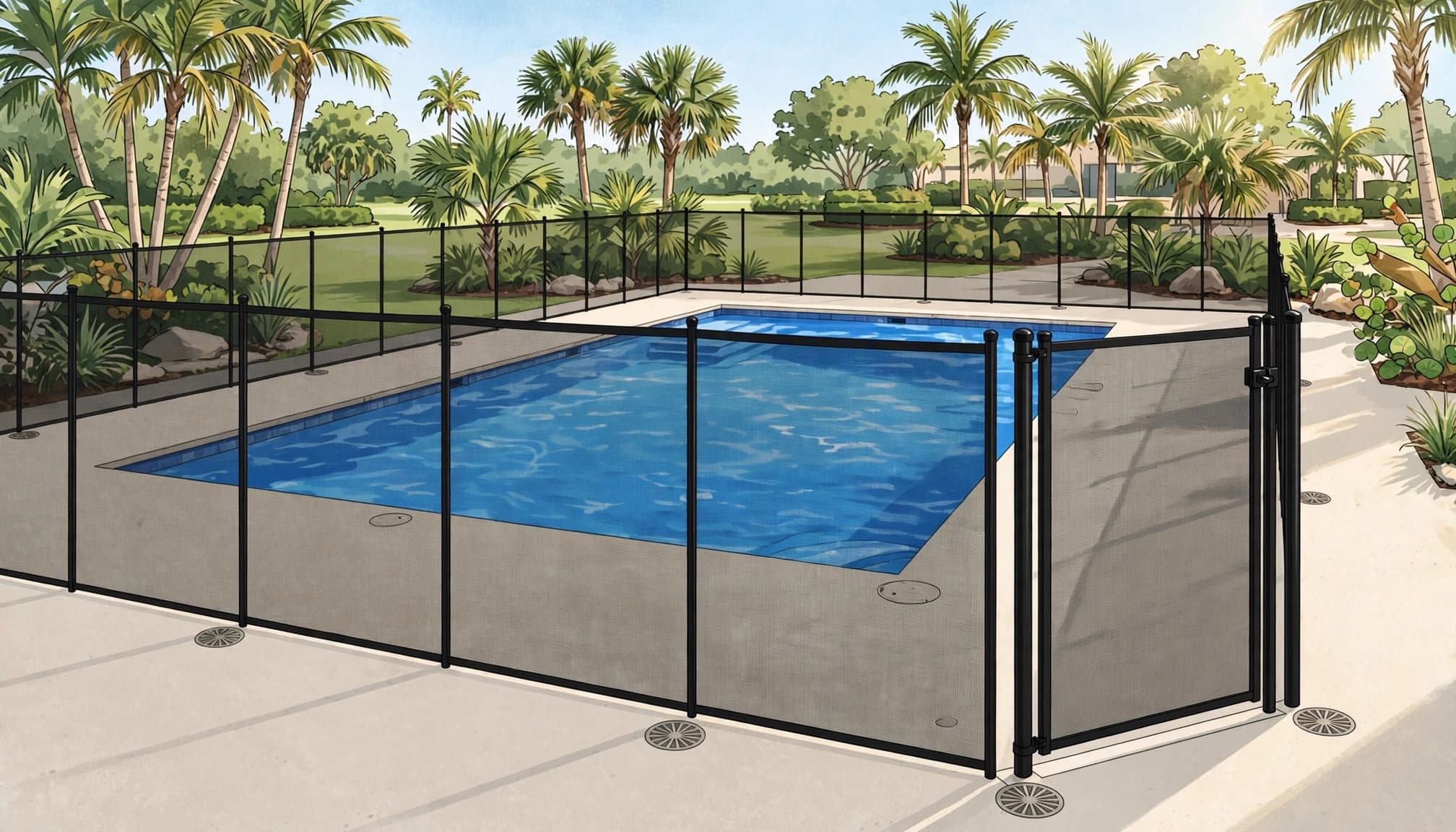
Keep drain grates open and accessible
Installers should locate every round drain, channel drain, and low spot before marking pool fence sleeves. Leaves, mulch, toys, and storm debris can quickly create drainage problems.
Pool fence posts should never make it harder to lift a grate or rinse debris from a channel. The sleeve anchoring points also need enough distance from drainage edges for safe installation and maintenance.
A gate section must remain easy to walk through, with no standing water blocking the route. Families also need enough room to move safely around the perimeter.
Water that backs up against a drilling point can soften nearby bedding, stain pavers, or expose a drainage issue. That warning shouldn’t be ignored.
A pool safety fence should protect access to the water, not stop rainwater from leaving the deck.
Map the whole pool area first
The best layout considers more than the waterline. It includes screen doors, steps, raised planters, equipment pads, furniture zones, and the gate swing.
Many removable mesh fence systems sit about 20 to 24 inches from the water. That number is not a Florida rule. The pool shape, product instructions, walking space, and gate location guide the final route.
Florida does not provide one universal drain-to-fence clearance. The route depends on the slope, grate access, fence system, and local approval.
Curved pools need careful marking. A good layout keeps mesh sections tight without placing sleeves too close to drain edges or fragile coping.
Florida Pool Fence Installation Rules That Matter
Florida has statewide pool barrier requirements, and local building departments or HOAs may add rules. Confirm the final pool fence installation plan with the local building department before work starts.
The Florida Statutes Section 515.29 requires a residential pool barrier at least four feet high. The barrier must separate the pool from the yard unless another qualifying enclosure does that job.
Height and bottom clearance need attention
Florida Building Code guidance measures pool fence height at 48 inches above grade on the outside of the barrier. It also limits the gap under the barrier to two inches on that exterior side.
The same Florida Building Code barrier guidance discusses placing a barrier about 20 inches from the water’s edge. This guidance shouldn’t replace confirmation with the applicable local jurisdiction.
Height, openings, bottom clearance, and gate operation work together to support pool safety. Drains can affect the fence route and gate threshold, but they don’t create a separate universal clearance rule.
Gates must close and latch by themselves
A gate is the part families use most. In the gate section, confirm that it swings outward from the pool area and has enough clearance to operate fully.
It must close on its own and latch on its own. A properly installed self closing gate may use stainless steel latches that meet the applicable requirements.
The gate section also needs inspection over sloped or wet surfaces. Standing water, uneven pavers, or a sloped threshold can change how the gate swings. Test it several times before calling the job finished.
Concrete, Pavers, and Travertine Need Different Plans
Every pool deck surface feels different underfoot. That doesn’t mean every deck can safely hold a pool fence post.
Concrete often offers a stable base. Paver decks and natural stone need a closer look before anyone drills.
Concrete decks need clean, accurate sleeve holes
A removable mesh fence uses pool fence sleeves installed into the deck. Sleeve depth, hole size, and pool fence posts spacing depend on the exact fence system.
A diamond core drill can create a controlled opening in some concrete decks. A hammer drill may work for certain systems and surfaces, but it can chip concrete or leave a rough hole.
The installer should inspect slab condition, edge distance, and sleeve placement first. Nearby drains also need review, since drilling can affect water movement and long-term stability.
Pavers and travertine need support below the surface
A paver can feel firm while the base underneath has shifted. Paver decks may conceal weak bedding, drainage problems, or movement below the surface.
Some installations require drilling through the paver into a concrete footing. Others need a different support method after checking how water moves beneath the surface.
Travertine can crack or chip when drilling happens near an edge or with the wrong equipment. Loose pavers, sinking corners, and poor drainage are warning signs.
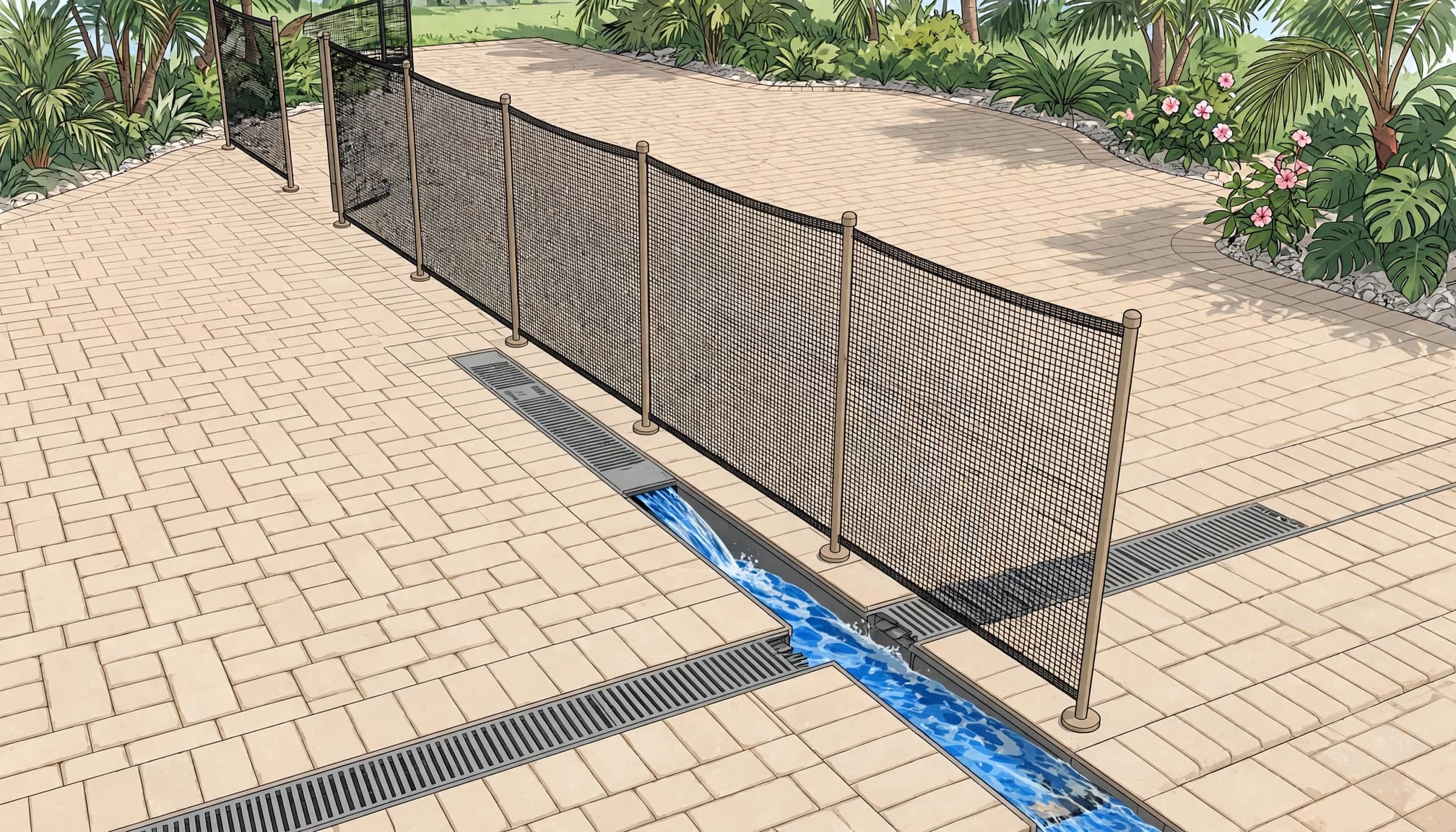
A professional checks each anchor point before drilling. That check protects the deck, the fence tension, and the family using the pool area.
A mesh pool fence kit doesn’t make every installation suitable for pool fence DIY. Homeowners should verify the slab, base, drainage, and manufacturer requirements before choosing a drilling method.
What Professional Mesh Fence Installation Looks Like
Professional pool fence installation starts with planning, not drilling. The installer walks the deck, checks access points, and studies how the family uses the backyard.
A custom pool fence layout helps on freeform pools, narrow decks, and patios with several elevations. Complex drain and elevation layouts need more planning than a basic pool fence DIY kit installation.
Measure, mark, and review the fence route
The installer marks post locations and checks distances from drains, coping, steps, and walls. Many systems use poles spaced about 30 inches on center.
Again, that spacing is product-specific. It is not a statewide rule.
The gate section gets special attention. It needs room to open outward without hitting furniture or planters. The installer also checks the gate section’s clearance from the drain grate and keeps water flow and grate access unobstructed.
The route should provide a safe, direct walking path from the home. It should also support a controlled gate swing without creating new trip hazards.
Install sleeves, mesh sections, and gate hardware
After confirming the deck supports, the installer drills the required holes and secures the pool fence sleeves. Poles go into the sleeves, then the pool fence sections are tensioned around the pool.
A quality removable pool fence should sit tight and controlled. Proper fence tension keeps it from sagging between posts or leaving gaps below a step.
Finally, the installer tests the gate section, checks every connection, and walks the full perimeter. Families should know how to remove sections safely and replace sleeve caps when the fence is down.
The approved route and drain access points should be documented for future maintenance and seasonal fence removal.
Can a Homeowner Install a Removable Mesh Fence?
A pool fence DIY project for a removable pool fence can suit a simple, stable concrete deck. Even basic pool fence installation requires accurate measurements, correct sleeves, proper drilling equipment, and careful gate planning.
The challenge starts when the deck is old, uneven, or built over sand.
DIY may fit a straightforward deck
Pool fence DIY is reasonable when the deck is solid, the pool shape is simple, and every drilling point is clear of cracks and drains. A mesh pool fence also needs a clear route around the pool.
Manufacturer instructions must control the hole depth, post spacing, and fence tension for the pool fence kit. A homeowner should also check local barrier and permit rules before starting.
After installation, the gate must close and latch repeatedly without help. The mesh must stay tight through every curve.
Professional help is the safer choice for difficult layouts
Pool fence DIY shouldn’t be treated as basic work on paver decks, travertine, multi-level patios, sloping surfaces, or tight drain locations. These areas can hide unstable soil, weak base material, or drainage problems.
An above ground pool fence uses different attachment conditions and isn’t a workaround for planning around deck drains. A barrier should follow the actual deck and drainage layout.
A fence should not bridge a step, slope, or drain channel with a gap underneath. Separate pool fence sections may be needed to follow elevation changes safely, and each gate section should be tested for reliable closing and latching.
Before drilling begins, confirm the deck condition, drain route, barrier requirements, and any permit rules. This review helps determine whether the layout is suitable for homeowner installation or needs professional planning.
Fixing Sagging Fences and Drainage Problems
A mesh pool fence should stay firm after installation. Heavy rain, settling soil, and moving pavers can affect both the fence and nearby drainage.
A quick walk around the fence after storms supports pool safety and helps catch small problems early. Check for blocked grates, standing water, and changes along the fence line.
Watch for movement around posts and pavers
Rocking pavers, cracked sleeves, leaning poles, and loose mesh need attention. So do puddles that remain beside the fence after the deck should be dry.
Clear leaves, mulch, and debris from drain grates. Confirm that water can flow away from the fence instead of collecting around anchors or sleeves.
A pool fence DIY repair should not simply retension or reset a damaged section. First identify whether the cause is a loose anchor, settled paver, cracked sleeve, or drainage failure.
Inspect the gate section after storms and yard work. Look for shifting hardware, blocked drainage, and changes that prevent the gate from closing or latching properly.
An installer can inspect the anchors and explain whether the deck needs repair before the fence is reset.
Keep the perimeter clear during yard care
Mowers, trimmers, and blowers can damage mesh, poles, and gate hardware. Before lawn work, remove stones, sticks, toys, and loose mulch from the fence perimeter.
Direct mower discharge away from the mesh. A hand tool is often safer in the narrow strip beside the barrier.
Keep chairs, grills, planters, and large toys away from the fence. Nearby objects can create a climbing point or block the gate swing.
Frequently Asked Questions
How close can a pool safety fence sit to a deck drain?
Florida law does not list one required drain-to-fence distance. The right clearance depends on the drain style, deck slope, sleeve location, and access needed for cleaning.
The installer should leave the grate open and reachable. Water should still flow freely after installation, and the fence shouldn’t block routine drain maintenance.
Does a four-foot mesh fence always meet code?
A four-foot pool fence height is the common Florida minimum, but height alone doesn’t determine pool safety. Bottom gaps, gate behavior, openings, property layout, and local rules all matter.
Miami-Dade pool permit guidance also explains the 48-inch barrier height requirement. Homeowners should confirm local requirements with the relevant building department before scheduling installation.
How should a removable fence be anchored near a deck drain?
Anchors or sleeves should sit in stable deck material without covering the drain grate. The installer should account for concrete joints, paver movement, slope, and future cleaning access.
Can a homeowner install a removable mesh fence?
Some homeowners can handle a simple installation, but the layout, anchoring, gate, and deck surface still need careful planning. An above ground pool fence may use different attachment methods than a barrier installed through a deck around an in-ground pool.
Local permitting requirements can also vary. Confirm the installation plan with the relevant building department before starting work.
Is a safety pool net automatically an alternative to a fence?
A safety pool net isn’t automatically a substitute for a compliant barrier where a barrier is required. Homeowners should verify whether the proposed safety system meets local rules for the specific pool and property.
What should the gate section include?
The gate section should swing away from the pool, close and latch automatically, and keep the latch accessible from the required side. Standing water near the threshold can interfere with operation and should be corrected before final approval.
A Safer Pool Area Starts With the Details
A removable pool fence works best with stable anchoring, open drains, and clear water flow. Leave enough cleaning access, and check the barrier after storms or heavy rain.
Pool safety depends on the complete system, not one feature alone. The gate section must close reliably, while the barrier stays secure and the deck remains easy to maintain.
Pool fence installation should account for drainage, cleaning access, storm maintenance, and dependable gate operation from the start.
Questions or ready to get started? Call us at (941) 500-9484.