
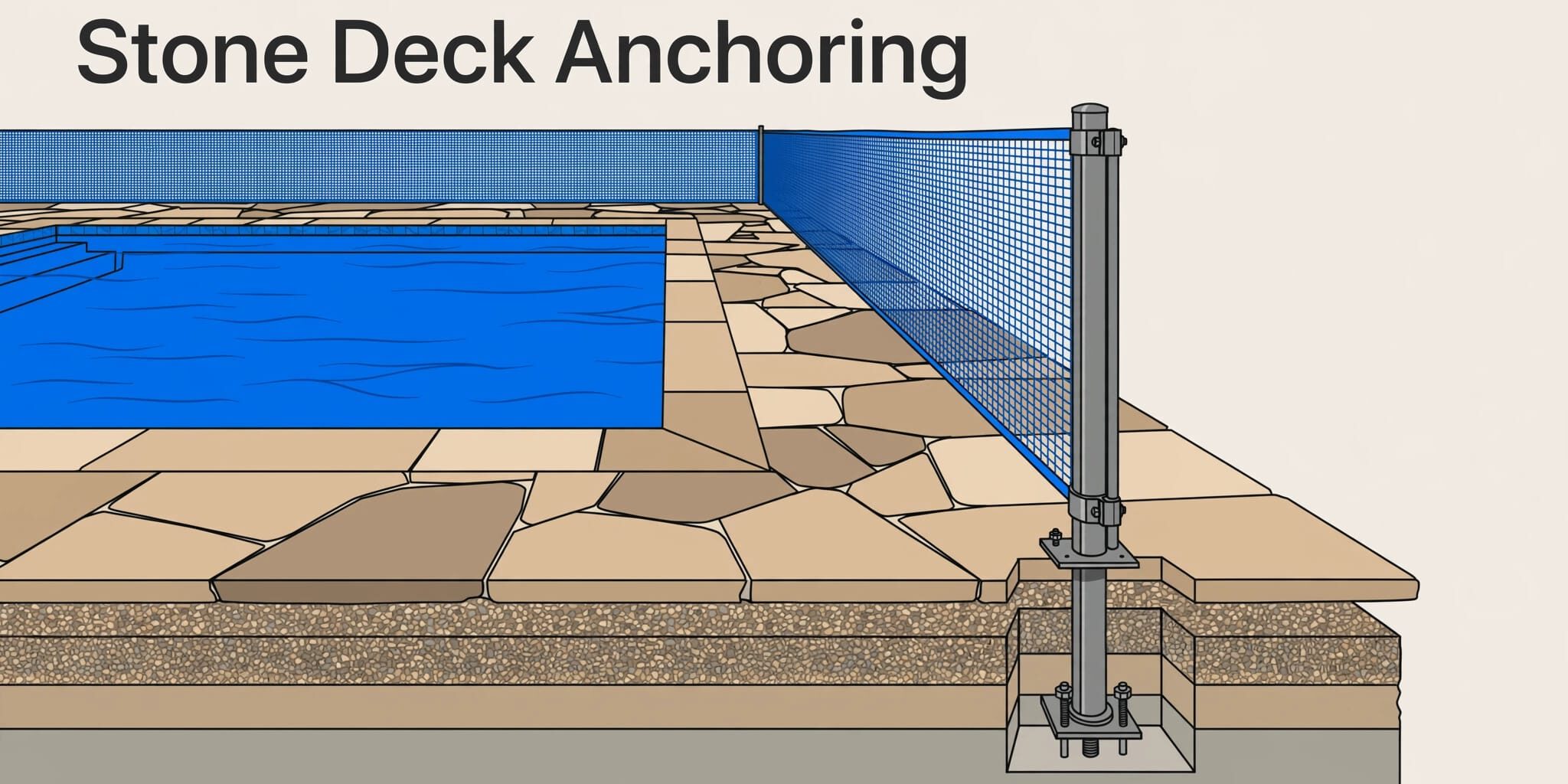
A pool fence can look simple after installation. The work below each post is where safety starts. Pool fence anchoring on natural stone needs more planning than a standard concrete pool deck.
Travertine, limestone, flagstone, and marble can chip, crack, or hide voids below the surface. These conditions can weaken a mesh pool fence, despite a clean-looking deck.
Families need a safety mesh barrier that stays tight, stable, and ready every day. It starts with an honest look at the deck.
Why Pool Fence Anchoring Changes on Natural Stone
Natural stone isn’t the same as poured concrete. Each piece may have different thickness, strength, seams, and support underneath.
A fence post pulls against the deck when mesh tension increases. Heavy rain, settling soil, and daily gate use can add more stress. Loose stone or weak bedding can leave a post leaning over time.
Check the stone and the base below it
Homeowners should inspect every planned anchor point before drilling starts. Cracks, patched areas, loose stones, drain channels, and thin edges all need attention.
Pavers and stone tiles may sit over sand, gravel, mortar, or stamped concrete. A solid-feeling surface doesn’t confirm a solid anchor location. Natural-stone specialists at Adit recommend checking the substrate and considering pull-out testing when stone conditions vary.
Also, an installer should look for irrigation lines, deck lighting, utilities, and pool equipment. Therefore, one misplaced hole can become an expensive repair.
Know when drilling is not the right choice
Drilling works best when the finished deck has stable support below all anchor sleeves. It becomes riskier near coping, cracks, control joints, and narrow stone pieces. Using a heavy hammer drill without evaluating the sub-base risks cracking delicate pavers.
Old decks can hide more trouble. Rocking pavers, sinking corners, and standing water are warning signs. Therefore, repair these issues before installing any removable mesh fence.
Finally, a professional site visit can save a family from drilling into an unsafe surface.
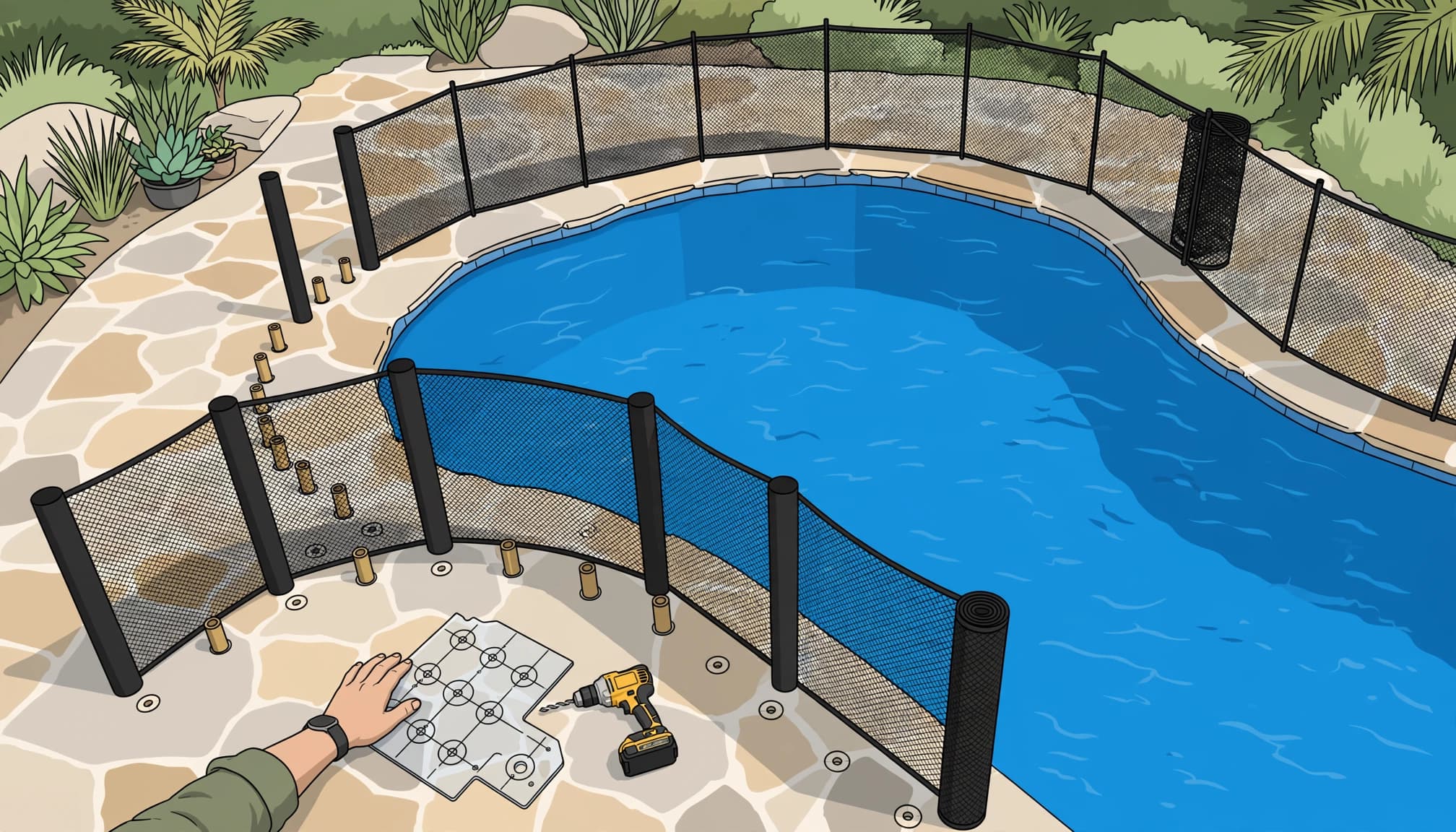
Image guidance: Use alt text containing “pool fence anchoring.” Depict only a removable mesh fence, without metal railings, chain link, or iron fencing.
Start With the Fence Route, Not the Drill
A good mesh pool fence line follows the way a family uses the pool area. It should protect the water without blocking doors, walkways, lounge areas, or service access.
Freeform pools need extra care. Curves, tanning ledges, screen enclosures, raised walls, and landscape beds can all change post placement.
Mark every turn, gate, and access point
String works well for planning an irregular layout. It lets homeowners see the full barrier route before permanent holes go into the deck.
The layout should include:
- Pool steps, ladders, equipment pads, and screen doors.
- A clear gate location with room for full opening and closing.
- Space for adults to walk comfortably outside the barrier.
- Drain covers and irrigation zones that need future access.
Furniture, planters, and toys should stay away from the finished fence. A child shouldn’t find an easy climbing point near the safety mesh.
Plan for slopes and changing elevations
A gradual grade may allow mesh sections to follow the deck. Sharper changes often need stepped sections to maintain proper mesh tensioning and control the lower edge.
A pool fence should follow the deck safely, never bridge a step or drain with a gap below.
A concrete grade slope of 2 percent may sound small. Still, installers must verify bottom clearances along the entire fence perimeter. A low corner can create a problem even when the posts look level across the patio.
Choose an Anchor Method for the Actual Deck
There is no single anchor for every natural stone deck. The fence system, stone thickness, base material, and local conditions should guide your choice.
A removable mesh pool fence often uses sleeves installed into solid support. The solid aluminum poles slide directly into embedded anchor sleeves. They come out when owners remove the fence.
While some homeowners evaluate an aluminum pool fence, natural stone often suits removable systems better.
Use the complete system from one manufacturer
Fence sleeves, solid aluminum poles, safety mesh, and gate hardware should work together. Mixing parts from different systems can affect fit, tension, and gate alignment.
Some stone conditions may call for chemical anchors or another approved support method. Others may require core drilling through the finished surface into a stable base. Manufacturer instructions should control hole size, spacing, embedment, and curing time.
Homeowners shouldn’t assume 304 stainless steel wedge anchors fit every deck. Stainless steel anchors resist corrosion, but hardware must match the fence design and substrate. Salt air and splash-out from a salt water pool demand corrosion-resistant materials.
Consider removable no-hole base systems
Some removable mesh systems use water-weighted base plates instead of deck sleeves. These no holes pool fence systems avoid permanent drilling when stone cannot safely accept anchors.
Base plates need a suitable, level surface and a complete barrier layout. They also don’t replace local code requirements.
Homeowners in Southwest Florida can Get a FREE Quote before they commit to a drilling plan. A layout review makes the next step feel much easier.
Drill Sleeves Without Damaging the Stone
Natural stone needs patience. Rushing with the wrong bit or too much hammer action can chip the surface before the fence goes up.
The exact drilling method depends on the stone, its thickness, and the anchor sleeves. A rotary diamond setup may create cleaner openings on some decks. A standard hammer drill can damage brittle stone through excessive vibration. Avoid a hammer drill unless the product instructions specifically allow it. The wrong masonry drill bit may also cause surface blowout.
Use a template to keep the bit steady
Stamped concrete and textured stone can pull a bit into a divot. A rigid drill template helps hold the starting point in place.
The installer should mark each location, check it again, and begin slowly. Keeping each post plumb supports smooth pole insertion and balanced tension. Water or cooling methods may reduce heat on suitable materials. The correct approach depends on the product and stone.
Avoid openings close to edges, seams, cracks, and repaired areas. Small placement changes can protect a costly deck.
Clean every hole before setting a sleeve
Clean all anchor holes thoroughly before setting the anchor sleeves. Stone dust inside a hole can weaken the fit.
The installer should remove debris using the method required by the fence manufacturer.
S.R. Smith’s RockSolid anchor instructions show why product details matter. That system calls for a 6 1/2-inch core-drilled opening and a 24-hour cure. It also keeps openings six inches from slab edges or control joints.
Those numbers aren’t universal fence rules. They belong to that anchor system. A different sleeve can require a different depth, drill size, adhesive, and cure time.
Code Rules and Gates Deserve the Same Care
A well-anchored fence must also meet pool barrier requirements. Florida law requires residential pool barriers to stand at least four feet high outside.
The barrier must prevent young children from climbing over, crawling under, or squeezing through openings. Homeowners can review Florida’s residential pool barrier requirements before installation begins.
The gate must work every time
Properly adjusted self-closing gates must swing outward, away from the water. The gate must close and latch without anyone pushing it shut.
Florida rules also address gate hardware and latch positioning. A reliable self-latching latch prevents access when released from any open position.
The installer should open the gate fully, release it, and watch it close. Repeat the test from different positions. A gate that sticks, rubs, or misses the latch needs adjustment. Repeated testing verifies full code compliance.
Local permits may add more requirements
Counties and cities can add building permit, inspection, and code requirements. Homeowners should check with the local building department before work begins.
This matters even more on a renovated deck. New pavers, raised coping, and changed drainage can alter the finished fence line. Install the permanent barrier after the deck reaches its final height.
Homeowners with complex stone, drains, slopes, or tight gate locations can request a pool fence installation quote before drilling begins.
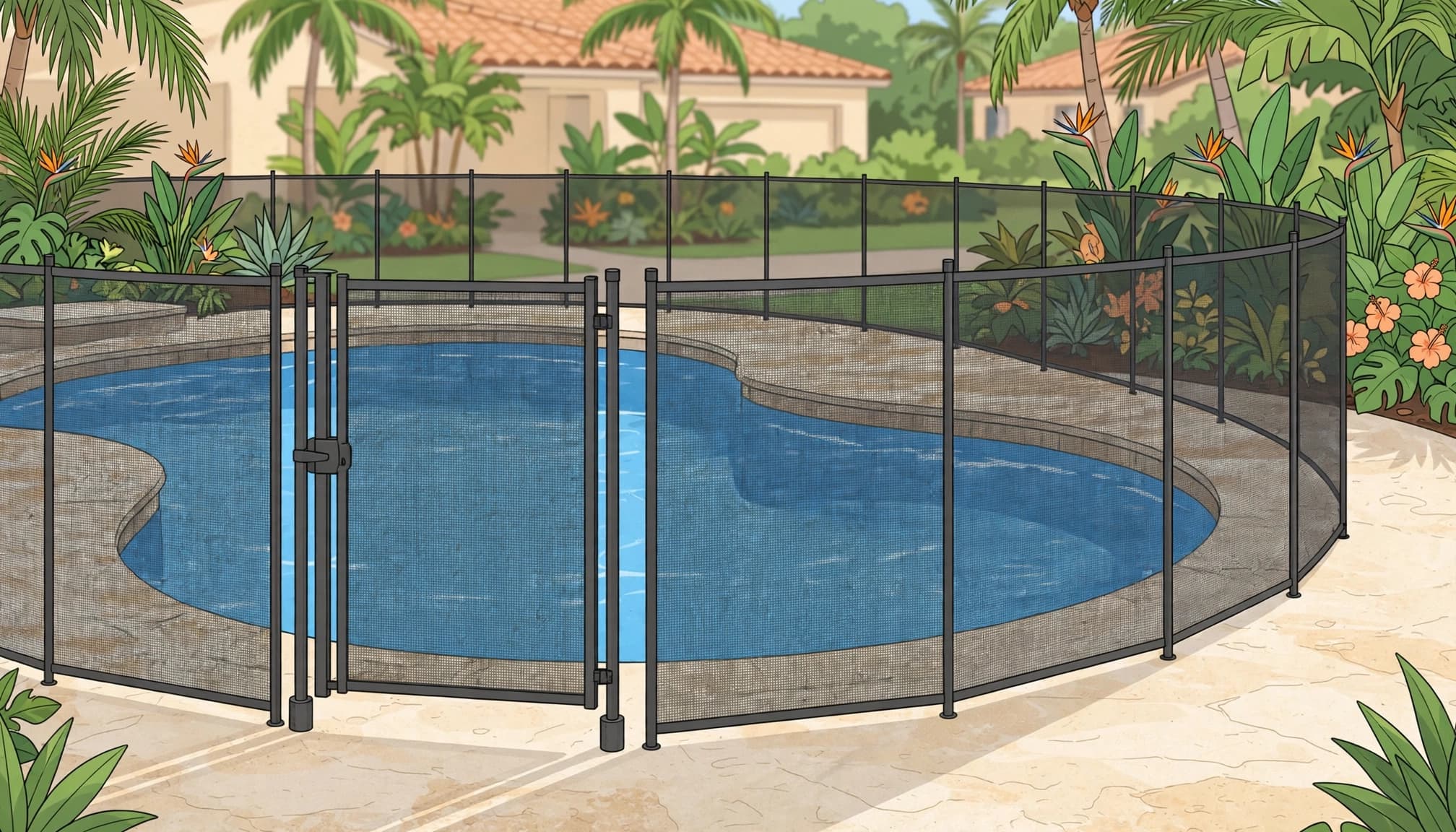
Key Takeaways
- Inspect the natural stone deck at every planned post location.
- Plan the fence route around drains, slopes, steps, gates, and daily pool access.
- Follow manufacturer instructions for sleeve depth, drilling, curing, and post spacing.
- Repair loose pavers, cracked stone, and weak edges before anchoring.
- Test gate hardware repeatedly, confirming the self-latching latch engages every time.
A tight mesh pool fence starts with a stable base. The finished barrier should look clean and feel dependable.
Frequently Asked Questions
Can a homeowner install a removable mesh fence on stone?
A homeowner may handle a simple layout on sound, level concrete. Natural stone makes installation harder because surfaces and bases can vary.
DIY work should stop when the deck has cracks, loose pieces, slopes, drains, or thin edges. Those conditions need professional assessment.
What happens if the deck has a 2-percent slope?
A gradual slope may work with the right layout. The installer must check lower clearance along the entire fence line.
Stepped fence sections often work better on sharper changes. They help control bottom gaps and keep mesh tension even.
Do no holes pool fence systems meet Florida requirements?
A no holes pool fence can work when the complete system meets applicable barrier rules. Its base plates don’t guarantee automatic approval.
Homeowners should confirm surface limits, barrier height, gate operation, and building permit details before choosing one.
How often should a removable mesh fence be checked?
Families should inspect the mesh, posts, anchor sleeves, caps, and gate regularly. They should also check after storms or landscaping work.
The gate should close and latch on its own every time. Torn mesh, loose posts, or damaged caps need prompt service.
A Safer Pool Area Starts Below the Surface
Natural stone gives pool areas a beautiful finish. It also requires careful pool fence anchoring, patient drilling, and layouts respecting slopes and drains.
The strongest result is a safety mesh barrier with stable support, tight sections, and a gate that closes reliably. That’s the kind of protection families can feel good about.
Questions or ready to get started? Call us at (941) 500-9484