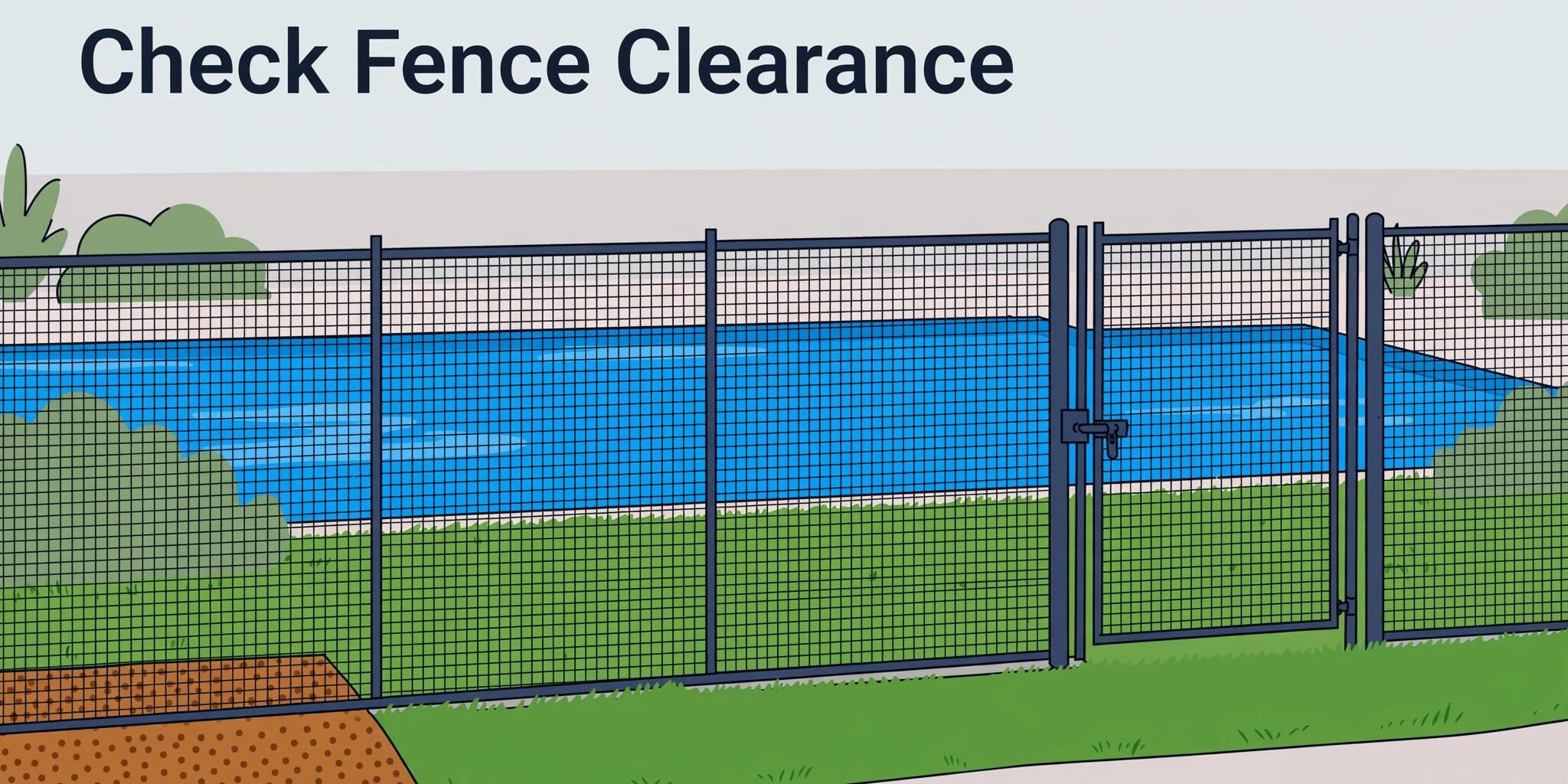
New sod or mulch can change pool fence clearance even when nobody moves the fence. Added material reduces effective barrier height, while settling or washouts can enlarge gaps underneath.
For removable mesh fencing, CPSC guidance recommends a maximum one-inch bottom gap, not the larger allowance for other barriers. Fresh landscaping can also block a gate that previously closed reliably.
A full fence-line inspection after landscaping helps homeowners catch these changes before normal backyard routines resume.
Key takeaways after landscaping
- Added soil, sod, or mulch can reduce the fence’s effective height.
- Removable mesh needs close attention to its one-inch bottom clearance, secure posts, and panel connections.
- Gates must close and latch without help after landscaping crews finish.
Landscaping doesn’t strengthen a barrier simply because it fills a visible gap. Loose material can move, and raised beds can create climbing access.
Pool fence clearance: the measurements that matter
The CPSC Safety Barrier Guidelines provide useful safety recommendations, but they aren’t a mandatory national building code. State and local requirements govern enforceable dimensions.
These CPSC recommendations provide a starting point for examining an existing barrier.
| Barrier feature | CPSC recommendation |
|---|---|
| Overall height | At least 48 inches |
| Bottom gap over solid surfaces | No more than 4 inches |
| Bottom gap over grass or pebbles | No more than 2 inches |
| Removable mesh bottom gap | No more than 1 inch |
| Barrier openings | Must prevent passage of a 4-inch sphere |
The important distinction is the barrier type and surface, rather than one clearance number for every backyard.
For fence designs with closely spaced horizontal rails, climbing resistance also matters. If the rails are less than 45 inches apart, they should be on the pool side. In that arrangement, vertical-member spacing shouldn’t exceed 1¾ inches. This spacing rule applies to specified designs, not every fence type.
CPSC recommends chain link mesh no larger than 1¼ inches square. On chain link fences, secured slats can reduce openings to no more than 1¾ inches.
Ornamental iron and aluminum fencing may have different opening and climbability rules than removable-mesh barriers.
These construction details still matter after landscaping changes the ground beside a fence.
How sod and mulch change fence measurements
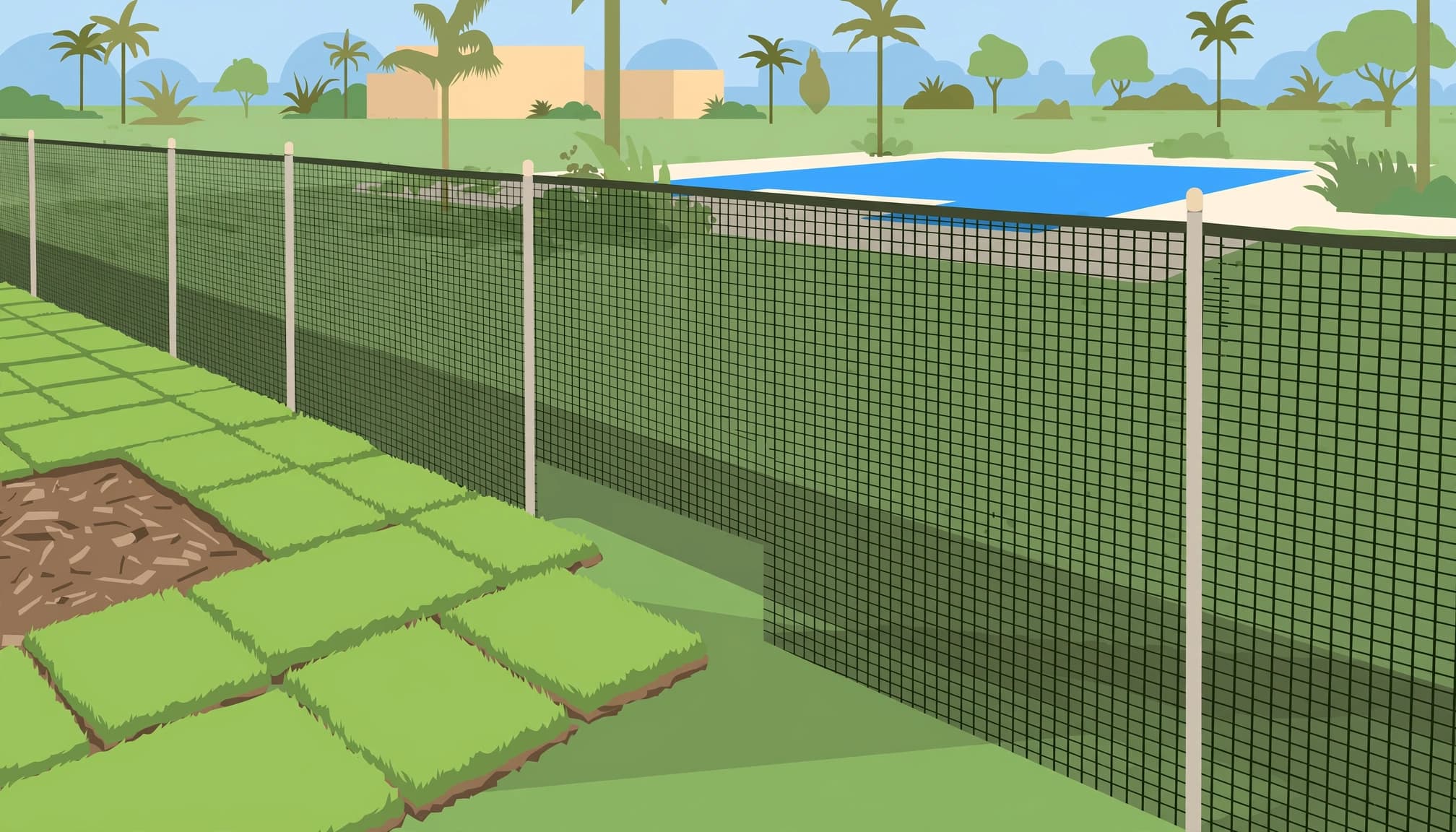
Added material reduces usable height
Fresh sod adds a soil layer beneath the grass. Mulch installation often follows bed preparation or topsoil additions.
Both can raise the ground outside the pool fence. This makes the fence easier to reach over, even when its panels stay unchanged.
Measure fence height from the finished landscape level, not the original ground line. Check raised planting borders beside the fence, too.
CPSC measures its height recommendation from the pool side. Many building codes measure required height from outside the pool. Keep these measurement conventions separate.
Loose material doesn’t provide a dependable repair
Mulch can scatter during mowing, rainfall, or routine yard work. Sod can settle, and runoff can wash soil from beneath its edges.
A gap that looks smaller after installation may reopen later. Mulch is loose ground, not concrete or another solid surface.
A mound beneath loose mesh doesn’t repair the fence. A raised bed outside the fence can create a climbing platform.
Set the landscape level for dependable measurements. Keep damaged panels and unstable anchors visible.
Measure the whole fence line, including slopes
Bottom clearance measurements belong on the exterior side, away from the pool. Measure vertically between the finished surface and the barrier’s lower edge.
On slopes, the largest opening matters. An average measurement can hide a low spot beneath an otherwise tidy section.
A practical inspection follows this order:
- Measure the bottom gap along every panel, including corners, connections, and wall junctions.
- Examine the finished exterior grade for raised soil, sod edges, borders, or planting beds.
- Measure barrier height using the applicable building-code convention.
- If local code applies the stricter rule for closely spaced horizontal rails, keep vertical openings at 1¾ inches or less.
- Test the gate throughout its swing without pushing it closed.
- Photograph problem areas before anyone changes the fence or landscaping again.
Virginia’s James City County pool packet illustrates the distinction between solid and non-solid ground. It limits clearance over non-solid surfaces to two inches.
A straight top edge doesn’t prove the lower edge follows the ground safely. Check steps, drainage channels, and settling pavers individually.
Measure again after heavy rain. Washouts can expose gaps that landscaping initially concealed.
Keep mesh sections and gates working together
Mesh needs secure anchoring and controlled spacing
CPSC recommends removable mesh fencing at least 48 inches tall. Its recommendations include support posts extending at least three inches below grade, with spacing no greater than 40 inches.
The selected system’s installation instructions also govern anchoring and spacing. These figures don’t authorize ordinary fence posts pushed into fresh sod.
Mesh should remain taut, and posts should seat securely in their intended supports. Landscapers shouldn’t lift posts partway out to accommodate new material.
Panel connections need attention too. An opening beside a wall can defeat an otherwise well-maintained fence.
Gate clearance must allow reliable closing
Pedestrian pool gates should open outward, away from the water, and use a self-closing self-latching gate.
Fresh sod can drag beneath the gate. Meanwhile, mulch, edging, or nearby planters can block its closing path.
After landscaping, confirm the gate closes and the gate latch engages without help.
CPSC recommends protected placement for releases below 54 inches from the gate bottom. The release should sit pool-side, at least three inches below the gate top.
Within 18 inches of that release, openings should measure no more than one-half inch.
A gate that stops against fresh sod leaves an access opening, even when its latch works perfectly.
Test the gate through its full swing path, including fully open, halfway open, and barely open positions. A gate that needs a final push needs attention.
Pool type and location change the requirements
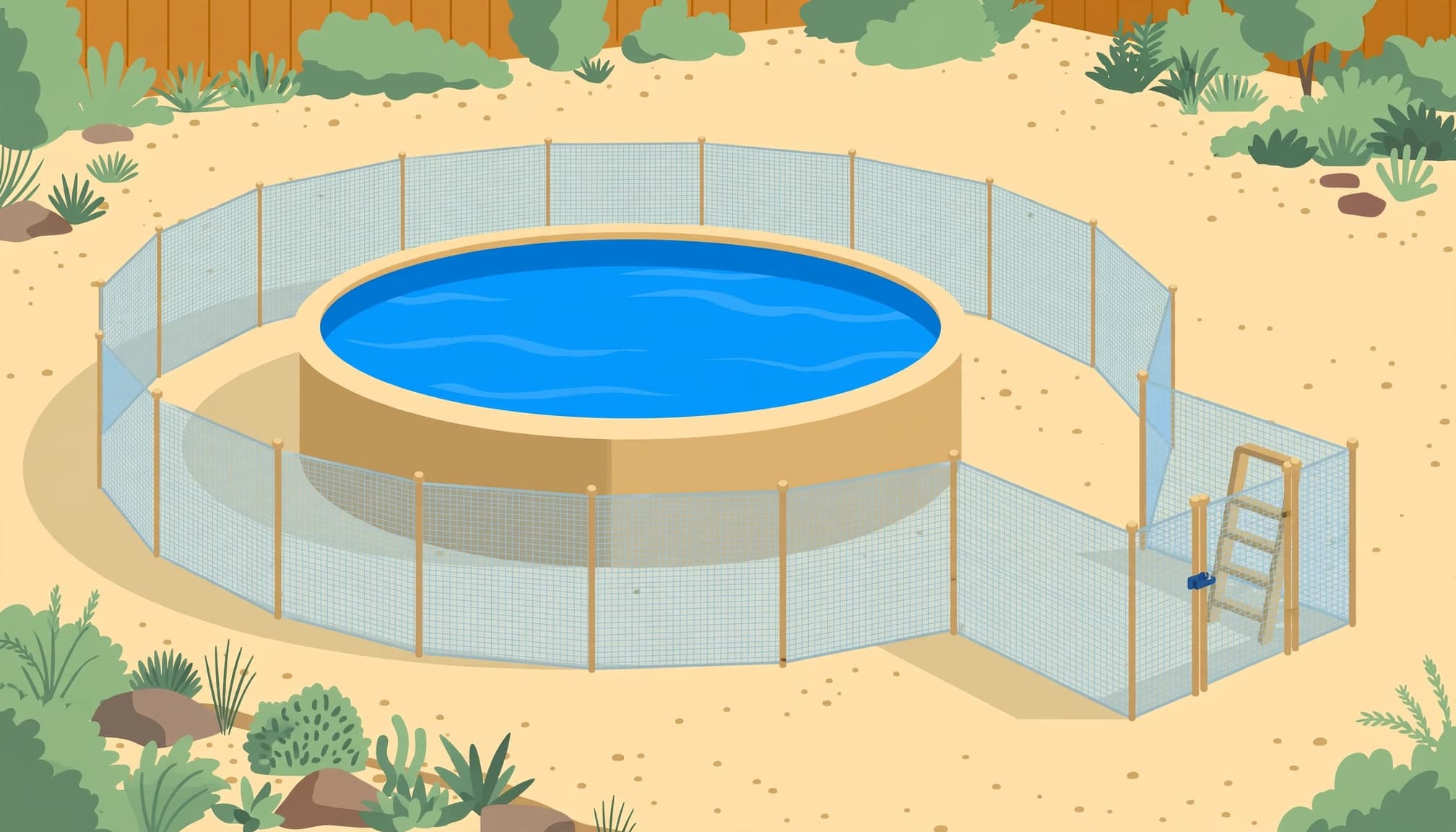
Above-ground pools still need protected access
An above ground pool wall may provide the barrier when it meets applicable requirements. CPSC describes a wall height of at least 48 inches.
Access still needs protection. Ladders or steps should lock, come out, or sit within a suitable barrier.
New fill beside an above ground pool can reduce the wall’s effective height. Check grading even when no separate fence surrounds the pool.
California and county rules can be stricter
California’s Swimming Pool Safety Act requires two qualifying drowning-prevention features for covered construction or remodeling. Before remodeling, check which prevention features qualify for your permit.
Its statutory enclosure option requires 60-inch height and no more than two inches of ground clearance. It also requires outward-opening, self-closing gates with self-latching devices at least 60 inches above ground.
Those requirements shouldn’t be reduced to a universal four-foot fence rule. A pool alarm and door alarm can add alerts, but they don’t replace a required barrier. Pool safety measures add protection, but they don’t replace a required barrier. Local rules decide whether a power safety cover meeting ASTM F1346 qualifies as a required pool cover prevention feature.
Meanwhile, Montgomery County pool requirements distinguish older installations from newer pools. Pools installed after January 1, 1990, require barriers 5 feet high.
These differences explain why national recommendations alone don’t establish local compliance. Landscaping changes must preserve the dimensions governing the property’s barrier. Local rules may impose stricter dimensions, so check them before changing landscaping or applying for a permit.
Correct the landscape without weakening the fence
Restore drainage and the intended ground level
When added material causes trouble, removing excess landscaping may solve the problem without changing the fence. However, digging beneath posts can weaken their support.
Landscape crews should keep drainage paths open and avoid burying deck sleeves or hardware. Drain grates also need access for cleaning.
Solid edging shouldn’t become a step beside the barrier. Likewise, chairs, storage bins, and large planters belong away from the fence.
Landscaping and furniture don’t replace a pool barrier. Their placement should preserve protection rather than create another access route.
Arrange adjustments when the fence no longer fits
Persistent gaps, loose anchors, or a dragging gate call for qualified fence service. Raising a panel can fix rubbing while creating an oversized opening underneath.
Similarly, cutting mesh can damage the complete barrier system. Professional adjustments should preserve height, tension, anchoring, and gate operation together.
Homeowners can discuss pool fence adjustments when landscaping changes the existing layout.
If workers remove sections, the pool must remain inaccessible throughout the work. Every required section needs secure reinstallation before children regain backyard access.
Frequently asked questions
Can new sod cause a fence inspection failure?
Yes. Raised grade can reduce effective height, and uneven turf can stop a gate from closing.
A failed barrier inspection can delay final pool approval. Before inspection, the finished landscaping and complete fence installation need to work together.
A previously accepted fence doesn’t automatically remain compliant after grading changes its dimensions.
Does mulch allow a four-inch bottom gap?
The CPSC’s four-inch recommendation applies to solid surfaces. Loose mulch doesn’t become a solid surface because someone packs it down.
For removable mesh, CPSC recommends no more than one inch beneath the barrier. That mesh-specific recommendation deserves attention regardless of nearby landscaping.
Does a small gap guarantee a safe mesh fence?
No. Secure posts, sound mesh, protected connections, and reliable gates also matter.
ASTM F2286 addresses removable mesh barrier design and performance. However, a standard-compliant product still needs a suitable installation.
Removability alone doesn’t make a fence an approved primary barrier.
Keep protection dependable after landscaping
Fresh landscaping should leave the pool barrier fully functional. The strongest follow-up is a complete perimeter inspection, including finished grade and gate operation.
Reliable protection depends on the whole installation, not one successful measurement. A fence also supplements active adult supervision; it doesn’t replace it.
Homeowners planning a replacement can Get a FREE Quote for removable mesh pool fence installation.
Questions or ready to get started? Call us at (941) 500-9484