A backyard pool can be the reason a buyer falls in love with a Southwest Florida home. It can also hide safety issues that need attention before closing.
Before the property transfer, a pool safety inspection helps buyers identify defects throughout the pool area. A practical pool safety checklist looks beyond the water and patio, checking how barriers prevent unsupervised access for children and pets. A few careful checks now can bring real peace of mind later.
Start With Florida’s Pool Barrier Rules
Florida’s Residential Swimming Pool Safety Act provides the statewide starting point for swimming pool safety. Local building departments can add details, so buyers should confirm compliance requirements in Lee, Collier, Charlotte, or Sarasota County.
Under Florida Statutes Section 515.29, a residential pool barrier must stand at least four feet high on the outside. This barrier height must stop a young child from crawling under, squeezing through, or climbing over.
A backyard perimeter fence does not automatically qualify as one of the pool’s safety barriers. The pool needs its own protected space. A fence along the property line may leave open access from the house, patio, or side yard.
Before the property transfer, a pool safety inspection should verify the barrier and access points. Buyers can record the applicable Florida and county rules in a pool safety checklist. California requirements shouldn’t be substituted for Florida law, and local officials control interpretation in Lee, Collier, Charlotte, and Sarasota counties.
Florida law also recognizes several safety features for new residential pools. A compliant barrier is one option. An approved safety cover, pool alarm, exit alarms, or qualified self-closing doors may also apply, but buyers should confirm the specific option with the local authority.
State requirements are the floor. Local permits, deck conditions, and inspection rules may require more.
Use This Pool Safety Checklist First
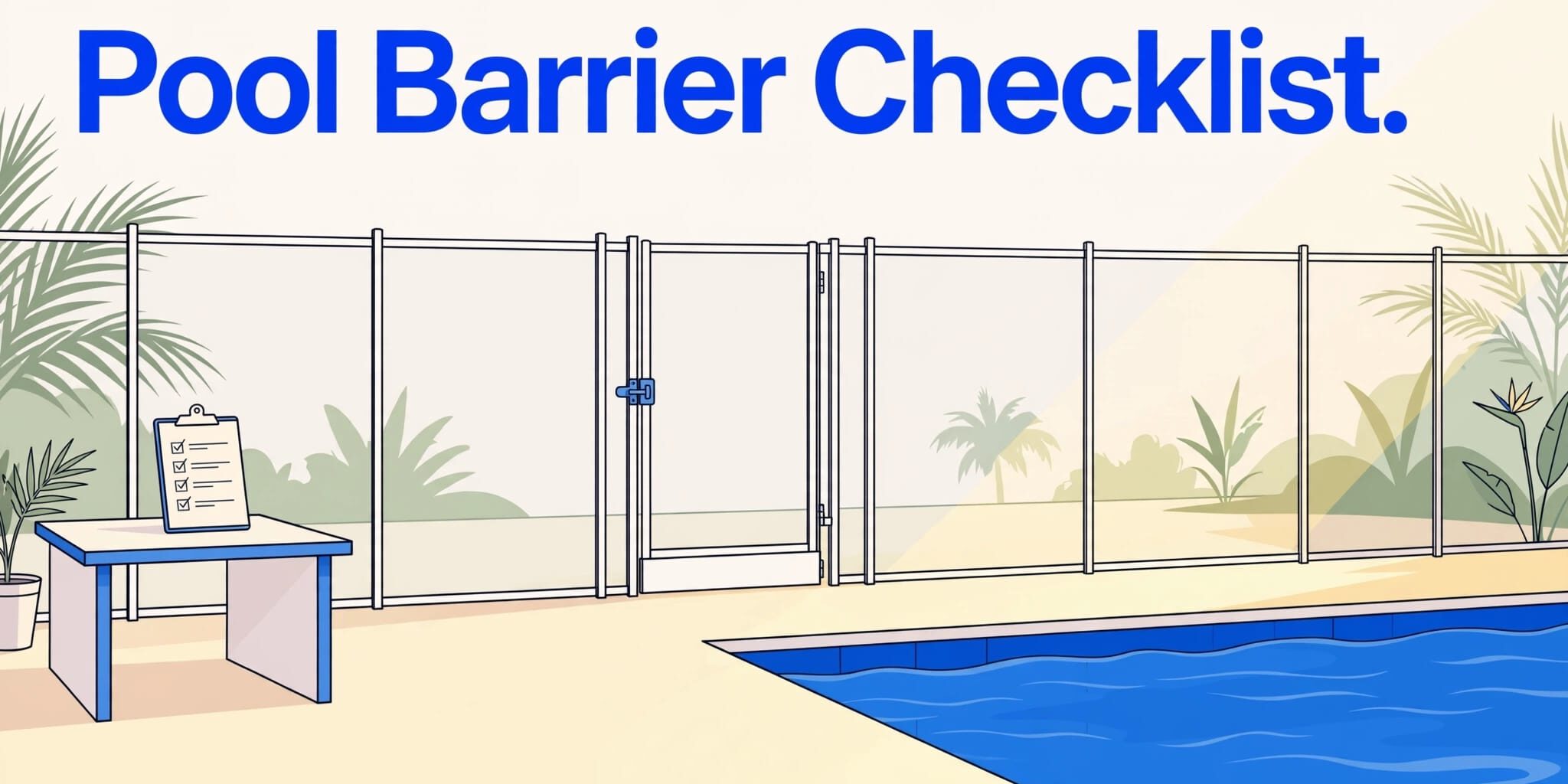
The barrier is where buyers should slow down. Start this pool safety checklist with a pool safety inspection of the barrier, gate, and surrounding area. It should look clean, secure, and hard for a child to defeat.
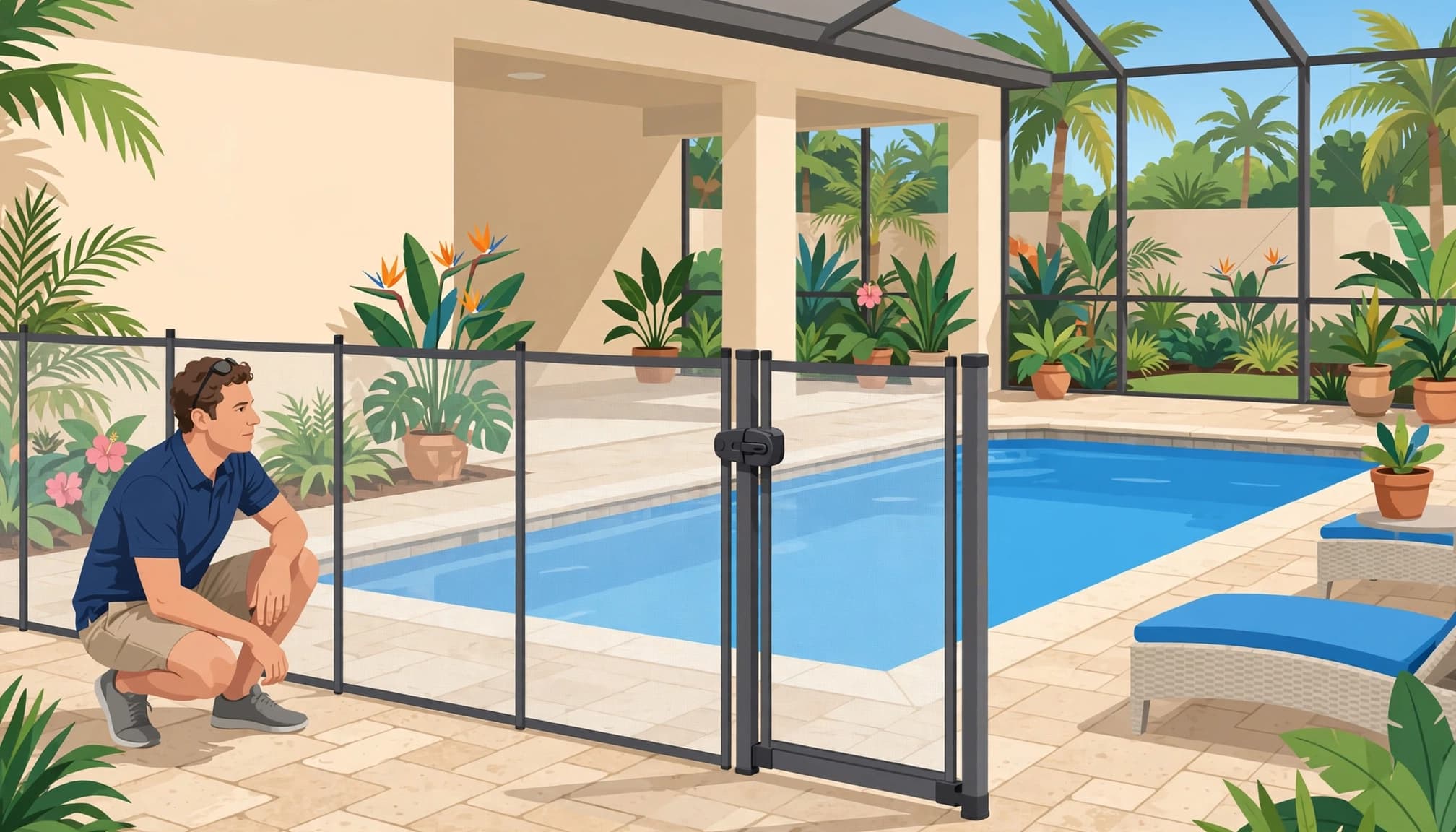
Measure height along the entire barrier
Use the pool safety checklist to measure from the outside finished grade, not from an old paver level or a raised planter. The minimum height for pool fencing is 48 inches on the outside.
Walk the entire fence line. Uneven landscaping can create a low spot under an otherwise tall barrier. Fresh mulch, stacked pavers, or settled soil can change the measurement.
Check every panel, post, sleeve, and anchor point. Loose mesh, leaning posts, cracked deck sleeves, or missing caps can affect the barrier’s structural integrity.
Document each defect during the pool safety inspection, including loose mesh, damaged panels, and unstable supports. These notes can help guide repair discussions before closing.
Check openings, gaps, and climbable objects
Continue the pool safety checklist by checking whether a child could pass through, crawl beneath, or climb over the barrier. The common four-inch opening test is useful during a visual review, but local officials make the final call.
Buyers should look for gaps below the mesh, between panels, and beside gates. They should also check for damaged fabric or a panel pulled away from its support.
Finish this pool safety checklist by moving patio furniture, planters, grills, coolers, storage boxes, and pool toys away from the fence. Low branches and stacked chairs can turn a solid pool fence into an easy climbing route.
Test Every Self-Closing Gate
A beautiful fence cannot make up for a gate that stays open. This is one of the most important parts of a pool safety inspection and a key step in your pool safety checklist.
Watch the gate close without help
Open the gate fully, then let it go. It should swing outward, away from the pool, close completely, and latch without a push.
Test it several times. Wind, humidity, a shifted deck, and worn hardware can change how a gate performs. Include the results in the buyer’s written pool safety inspection record. A gate that bounces back or stops short needs repair.
The gate should not drag on the deck. It should not have a loose hinge, a weak spring, or a latch that catches only sometimes.
Look closely at the self-latching mechanism
The latch release should stay on the pool side and out of a young child’s reach. Buyers should check that the latch engages every time.
A seller may have added a hook, tie, or temporary stopper for convenience. Those shortcuts are red flags. A pool gate needs reliable operation every day.
If the house has doors leading directly to the pool area, inspect those too. The pool safety checklist should distinguish pool gates from doors leading directly to the pool area. A door alarm or self-latching door may be part of the home’s safety setup. Buyers should confirm what works and what needs service.
Review Other Layers of Swimming Pool Safety
A barrier is the main access-control layer. Other features support swimming pool safety, but they don’t replace a closed gate or active adult supervision.
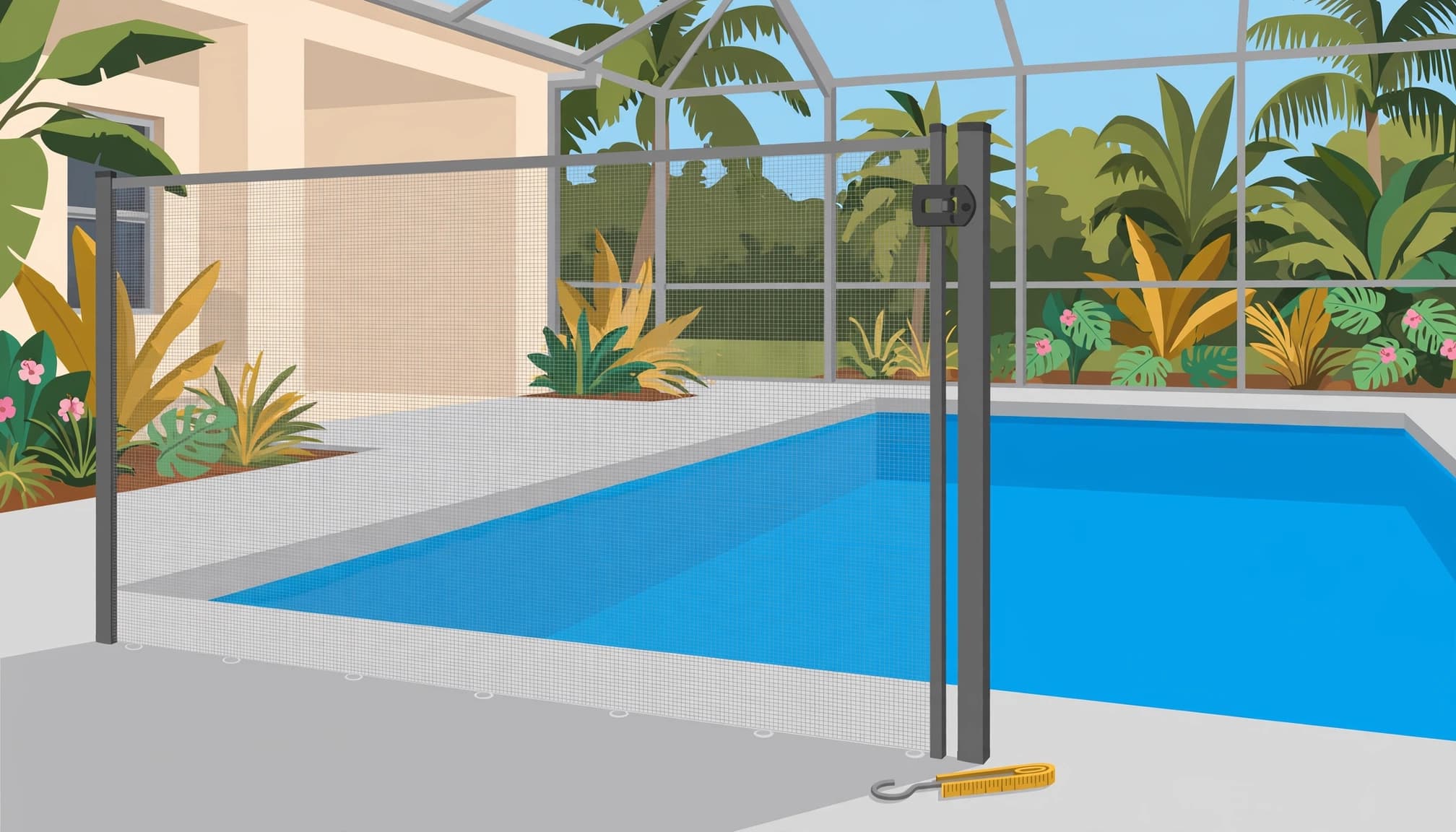
Check alarms and safety covers honestly
Use a pool safety checklist to organize alarms, covers, and supervision. During a pool safety inspection, ask the seller to demonstrate pool alarms, door alarms, and window alarms. A dead battery, disconnected sensor, or muted alarm isn’t protection.
An approved safety cover is different from a floating solar cover. Buyers should ask for product records and installation paperwork for safety covers. ASTM F1346-23 safety-cover requirements address safety-cover performance and labeling under ASTM standards.
A visual review of safety covers should confirm correct fit, secure anchors, and proper drainage. Missing anchors, torn material, or standing water shouldn’t wait until after closing.
Keep rescue equipment visible and ready
Rescue equipment, including a life ring and reaching pole, belongs near the pool with other emergency equipment. Buyers should look for cracked rings, missing poles, and equipment hidden in a locked shed.
The pool safety checklist should also include simple rules. The gate stays closed. Children don’t enter the pool area alone. Adults stay close whenever children are in or near the water.
That routine matters as much as the physical equipment.
Inspect Pool Systems Separate From the Fence
A pool safety checklist and pool safety inspection should also flag risks inside the pool area. The fence may pass a visual review while other safety concerns remain.
Look at drains and drain covers
A missing, loose, or broken drain cover needs quick attention. The Virginia Graeme Baker Pool and Spa Safety Act addresses suction entrapment and compliant drain covers. Buyers should verify VGB compliance and confirm that current covers are properly installed.
The CPSC’s drain-cover guidance explains why this issue matters. Buyers should ask a qualified pool professional to inspect questionable covers before anyone uses the pool.
Drain covers are not part of the barrier law. They are still a serious pool safety concern.
Review electrical equipment and water quality
Ask the inspector to review visible pool equipment, including pool lights, electrical panels, electrical bonding, and GFCI protection. Water and electricity never mix safely when equipment has faults. Also look for signs that could affect the pool shell, deck, equipment pad, or surrounding surfaces, including concerns with structural integrity.
Ask the inspector to document findings in the pool safety checklist and pool safety inspection report before the property transfer. Buyers should also ask for recent service records. Those records may show water testing, disinfectant use, filtration system maintenance, pump repairs, and recurring leaks.
Check the chemical storage area. Products should stay dry, secured, and separated from incompatible chemicals. A corroded equipment pad or chemical smell in a closed storage area deserves more investigation.
Choose the Right Inspection Before Closing
Florida does not require every home sale to include a separate pool inspection. Still, buyers shouldn’t skip one when the property has a pool, spa, dockside equipment, or an aging barrier.
A general home inspector may identify obvious issues. A separate pool professional can review the pool shell, visible plumbing, water features, drains, and safety systems more closely. The review should also consider structural integrity in the pool shell, deck, barrier supports, and other visible construction conditions.
Ask what the inspection includes
Before scheduling, ask whether the scope follows your pool safety checklist. The pool safety inspection should address more than water condition and visible equipment.
Ask the home inspector whether the review includes:
- Is the barrier at the required height?
- Does the gate self-close and self-latch properly?
- Are screened-enclosure doors secure, and are the screens intact?
- Are drain covers properly installed and undamaged?
- Is GFCI protection present where required?
- Is electrical bonding visible and properly connected?
- Is the pool equipment operating safely?
- Does the water quality appear properly maintained?
- Are there visible deck hazards?
- Are chemicals secured through appropriate chemical storage?
They should also ask for photos and written findings tied to the pool safety checklist. This record helps confirm what the pool safety inspection actually evaluates and supports repair requests before closing.
A Florida license, insurance, qualifications, and inspection scope all matter. Buyers shouldn’t assume every inspector reviews pool safety barriers in the same way.
Document every issue before negotiations
Take wide photos of the entire pool area. Then take close photos of low fence sections, gaps, damaged mesh, failed latches, and nearby climbing aids.
Ask the seller for permits, final inspection approvals, fence installation records, warranty details, and repair invoices before the property transfer. Insurers may also ask for pool and barrier information.
Keep those documents after closing. Preserve them in the transaction file so the record remains available after the property transfer. Create a maintenance checklist for service, repairs, testing, and recurring defects. A good file makes future repairs, insurance conversations, and local inspections much easier.
Understand Repair Costs and Next Steps
A basic pool safety inspection often costs about $125 to $250 in Southwest Florida. Pricing varies by scope, and a basic inspection isn’t the same as a detailed systems review. Bundled home and pool inspections cost more.
The final repair bill depends on the issue. A gate adjustment may be simple. Damaged mesh, shifted anchors, deck repairs, or a full barrier replacement can cost much more.
Prioritize access-control failures
Use a pool safety checklist to prioritize defects that affect access and protection. A gate that won’t latch isn’t a small cosmetic item. Treat it as an urgent repair.
The same goes for loose barrier sections, wide openings, or a climbable object beside the fence. Also verify emergency equipment, including rescue devices and other items needed for a quick response.
Buyers can request repairs before closing, negotiate a credit, or schedule work immediately after taking ownership. A written scope and estimate can clarify those choices during the property transfer.
Confirm any required permits or repair approvals with the local building department. After closing, track completed repairs, gate tests, records, and recurring pool tasks with a maintenance checklist.
Key Takeaways
- Use a pool safety checklist to verify the isolated barrier, gate operation, openings, and climbable objects around the pool.
- Florida requires a residential barrier to be at least four feet high on the outside.
- Every pool gate should open away from the water, close by itself, and latch every time.
- Furniture, planters, grills, toys, and trees can create unsafe climbing access.
- A pool safety inspection should document defects, permits, and local building department or insurance requirements.
- Drain covers, electrical protection, alarms, water care, and rescue equipment need separate review.
- Keep a written pool safety checklist for recurring checks after closing, using a maintenance checklist to review the gate, barrier, equipment, water, and emergency supplies.
Frequently Asked Questions
Does a screened enclosure count as a pool barrier?
It may, if it meets applicable barrier requirements and controls access to the pool. Include enclosure doors, closers, screens, latches, and access points on your pool safety checklist.
A torn screen, damaged door closer, or unsecured access door can create a serious problem. A local building department can clarify requirements for the property.
Can a removable mesh fence meet Florida requirements?
A removable mesh fence may qualify when its height, spacing, anchoring, gate operation, and installation meet applicable rules. Local acceptance also matters.
During a pool safety inspection, buyers should measure the barrier, test the gate, and inspect every anchor point. They should also confirm local permit and inspection expectations.
Is a property-line fence enough for pool safety?
Usually, no. A property-line fence may enclose the yard without separating the pool from the home and patio. The pool needs controlled access from all directions.
A proper barrier should prevent easy entry from the rest of the yard. Rescue equipment and other emergency equipment can add protection, but they don’t replace a compliant barrier.
Does a compliant barrier guarantee insurance coverage?
No. A compliant barrier supports safer pool ownership, but insurance companies have their own underwriting rules. They may ask for photos, documentation, alarms, or additional safety details.
Before the property transfer, buyers should ask their insurance agent about pool-related requirements. Written answers are always better than assumptions.
A Safer Pool Area Starts Before Closing
The strongest pool barrier inspection checks the full picture. It measures the fence, tests the gate, clears climbing hazards, and reviews the pool’s other safety systems.
A pool should be a place for family time, not constant worry. A secure, well-maintained pool barrier gives homeowners one more layer of protection every single day.
Questions or ready to get started? Call us at (941) 500-9484