A child can learn to swim and still reach a swimming pool in seconds. That is why pool barrier safety matters, even when young children are confident swimmers.
Lessons teach water skills. They don’t control access before an emergency, replace adult supervision, or provide a safety barrier. The safest approach combines lessons with layered pool safety, and pool barrier safety remains an important part of that protection.
Key Takeaways
- Swimming lessons teach valuable water skills, but they don’t prevent unsupervised access or replace adult supervision.
- A four-sided pool barrier creates separation between the swimming pool and the home, deck, driveway, and play areas.
- Pool barrier safety depends on proper height, limited openings, climbing resistance, secure installation, and a self-closing, self-latching gate.
- Door alarms, safety covers, supervision, lessons, and regular inspections add protection but should support—not replace—a reliable pool safety fence.
- Homeowners should confirm local safety codes, insurance requirements, and access conditions before pool fence installation.
What Swimming Lessons Can and Cannot Do
Lessons build skills, not constant readiness
Swimming lessons help children learn floating, breathing, kicking, and water recovery. Those skills can help a child respond during an emergency.
However, lessons don’t make a child fully safe around water. A tired swimmer may panic, swallow water, or struggle after an unexpected fall into a swimming pool. Clothing, poor visibility, illness, and cold water can also change the situation quickly.
Young children may understand pool rules one day and forget them the next. Children under 5 may follow a toy, open a gate, or approach the water without telling anyone despite lessons.
The current CPSC safety guidelines state that barriers can’t replace adult supervision, swimming lessons, or other pool safety layers.
A barrier works when attention moves
Even careful parents, grandparents, and caregivers face ordinary interruptions. A phone call, a crying baby, a delivery, or another child can pull attention away.
A closed pool barrier adds time between that moment and the water. That extra separation can give an adult time to notice a missing child and respond.
Swimming ability helps in the water. A physical barrier keeps a child from entering it alone.
Swimming lessons remain valuable for drowning prevention, while multiple layers help reduce the risk of child drowning. Together, they reinforce pool barrier safety while addressing different risks.

Why pool barrier safety needs four sides
Pool barrier safety starts with a complete pool barrier that stops unsupervised access before a child reaches the water.
Four sides create real separation
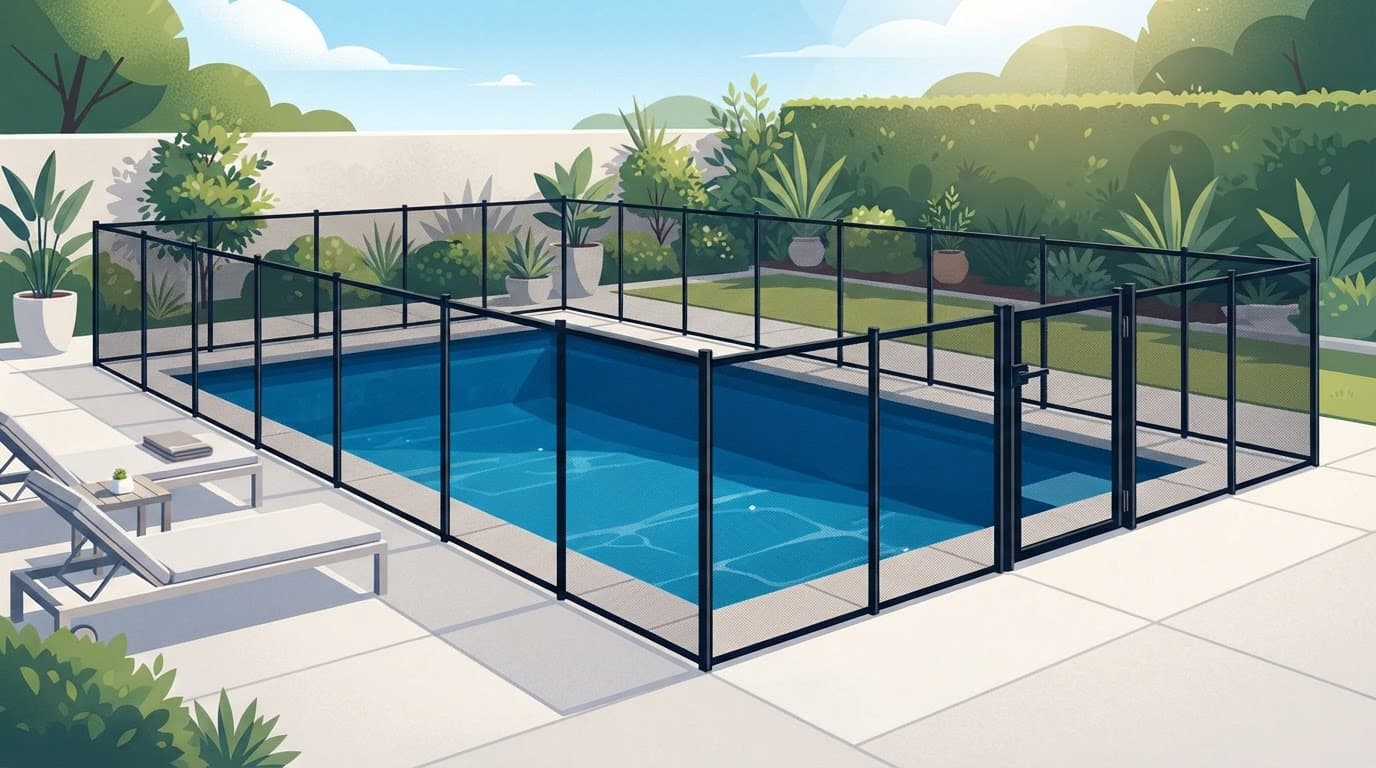
The Consumer Product Safety Commission recommends a pool enclosure that completely surrounds the swimming pool. This design is often called a four-sided isolation fence, or a pool safety fence.
A three-sided fence uses the house as the fourth side. That setup may leave doors, patios, and daily household traffic connected directly to the pool area.
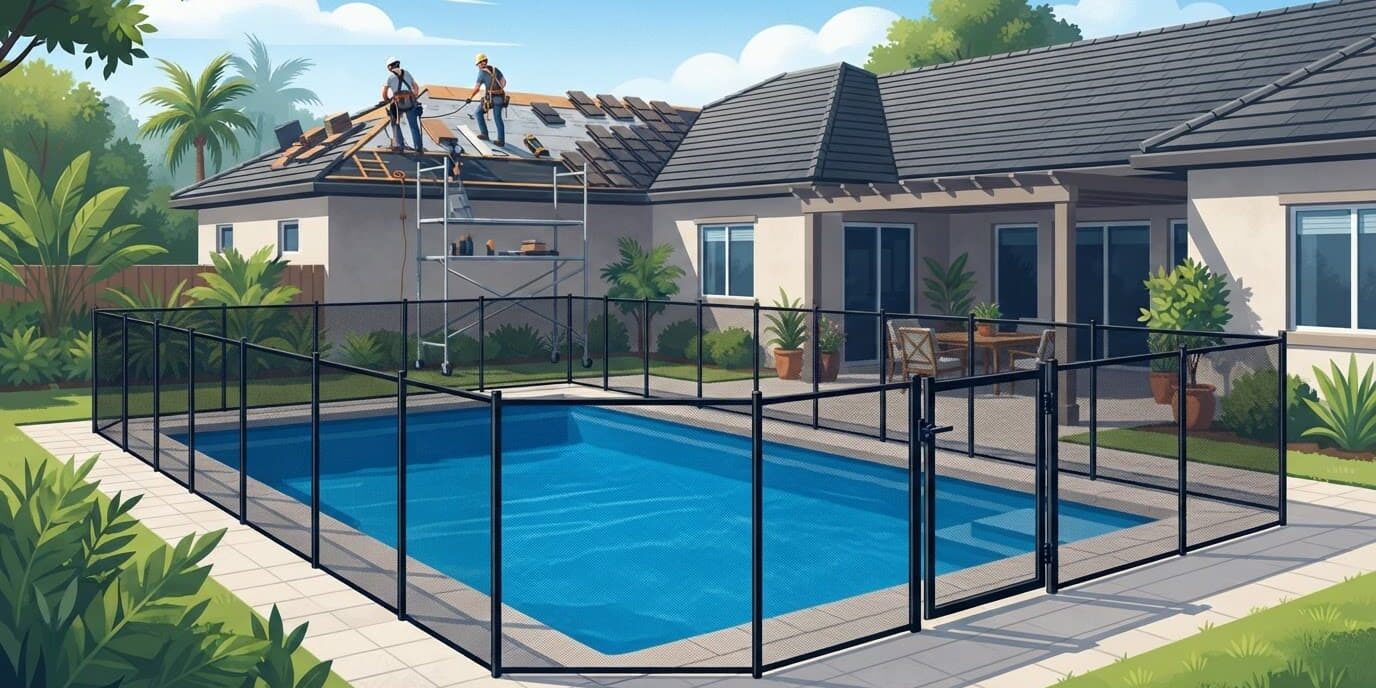
A four-sided pool barrier separates the swimming pool from the home, deck, driveway, and play spaces. Children then need to bypass a gate before reaching the water.
An NIH evidence review describes pool fencing as a passive intervention that reduces unintended access for small children.
The fence still needs supervision, lessons, alarms, and other pool safety measures. Yet this pool barrier gives those other safety measures a stronger starting point.
Height, openings, and climbing points matter
A safety barrier needs careful attention to height, openings, and climbing resistance.
The Consumer Product Safety Commission’s safety guidelines for residential pools call for a barrier at least 48 inches high above the ground outside the pool area. A five-foot barrier offers an even stronger margin.
The maximum opening depends on the fence design and the spacing between vertical members. In general, openings should not allow a four-inch sphere to pass through.
Chain-link designs may need openings no larger than 1-3/4 inches square. Closely spaced vertical members can limit access, but horizontal members may create footholds.
Review horizontal members across the entire design, since their placement can make climbing easier.
The ground below the fence matters during pool fence installation. Uneven soil, loose mulch, deck gaps, and erosion can create openings beneath the barrier.
A fence also needs space around it. Chairs, planters, toys, tables, and storage boxes can give a child an easy climbing route, especially near horizontal members.
A removable pool fence may be configured for four-sided isolation, but it still requires code-compliant design and appropriate installation.
Height, opening size, and climbing resistance are essential safety features.
What a reliable residential pool barrier needs
A pool barrier can meet the right measurements and still fail during daily use. Pool barrier safety depends on gate hardware, installation quality, and regular checks.
Self-closing gate and self-latching device
Every access gate should close and latch without help. CPSC guidance recommends gates that close and latch automatically.
The gate should swing away from the pool. It should also stay closed after a child or pet passes through.
Standard guidance places the latch release mechanism at least 54 inches above the bottom of the gate. Some designs use other protective features when the release sits lower.
A high latch helps, but it doesn’t excuse poor hardware. Homeowners should test the self-closing gate and self-latching device from different open positions. The gate mechanism should move freely, close completely, and latch every time.
A gate that stays propped open defeats a complete pool barrier. Families should avoid leaving towels, toys, or furniture near the gate.
Mesh, aluminum, glass, and other materials
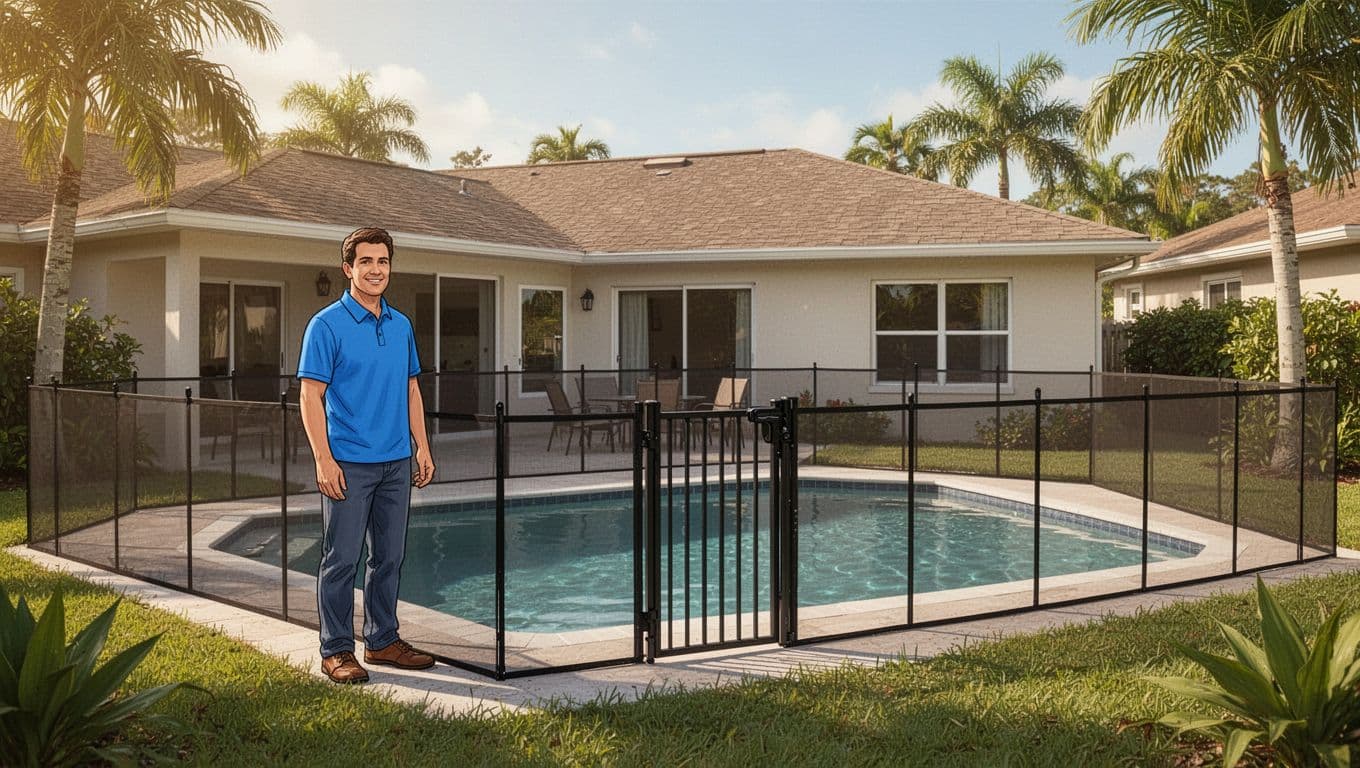
A removable mesh pool fence gives many homeowners clear sightlines around the swimming pool and a simple layout. Strong poles, tight fabric, secure deck anchors, and reliable gate hardware matter more than appearance alone.
A mesh pool fence can also work well for homes that need occasional access to the entire pool deck. As a removable pool fence, it offers flexible access when needed. A qualified installer can complete pool fence installation and remove or reinstall sections without changing the whole yard.
Aluminum, glass, and wrought iron can also form an effective pool safety fence. Glass offers visibility but needs frequent cleaning. Metal layouts should avoid creating climbing points, whether from horizontal members or vertical members. Metal fencing needs careful corrosion control in coastal weather.
Pool owners should compare the complete system, not one material sample, when evaluating pool safety. For a removable fence, the quote should cover removal, anchors, and reinstallation requirements. It should also explain pole spacing, gate construction, installation, repairs, and warranties.
Door alarms, covers, and above-ground pools
A pool safety fence provides the primary physical layer for pool barrier safety. Home access points and equipment around the swimming pool need attention too.
Door alarms add another warning
When the house forms one side of the pool barrier, CPSC guidance recommends alarms on doors to the pool area.
The alarm should sound when someone opens the door. It alerts an adult, but it doesn’t stop the child from reaching the water.
Adults should keep doors closed and avoid propping them open. Sliding doors, side doors, and garage access may all need review.
Some local requirements use an 85 dBA alarm benchmark and a short activation delay. Local building officials can confirm the rules that apply to a specific property.
ASTM F1346-91 covers safety cover performance
ASTM F1346-91 is an ASTM standard for swimming pool, spa, hot tub, and wading pool safety covers.
Power safety covers can add protection when they fit correctly and stay fully closed. Along with alarms, these safety features support pool safety, but they don’t replace every barrier requirement.
A cover won’t protect the pool when someone leaves it open.
Homeowners should inspect alarms before use and check power safety covers for fabric, track, control, or seam damage.
Above-ground pools still need controlled access
Above-ground pools may use their walls as part of the barrier when they meet required height and construction standards. Ladders and steps remain major access points.
Families should remove portable ladders after use. Fixed ladders may need a locked barrier, gate, or other approved protection.
A deck can also create new access routes. Deck stairs, gates, and openings need the same attention as an in-ground pool fence.
Local safety regulations can treat these pools differently. The safest choice is confirming requirements before installation.
A practical homeowner check before installation
A quick inspection before pool fence installation can reveal pool barrier safety issues that swimming lessons can’t solve.
Walk the entire perimeter
Homeowners should compare layouts and access needs before choosing a removable pool fence. Then check these areas before approving a pool barrier:
- Measure the barrier from the outside grade, not only from the pool deck.
- Check for gaps below the fence and openings through the barrier.
- Open the gate, release it, and confirm it closes and latches without help.
- Move chairs, toys, planters, tables, and other climbing aids away from the fence.
- Inspect every door, window, ladder, stairway, and path leading toward the swimming pool.
Pool owners should repeat the inspection after landscaping, deck work, storms, pool repairs, or changes to how children under 5 access the yard. This keeps pool safety in focus because soil can shift, anchors can loosen, or furniture can move closer to the fence.
Ask about local rules and insurance
CPSC guidance offers a strong starting point, but local safety codes control many requirements for residential pools.
Requirements can vary by city, county, pool type, and property layout. Confirm which safety codes and safety regulations apply before work begins.
A compliant barrier may help with insurance conversations, but no universal premium discount exists. Insurance companies set their own conditions and documentation requests.
A barrier also doesn’t remove homeowner responsibility. It supports a reasonable safety plan, while supervision and maintenance remain necessary.
Homeowners in Southwest Florida can contact Pool Fence SWFL for a free estimate before selecting a layout. Families comparing installation options can also Get a FREE Quote for a custom pool safety fence.
Frequently Asked Questions
Do swimming lessons replace a pool barrier?
No. Lessons help children develop water skills, but they don’t prevent a child from reaching the pool or guarantee a safe response after an unexpected fall. A physical barrier remains an important layer of pool safety.
Why is a four-sided pool barrier recommended?
A four-sided barrier separates the swimming pool from the house, deck, driveway, and play spaces. It reduces direct access routes and requires a child to bypass a gate before reaching the water.
What makes a pool safety fence reliable?
A reliable fence has appropriate height, limited openings, climbing resistance, secure installation, and a gate that closes and latches automatically. Homeowners should also keep furniture, toys, and other climbing aids away from the barrier.
Do door alarms and pool covers replace a safety fence?
No. Door alarms provide a warning, while a properly fitted safety cover can add protection when it is fully closed. Neither feature replaces a compliant barrier, supervision, or regular maintenance.
Should homeowners check local pool barrier requirements?
Yes. Requirements can vary by city, county, pool type, and property layout, so homeowners should confirm applicable safety codes before installation. Insurance companies may also request specific documentation or conditions.
Lessons and barriers work better together
Swimming lessons give children useful water skills. A physical pool barrier limits access before those skills become necessary.
The strongest pool safety plan combines lessons with physical access controls, including a pool safety fence around the swimming pool and a secure gate. Alarms, supervision, a maintained cover, and a removable pool fence add flexible protection.
A child can know the rules and still wander toward the pool. A reliable barrier helps keep that moment from becoming an emergency. Together, these layers support drowning prevention and show the real value of pool barrier safety.