Drowning prevention matters because one uncovered pool can turn a quiet Southwest Florida afternoon into a serious safety risk. Choose a pool cover that fits properly and stays securely in place.
Heat, heavy rain, strong sun, leaves, and hurricane-season debris also affect your decision. Before comparing colors or controls, remember that a pool cover is one layer of pool safety, alongside supervision and a fence.
Key Takeaways
- A regular solar blanket or loose tarp is not a safety cover. Choose a certified safety pool cover that fits the pool, connects securely to deck anchors, and meets applicable ASTM F1346 requirements.
- Pool covers are one layer of protection, not a replacement for supervision, locked doors, or a separate barrier such as a black mesh fence with a self-closing, self-latching gate.
- Mesh, solid vinyl, and automatic safety covers suit different needs. Compare drainage, sunlight and debris control, pool shape, deck layout, maintenance, and daily use before choosing a cover.
- Inspect the cover, anchors, springs, seams, tracks, and hardware after heavy rain or storms. Never walk on the cover, and use a properly sized pump to remove standing water from solid covers.
- Professional measurement and installation help the cover perform as intended. Check local barrier rules and ask your insurance agent how pool safety features may affect your policy.
Pool Cover Safety Starts With the Right Barrier
A regular solar blanket is not a safety cover. It floats on the water and helps reduce evaporation, but a child or pet can slip underneath it. A loose tarp has the same problem. Neither option creates a dependable barrier across the pool.
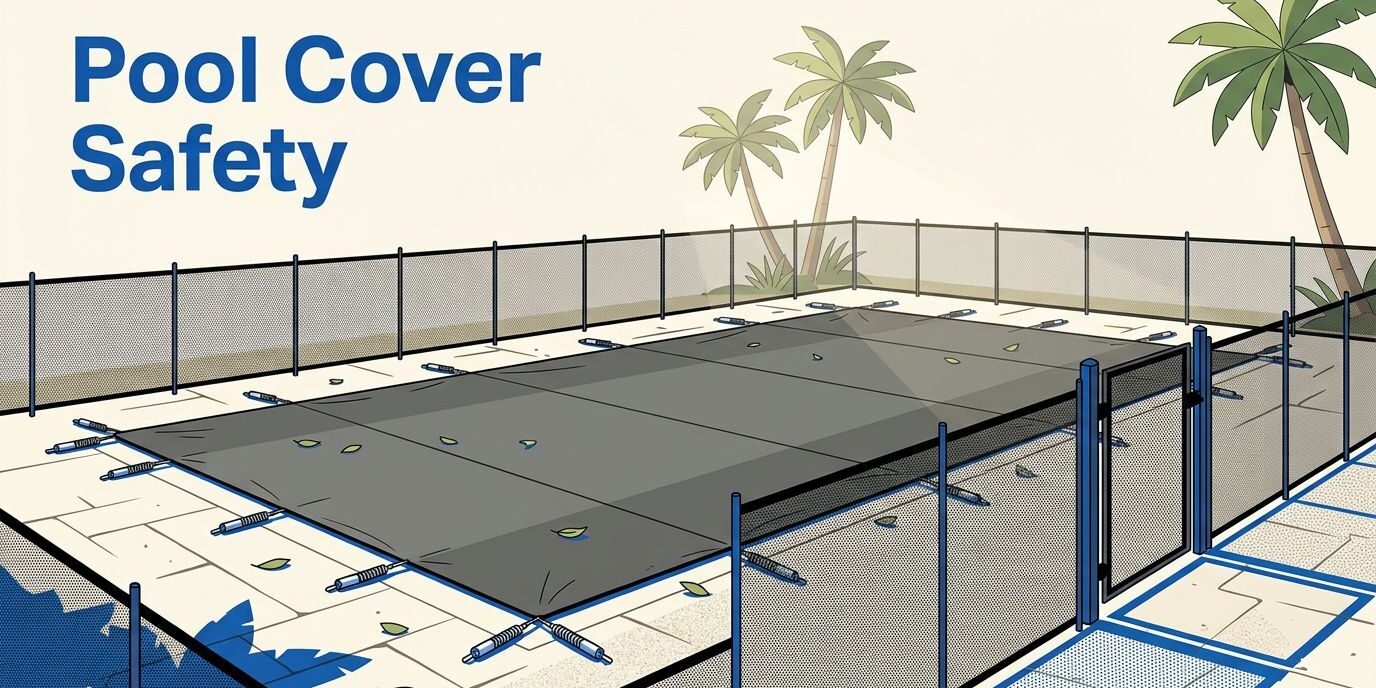
Certified safety pool covers connect to anchors around the deck. They stay tight across the opening and carry a tested load without allowing someone to fall through. The pool cover also needs proper drainage, secure anchors, strong seams, and correct tension.

A cover still doesn’t replace supervision or basic pool safety. Doors should remain locked, gates should close and latch by themselves, and children should never play on a deployed cover. For swimming pool safety, I treat the cover as one layer of protection, not permission to stop watching the pool.
What ASTM F1346 Means
Ask the installer or manufacturer to verify ASTM F1346 documentation and applicable ASTM safety standards in writing. This standard covers performance requirements for swimming pool safety covers, including load testing, openings, strength, and cover security.
The commonly referenced test requires safety pool covers to support at least 485 pounds in a concentrated area. You can review the current discussion of ASTM F1346 requirements before requesting quotes.
That weight load rating doesn’t make the cover a walking platform. It reflects a specific safety test under controlled conditions. The pool cover must also stay anchored and correctly tensioned.
A product description that says “heavy-duty” isn’t enough. I look for the standard, the test information, the warranty, and the installation requirements. A trustworthy quote should explain all four.
Choosing a Cover for Southwest Florida Weather
Southwest Florida pools face conditions that differ from northern pools, and pool safety planning must account for them. Unlike homes that rely on winter pool covers during long closures, Florida pools may need protection throughout the year. Strong sunlight can fade vinyl and weaken exposed materials over time, so UV protection matters. Heavy rain can collect on a solid pool cover, while warm temperatures can encourage algae when sunlight reaches the water.
Pool shape also matters. A simple rectangle usually gives you more automatic pool cover options. A freeform pool with raised walls, attached spas, tanning ledges, or unusual steps may need a custom manual cover or another safety barrier.
Safety pool covers vary in drainage, sunlight control, and debris control. The best safety pool covers match your pool’s shape, deck, budget, and daily routine.
| Cover type | Works well for | Main tradeoff |
|---|---|---|
| Mesh safety cover | Rainy climates and lower-maintenance water removal | Allows some sunlight and fine debris through |
| Solid vinyl safety cover | Blocking sunlight, leaves, and dirt | Needs a cover pump for standing water |
| Automatic safety cover | Frequent use and quick daily closure | Costs more and needs reliable mechanical service |
The right choice depends on your pool, budget, deck, and daily routine. A cover that stays closed will protect your home better than an expensive cover that feels difficult to use.
Mesh Safety Pool Covers
Mesh safety pool covers allow rainwater to pass through. That feature matters in Florida because you won’t need to pump every rainfall off the surface.
Mesh also weighs less than many solid options. It handles seasonal storage well and usually makes opening the pool easier. However, some mesh allows sunlight through. Fine leaves and dirt can also reach the water.
I recommend checking the mesh weave, warranty, anchoring system, and expected cleaning before you buy. A mesh cover can lower pool maintenance demands, but it won’t keep the pool as dark or clean as a solid cover.
Solid Vinyl Safety Covers
Solid vinyl safety covers block sunlight and keep most leaves, sand, and debris out of the pool. That can help control algae and reduce cleanup after a storm.
The catch is standing water. Rainwater cannot pass through the vinyl, so a solid safety cover requires a properly sized cover pump. Never step onto a solid cover to remove water. Use the pump from the deck and inspect the cover afterward.
Solid covers also need careful storage. Unlike winter pool covers used during long seasonal closures, Florida covers may be stored and redeployed more often. Dry the material before folding it, then keep it away from sharp tools, hot surfaces, and direct sunlight.
Automatic Pool Safety Covers
Automatic pool covers close with a motor, tracks, and a control switch. Many systems use key controls or secured digital controls, with locking options that help prevent casual operation. Quality systems may include stainless steel hardware and reinforced webbing.
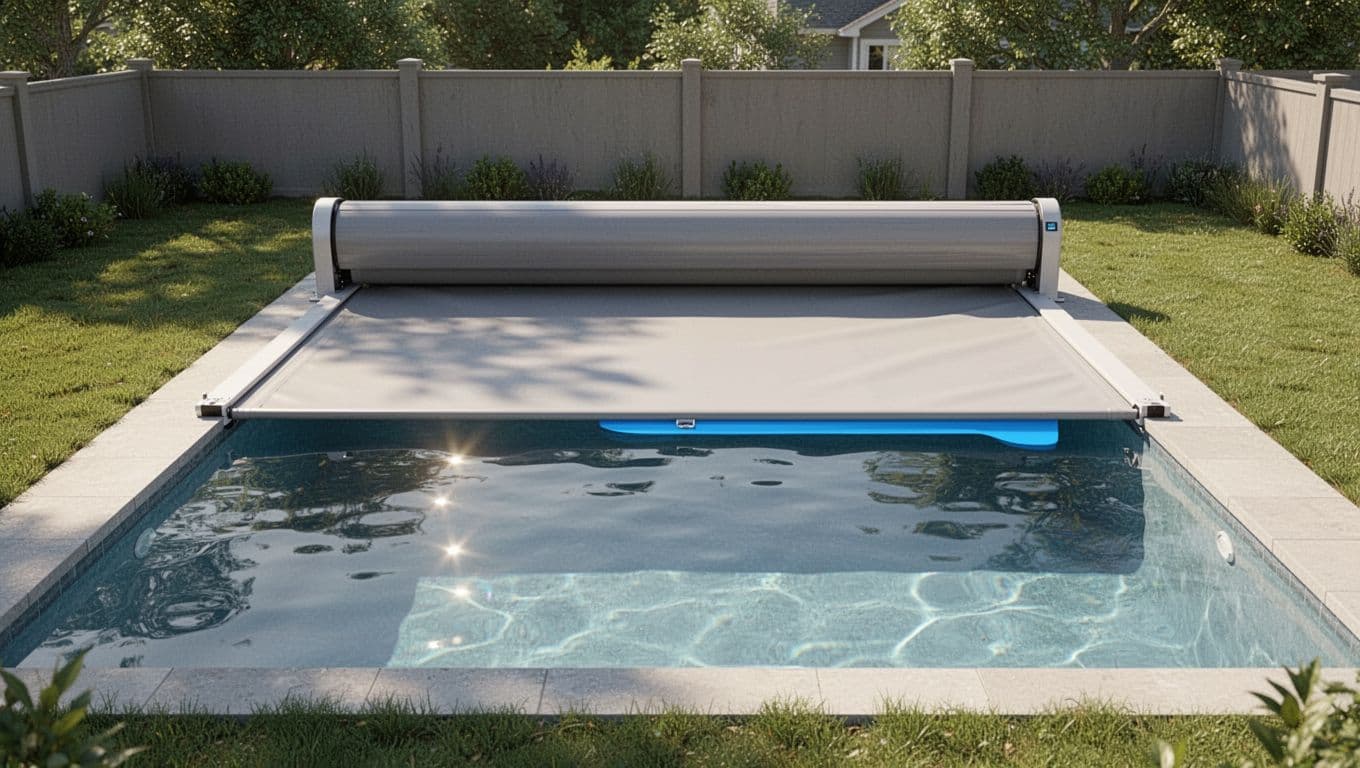
The main benefit is convenience. You can close the pool after swimming instead of carrying and stretching a manual pool cover. That makes daily use more realistic for busy families.
Automatic covers can also reduce water evaporation, heat loss, and chemical loss. Still, automatic safety covers don’t automatically mean safe. The complete automatic pool safety cover system must meet the applicable safety standard, including the cover, tracks, attachments, controls, and installation.
Under-Track or Top-Track Automatic Covers?
An under-track system sits below the deck surface. It gives the pool a cleaner appearance and keeps more hardware out of sight. Builders often plan this option during new construction or major deck work.
A top-track system places the tracks on the pool deck. You can often install it on an existing pool with less structural work. The tracks remain visible, and they may affect walking space around narrow decks.
Neither track style wins for every home. I’d compare the deck condition, pool shape, equipment access, future repairs, and total installation price. Either configuration can support compliant safety pool covers when correctly specified and installed. Ask where the motor sits and how a technician reaches it.
With an automatic pool safety cover, a motor that stops working while the cover is open creates an urgent problem. First, stop pressing the switch. Check whether the cover has caught on the track or an obstruction has entered the mechanism. Look for a tripped breaker, but don’t remove housing panels or reach into moving parts.
Call the installer if the pool cover binds, twists, moves unevenly, or makes a grinding sound. Never force the pool cover closed. A small mechanical issue can become a torn cover or damaged track.
Installation and Daily Checks That Matter
Safety pool covers perform as intended only when measured accurately and secured at every anchor. A custom fit accommodates steps, attached spas, raised sections, and other irregular features.
Before installation, I would confirm these points:
- The pool cover matches the pool’s full shape, including steps, attached spas, and raised sections.
- Professional installation places anchors in sound deck material and follows the manufacturer’s spacing requirements.
- The cover remains tight without rubbing against sharp edges.
- The control switch sits away from the pool and requires deliberate operation.
- The installer explains cleaning, storage, pump use, and emergency procedures.
Daily checks support a broader pool safety plan. Inspect the pool cover after heavy rain and strong storms. Look for torn webbing, loose springs, damaged anchors, mildew, and standing water. Clear branches before opening or retracting it.
Pool safety also requires a separate barrier for children and pets during normal pool use. A professionally installed black mesh fence around all sides of the pool, with a self-closing and self-latching gate, supports drowning prevention by limiting unsupervised access when the cover is open.
That layer also helps when the barrier sits off the pool during swimming. Homeowners in Southwest Florida can contact our team for a custom safety discussion and free estimate.
Water, Energy, Insurance, and Local Rules
A pool cover can save money by slowing water evaporation and reducing chemical loss. Automatic pool covers make consistent closure easier, limiting heated water replacement while supporting energy savings and heat retention. Some systems can reduce evaporation by up to 90 percent, while heating savings can reach 70 percent in the right conditions.
Energy savings depend on pool size, temperature, wind, pool cover fit, and closure consistency, so I treat these figures as possibilities, not promises. The 485-pound load test and proper installation matter more than a large savings claim.
The cover can also reduce cleaning after storms, making pool maintenance easier. A solid safety cover blocks more sunlight and debris, while mesh handles rainwater with less pumping. Use a cover pump to remove standing water, and never step on the material.
Unlike winter pool covers used during long seasonal closures, Southwest Florida covers are usually opened and closed throughout the year.
The safety cover comparison guide offers another useful comparison of cover types and testing.
Local building and barrier rules can vary across Southwest Florida communities. Pool owners should ask the city or county building department whether the cover satisfies required barrier rules for pool safety. Then ask your insurance agent whether the cover, fence, alarms, or other safety measures affect your policy.
Don’t assume one safety feature satisfies every local requirement. Get the answer in writing when possible, especially if you recently built the pool or bought the home.
If you want a separate pool barrier, you can Get a FREE Quote for a professionally installed mesh fence.
Frequently Asked Questions
Is a solar blanket the same as a safety pool cover?
No. A solar blanket floats on the water and helps reduce evaporation, but it does not create a dependable barrier for children or pets. A safety pool cover connects to anchors around the deck and is tested to support a specific load.
What does ASTM F1346 mean for pool covers?
ASTM F1346 covers performance requirements for swimming pool safety covers, including load testing, openings, strength, and security. The commonly referenced test requires a safety cover to support at least 485 pounds in a concentrated area, but the cover must also remain properly anchored and tensioned.
Should I choose a mesh or solid vinyl safety cover in Southwest Florida?
Mesh covers allow rainwater to pass through and usually require less pumping, but they may allow some sunlight and fine debris into the pool. Solid vinyl covers block more sunlight and debris, but they need a properly sized cover pump to remove standing water.
Are automatic pool covers safer than manual covers?
An automatic pool safety cover can make daily closure easier, which may encourage more consistent use. It is only safe when the complete system—including the cover, tracks, attachments, controls, and installation—meets applicable safety requirements and is maintained properly.
Does a pool cover replace a fence or supervision?
No. A pool cover should be used with active supervision, locked doors, and a separate barrier with a self-closing and self-latching gate. Children and pets should never play on a deployed cover, even when it is labeled as a safety cover.
The Safest Choice Is the One You Use
Pool cover safety depends on more than buying a cover with the word “safety” in its name. Look for ASTM safety standards documentation, tested capacity, secure anchors, proper drainage, and correct installation.
Mesh and solid vinyl covers suit different homes, while an automatic pool safety cover can simplify routines. In Southwest Florida, pool owners should compare safety pool covers for rain, sun, pool shape, deck layout, and family routine. Don’t choose winter pool covers for cold-climate closures alone; treat energy savings as a secondary benefit.
I prefer a layered plan. Use a certified pool cover when the pool is closed, arrange professional installation, keep a black mesh fence and self-latching gate around the pool, and continue active supervision. Automatic safety covers add convenience, but a pool cover never replaces a fence or supervision; together, these habits strengthen pool safety.