One unlocked gate, an open back door, or a distracted adult can change a pool party in seconds. Florida pool safety starts with a secure barrier, but it doesn’t end there.
I treat every gathering like a safety plan, not just a celebration. The fence, gate, alarms, rescue equipment, and adult supervision are pool safety features that need to work together. Before guests arrive, I check Florida’s rules and add practical steps that protect children, older adults, pets, and every swimmer.
Key Takeaways
- Florida’s Residential Swimming Pool Safety Act requires a new residential pool, spa, or hot tub to have at least one approved safety feature before final inspection and a certificate of completion.
- A compliant pool barrier must be at least 4 feet high, surround the pool perimeter, prevent climbing or crawling through, and include a self-closing, self-latching gate that opens away from the pool.
- A named, sober adult should actively supervise the water during a pool party. Alarms, safety covers, life jackets, and other devices add protection but do not replace focused supervision or a closed gate.
- Pool alarms should meet ASTM F2208, while approved safety covers should meet ASTM F1346. Broken, loose, or missing drain covers require shutting down the pool until a licensed pool contractor repairs them.
- Local building departments may impose additional requirements, so homeowners should verify local rules and keep permits, inspection records, maintenance notes, and insurance information organized.
Chapter 515: Florida’s Residential Swimming Pool Safety Act
Florida’s Residential Swimming Pool Safety Act applies to new residential swimming pools, spas, and hot tubs. Before a new pool passes final inspection and receives a certificate of completion, it must have at least one approved safety feature.
When applicable, the Department of Health may offer the required drowning prevention education program as part of the safety process.
The current law lists five choices. You may hear these described as four options, but Florida’s statute treats each listed protection as a separate choice. The Residential Swimming Pool Safety Act provides the full legal language.
Here are the listed safety options:
| Safety feature | Main requirement |
|---|---|
| Swimming pool barrier | A compliant enclosure around the pool perimeter |
| Approved safety pool cover | A cover that meets the ASTM F1346 standard |
| Exit alarm | Alarms on doors and windows with direct pool access, rated at least 85 dB A at 10 feet |
| Self-closing doors | Direct-access doors must close and latch, with the release at least 54 inches above the floor |
| Swimming pool alarm | An alarm independently certified to ASTM F2208 |
A swimming pool barrier is often the most practical choice for a backyard party because it keeps children away from the water when nobody is swimming. Generic safety pool covers don’t automatically qualify as an approved safety pool cover. Alarms and covers can add another layer, but neither replaces responsible supervision.
You can review the Florida safety feature options in Section 515.27 before scheduling an inspection or changing your pool area.
Pool barrier requirements that homeowners miss
Florida’s pool barrier requirements are detailed for a reason. A fence isn’t compliant simply because it looks tall or surrounds part of the yard.
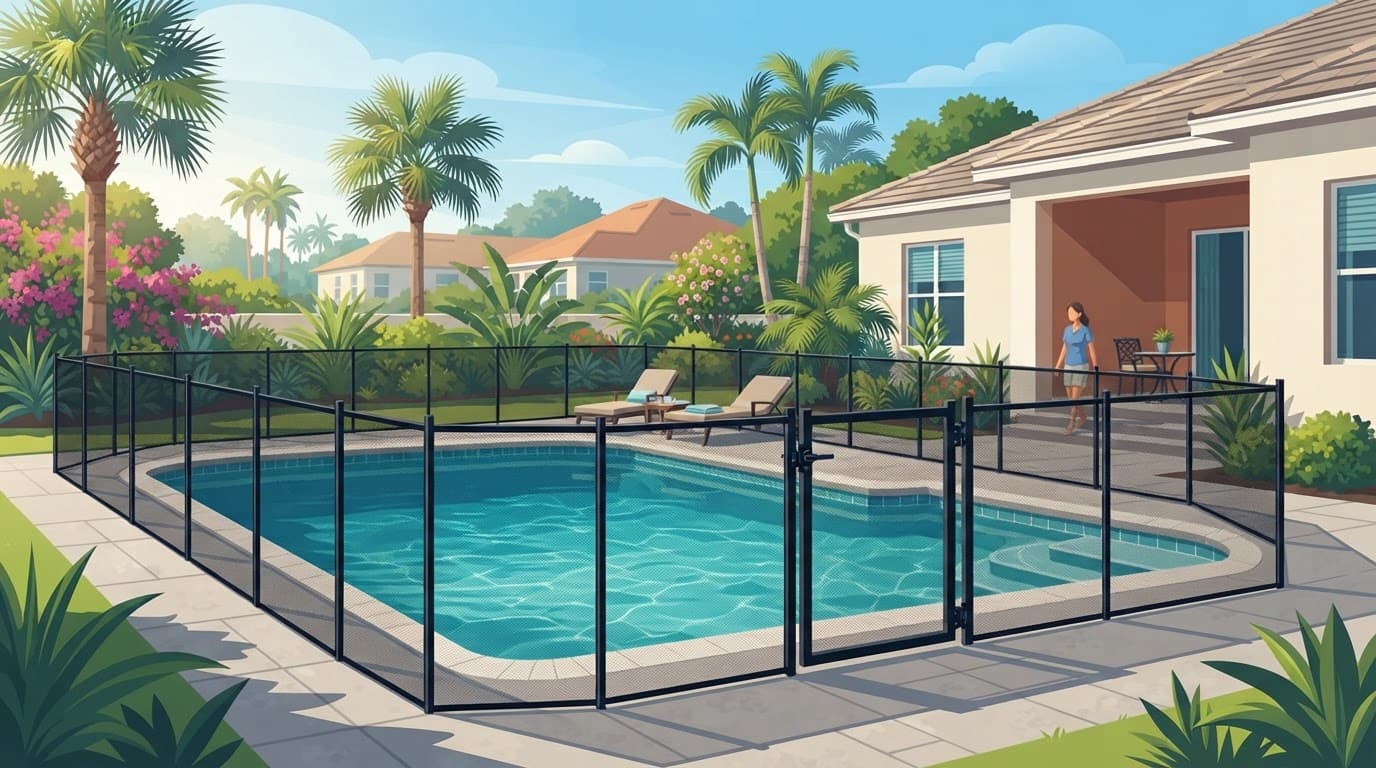
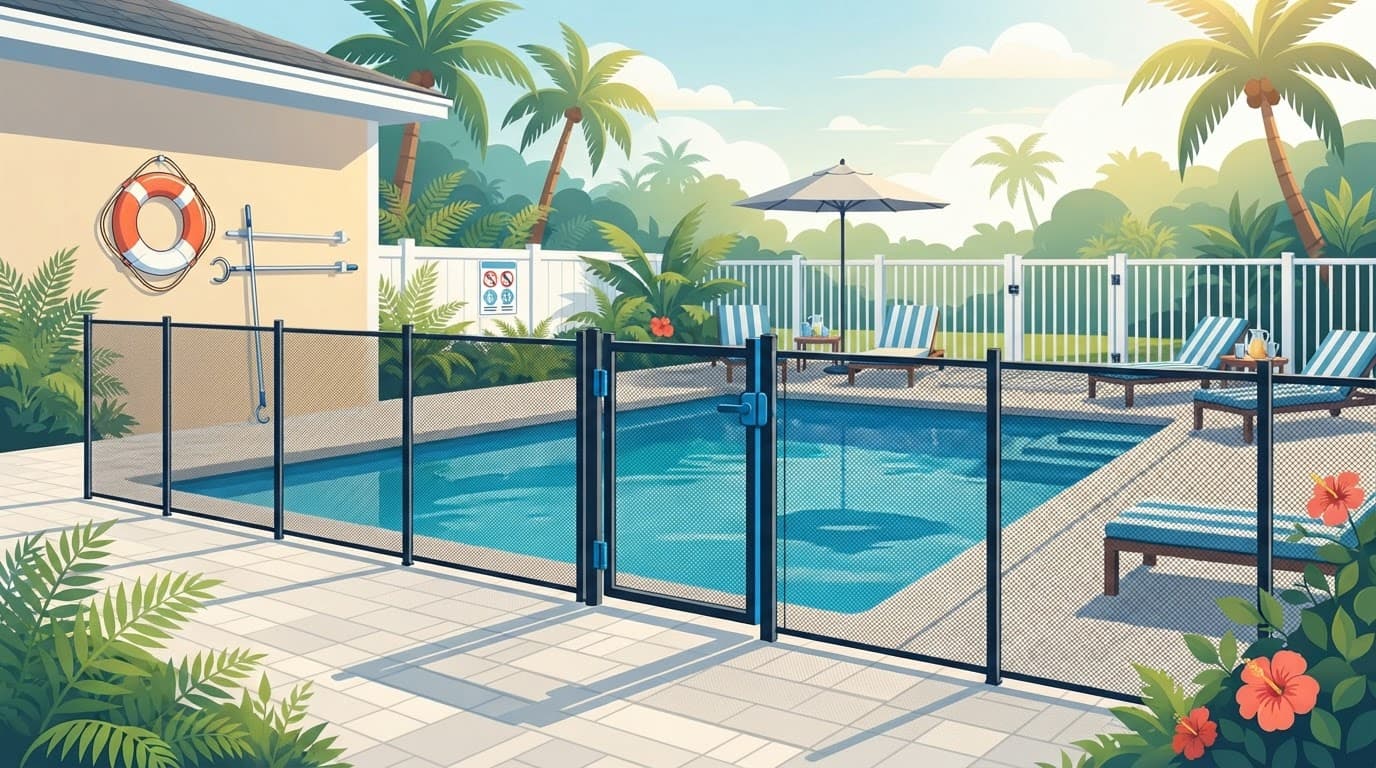
The swimming pool barrier must meet the stated dimensions, including a minimum height of 4 feet. It must surround the pool perimeter and have no gaps, openings, footholds, or handholds that allow a young child to crawl under, squeeze through, or climb over it.
Florida defines a young child as someone under 6 years old. The law also considers a medically frail elderly person, generally a person at least 65 years old with a physical or mental impairment that significantly limits major life activities. Barrier placement and access control matter for a medically frail elderly person, too. The barrier must be positioned far enough from the water that someone who gets through it doesn’t immediately fall into the pool.
A property fence may not protect the pool unless it sits on the pool perimeter and meets the pool fence requirements. It must satisfy the same pool barrier requirements. A fence around the entire backyard doesn’t automatically count.
Gates, walls, and pet doors
The gate needs special attention. It must be a self-closing and self-latching gate that opens outward, away from the pool. Its release mechanism belongs on the pool side, where a young child can’t reach it over or through the gate.
I check the gate every time I walk through the pool area. It should close fully without being pushed, and the latch should catch every time. A gate that stays open after someone carries in a cooler is not doing its job.
A wall of the home can form part of the barrier only when doors and windows don’t open directly to the pool. Pet doors are easy to overlook. A small opening can give a toddler access, so a pet door in the barrier line can defeat the protection.
Keep chairs, tables, toys, planters, and storage bins away from the fence. Permanent objects can’t be positioned where a child could use them as a climbing step.
Backyard pool party rules for the day
The party plan should begin before the first guest arrives. I walk around the pool deck and look for anything that could create a problem. I test every exit alarm exactly once before guests arrive. The gate is closed, the latch works, toys are moved away from the fence, and the deck is free of loose items.
The most important rule is simple: one sober adult watches the water. That person stays close, keeps the phone away, and doesn’t assume another guest is watching. Rotate the responsibility when needed, but make the handoff clear. A formal drowning prevention education program can reinforce the plan, but it can’t replace active supervision by a named adult.
Children who can’t swim need an adult within arm’s reach. Coast Guard-approved life jackets can help, but floaties and inflatable toys aren’t life-saving devices. I also keep the pool rules short and direct, focusing on behaviors that can lead to drowning incidents:
- No running around the pool deck.
- No pushing or rough play.
- No swimming alone.
- No breath-holding contests.
- Children leave the water when the supervising adult leaves.
Alcohol creates another concern. Anyone supervising children should remain sober and alert. If a guest becomes impaired, that person shouldn’t be responsible for watching the pool.
The barrier stays closed during the party, even when everyone is outside. Guests may prop the gate open because they want an easy path to the patio. I don’t allow it. The fence only works when the access point stays secured.
Alarms, covers, and drain entrapment
A swimming pool alarm can alert you when someone enters the water, but it doesn’t stop access. Florida recognizes alarms using surface motion, pressure, sonar, laser, or infrared technology. The alarm must meet the ASTM F2208 standard.
An approved safety pool cover must meet ASTM F1346. It needs to cover the water completely and be installed and used according to the manufacturer’s instructions. A lightweight solar cover isn’t the same thing as a safety cover. Never let children walk or play on safety pool covers.
Drain safety deserves attention too, since suction entrapment can occur around pool drains. The federal Virginia Graeme Baker Pool and Spa Safety Act focuses on public pools and spas, but homeowners should still inspect drain covers and teach children to stay away from them.
The main types of suction entrapment include:
- Hair entrapment, when hair is pulled into a drain.
- Body entrapment, when part of the body blocks the drain.
- Limb entrapment, when an arm or leg enters the opening.
- Evisceration, when suction causes severe internal injury.
- Mechanical entrapment, when jewelry, clothing, or another object becomes caught.
Never use a pool with a broken, loose, or missing drain cover, because suction entrapment can cause serious injury. Shut it down for drain safety and call a licensed pool contractor. A drain cover isn’t a minor cosmetic part. It is part of the circulation system’s safety protection.
Local rules, penalties, and insurance questions
Chapter 515 sets a statewide baseline, but local requirements can add another layer. Building departments and municipalities in Broward, Martin, and St. Lucie counties may have permitting details that differ from a neighboring community. I check with the local building department before construction, especially when the pool sits near a property line, seawall, screen enclosure, or waterfront.
Failure to equip a new residential pool with at least one required safety feature is a second-degree misdemeanor. Florida’s general penalties for that offense can include up to 60 days in jail and a fine of up to $500. The law provides a 45-day correction period after an arrest, summons, or notice to appear. The owner must install a required feature and attend the drowning prevention education program offered by the Department of Health, when that program is available.
Following the law doesn’t guarantee pool safety compliance. A compliant fence doesn’t excuse poor supervision, unsafe maintenance, or an open gate. After an accident, a homeowner may still face premises liability questions and an insurance review.
I keep copies of permits, inspection records, fence installation information, and maintenance notes. When attendance is required, I also retain proof of completion for the drowning prevention education program and ask my insurance company about specific pool safety requirements. Written answers are much better than assumptions.
If your current barrier needs attention, you can contact Pool Fence SWFL with questions about a custom black mesh fence and self-closing gate. For pricing, Get a FREE Quote.
Frequently Asked Questions
What safety feature does Florida require for a new residential pool?
Florida requires at least one approved safety feature before a new residential swimming pool, spa, or hot tub receives final inspection approval and a certificate of completion. The choices include a compliant barrier, an approved safety cover, exit alarms, self-closing doors, or a swimming pool alarm.
Does a fence around the backyard count as a pool barrier?
Only when the fence sits on the pool perimeter and meets Florida’s barrier requirements. It must generally be at least 4 feet high, have no openings or footholds that allow a young child to pass or climb through, and include a compliant access gate.
Can a pool alarm or safety cover replace adult supervision?
No. These features can provide another layer of protection, but they do not prevent every dangerous situation or replace a sober adult actively watching the water.
Who should supervise children at a pool party?
A named, sober adult should stay close to the water, keep the phone away, and avoid assuming that another guest is watching. Children who cannot swim need an adult within arm’s reach, and the responsibility should be handed off clearly when the supervising adult leaves.
What should I do if a pool drain cover is broken or missing?
Do not use the pool, because a damaged drain cover can create a suction-entrapment hazard. Shut down the pool and contact a licensed pool contractor to inspect and repair the drain system.
Conclusion
A backyard pool party should feel relaxed, but the safety work needs to happen before anyone gets in the water. A four-foot barrier, a working self-closing gate, proper alarms, safe drains, and a focused water watcher give your family several layers of protection.
When legally applicable, these measures complement the state’s drowning prevention education program by reinforcing safe habits at home.
I never depend on one device or one rule. Florida pool safety works best when the barrier stays closed, adults stay alert, and every guest knows the expectations. That preparation brings the peace of mind a pool party should have from the beginning.