A relaxed pool day starts with preparation before anyone gets wet. A backyard water emergency plan gives families clear steps for pool accidents, storm damage from natural disasters, and drinking-water interruptions.
That preparation brings peace of mind, especially when children, grandparents, or visiting caregivers share the backyard. Nobody should have to search for equipment or guess who’s watching.
The first step in emergency preparedness is a simple written plan that every regular caregiver understands.
Key Takeaways
- Write a one-page plan that assigns adult supervision, 911, rescue-equipment, and responder-meeting responsibilities; make sure caregivers and visitors know the address, gate, and equipment locations.
- Before swim season, check the pool barrier and self-latching gate, keep rescue equipment easy to reach, and layer fencing with supervision and other appropriate safety measures.
- In a pool emergency, check nearby water immediately if someone is missing, call 911, and follow dispatcher instructions. Rescue breaths are part of drowning CPR, so caregivers should maintain current CPR training and seek medical evaluation after a submersion incident.
- Keep a separate drinking-water reserve: at least one gallon per person per day for three days, with a goal of two weeks when possible. Store it safely, and follow current utility notices because boiling or bleach treatment does not address chemical contamination.
- Practice the plan before guests arrive and update it when caregivers, medical needs, or property access change.
Put the Plan on One Page
A useful plan stays short, clear, and easy to find. Families can use an emergency plan template to create a waterproof copy for the rescue station.
Assign adults clear responsibilities
During swimming, one designated adult watches children without scrolling, cooking, or handling other jobs. Young children need close supervision, even after swimming lessons.
Before that adult steps away, another adult must clearly accept responsibility. A casual assumption that somebody else is watching leaves a dangerous gap.
The written emergency response plan should name who calls 911, retrieves rescue equipment, and meets responders. These emergency procedures give everyone a clear role. Older children can alert adults and share the address, but they must not supervise swimmers or attempt rescues.
Give visitors the information they need
Babysitters and visiting relatives need the full street address, pool location, gate operation, and rescue-equipment location. Vacation guests may know the neighborhood without knowing the house number.
A short walkthrough helps everyone feel more comfortable. A quick risk assessment should identify nearby canals, ponds, and other accessible water.
The plan should include emergency contacts and relevant medical information. Families can keep sensitive details accessible to caregivers without displaying them publicly.
Clear information saves searching when everyone needs to act quickly.
Close Pool Access Gaps Before the First Swim
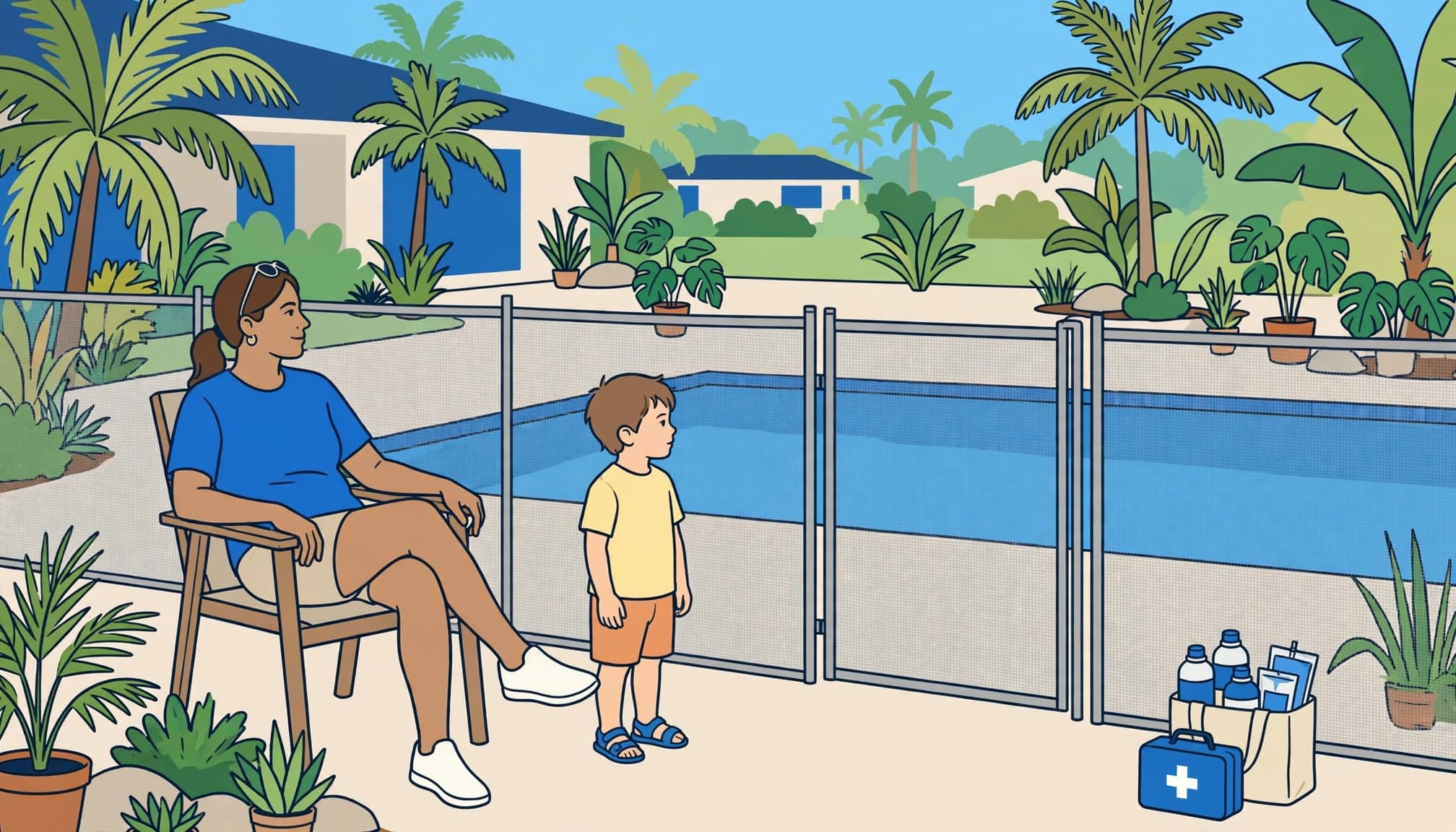
A dependable barrier adds protection when the pool isn’t in use. It also gives families a clear boundary.
Check the removable mesh fence and gate
Before swim season, inspect the mesh, attachment points, and gate. Torn material, loose components, or a gate that doesn’t latch need attention before children visit.
Include nearby climbing opportunities in your risk assessment. Furniture, planters, and toys shouldn’t sit beside the fence where children can climb them.
The gate should close and latch on its own, without someone pushing it shut. A four-sided isolation barrier separates the pool from the house and yard. A pool fence consultation can help homeowners consider placement, access, and family needs.
Professional guidance can make preparation feel much more manageable.
Keep other protection layers working
Door alarms, appropriate safety covers, swimming skills, and adult supervision add protection. None makes a child drown-proof.
Keep removable fencing properly installed whenever it serves as the pool’s access barrier. Propping open the gate defeats that protection.
Check drain covers and keep children away from damaged equipment. Close the pool if a drain cover is broken or missing, until a qualified contractor repairs it.
For installation pricing, homeowners can Get a FREE Quote by phone or email.
Make Rescue Equipment Easy to Reach
Rescue equipment and emergency supplies belong where adults can grab them quickly. A locked shed across the yard creates an unnecessary delay.
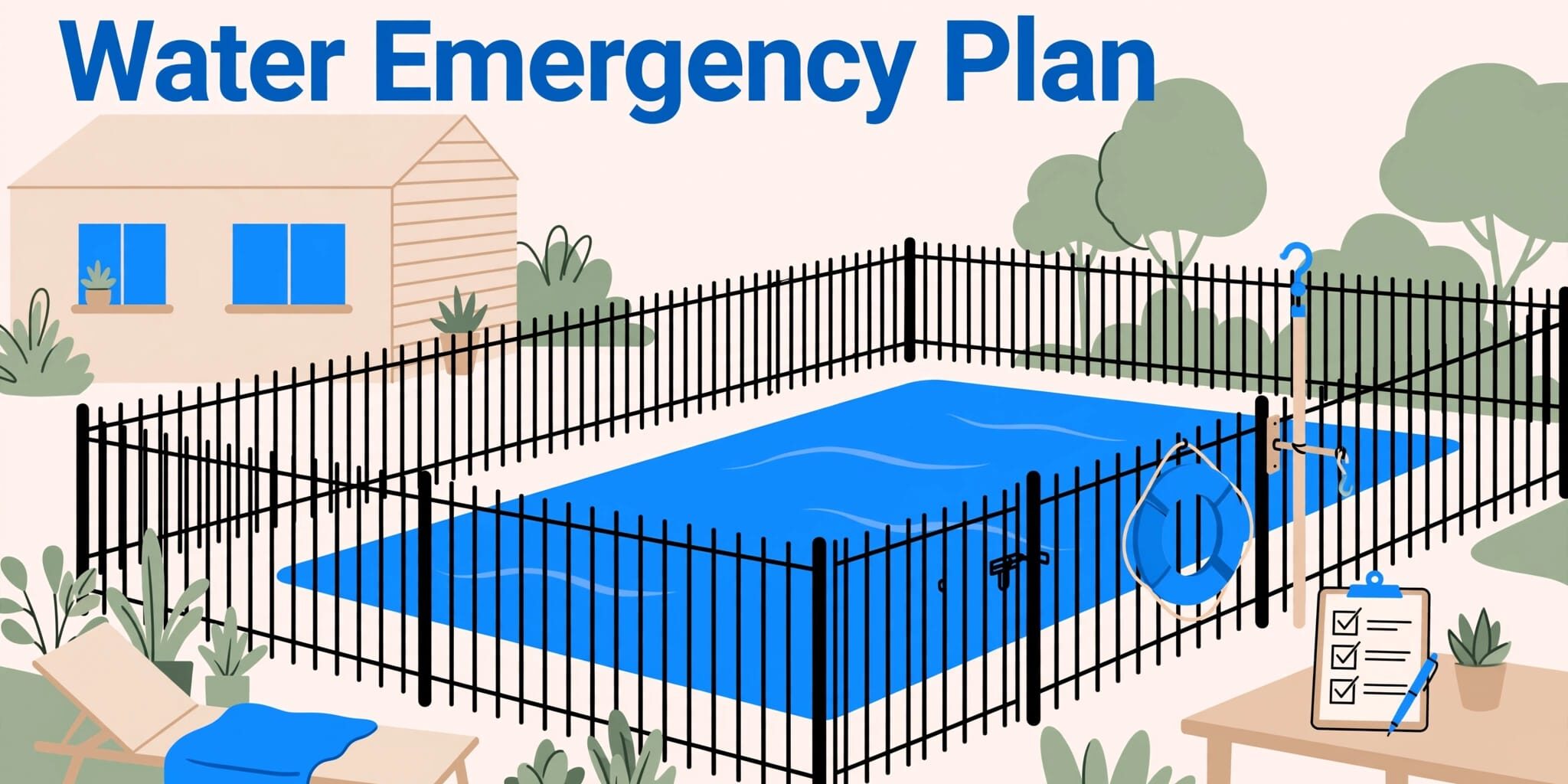
A reaching pole or shepherd’s crook and a ring buoy provide practical rescue options. Keep both in a visible, familiar spot.
A quick risk assessment should confirm adults can reach them without entering the fenced pool area. Keep the access path clear.
A charged phone should stay nearby, though the supervising adult shouldn’t use it for entertainment. Keep a weather-protected first-aid kit in the emergency kit.
Gloves, gauze, bandages, and a CPR face shield are useful supplies. However, equipment doesn’t replace hands-on CPR training.
Families can use Ready.gov’s emergency kit guidance when organizing flashlights, backup charging, medications, and other household supplies.
Florida heat and rain can damage stored items. Homeowners should replace wet, expired, missing, or damaged supplies during regular checks.
An AED, if available, needs storage and maintenance that follow its manufacturer’s instructions. Caregivers should know its location beforehand.
Specialized equipment, including spineboards, belongs only in a response plan involving trained users.
Know the First Actions During a Pool Emergency
Drowning can happen quickly and without obvious shouting or splashing. A calm response helps adults move directly to the right tasks.
Check the water and make a safe rescue
When a child goes missing, immediately check the pool and other nearby water. Another adult should call 911 during an unexplained disappearance involving water risk.
A quick risk assessment can identify immediate hazards, but it must not delay the 911 call or prompt anyone to enter unsafe water.
If someone struggles in the pool, adults should give short, calm directions. “Hold the wall” or “Move toward the steps” keeps communication simple.
A reaching pole or ring buoy may help from a stable position. Adults shouldn’t enter the water if the rescue could pull them under.
Children should learn to alert an adult and call for help when appropriate, but never attempt a rescue.
The caller should follow the dispatcher’s instructions and explain the situation clearly.
Call 911 and begin trained care
After removal, the responder should check responsiveness and normal breathing. An unresponsive person or someone who isn’t breathing normally needs immediate emergency help.
If alone, the responder can call 911 on speakerphone and follow instructions. CPR for drowning includes rescue breaths, so adults should maintain current CPR training.
Another adult can retrieve an AED without interrupting care. Responders should follow its prompts when available, and adults should maintain current AED training.
Breathing trouble, blue lips, confusion, persistent coughing, or unusual sleepiness after submersion require urgent medical attention. Even apparent recovery after a drowning incident warrants medical evaluation.
The caregiver should stay with the person and continue monitoring until help arrives. Preparation supports, but doesn’t replace, 911 dispatch, CPR training, or professional medical evaluation.
Store Emergency Drinking Water Separately
A backyard plan also needs a separate household reserve of drinking water, not a substitute for pool-emergency response. Storms and power failures can interrupt service even when the pool looks normal.
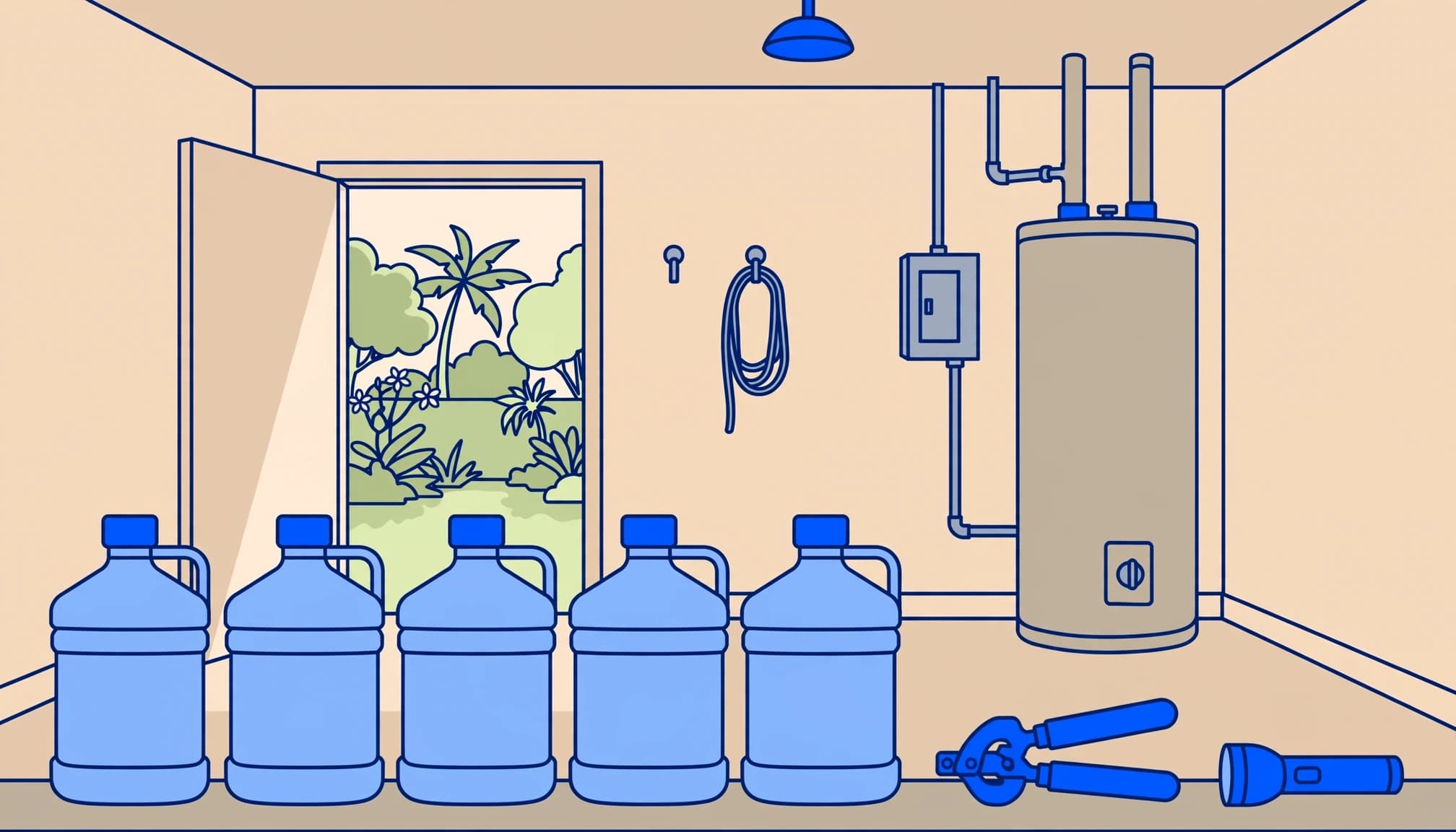
For a minimum emergency water supply, Ready.gov’s water-storage guidance recommends at least one gallon per person daily for drinking and sanitation.
Families should keep at least three days available and aim for two weeks when possible. Calculate the household’s emergency water supply from that goal: Four people need 12 gallons for three days or 56 gallons for fourteen days.
That calculation doesn’t include extra water for pets. A household risk assessment should also account for hot weather, pregnancy, illness, and individual needs.
Commercially bottled water offers a straightforward option. For water storage, choose clean, food-grade containers with secure lids if filling them at home.
Safe water storage requires a cool location away from sunlight, fuel, pesticides, and pool chemicals. A garage that becomes extremely hot isn’t a good choice.
Homeowners should label filled containers with the storage date and replace that water every six months. Commercial bottles should follow their expiration dates.
Keep the reserve organized with the household emergency kit. Check local utility information and any public notice during an outage.
If a boil order is issued, follow the utility’s instructions. Don’t use water from a questionable source without checking its water quality.
Keep emergency supplies separate from pool-maintenance products. Nobody should reuse chemical containers for water storage.
Heavy containers also need stable placement. Avoid high shelves where containers could fall or become difficult to lift.
An organized supply offers real reassurance when a water interruption happens.
Treat the Water Heater as a Careful Backup
A conventional storage water heater may serve as a limited emergency water supply, but only under safe conditions. Tankless models don’t provide a comparable backup water supply.
Before an emergency, ask a plumber to explain your system and provide guidance. This can identify shutoffs and prevent surprises.
The basic sequence is to turn off electricity or gas, close the cold-water inlet, and let the water cool. Then open a hot-water faucet to let air enter the system. Slowly open the drain valve into a suitable clean container.
Hot water can cause serious burns. Clear appearance doesn’t prove the water is safe.
Flooding or chemical exposure may lead to water contamination in the tank or plumbing. Families shouldn’t drink water from the tank if contamination is possible.
If the water smells unusual or seems questionable, choose safer emergency water sources instead. Bottled water is simpler when safety is uncertain.
Homeowners shouldn’t force a stuck valve or attempt unfamiliar plumbing work. They also shouldn’t restore heat until the tank is completely refilled.
A plumber should handle equipment problems or any uncertainty about safely restarting the system.
Match Water Treatment to the Local Advisory
The household water emergency plan should explain which alerts to follow from local community water systems. Check the public notice for your area’s status and required actions, then review any updated public notice. Different water contamination problems require different responses, so identify the advisory first as part of a risk assessment.
Boiling helps with germs, not chemicals
When the utility issues a boil order, follow its exact instructions. The boil order may cover drinking, cooking, brushing teeth, and making ice.
For germ contamination, clear water needs a rolling boil for one minute. Above 6,500 feet, boil it for three minutes.
The CDC’s emergency water-treatment guidance explains these methods and their limits.
When treating emergency water, remember that household water treatment has limits. Boiling doesn’t remove fuel or other chemical contamination. A do-not-drink or do-not-use notice requires the specified restrictions and an approved emergency water supply, such as bottled water.
Pool water shouldn’t become the family’s drinking-water backup, especially after flooding.
Bleach requires the correct product and dose
For clear water, CDC guidance specifies eight drops per gallon of unscented bleach containing 5% to 9% sodium hypochlorite. Cloudy, colored, or very cold water requires sixteen drops per gallon.
Families should first filter cloudy water through a clean cloth or allow sediment to settle. After adding bleach, they should stir and wait at least thirty minutes.
Scented bleach, splashless products, and cleaners with added ingredients aren’t suitable choices.
Bleach also doesn’t remove chemical contamination. When the product or water source is uncertain, families should use bottled water.
Understand What the Water Utility Handles
Household preparation complements public water system planning. It doesn’t replace the utility’s responsibility for safe service or infrastructure investments.
Under EPA’s AWIA Section 2013 requirements, community water systems serving more than 3,300 people must complete a risk assessment.
Covered community water systems must also prepare or update an emergency response plan. They certify the plan within six months after certifying the assessment.
These systems review their assessments at least every five years. They also review and revise emergency plans as needed within the required five-year cycle.
Homeowners don’t need to complete utility compliance paperwork. Instead, they need access to emergency alerts and their provider’s emergency number. Use the utility’s public notice to identify affected areas, then check the notice for restrictions and timing.
Sign up to receive each revised public notice. Check the latest public notice to confirm when a boil advisory ends.
An outage plan should include stored water, since disruptions to water mains can delay service restoration.
Practice the Plan Before Guests Arrive
A short practice helps everyone learn the plan without frightening children. Adults can explain that preparation supports emergency readiness and helps everyone enjoy the pool safely.
The walkthrough should cover the phone, address, gate, rescue gear, and each person’s responsibilities. Caregivers can rehearse describing how to reach the property without placing a test call to 911.
Children should know to alert an adult immediately if someone falls in. Adults should explain that children must never attempt a rescue.
Families should end every swim with the same closing routine. An adult confirms everyone has exited, puts away tempting toys, and checks the gate.
After storms, homeowners should inspect barriers and equipment before reopening the pool. Floodwater, damaged wiring, or uncertain water quality require professional guidance.
Update the written plan when caregivers, medical needs, or property access change. An emergency plan template can help families keep those details organized.
A brief review before gatherings keeps the routine fresh. Consistent preparation feels reassuring because everyone knows what to do.
Frequently Asked Questions
What should a backyard water emergency plan include?
It should list each adult’s responsibilities, the property address, emergency contacts, pool-gate information, and the locations of rescue equipment and supplies. Caregivers should review the plan before supervising swimmers.
What should I do first if someone is missing near the pool?
Immediately check the pool and other nearby water, and have another adult call 911 when there is an unexplained disappearance involving water risk. Follow the dispatcher’s instructions and do not enter unsafe water to attempt a rescue.
How much emergency drinking water should a household store?
Plan for at least one gallon per person per day for three days, and aim for two weeks when possible. Account for pets, hot weather, illness, and other household needs, and store drinking water separately from pool chemicals.
Can I boil or treat water during any water advisory?
No. Follow the local utility’s current notice: boiling can address germs when instructed, but it does not remove fuel or other chemical contamination. A do-not-drink or do-not-use notice requires the specified restrictions and a safe alternative water supply.
Can I use water from my water heater in an emergency?
A conventional storage water heater may provide limited backup water only when conditions are safe; tankless models do not provide a comparable reserve. Ask a plumber how to handle your system, and do not use the water if contamination is possible or its safety is uncertain.
A Prepared Backyard Brings Peace of Mind
A dependable backyard setup combines secure removable mesh fencing, attentive supervision, and rescue equipment that’s easy to reach. Trained adults who have practiced their response add another layer of protection.
Families gain peace of mind when caregivers understand their roles before swimming starts. Practice the response before guests arrive or anyone needs help.
Questions or ready to get started? Call us at (941) 500-9484