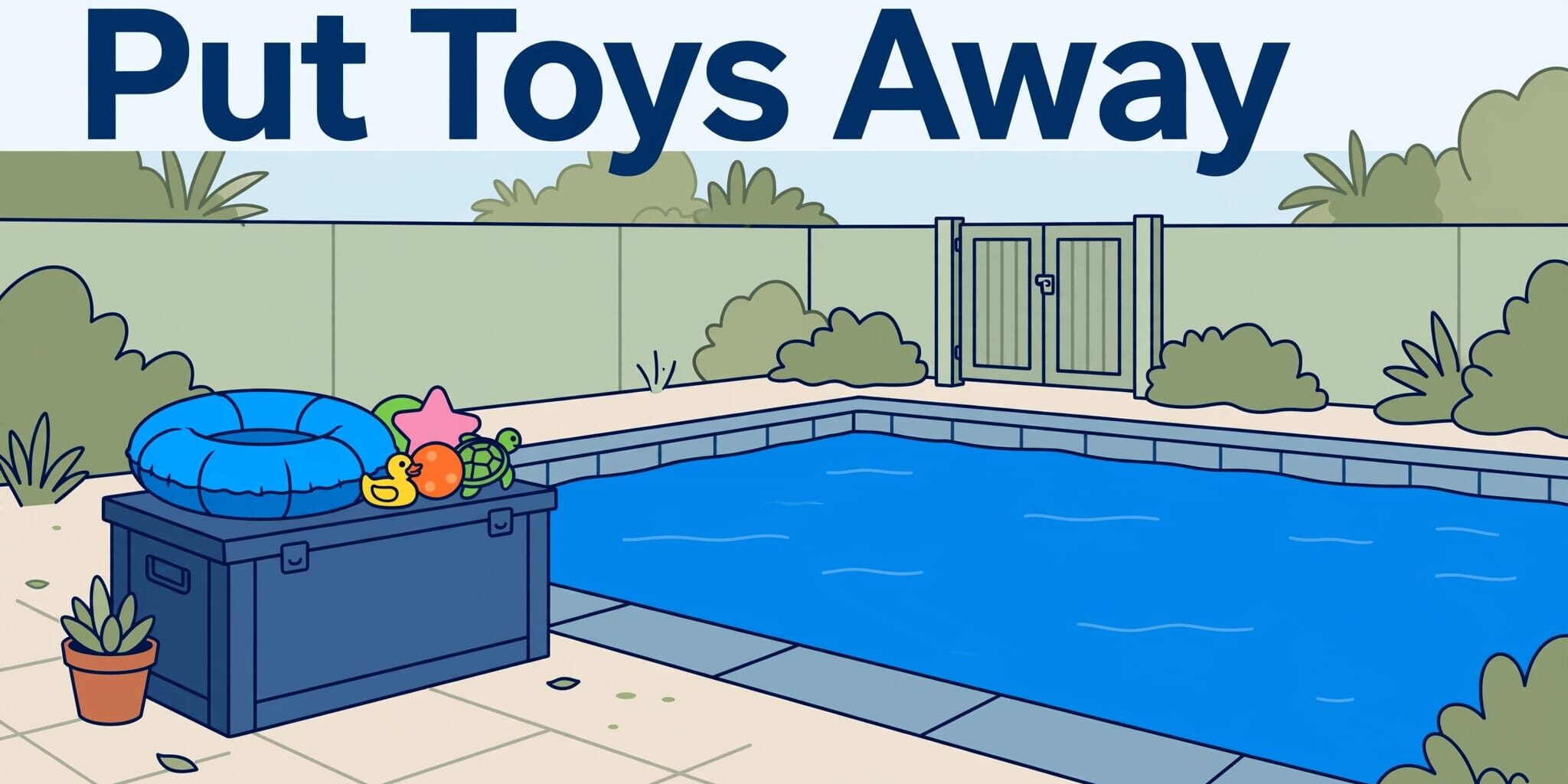
Start by removing all pool toys after swimming. Never leave toys in the pool; store them out of sight and reach. Bright floats can draw children toward water, even after everyone has changed into dry clothes.
According to the CDC’s drowning report, drowning leads accidental deaths among U.S. children ages one through four. A reliable cleanup routine removes that temptation while secure barriers help prevent access.
That routine should begin before the supervising adult turns toward towels, snacks, or visitors.
Key Takeaways
- Adults should remove every pool toy after swimming, then store everything securely away from children and the pool fence.
- Floaties and inflatable toys don’t replace properly fitted, Coast Guard-approved life jackets or close adult oversight.
- A safe closing routine accounts for every child, clears the water, and leaves the pool gate closed and latched.
Put Every Toy Away Before Closing the Pool
A floating ball gives a child a reason to return. Even a familiar toy can encourage reaching over the edge.
Keep supervision in place during cleanup
First, an adult should account for every child outside the pool area. Another responsible adult should supervise children while someone collects toys.
When only one adult is present, children should stay safely supervised throughout cleanup. Nobody should leave them alone beside the water.
Adults should collect submerged diving toys, floating rings, noodles, and balls. A quick look across the surface won’t catch everything.
Children should also learn a simple rule: only an adult retrieves a toy near the water after swimming ends.
Store toys without creating climbing steps
Remove all pool toys after swimming. Then store them securely in a locked shed or opaque container, out of children’s sight and reach.
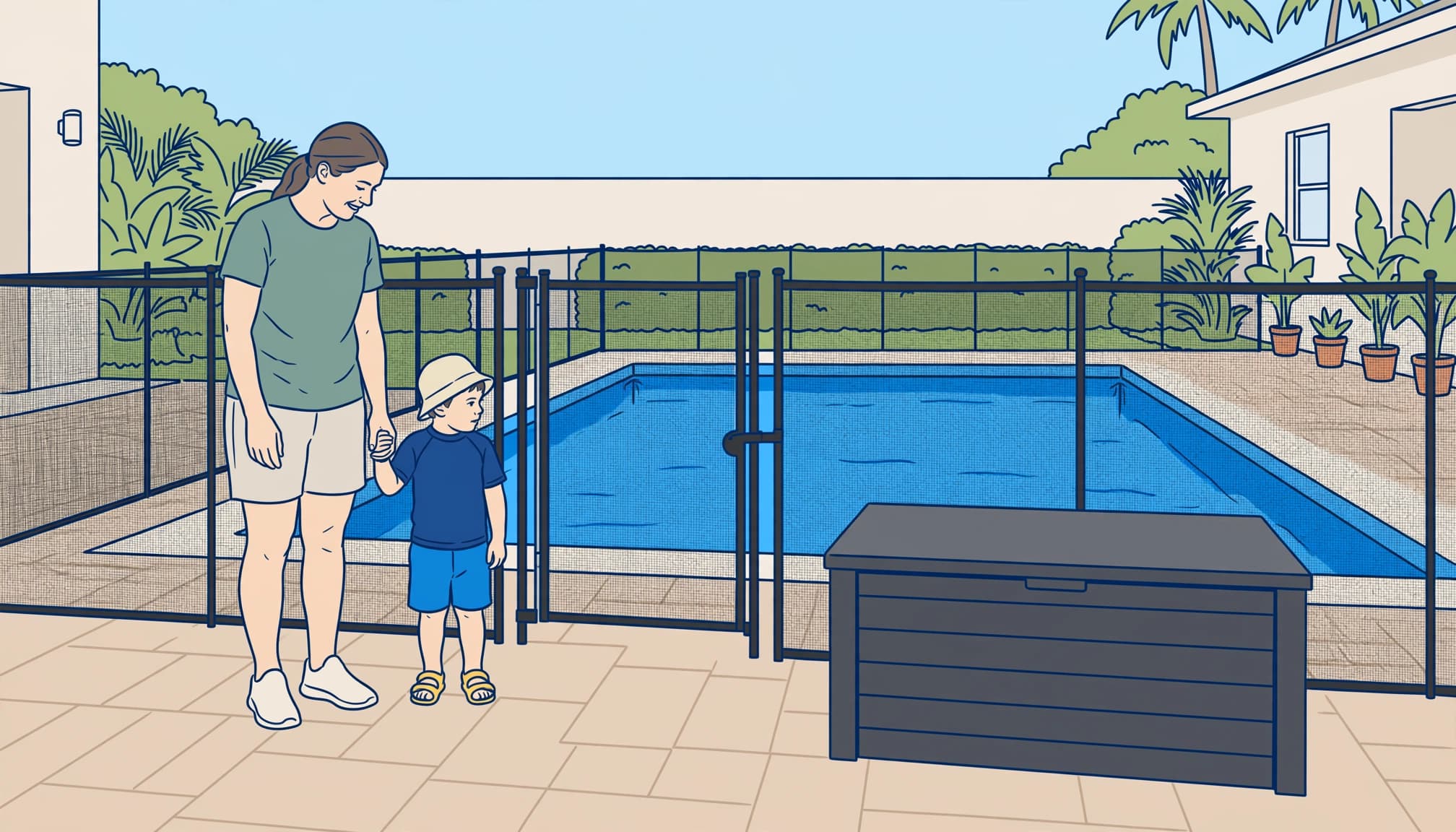
Storage boxes, stacked floats, and coolers can help children climb a pool barrier. Keep these items away from the fence.
Adults should deflate inflatable toys when not in use, following manufacturer instructions. Clean, dry storage also makes damage easier to notice.
Toy storage should remain separate from locked pool chemicals. Children shouldn’t enter chemical storage areas to collect playthings.
Understand How Different Pool Toys Can Fail
Manufacturer age and weight recommendations set limits for each product. Adults should follow both, along with the toy’s intended purpose.
There isn’t one safe age for every inflatable. A child’s birthday doesn’t remove the need for a watchful adult or suitable swimming conditions.
Water wings and floaties
Water wings can slip off, leak, or deflate. They can also create a false sense of security about a child’s swimming ability.
Royal Life Saving recommends floaties with three inflatable chambers and a snug fit around the arms. Even then, they aren’t lifesaving equipment.
A child who floats comfortably with assistance may struggle immediately without it. Adults shouldn’t treat supported floating as independent swimming.
Noodles, rings, and rafts
Pool noodles provide play support, but they aren’t lifesaving devices. Rings can tip, and children can slip through their openings.
Meanwhile, rafts can drift toward deep water. Large floats can also hide the pool floor or a submerged child.
Adults should limit bulky floats when they obstruct the supervising adult’s view.
Baby floats and neck floats
Baby floats never provide hands-free supervision. Infants and toddlers need an attentive adult within arm’s reach throughout water play.
Neck floats introduce slipping and buoyancy hazards. A product standard doesn’t turn them into a safe substitute for hands-on supervision.
Mermaid tails and restrictive toys
Mermaid tails bind the legs and limit movement. Children need free arms and legs to regain their position in water.
Therefore, caregivers should avoid toys that restrict those movements.
Choose a Life Jacket by Its Label and Fit
A familiar shape or bright color doesn’t identify protective equipment. The approval label provides the distinction that matters.
Find the Coast Guard approval
U.S. Coast Guard-approved life jackets meet applicable approval requirements under 46 CFR Part 160. They carry an approval label inside.
The Coast Guard’s life jacket guidance explains selection, sizing, use, and care.
Adults should read the approval information, intended activities, and any restrictions. A toy warning or label for swimming aids doesn’t establish Coast Guard approval.
Also, some products resemble toys while carrying approval. Appearance alone can’t settle the question.
Match the printed weight range
Life jacket sizing depends on body weight, not age alone. The child’s weight must fall within the label’s printed range.
Next, adults should fasten every required buckle and strap, including any supplied crotch strap. The jacket should fit snugly without restricting breathing.
A gentle upward lift at the shoulders shouldn’t push the jacket over the child’s chin or ears.
Buying oversized equipment for future growth creates an unsafe fit now. A correctly fitted jacket still requires an attentive adult nearby.
Inspect Inflatables Before Every Swim
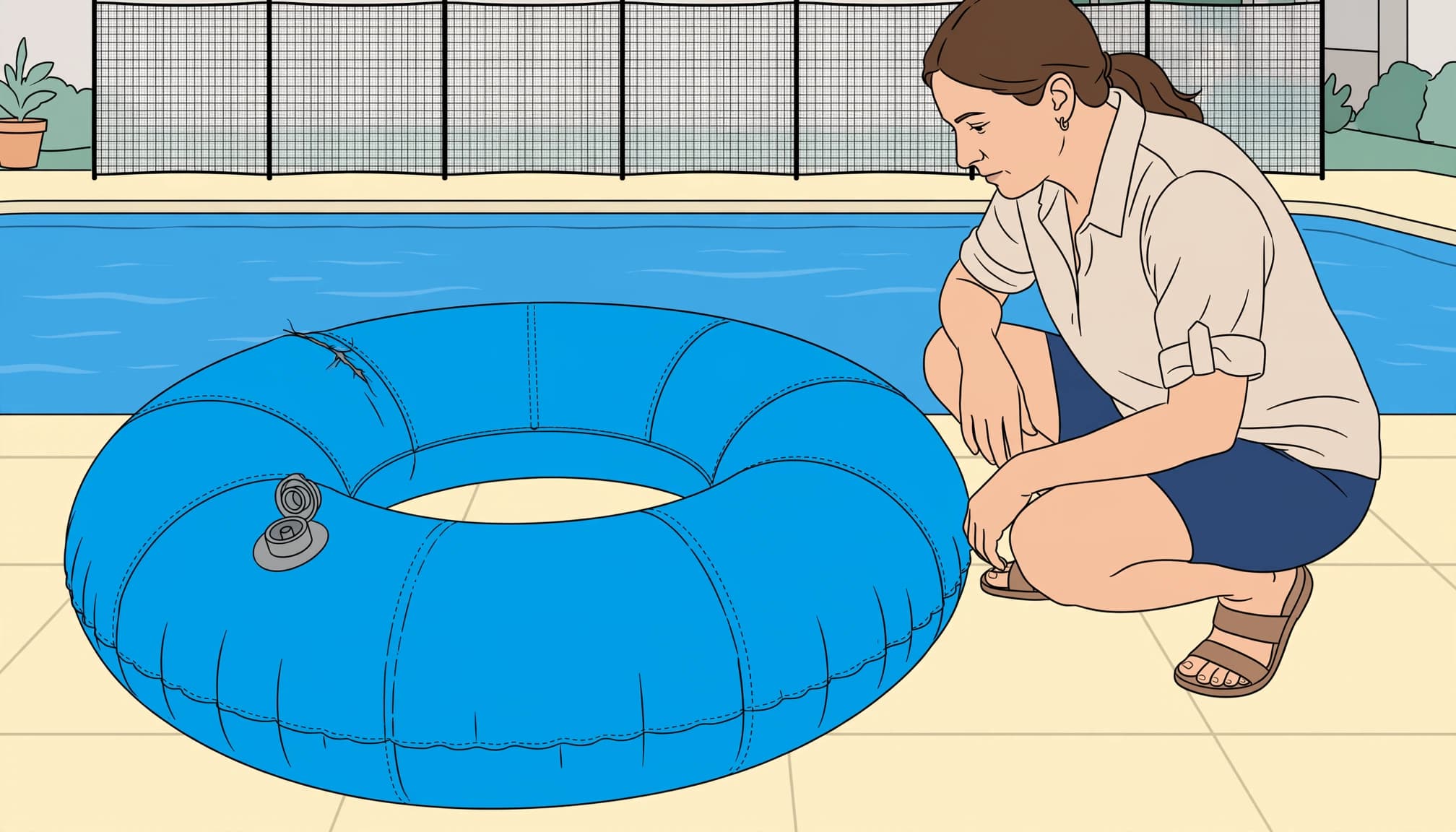
Inspect toys before every swim; yesterday’s condition doesn’t establish today’s, especially after rough play or storage.
The following sequence helps adults find common problems before children enter the water.
- Read the label, then inflate the deflated toy according to its instructions. Avoid overinflation.
- Examine seams and surfaces for tears, split joints, thinning material, or brittle patches. Remove toys with loose parts or sharp edges.
- Gently press each chamber and listen for escaping air to check for leaks. Underwater bubbles can reveal leaks around seams or valves.
- Inspect the valve and stopper for cracks or distortion. Reseat the closure according to instructions, then check for continued leakage.
Any leaking valve, damaged seam, or unreliable closure means the toy leaves service. Tape shouldn’t substitute for a sound valve.
Adults should also remove damaged cords or tethered toys that could entangle children. Products with missing labels no longer provide dependable instructions.
If a toy suddenly deflates, swimming stops while an adult brings the child to safety. Nobody should reinflate it around a child.
After a submersion or breathing concern, emergency medical help takes priority over examining the toy.
Know What Toy Standards Require
Safety standards address product requirements. They don’t remove the hazards of tipping, drifting, slipping out, or unsupervised access.
U.S. toy requirements and neck floats
In the United States, inflatable pool toys fall under ASTM F963 toy-safety requirements. Their labels must state that they aren’t lifesaving devices.
The CPSC’s toy safety guidance explains the mandatory federal toy standard.
The CPSC also finalized the first federal neck float standard. It requires buoyancy retention after submersion and warnings addressing drowning hazards.
Those warnings include that a child can drown in as little as one inch of water. Compliance doesn’t make a neck float lifesaving equipment.
Australia’s aquatic toy requirements
Australia’s aquatic toys mandatory standard covers inflatable and non-inflatable toys supporting children under 14 during shallow-water play.
It excludes beach balls, bodyboards, kickboards, surfboards, inflatable air beds, and deep-water inflatable boats.
Inflatable aquatic toys must have non-return valves with permanently attached stoppers. When inflated, the stopper must protrude no more than 5 mm.
The standard requires this permanent warning:
Warning! This is not a life-saving device. Only to be used in water in which the child is within its depth and under adult supervision.
These Australian requirements don’t establish U.S. Coast Guard approval. Also, a warning label never authorizes a child to play alone.
Keep Supervision and Barriers Working Together
During swimming, one named, sober adult should provide active supervision as water watcher, without phones, cooking, or distracting conversations.
Infants and toddlers must stay within arm’s reach. When watchers change, both adults should clearly acknowledge the handoff.
Older children still need limits. Breath-holding contests and prolonged underwater challenges can cause unconsciousness, even among confident swimmers.
A buddy can notice trouble, but another child cannot take the adult’s role.
Children must not enter the pool area or retrieve toys without an adult. For drowning prevention and pool safety, put toys away after swimming and keep the gate closed and latched.
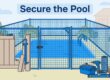
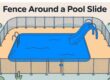
Outside swim time, four-sided isolation fencing separates the pool from everyday play areas. A removable mesh barrier needs a self-closing, self-latching gate.
The gate should remain closed between entries. Adults should never prop it open while carrying toys or towels.
Royal Life Saving recommends keeping a reach pole or personal flotation device nearby for reach-or-throw rescue. It considers toys only a last resort.
Dedicated rescue equipment belongs within adult access, rather than locked away with playthings.
Adults should empty and store portable pools after use. Above-ground pool ladders and steps need secure access according to their design.
Frequently Asked Questions About Pool Toy Safety
What flotation device should a 2-year-old use?
A properly fitted, U.S. Coast Guard-approved life jacket offers flotation support. The child’s weight must match its label.
However, a two-year-old still needs an adult within arm’s reach. Neither a jacket nor swimming lessons permits independent pool play.
Can children use inflatable toys without adult supervision?
Children shouldn’t use inflatable pool toys without adult supervision. Shallow water doesn’t eliminate drowning risk, and inflatables can fail suddenly.
The same rule applies when children play near the pool rather than inside it. An adult must control access.
Should toys come out after every swim?
Yes, adults should remove every toy after each session. Leaving one favorite float behind can encourage a child to return.
Cleanup should also cover toys beside gates and fences. Those items can attract children or create climbing opportunities.
Make the End of Swimming a Safety Habit
Removing tempting toys gives children fewer reasons to approach the water. Secure storage and a latched barrier make this routine stronger.
Supervision continues until every child has safely left the pool area. Keep the pool inaccessible without an adult.
Questions or ready to get started? Call us at (941) 500-9484