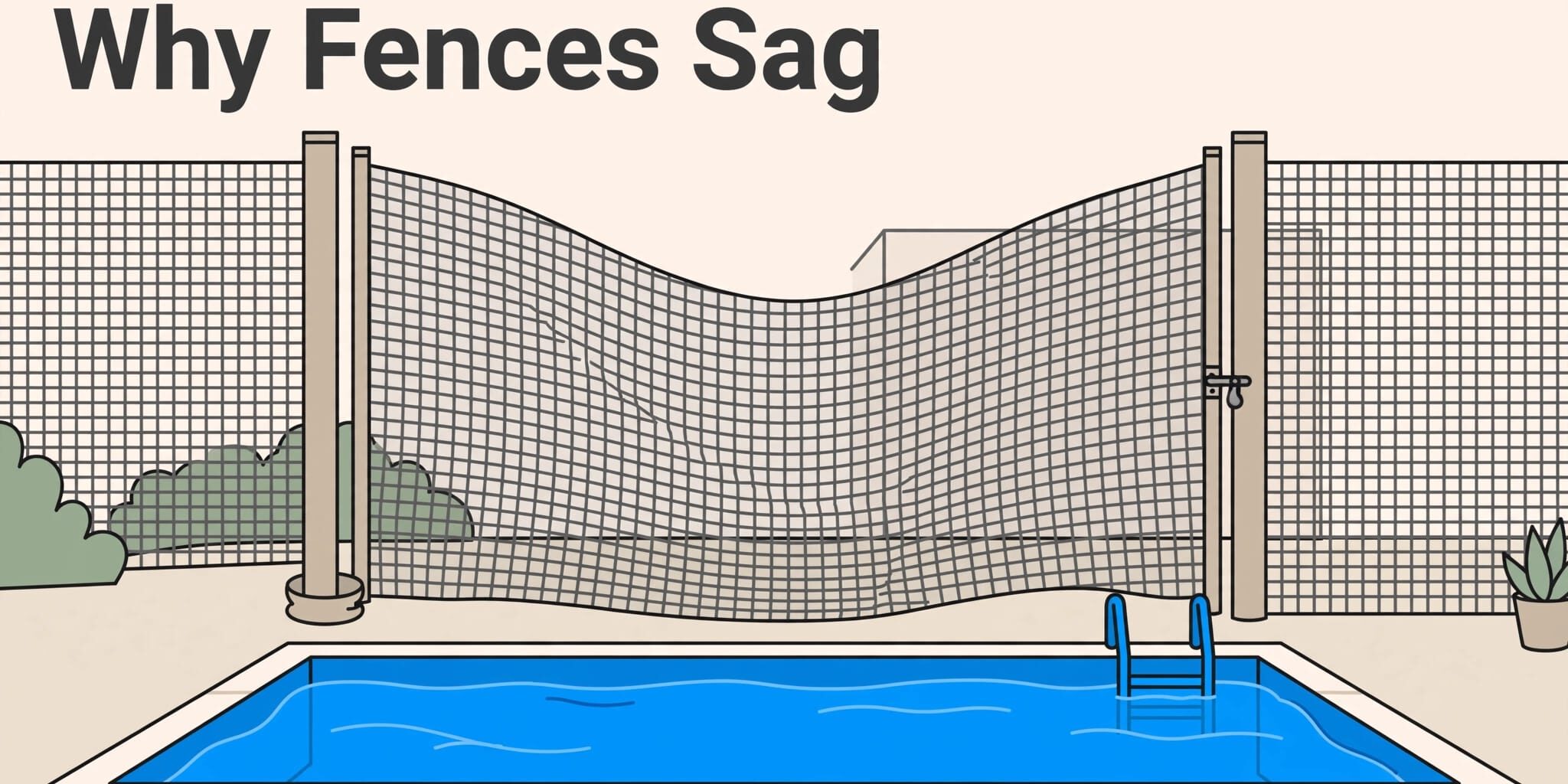
Loose removable mesh usually means the fence has lost tension between its poles. The cause may involve shifted supports, loose connections, or damaged fabric, so pulling harder rarely solves the problem.
A loose panel deserves prompt attention because it can create easier access beneath or through the barrier. A careful inspection starts with the supports, then follows the mesh and gate.
Key Takeaways
- Panel slack often starts with leaning poles, loose sleeves, or incomplete connections rather than stretched fabric.
- The four-inch opening rule doesn’t establish acceptable bottom clearance for removable mesh fencing.
- A gate that needs lifting or pushing needs correction before anyone relies on the barrier.
Until repairs restore the complete barrier, adults should prevent unsupervised pool access. The CPSC recommends layers of drowning protection, including barriers and a self-closing gate with a self-latching mechanism that engages automatically.
Why Removable Mesh Panels Lose Tension
A removable mesh pool fence should feel drum-tight, with even tension across each section. When mesh pool fence sagging appears, inspect the supports before blaming the fabric. Appearance alone doesn’t identify the failed component.
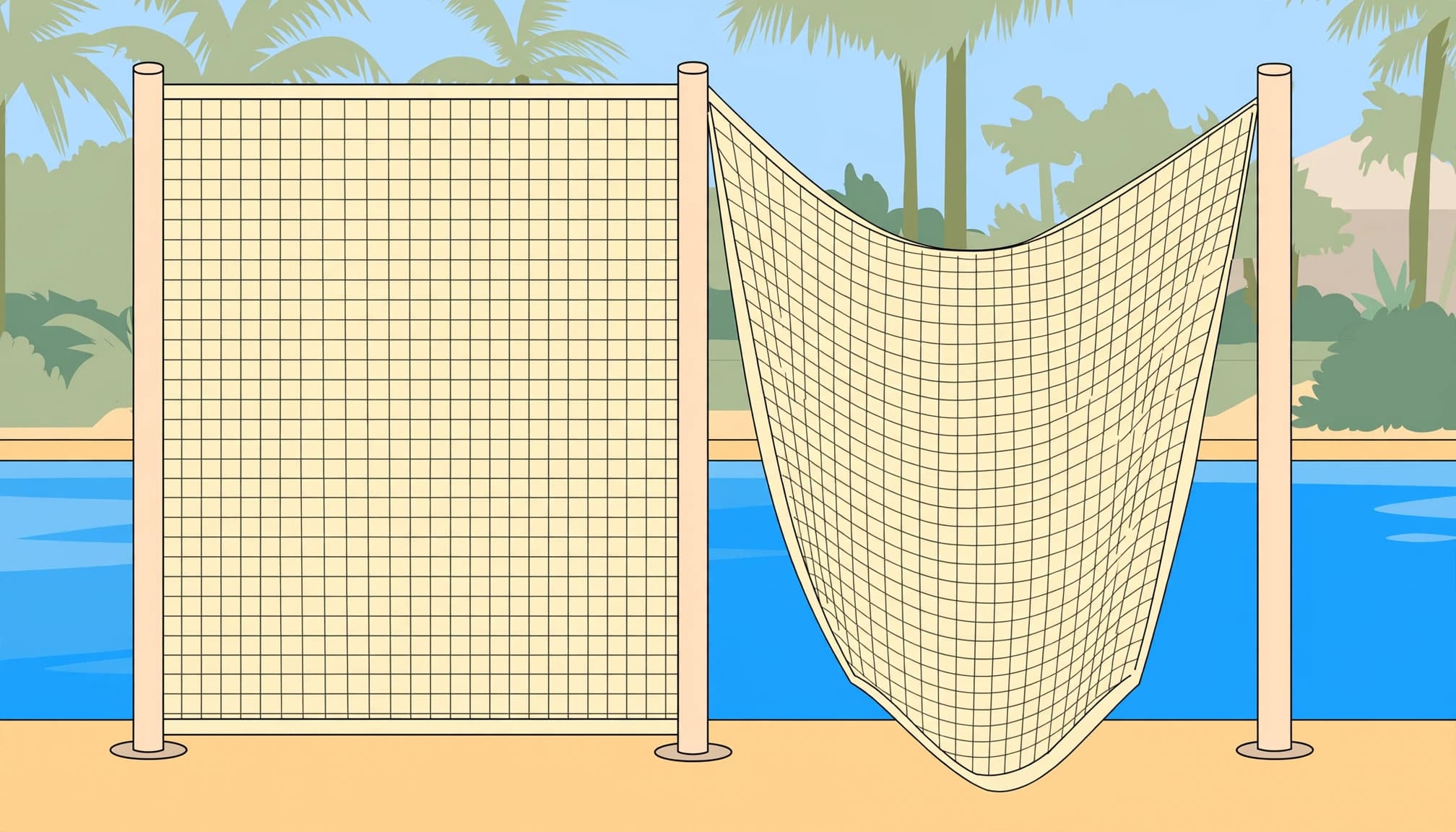
Support movement changes the panel’s shape
Poles that lean or gradually shift change the distance between attachment points. Previously tight mesh can develop wrinkles or a dipping upper edge.
Loose fittings, worn anchors, rusted brackets, and shifting deck sleeves can all release tension. Pavers may also settle around an unstable base. When several neighboring panels sag together, inspect shared supports before the fabric.
Damaged mesh can stay loose despite secure supports
Stretched mesh fabric, loose stitching, and separated edge attachments can leave slack between otherwise stable poles. Sun exposure also weakens aging material.
An isolated loose panel beside tight sections points toward a panel-specific problem. Its connections still need inspection before replacement. New fabric won’t correct a bent pole or unstable sleeve.
Inspect Poles, Deck Sleeves, and Connections First
A fence inspection should follow the fence route, including corners and sections recently removed for patio access. Compare neighboring supports to spot changes.
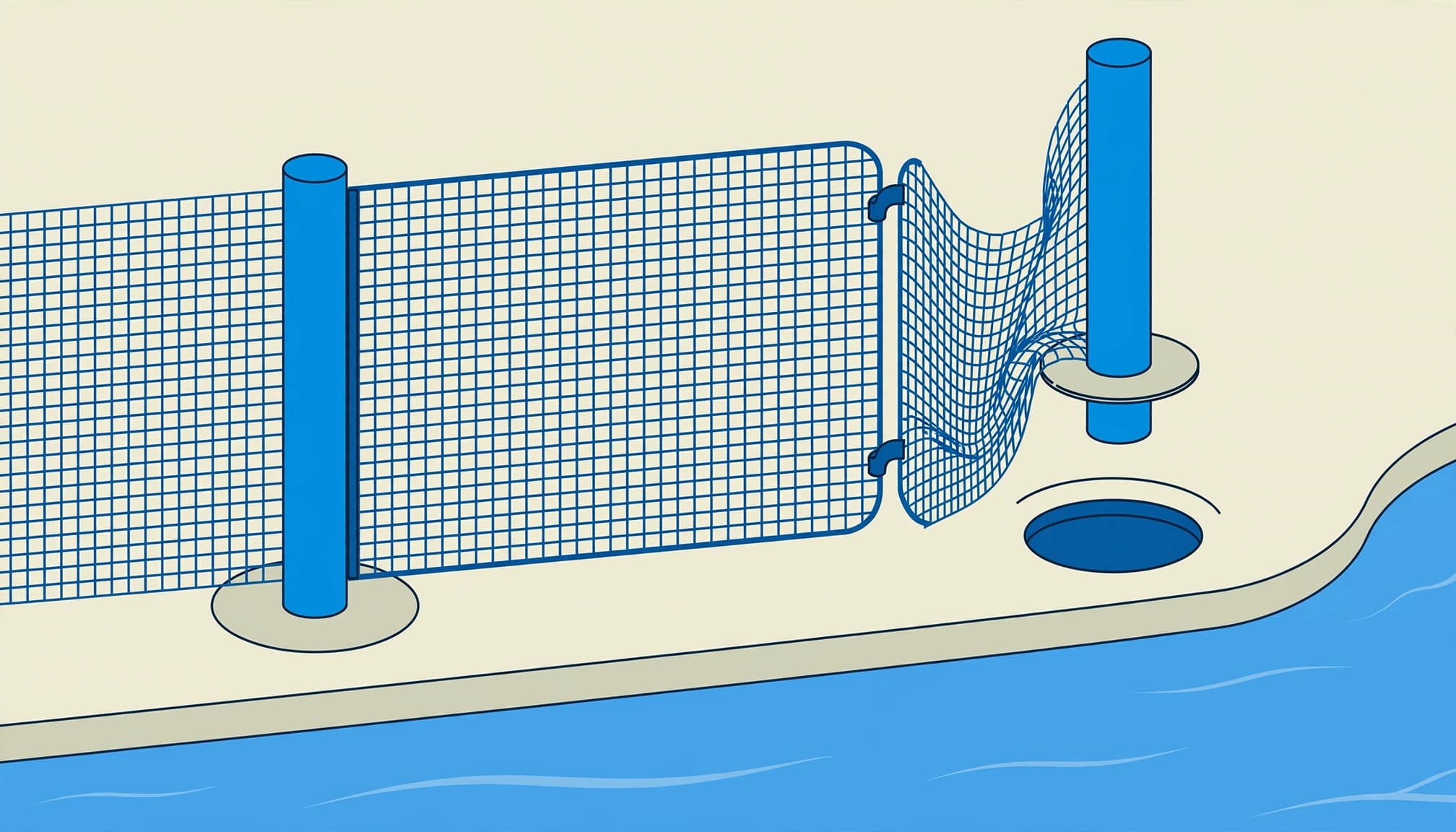
Check seating depth and support movement
Each pole must sit fully inside its correct deck sleeve. Compare neighboring fence poles to identify loose poles that may pull free under lateral pressure.
Leaves, sand, or debris may prevent full seating after reinstallation. Forcing a pole into an obstructed sleeve can damage components.
Gentle hand pressure can reveal movement without a forceful shake. If the sleeve moves with the pole, the anchoring needs professional attention.
A spirit level can help compare alignment, but some systems intentionally angle posts. Vertical alignment alone doesn’t establish correct installation.
Examine connections and the surrounding deck
Inspect section connectors, mesh attachment strips, screws, brackets, and pole caps. Missing fasteners or separated seams can release tension locally.
Look around every sleeve for cracked concrete, widened holes, loose pavers, or washed-out bedding. These conditions suggest an anchoring problem.
Stop DIY adjustments when the sleeve, base, or pole can’t hold its intended position. Tightening the mesh against an unstable support can worsen the damage.
Check Mesh Tension and Measure Every Gap
A useful inspection records where slack appears and which components move. That distinction helps separate stretched mesh from moving supports.
Use movement as a warning, not a certification test
Mesh movement beyond an inch or two under gentle pressure can flag lost tension. However, push force and panel dimensions affect deflection.
That measurement isn’t a standardized pass-or-fail test. Homeowners shouldn’t declare a barrier safe because movement stays below a guessed threshold.
Instead, watch the pole bases and attachments during gentle pressure. A moving support suggests anchoring trouble; fabric movement between stable supports suggests a panel problem.
Photographs taken straight along the fence line can also document leaning poles and changing bottom gaps.
Apply the correct opening limits
The familiar 4-inch rule means certain barrier openings must not allow a four-inch sphere through. Any larger opening needs correction.
However, that rule doesn’t permit four inches beneath removable mesh. ASTM F2286 sets a maximum one-inch bottom clearance for removable mesh fencing.
A ruler helps measure the lower edge along the entire route. Low spots, corners, steps, and panel junctions deserve extra attention.
A straight top edge can hide an unsafe bottom gap. Measurements must follow the deck, including settled areas.
Florida’s residential pool barrier law requires at least four feet of outside height. It also requires outward-opening, self-closing, self-latching pool-access gates.
Test the Gate Before Adjusting Anything
A nearby loose panel can pull gate supports out of alignment. Conversely, a shifting gate post can loosen adjacent mesh.
An adult should open the gate and release it without pushing. It should close completely and engage the gate latch automatically.
Repeat the test from a wide opening and from only a few inches open. A gate that stops short, drags, or misses its latch needs correction.
Check gate alignment at the post, then inspect the gate hinges, mounting screws, and swing path. Remove loose objects that obstruct movement.
However, don’t raise a dragging gate simply to clear the deck. That adjustment may enlarge the bottom gap or misalign the latch.
The CPSC’s residential pool barrier guidelines explain gate operation and child-resistant access features.
Adults should test closing and latching monthly. Repeat those checks after fence removal, reinstallation, storms, or deck work.
A spring adjustment cannot compensate for a bent post or unstable sleeve. Those problems need correction before gate tension changes.
Match the Repair to the Failed Component
Re-tensioning should follow the fence manufacturer’s procedure once supports are stable and connections are compatible. There isn’t one universal tightening sequence.
These symptoms help narrow the next step.
| Inspection finding | Likely concern | Appropriate response |
|---|---|---|
| Sleeve moves inside the deck | Unstable anchoring | Arrange professional anchor repair |
| Pole bends while its sleeve stays fixed | Damaged support | Replace the compatible pole |
| Fabric droops between secure supports | Stretched mesh or failed attachment | Inspect attachments and replace damaged sections |
| Gate needs lifting to latch | Hinge, post, or alignment problem | Correct alignment before adjusting closure |
The useful distinction is whether the support, attachment, or fabric has failed.
A manufacturer-approved repair kit may cover holes smaller than one inch. However, a patch doesn’t automatically restore a safety barrier’s performance.
Only manufacturer-approved repairs suit this application. The surrounding fabric, seams, and attachment points must remain sound. DIY fence repair should be limited to simple, manufacturer-approved reconnection.
Larger tears, repeated holes, widespread brittleness, or failing seams call for mesh replacement across the full panel. Tape and zip ties aren’t dependable repairs.
Replacement pool fence mesh must match the existing posts, sleeves, connectors, and gate hardware. Mixing incompatible parts can leave incorrect tension.
For replacement planning, homeowners can request installation guidance. Unstable anchors and gate misalignment require qualified pool fence repair, not repeated DIY tightening.
Keep Sun, Salt, and Sprinklers From Accelerating Wear
Southwest Florida exposure affects both fabric and hardware, so routine fence maintenance helps limit wear. It can’t restore brittle mesh or badly corroded components.
Watch fabric condition rather than color alone
UV exposure causes UV degradation that can make mesh stiff, brittle, or prone to tearing. UV-stabilized or UV-resistant mesh delays that damage.
Sun fading alone doesn’t establish failure. However, chalkiness, cracking, loose seams, stretched mesh, and tearing during ordinary handling deserve prompt attention.
An eight-to-twelve-year lifespan is a rough planning estimate for well-maintained removable mesh fencing. Harsh-climate estimates sometimes run 20% to 30% shorter.
Neither figure establishes a safe replacement date. Condition matters more than age when deciding on fence replacement, especially if the fence no longer holds tension.
Reduce repeated moisture and salt deposits
A saltwater pool can leave salt-containing splash and mist on nearby hardware. As moisture dries, deposits encourage corrosion and coating flaking.
Sprinklers create repeated wet-and-dry cycles, and sprinkler moisture can accelerate rust on vulnerable components. Redirect sprinkler heads away from the fence.
For rust prevention, gently rinse deposits with fresh water when the manufacturer’s care instructions permit it. Avoid harsh chemicals and aggressive pressure washing.
After heavy rain or storms, inspect the deck around sleeves. Water movement can expose base problems that cleaning won’t solve.
Common Questions About Sagging Mesh Pool Fences
Can homeowners tighten sagging mesh themselves?
Homeowners can correct simple reinstallation mistakes that cause mesh pool fence sagging when the manufacturer’s instructions allow it. For example, an incompletely connected section may need proper reconnection.
However, bent poles, moving sleeves, widened holes, and gate misalignment require professional assessment. Adding tension before correcting those problems can damage otherwise usable components.
The final test must include the entire barrier, not only the repaired panel. Bottom clearance and automatic gate latching still matter.
Can a sagging panel endanger children or pets?
Yes. Loose mesh can create openings, reduce effective barrier height, or provide easier footholds.
A pet may also enlarge an existing tear by pushing against it. Therefore, visible slack deserves attention even without obvious holes.
Furniture, planters, and toys should stay away from the fence because they can provide climbing access. Clear visibility through mesh helps supervision, but it doesn’t replace a secure barrier.
Does every sagging fence need complete replacement?
No. A compatible replacement pole, corrected connection, or properly repaired anchor may restore an otherwise sound system.
However, widespread UV damage, repeated seam failure, and multiple damaged panels make broader replacement more practical. Installing new fabric over failing supports leaves the original weakness in place.
Restore the Support Before Restoring Tension
A dependable repair starts with the cause: stable sleeves, sound poles, compatible connections, and intact mesh. Then, the gate must close and latch without help.
That complete inspection offers more reassurance than a panel that merely looks tighter.
For pool safety fence installation, homeowners can Get a FREE Quote by phone or email.
Questions or ready to get started? Call us at (941) 500-9484