Clear pool water needs dependable filtration, balanced chemistry, and treatment that matches the problem. If the bottom disappears from view, stop swimming until water readings return to acceptable levels. Before swimming resumes, the water should look crystal clear, but appearance alone doesn’t confirm safe readings.
Cloudiness deserves attention before another pool day, especially when children will swim. A reliable order of action makes cleanup easier and helps prevent unnecessary chemical additions. The first step is deciding whether anyone should enter the water.
Key Takeaways
- Keep swimmers out whenever cloudiness prevents a clear view of the pool floor and drain cover.
- Restore circulation, clean the filter, and balance water before choosing shock, a particle-binding product, or a settling treatment.
- Test water chemistry even when the pool looks clear, and maintain close supervision and secure pool access.
Stop Swimming When the Bottom Disappears
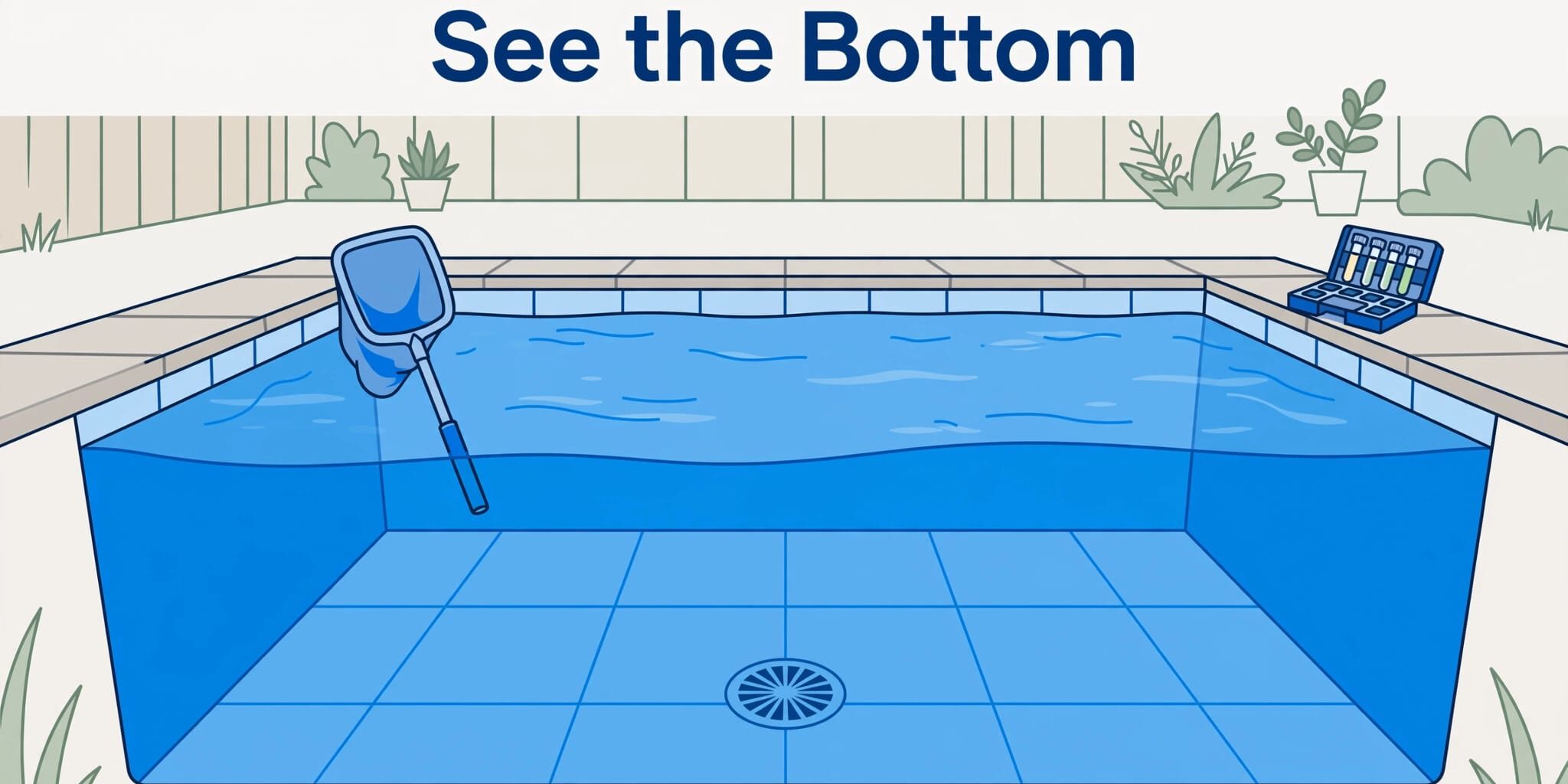
Cloudy pool water can hide a swimmer beneath the surface. Nobody should enter when adults can’t clearly see the bottom, submerged steps, and drain cover.
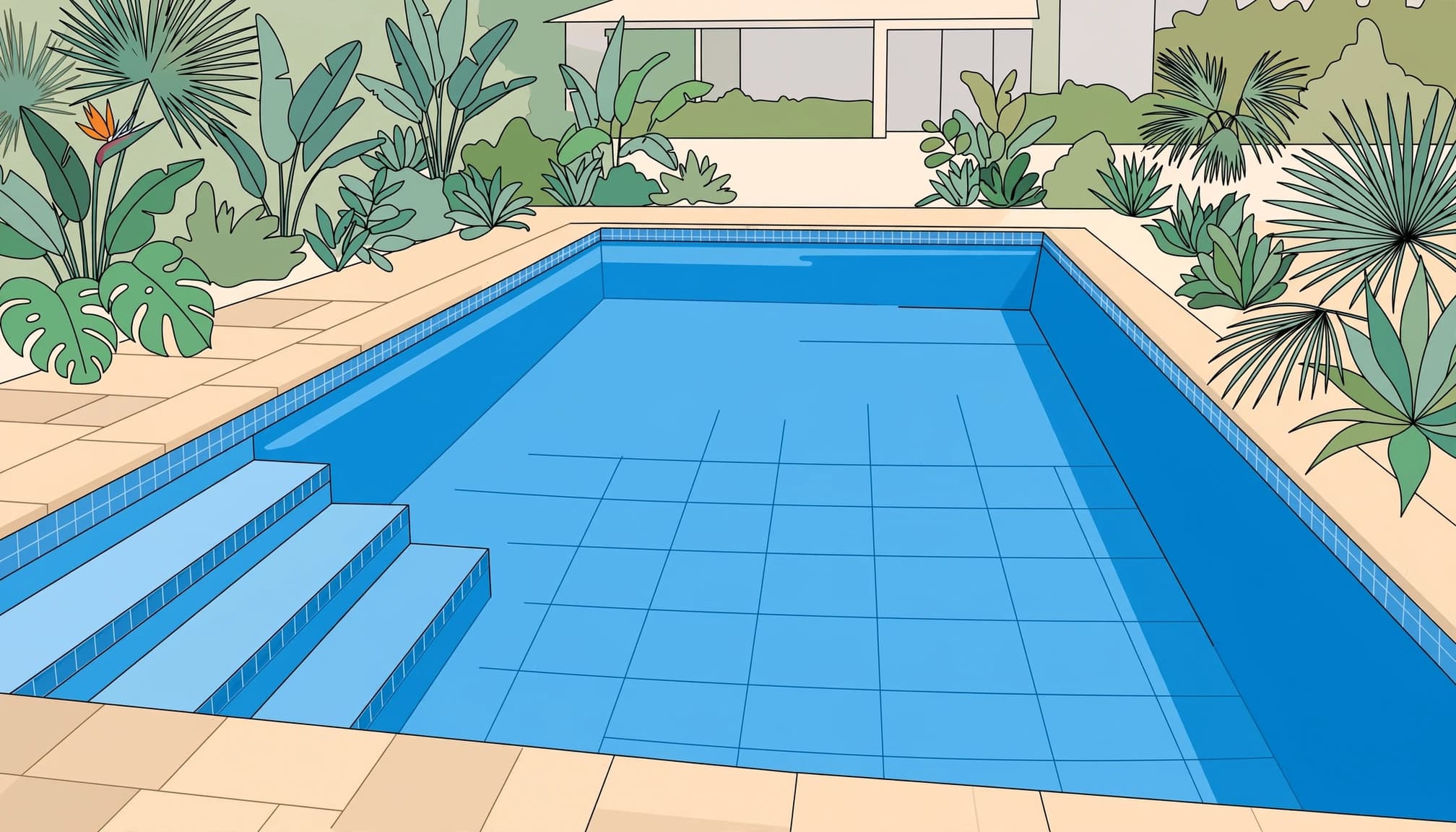
Visibility also depends on the surroundings. Glare, floating toys, reflections, and crowded seating can block an otherwise clear view.
Before swimming resumes, the supervising adult needs an unobstructed view of the entire swimming area. Watching through a kitchen window doesn’t provide close supervision.
Even crystal clear water doesn’t prove the pool is ready for swimming. Check the disinfection readings before anyone gets in.
During cleanup, children still need protection from unsupervised access. Keep them away from the pool until visibility and disinfection readings recover.
Floodwater requires a different response. Sewage, muddy runoff, or unknown contamination calls for pool closure and professional help, rather than ordinary cloudy-water treatment.
Restore Circulation Before Adding Products
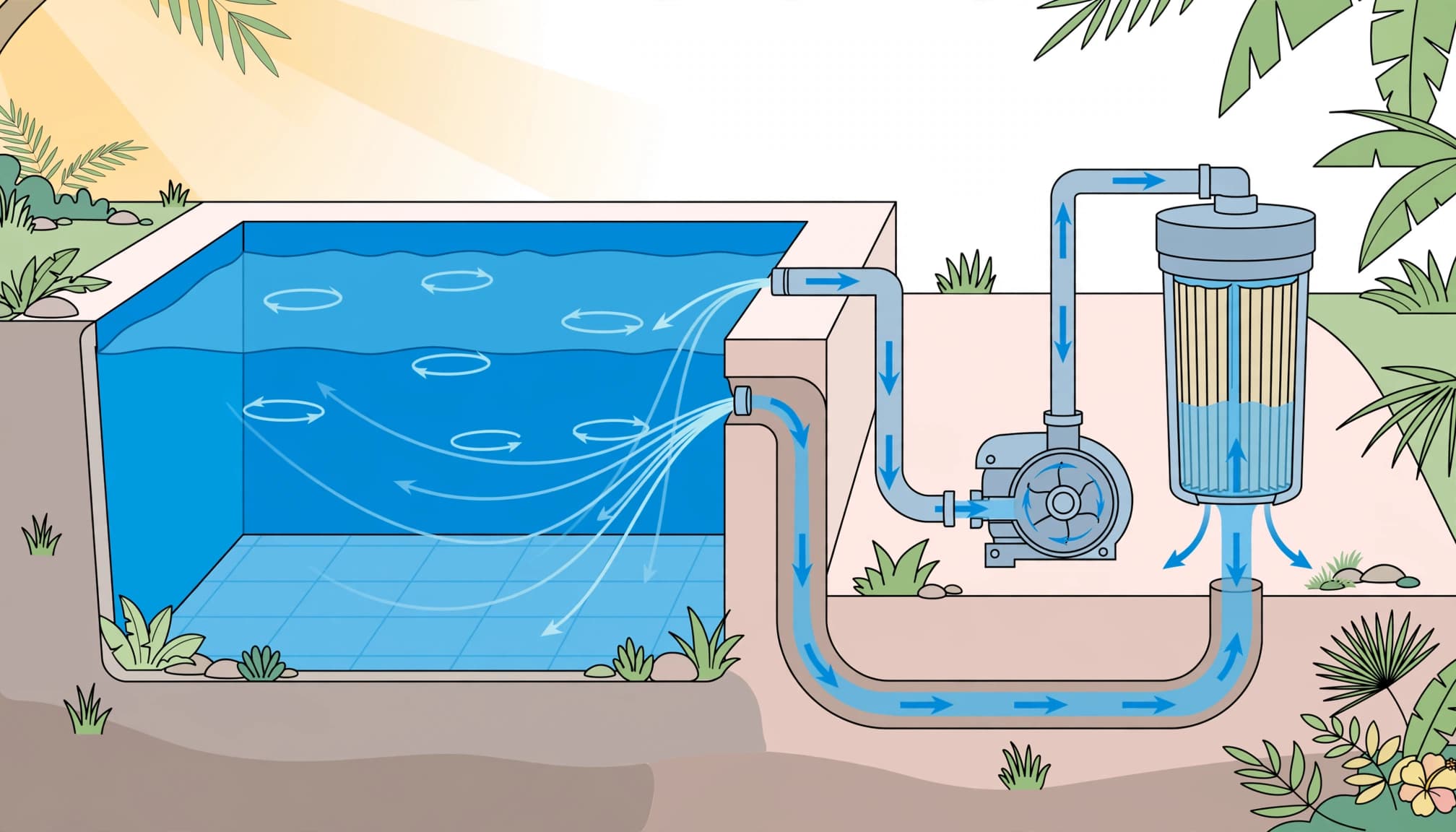
Good filtration gives treatment a dependable starting point. More chemicals won’t repair a blocked basket or a struggling filter.
Run the pump long enough
A common maintenance starting point is to run the filter pump 8 to 12 hours daily, with adjustments for pool size, equipment, and swimming demand. Hot weather and frequent swimming can increase that demand.
During active cloudiness, run the pump continuously, or 24/7, when the equipment permits continuous operation. Moving water carries suspended debris toward the filter.
However, pump hours alone don’t prove that every area receives good circulation. Weak returns or unusual equipment noise deserve attention.
First, empty skimmer baskets and remove floating leaves. Then brush walls and steps so settled dirt can reach the filtration system.
Clean the filter when pressure rises
Record the pressure after cleaning the filter. That clean reading gives homeowners a useful reference.
As pressure rises, follow the filter manufacturer’s cleaning threshold. Backwash sand filters and appropriate DE filters, or rinse cartridge filters.
DE filters also need the correct replacement DE after backwashing. Opening equipment requires shutting off power and relieving pressure according to its instructions.
Finally, vacuum visible debris. If circulation stays weak after cleaning, a pool professional should inspect the system before more treatment.
Balance Clear Pool Water in the Right Order
Test water before adding chemicals. For routine adjustments, work through total alkalinity, the level, and then free chlorine.
Stabilize alkalinity, then adjust pH
A common total alkalinity target is 80 to 120 ppm. This range helps resist sudden changes, often called pH bounce.
After alkalinity settles, a practical target is 7.4 to 7.6. A higher reading reduces chlorine’s effectiveness and can contribute to mineral cloudiness.
Chlorine’s effectiveness changes gradually as the reading rises. There isn’t a universal halfway cutoff at 7.6, especially because stabilizer changes chlorine chemistry.
The CDC’s home-pool testing guidance allows a broader range of 7.0 to 7.8.
Use a suitable test kit and follow its sampling instructions. Allow each adjustment to circulate before retesting or adding another product.
Set free chlorine for the pool’s sanitizer system
Many maintenance guides use approximately 1 to 3 ppm free chlorine. However, that range doesn’t suit every pool.
CDC recommends at least 1 ppm for pools without cyanuric acid. Pools using cyanuric acid or stabilized chlorine need at least 2 ppm.
Stabilizer slows sunlight’s effect on chlorine, but it also affects disinfection. Therefore, chlorine targets must account for its presence.
Saltwater pools still use chlorine. A running salt generator doesn’t prove that the current chlorine reading meets swimming requirements.
Product limits matter at the upper end, too. A minimum chlorine reading doesn’t justify excessive sanitizer.
Choose Shock for the Right Reason
Pool shock is appropriate when contaminants or algae need stronger treatment, but it doesn’t replace filtration or balanced chemistry.
Chlorine shock needs product-specific dosing
Chlorine shock products differ in strength and ingredients. A universal pounds-per-pool rule can deliver the wrong dose.
Use the product’s labeled dose for the pool volume and treatment purpose. For outdoor pools, dusk often reduces immediate sunlight exposure.
Keep swimmers out throughout treatment. Reopening depends on suitable water readings, clear visibility, and the product’s swimming limits.
Never mix chlorine products together or combine chlorine with acid. Store chemicals dry, secure, and away from children.
Add products separately, following their instructions. If treatment leaves the water cloudy, filtration still needs to remove the remaining suspended material.
Non-chlorine oxidizer serves a different purpose
After heavy swimming, a non-chlorine oxidizer can help address organic contamination and chloramines. It avoids adding a large chlorine dose.
Chloramines form when chlorine reacts with contaminants. Their odor doesn’t establish how much effective chlorine remains.
Non-chlorine shock doesn’t replace the regular sanitizer. It also isn’t an automatic substitute for chlorine treatment when algae needs control.
Homeowners should choose it only when existing chlorine levels and the product directions support that use. Some oxidizers can also interfere with certain chlorine tests.
Match Clarifier or Flocculant to the Cloudiness
These products handle suspended particles differently. Choosing the right one prevents extra work and unnecessary chemical additions.
Use clarifier for mild-to-moderate haze
A liquid pool clarifier gathers tiny particles into larger groups that the filter can catch. It suits lingering haze after cleaning and chemistry correction.
The clarifier and flocculant comparison explains their different roles in cloudy-water treatment.
Keep filtration running as directed, and clean the filter when pressure rises. Adding extra product can worsen cloudiness, so accurate dosing matters.
The In The Swim Pure Clear listing describes a 3-liter maintenance product. It claims to remove body oils, lotions, and cosmetics, while reducing chlorine odor.
Its listed dose is one capful per 8,000 gallons. That dose applies to that product alone, not every product.
Maintenance claims don’t establish that the water meets chemical requirements or that filtration works properly.
Reserve flocculant for compatible cleanup setups
The settling treatment gathers particles and drops them onto the pool floor, often during an overnight settling period. It can suit severe milky cloudiness.
Unlike ordinary clarifier treatment, cleanup usually requires vacuuming the sediment to waste. Sending that material through the filter can create another problem.
The pool needs equipment that supports the treatment and waste-vacuuming process. Some cartridge-filter arrangements don’t offer a suitable waste setting.
Follow the product’s instructions for circulation, settling, and vacuuming. Keep swimmers out during treatment, and replace lost water as necessary afterward.
Then retest the water. The treatment removes suspended material, but it doesn’t confirm that test readings meet safe chemical levels.
Keep Clarity With a Simple Routine
A steady routine feels easier than another round of cloudy-water cleanup. Weekly maintenance should include a full pool chemistry check, brushing, vacuuming, and basket cleaning.
Test weekly, but add a check before swimming and after heavy use or rain.
The CDC’s pool safety guidance also emphasizes following sanitizer product instructions.
Record readings and chemical additions. A short maintenance log helps identify repeated changes without guessing from water color.
Showering before swimming reduces what bathers bring into the pool. Sunscreen, body oils, dirt, and other debris still create ongoing cleanup needs.
Meanwhile, clear pool water never replaces supervision. One named, sober adult should watch swimmers without phone calls, cooking, or other competing jobs.
Toddlers and weak swimmers need an adult within arm’s reach. During watcher changes, the next adult should clearly accept responsibility.
Common Questions About Cloudy Pool Water
Why does pool water look cloudy blue?
Blue coloring doesn’t identify the cause of cloudiness. Lighting and the pool finish can affect appearance, while suspended particles reduce visibility.
Start by inspecting circulation, cleaning the filter, and testing the water. Color alone can’t determine which chemical to add next.
When should clarifier go into the pool?
Use the product after removing debris, caring for the filter, and correcting the water chemistry if mild haze remains. It works best with a functioning filtration system.
It shouldn’t replace safe chemical readings. Product directions determine the dose, circulation requirements, and any restrictions on swimming afterward.
How long does cloudy water take to clear?
There isn’t one dependable clearing time for every pool. Filter condition, contamination, treatment choice, and water balance all affect progress.
Clear visibility, acceptable test results, and treatment-label requirements determine when swimmers can return, not the clock.
If repeated treatment doesn’t improve the water, seek professional troubleshooting instead of adding more products.
Clear Water Gives Families a Better Starting Point
Dependable filtration and balanced pool chemistry are the foundation of clear water. Treatments work best when they address the actual cause of cloudiness.
Good visibility gives families peace of mind and helps adults supervise swimmers. Clear water supports supervision, but it doesn’t replace it.
Questions or ready to get started? Call us at (941) 500-9484