The swimming pool needs a complete, functioning safety barrier throughout fence repairs, including evenings and breaks. Homeowners should arrange replacement protection before removing any section, then keep swimming closed until the barrier passes a final review.
Protection during the work starts with controlled access, rather than a fast repair schedule. Children, pets, and visitors need separation from both the water and the work. That protection begins before the first fence post comes out.
Key Takeaways
- Install a suitable, code-compliant temporary pool barrier before removing the existing fence.
- Keep gates working, remove climbing aids, and close the pool during active repairs.
- Reopen only after inspecting the entire barrier, clearing construction hazards, and addressing any water-quality concerns.
A short repair still needs a complete access plan. An overnight opening deserves the same attention as a longer project.
Plan Pool Safety During Repairs Before Removal
A clear agreement helps homeowners and contractors avoid rushed decisions when work begins.
Record the fence’s starting condition
Photograph the entire fence line, gate, attachment points, and surrounding deck before work begins. Include existing tears, loose posts, damaged fittings, and cracks around sleeves.
Test the gate before the crew arrives. It should close and latch without someone pushing it shut.
These records establish the starting condition and help explain any damage afterward. Save them with the estimate, work agreement, and repair invoice.
Identify every route between the house and pool. A backyard perimeter fence may still leave direct access through a patio door.
Assign responsibility for every opening
The written work plan should identify who installs temporary protection and who inspects it after each workday. It should also address unexpected damage, weather delays, and unfinished work.
Remove only the smallest section necessary. A qualified installer should handle damaged mesh, uncertain anchors, or changes that affect the gate.
Arrange a work route outside the enclosed pool area whenever possible. This reduces unnecessary gate traffic and keeps household activity away from repairs.
Install a Complete Temporary Mesh Barrier
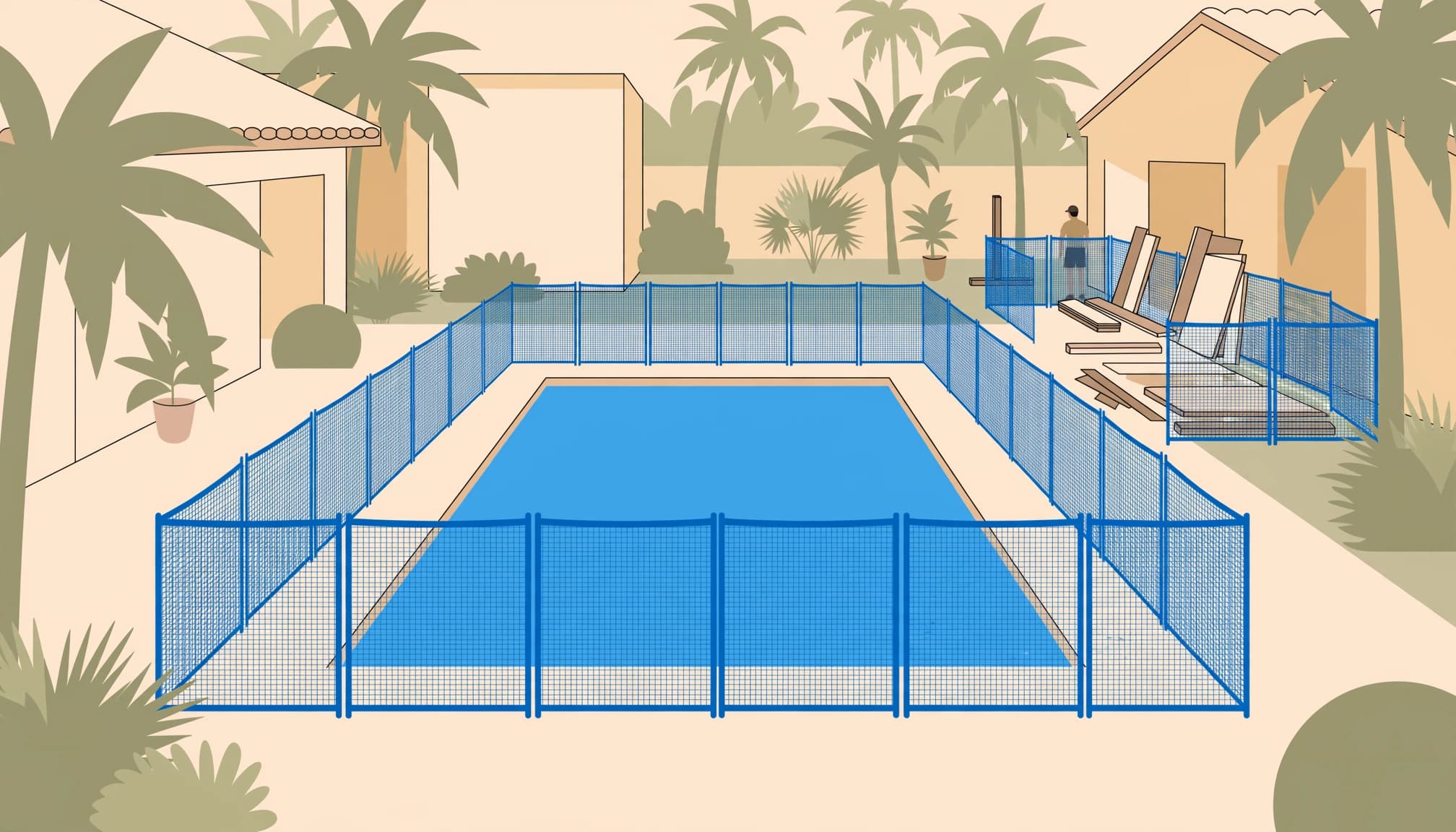
Temporary protection must prevent children from climbing over, crawling underneath, or passing through the barrier.
Use child-resistant pool fencing, not construction netting
Orange construction fencing can mark a work zone, but it doesn’t automatically qualify as a child-resistant barrier. Cones, caution tape, and patio furniture also leave access open.
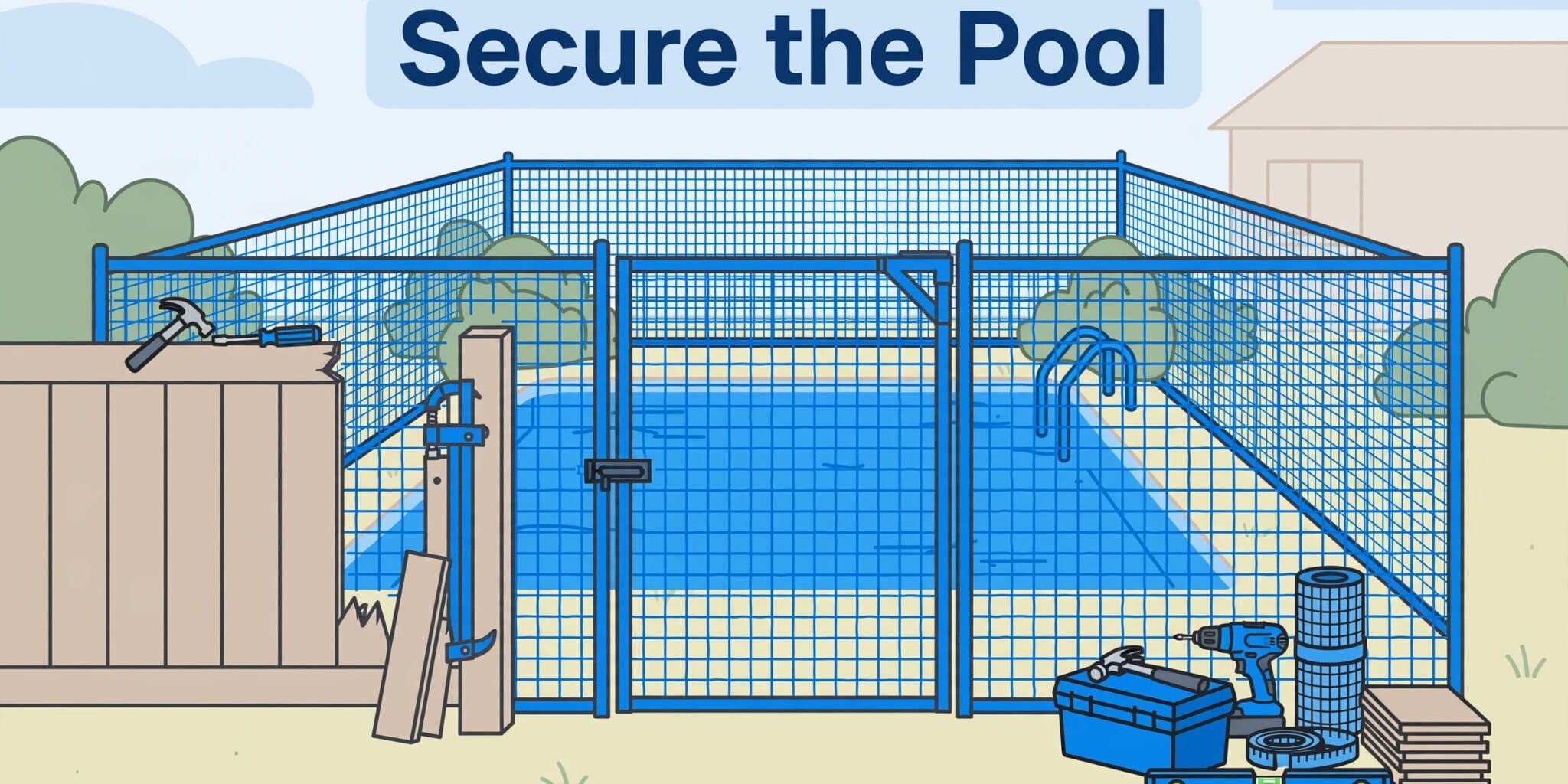
A properly installed removable mesh fence can provide temporary isolation. However, its complete installation must meet applicable barrier requirements.
The CPSC’s residential pool barrier guidelines explain how barrier design limits children’s access.
CPSC guidance recommends barriers at least 48 inches high, measured outside the enclosure. That recommendation doesn’t replace Florida or local requirements.
Temporary status doesn’t excuse gaps, unstable posts, or an unsecured gate.
Protect the gate and the entire perimeter
Four-sided isolation separates the water from the house and surrounding yard. The Red Cross recommends four-sided isolation fencing with a self-closing, self-latching gate.
The installer should assess the whole route, including landscaping, slopes, deck transitions, and access from neighboring areas.
Keep the gate clear throughout its swing. Workers shouldn’t tie it open, even when carrying materials repeatedly.
A secure temporary fence still fails its purpose when an open gate provides a direct path to the water.
Separate the Work Zone From Family Activity
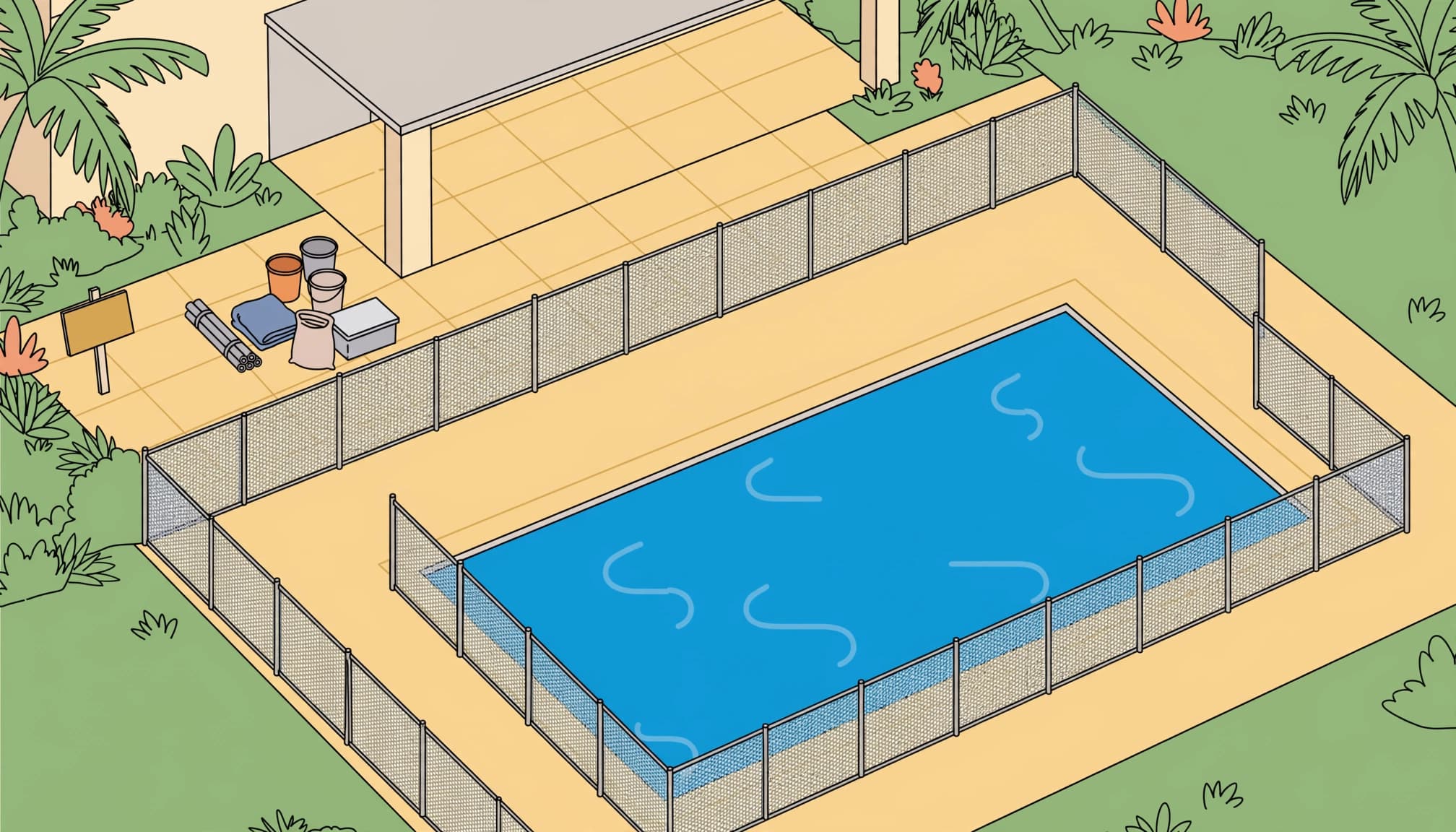
A tidy worksite makes the barrier easier to inspect and reduces preventable damage.
Keep equipment away from the mesh
Ladders, lumber, buckets, and stacked materials can become climbing aids. Place them away from the fence, including overnight.
Workers shouldn’t lean gear against mesh, tie tarps to posts, or use the fence as a handrail. These shortcuts can loosen fittings or distort the barrier.
Meanwhile, keep cords and hoses outside walking routes. Collect screws, broken fittings, and sharp debris before anyone enters the patio.
Contractors should store epoxy, solvents, and other repair products away from pool chemicals. Product instructions govern ventilation, protective equipment, and curing time.
Close access during work and breaks
Children, pets, and visitors should stay outside the repair area. Only workers performing necessary tasks should enter the closed pool enclosure.
A designated adult should supervise children elsewhere during any supervised transfer between barriers. Nobody should leave the water accessible afterward.
Before lunch breaks and departure, the responsible adult should inspect the temporary perimeter and gate. After wind or heavy rain, another check helps identify shifted components.
Match the Repair to the Damage
Fence repairs sometimes reveal separate pool problems. Those issues need their own diagnosis before swimming resumes.
The following distinctions help separate minor surface work from professional repairs.
| Warning sign | Appropriate response |
|---|---|
| Hairline surface cracks | These are often cosmetic. Arrange prompt assessment and suitable epoxy filler or patching after diagnosis. |
| Small, confirmed surface leak | Compatible sealants or patch kits may suit minor damage. Wet spots deserve early investigation. |
| Deep cracks or rapid water loss | Qualified pool repair experts should assess structural damage and explain replacement options. |
| Hidden plumbing leak | Professionals use pressure testers and leak detectors to locate damage with less unnecessary digging. |
Crack width alone doesn’t determine replacement. However, cracks wider than one-quarter inch warrant professional assessment, especially with movement or rapid water loss.
Cracked pool shells need specialized materials and reinforcement methods. A poor pool repair can leave leaks or structural instability.
Electrical work on pool lights and heaters belongs with qualified professionals. Water and electricity make experimentation unsafe.
Similarly, cloudy water, low circulation, leaks, or unusual machinery noises deserve professional attention. Dirty filters and blocked circulation strain equipment and can increase energy use.
Pools around 20 to 30 years old may need an overhaul, but age alone doesn’t require replacement. Repeated repairs can become expensive and eventually exceed replacement costs when structural problems persist.
Repairs usually cost less upfront. Replacement can add property value or allow energy-efficient equipment upgrades, but it can be expensive, depending on the pool’s condition.
Maintain Water Quality While the Pool Is Closed
Pool maintenance continues while access is closed. Construction debris, interrupted filtration, and Florida heat can complicate pool care.
Keep residential water maintenance running
Continue normal filtration unless the repair requires shutdown. Ask experts to isolate affected machinery safely before work begins.
Test pool water for appropriate chlorine, pH, and alkalinity levels. Low chlorine allows germs to survive, while excessive disinfectant or unsuitable pH can irritate skin and eyes.
Chloramines can also cause irritation, so a strong chemical smell doesn’t prove healthy water. Improper alkalinity can destabilize pH and contribute to corrosion when water becomes acidic.
Poor disinfection can allow E. coli and Pseudomonas to spread. These organisms can cause gastrointestinal illness, rashes, or ear infections.
Legionella can cause Legionnaires’ disease through contaminated mist, particularly around hot tubs. Clear-looking water alone doesn’t establish safety.
Apply stricter procedures at shared pools
Commercial and public aquatic facilities must follow applicable health codes, required health checks, and water-testing requirements. Violations can bring fines, closures, or legal consequences.
Weekly service visits don’t replace operational testing or cleaning between visits. High-traffic facilities need daily attention, with testing at the frequency their governing rules require.
Operators should record closures, chemical readings, repairs, and corrective actions. Where permits or closure orders require approval, the responsible authority must authorize reopening.
For homeowners, a repaired fence doesn’t resolve unsafe water or damaged equipment, so keep the swimming pool closed.
Inspect the Whole Area Before Reopening
The final walk-through should cover more than the repaired section. Nearby work can damage components that initially looked sound.
- Walk the full perimeter for torn mesh, loose posts, stretched sections, damaged fittings, and new gaps.
- Test the gate from several opening positions. It must close and latch without help.
- Inspect the deck around sleeves for cracks, loose pavers, sharp debris, and uncovered holes.
- Remove climbing aids, stored chemicals, cords, and leftover materials. Then address water-quality or equipment concerns before swimming.
Afterward, save photographs showing the completed installation. Keep permits and inspection records when the project requires them.
If any component fails, maintain temporary protection and keep the pool closed. A nearly finished barrier still leaves an unfinished protection task.
Homeowners needing help with placement or damaged mesh can contact our pool fence team before scheduling removal.
The CPSC’s Pool Safely guidance reinforces the importance of layered protection around backyard pools. Barriers support adult supervision; they don’t replace it.
Frequently Asked Questions
Should the pool be drained during fence repairs?
Ordinary fence repairs generally don’t require draining. Keeping water in place avoids adding an unnecessary task and another potential hazard.
Draining requires professional judgment because groundwater pressure can damage some pool shells. It also doesn’t remove the need to control access.
Can a pool cover replace the missing fence?
A loose tarp cannot protect children from pool access. A properly designed safety cover may add protection, but it doesn’t automatically replace required fencing.
Similarly, alarms provide warnings rather than physical separation. The repair plan should maintain a compliant barrier instead of depending on someone hearing an alert.
Keep Protection in Place Until Repairs Are Complete
A reliable repair plan preserves continuous protection around the water. Temporary fencing, controlled work routes, and a final inspection help families return to normal routines confidently.
Homeowners planning pool fence installation can Get a FREE Quote by phone or email. It should remain closed until the barrier and surrounding area pass inspection.
Questions or ready to get started? Call us at (941) 500-9484