Children generally need to wait 8 to 24 hours after chlorine shock before swimming. This is a general estimate; follow product directions and use test results and clear visibility to decide when children can return.
Non-chlorine shock often allows swimming after 15 to 30 minutes, while heavy algae treatment can require longer. First, the treatment type helps establish the likely waiting period.
Key Takeaways
Elapsed time doesn’t guarantee safe water. The pool stays closed until chlorine and pH meet requirements and adults can clearly see the bottom.
Waiting times for swimming after pool shocking
These are general estimates, not guaranteed reopening times. Each product label overrides these estimates, and test results and water clarity determine whether swimming can resume.
| Shock type or treatment | General waiting period |
|---|---|
| Calcium hypochlorite, lithium hypochlorite, or dichlor | Home Depot’s general guidance: 8 hours |
| Liquid chlorine shock | Several hours to 24 hours |
| Non-chlorine potassium peroxymonosulfate | About 15 to 30 minutes |
| Heavy algae or very cloudy-water treatment | 24 to 48 hours or longer |
Higher doses and smaller pool volumes can produce higher chlorine readings, which may extend the wait. Non-chlorine shock also doesn’t replace the pool’s regular sanitizer.
Shock levels often return toward normal within 24 to 48 hours, depending on sunlight, temperature, and circulation. Test results and clear water determine when swimming can resume, so keep the pool closed if cloudiness persists.
How to test before children swim
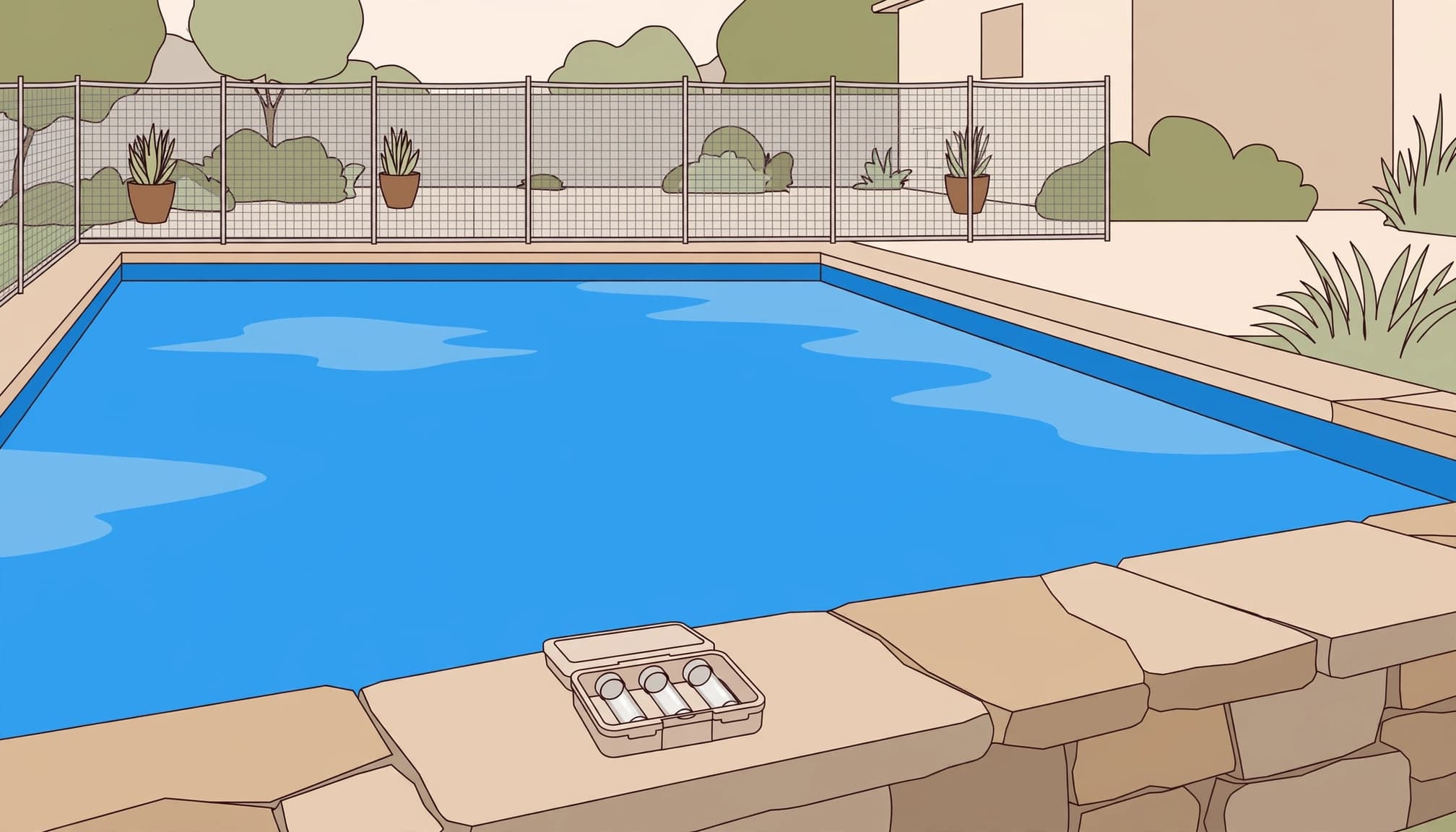
A suitable test kit gives more reassurance than water color or a running pump. Before reopening, an adult should follow these steps:
- Measure free chlorine. Maintenance guides commonly target 1 to 3 ppm; some use 1 to 4 ppm.
- Account for stabilizer. The CDC’s home-pool testing guidance recommends at least 2 ppm with cyanuric acid or stabilized chlorine. Without stabilizer, its minimum is 1 ppm.
- Test pH. A practical target is 7.2 to 7.8, within the CDC’s broader range of 7.0 to 7.8.
- Confirm visibility. Adults should clearly see the pool floor, submerged steps, and drain cover.
The treatment product’s upper swimming limit still applies. Very high chlorine can bleach some tests and falsely suggest that little chlorine remains.
Clear water alone can’t establish chemical safety.
Why pool shock and chlorine smell matter
What shock removes
Chloramines form when chlorine reacts with contamination, including sweat and body waste. They contribute to strong chemical odors, which don’t prove cleanliness.
A common breakpoint approach adds free chlorine at roughly 10 times the combined-chlorine reading. This describes the additional dose, not the final chlorine concentration.
A common maintenance goal keeps combined chlorine below 0.2 ppm. Readings above 0.5 ppm indicate a need for treatment.
Why swimming too soon causes problems
Excessive chlorine or unsuitable pH can cause eye irritation and dry, itchy skin. Chloramines can also trigger breathing discomfort, particularly among people with asthma.
A 2019 CDC injury summary reported 56% of pool-chemical injuries at homes. Children and teens accounted for 36%.
These figures cover chemical injuries broadly, including handling incidents, rather than swimming after shock alone.
How to add shock more safely
Match the dose to the pool
Product strength and pool volume determine dosing. Therefore, a universal pounds-per-pool rule can produce the wrong chlorine level.
Calcium hypochlorite adds about 0.8 ppm calcium per 1 ppm of added free chlorine. Dichlor contains approximately 50% to 60% chlorine and adds about 0.9 ppm cyanuric acid per 1 ppm free chlorine.
Commercial lithium hypochlorite contains approximately 35% chlorine. These differences explain why products aren’t interchangeable scoop for scoop.
Circulate treatment and prevent chemical reactions
For outdoor pools, dusk reduces immediate sunlight loss of unstabilized chlorine. Run the pump during and after treatment; Home Depot’s general guide recommends six hours or more.
Many maintenance guides suggest weekly shocking, plus treatment after parties, severe rain, or major water-level changes. However, fecal contamination requires a separate disinfection response, not an ordinary weekly dose.
Never mix chlorine products together or combine chlorine with acid. Add products separately according to their instructions, then secure every container away from children.
Keep children away throughout the waiting period
A removable mesh pool fence helps restrict unsupervised access while treatment circulates. However, fencing doesn’t replace an attentive adult or locked chemical storage.
Families can contact our pool safety fence team about controlling backyard access during maintenance and between swim times.
For removable mesh pool fence installation, families can Get a FREE Quote by phone or email. Meanwhile, adults should keep the gate latched and children away from chemical handling.
Frequently Asked Questions
Can children swim 12 hours after shocking?
Possibly, if the product permits entry and testing shows acceptable chlorine and pH. The pump must have circulated treatment, and visibility must remain clear.
Twelve hours alone doesn’t establish safety.
Do saltwater or above-ground pools need different waiting times?
Saltwater pools still use chlorine, so a running generator doesn’t prove safe readings. Above-ground pools, including Intex pools, also need product-appropriate dosing and testing.
Pool size affects concentration, but it doesn’t remove the need for safe chemistry.
Let water tests decide when swimming resumes
An 8-to-24-hour wait gives families a useful planning window after chlorine shock. However, acceptable readings and clear visibility determine when children can return.
Secure access throughout treatment and maintain close supervision afterward. That routine gives families a dependable way to reopen the pool without guessing.
Questions or ready to get started? Call us at (941) 500-9484