Home swimming lessons can build confidence fast, but a backyard swimming pool never becomes a bathtub. Children still need clear guidance on calm mornings, busy afternoons, and party days.
A child may feel comfortable in the water and still face danger during one unguarded minute. This is especially true for young children. Families with residential pools need more than floaties and good intentions.
Good habits, focused adults, and a secure pool barrier bring real peace of mind. Together, they support broader water safety, and that work starts before anyone enters the water.
Key Takeaways
- Children should ask an adult before entering the pool area and follow short, repeatable rules such as walking on wet decks and entering feet first.
- Active supervision is essential. One focused adult should watch the water without distractions, and every handoff should be clear.
- A four-sided isolation fence, self-closing gate, alarms, and secured ladders add valuable protection, but they never replace close supervision.
- Home lessons should stay short and focus on practical skills such as safe entries, finding the wall, reaching the steps, and climbing out.
- Families should check drains, test water, secure chemicals, and prepare emergency equipment and CPR-trained caregivers before a problem occurs.
Pool Safety Rules Start Before Anyone Gets Wet
Lessons should never begin with a child wandering through an open gate. A predictable routine protects children before the first splash.
Parents and caregivers should agree on the pool rules before a lesson starts. Using the same words supports water safety and helps children know what to expect.
Permission is the first rule
Every child should ask an adult before entering the pool area. That rule covers swimming, pool toys, and a quick look at the water.
An adult gives a clear yes, or the child waits. Parents can compare it to stopping at a curb.
The pool gate is not a playroom door. After each lesson, adults should remove tempting toys and close the gate.
Consistency makes the rule feel normal, not scary. It also removes guesswork for grandparents, babysitters, and visiting friends.
Keep the rules short and clear
Young children can’t follow a long safety speech. Short, repeatable rules teach safe behavior better than fear or lengthy lectures.
- Children enter feet first unless an adult gives other directions.
- They walk on wet decks, even when friends run ahead.
- They keep hands, hair, and swimsuits away from drains.
- They leave the water when the supervising adult says so.
Parents should repeat these rules before every lesson. Short, calm corrections work better than shouting across the yard.
Active Supervision Has No Substitute
Active adult supervision is the central layer of water safety during every home lesson. No product or swim skill can replace close watching.
Parents need to stay near enough to act quickly. Young children learning to float can still panic, slip, or swallow water, turning a small mistake into an emergency.
Give one adult only one job
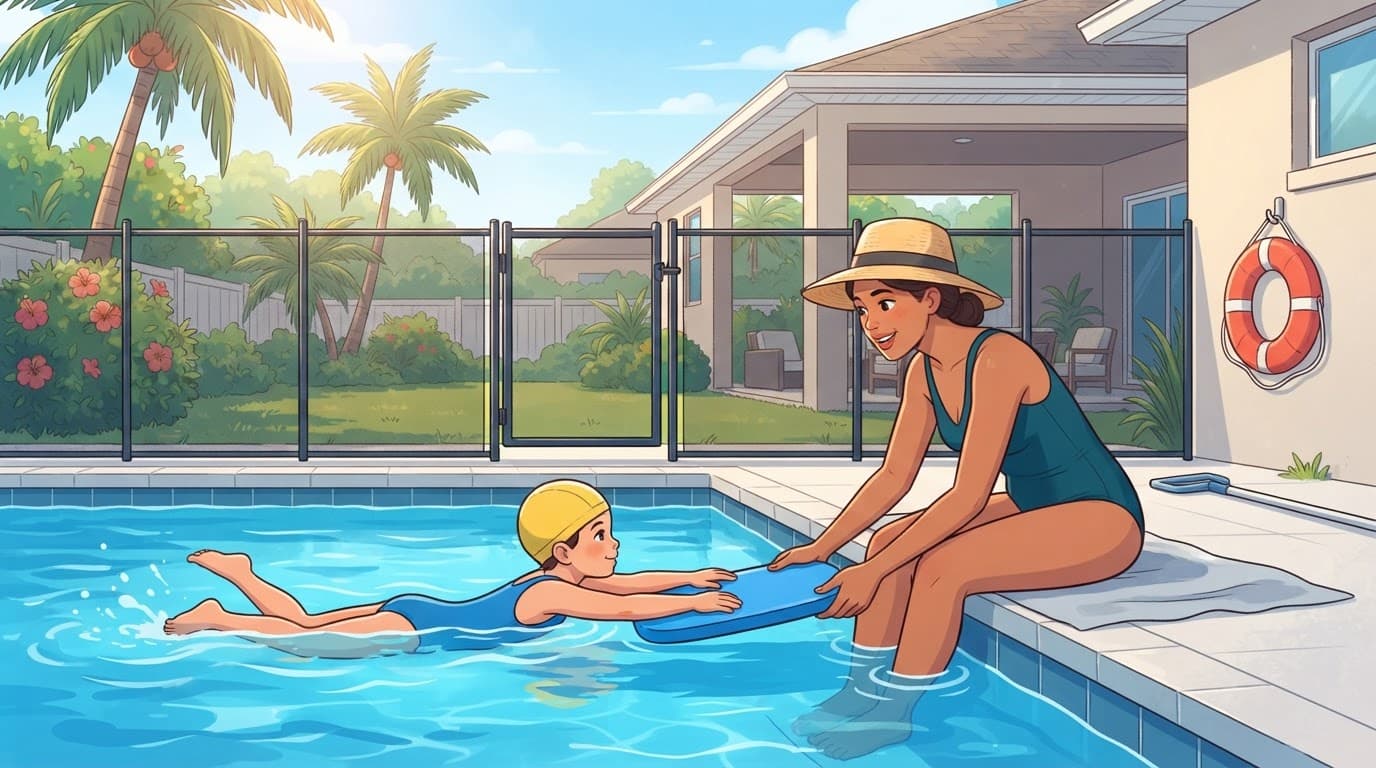
At every lesson, one adult should only watch the water. Families often call this person the water watcher.
That adult stays close, faces the pool, and keeps both eyes on the children. Phone calls, grilling, alcohol, and housework can wait.
If the watcher must leave, another adult accepts the job first. A clear handoff matters.
The CDC’s drowning prevention guidance advises close, distraction-free supervision around water.
Pool parties need a planned handoff
More adults can mean less supervision when everyone assumes someone else is watching. Pool parties need a named watcher before guests arrive.
The host should tell guests who has the job. A simple spoken handoff works best: “I have the pool now.”
Young swimmers also need a head count when they enter and exit. The supervising adult never drinks alcohol while children are in or near water.
A child who has passed a swim test still needs the same close watching.
A Four-Sided Pool Barrier Creates Valuable Time
An adult can’t watch every second without interruption. That is why physical barriers matter so much.
Layers are not overkill. They give a parent a few extra seconds to notice a child moving toward the water.
Why a Four-Sided Pool Fence Matters
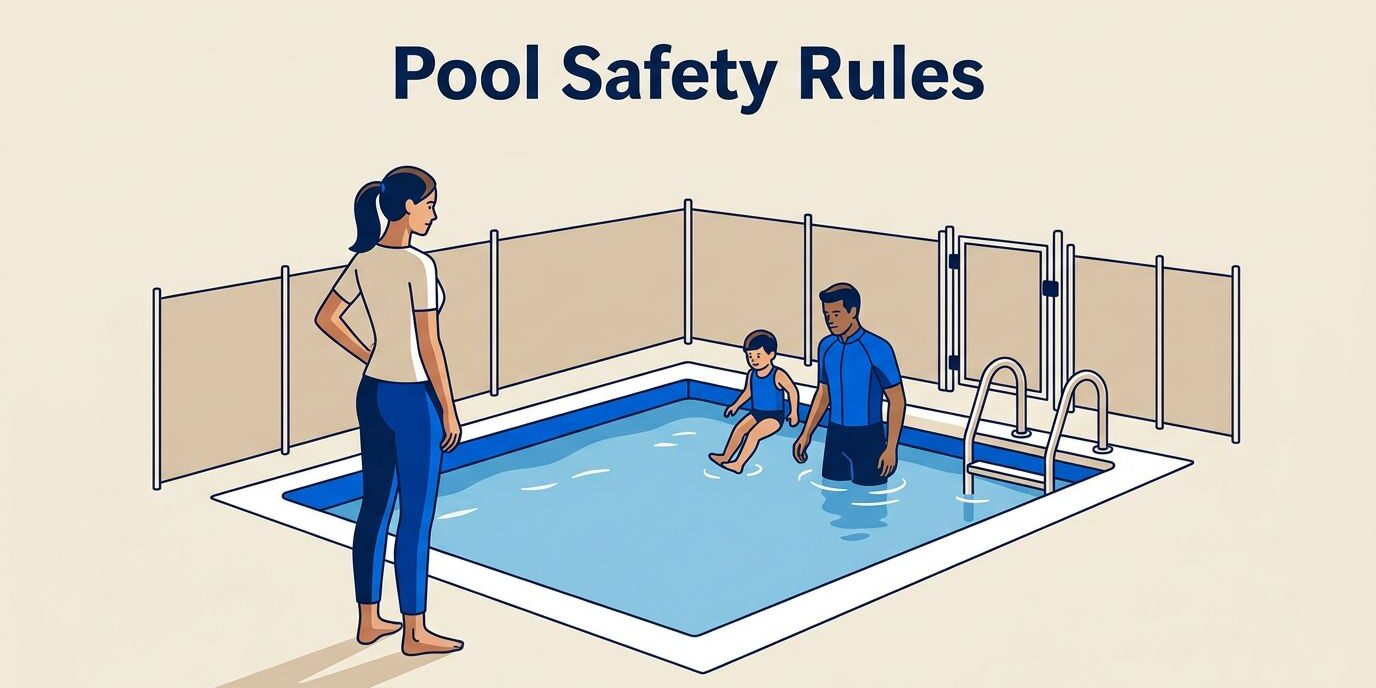
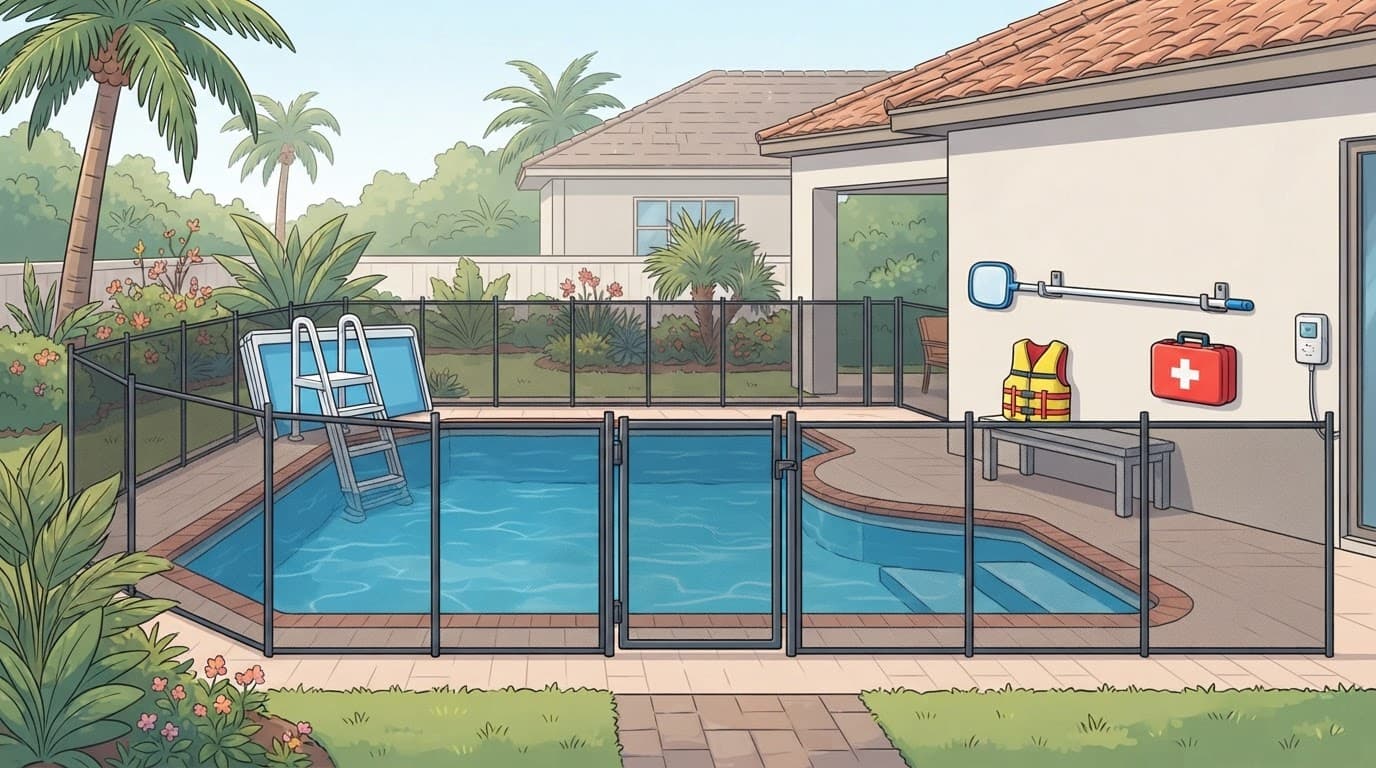
A four-sided isolation fence fully surrounds the swimming pool area. This pool barrier separates the water from the house, patio, and rest of the yard.
A property-line fence may contain the backyard. It does not stop a child from walking straight outside and reaching the pool.
The CDC reports an 83% lower drowning risk with four-sided isolation fencing than with three-sided property-line fencing. The CDC also recommends a pool fence at least four feet high.
Local Florida requirements and community rules can require more. Homeowners should confirm current county and municipal rules before installation. A pool inspection can help verify the completed setup.
Gates, Alarms, and Above-Ground Access
A removable mesh barrier needs a self-closing gate with a latch beyond the reach of young children. The self-latching gate should close securely every time.
Parents should check that it closes and latches every day. A gate left propped open defeats the entire barrier.
Above-ground pools need the same access plan. Adults should lock, secure, or remove ladders and steps when nobody supervises the pool.
Alarms are helpful safety devices, and door alarms at house exits add another layer. Safety covers offer supplemental protection, but neither option replaces a fence or focused adult supervision.
Families considering a fitted removable barrier can Get a FREE Quote. Those with questions can schedule a pool safety fence consultation.
Keep Home Swim Practice Small and Repeatable
A home pool can feel familiar, which is a good thing. However, that comfort can tempt adults to skip the structure children need.
Short lessons with one clear goal usually work best. A tired child loses focus quickly.
Teach safe exits before harder skills
Before water time, a parent should check the gate, water conditions, and safety equipment. Then the lesson can focus on one or two skills.
Start with safe feet-first entries and holding the wall. Young children should practice turning toward the wall and moving along it in the swimming pool.
Next, they can learn to find the steps and climb out safely. An adult stays within arm’s reach during every new skill.
Parents should end the lesson before a child becomes exhausted. Tired kids make unsafe choices, even when they feel brave.
Swimming Lessons Add Skill, Not Immunity
Swim competency is an important safety layer. It is not permission for children to swim without active adult supervision.
The American Red Cross offers water safety classes for children and adults. These lessons help children gain skills at their own pace.
Inflatable toys don’t make a child water-safe. Properly fitted life jackets have a place, but they don’t replace adult supervision.
Every child learns differently. Parents should match the lesson to the child’s attention, ability, and comfort level.
Drains and Water Chemistry Need Daily Attention
Safety also happens below the waterline. A swimming pool may look bright and inviting while another hazard waits underneath.
Parents should include drain checks and chemical testing in regular pool maintenance to support water safety. No guessing. No casual exceptions.
Treat drains with respect
Powerful main drains can cause suction entrapment, trapping a child against the drain. Children should never sit, play, or put hands near a drain cover.
Before each season, homeowners should inspect drain covers for cracks, loose screws, and damage. A damaged or missing cover means the pool stays closed.
Replacement drain covers must match the drain and circulation system. An experienced pool professional can confirm the right anti-entrapment cover.
Children should never test a drain with their hands or feet. That is not a lesson activity.
Keep water balanced and tested
Parents should test water and check chlorine levels before lessons, especially after heavy rain, large gatherings, or long sunny days. Clear water is not a test result.
CDC pool-operating guidance sets public-pool minimums at 1 ppm chlorine, 3 ppm bromine, and pH 7.0 to 7.8.
Home systems need their own product instructions and test-kit guidance. Families should close the pool when readings fall outside the recommended range.
Store pool chemicals high, dry, and away from children. Never mix pool chemicals.
Prepare for a Water Emergency Before It Happens
Emergency preparedness feels uncomfortable, but it saves precious seconds when panic hits. Every adult who oversees lessons should know where the safety items are.
A prepared pool area feels calmer. It also helps adults act fast when something goes wrong.
Build a simple emergency plan
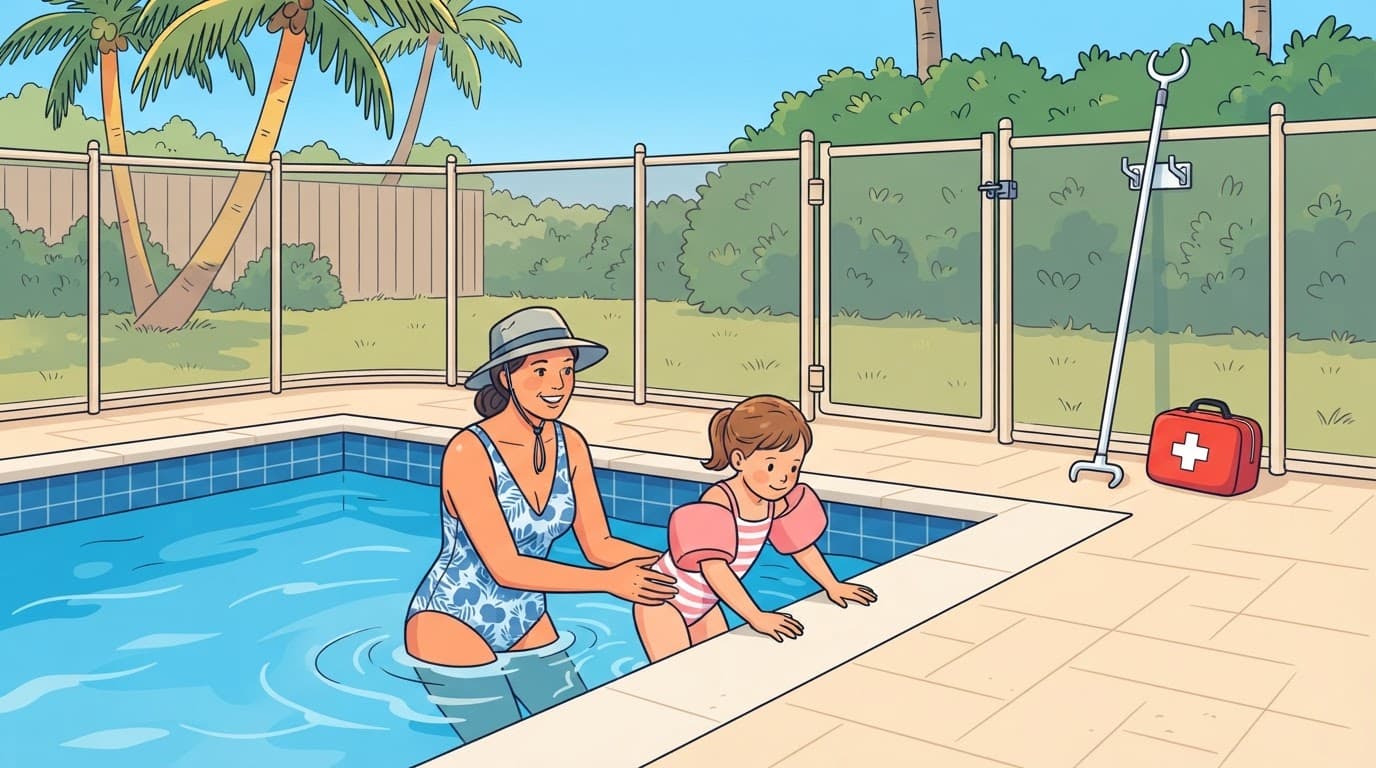
Keep a charged phone, life ring, and reaching pole nearby as safety devices. Adults should also keep the home address where they can find it fast.
If a child goes missing, adults should check the swimming pool first. Then they should call 911 and begin emergency action.
Every regular caregiver should be CPR certified and trained in first aid. The Red Cross includes CPR knowledge in its water safety recommendations.
Practice the plan with caregivers before an emergency occurs. A real emergency is not the time to search for equipment.
Close the pool with the same care
The end of a lesson needs a routine too. One adult should confirm every child has exited the pool area.
Then the family removes toys, secures ladders, latches the gate, checks alarms, and secures the safety covers. No child returns without asking again.
Safety covers need proper use every time. They don’t replace a closed gate or active supervision.
These closing pool safety rules keep a good lesson from ending with an avoidable risk.
Frequently Asked Questions
Can a child swim in a home pool without an adult watching?
No. Even children with swim skills can panic, slip, or become trapped, so an adult should provide close, distraction-free supervision every time.
Is a four-sided pool fence required for home pool safety?
A four-sided isolation fence is a valuable barrier because it separates the pool from the house and the rest of the yard. Local laws may require specific heights, gates, or other features, so homeowners should confirm current requirements before installation.
Do floaties, alarms, or safety covers replace supervision?
No. These products can add layers of protection, but they do not make a child water-safe or replace a focused adult watcher and a secure pool barrier.
What should families do before a home swim lesson?
Adults should check the gate, water conditions, drain covers, and safety equipment before children enter the pool. They should also keep a charged phone and emergency equipment nearby and end the lesson before the child becomes tired.
Safe Lessons Build Real Confidence
Home swim lessons should build joy, not false confidence. The strongest pool safety rules work in layers: close supervision, secure barriers, consistent habits, clean water, and emergency readiness.
Parents do not need a complicated script. They need routines that every caregiver follows without exceptions.
One focused adult and one closed gate can make a huge difference. Together, these habits build realistic confidence and give every family greater peace of mind.