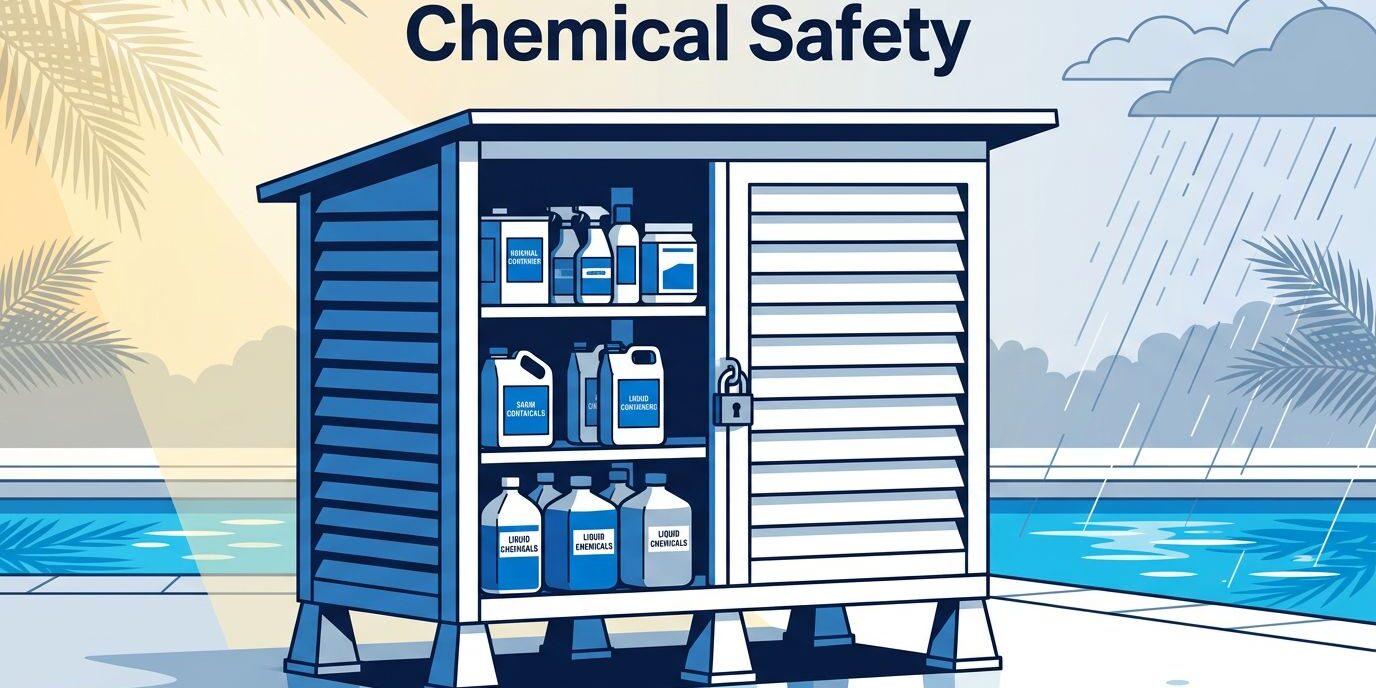
A hot, wet, forgotten cabinet can turn routine pool care into a serious family risk. Pool chemical safety deserves the same attention as a secure pool gate, a locked door, or a properly used car seat.
Southwest Florida heat, humidity, and heavy rain can damage containers and labels. Keep pool chemicals cool, dry, and locked away from children and everyday backyard traffic. A hot pump room is never a safe storage location.
These simple habits reduce guesswork, protect your family, and support dependable water quality.
Key Takeaways
- Store pool chemicals in a cool, dry, shaded, ventilated, and locked area away from children, pets, fuel, food, equipment, and everyday backyard traffic.
- Keep chlorine, acid, liquid products, and other incompatible chemicals in separate zones, with liquids stored low and never above dry chemicals.
- Keep every product in its original, labeled container with the lid closed, and return it to the locked cabinet immediately after use.
- Check the cabinet monthly for leaks, damaged containers, faded labels, moisture, expired products, and a working lock; buy only what the household can use within a reasonable season.
- Never mix, move, or discard suspicious chemicals without guidance. Contact the manufacturer, local hazardous-waste authority, or 911 when a leak, strong odor, visible fumes, fire, or illness creates an emergency.
A Safe Home for Pool Chemical Storage
A safe setup gives pool chemicals a cool, dry, locked home. Choose a dedicated chemical storage area instead of using a convenient cabinet beside the pool.
Pick a real storage spot
Garage corners collect clutter, lawn tools, gasoline, and wet shoes. Indoor storage works only when the cabinet stays separate from vehicles, fuel, food, and equipment.
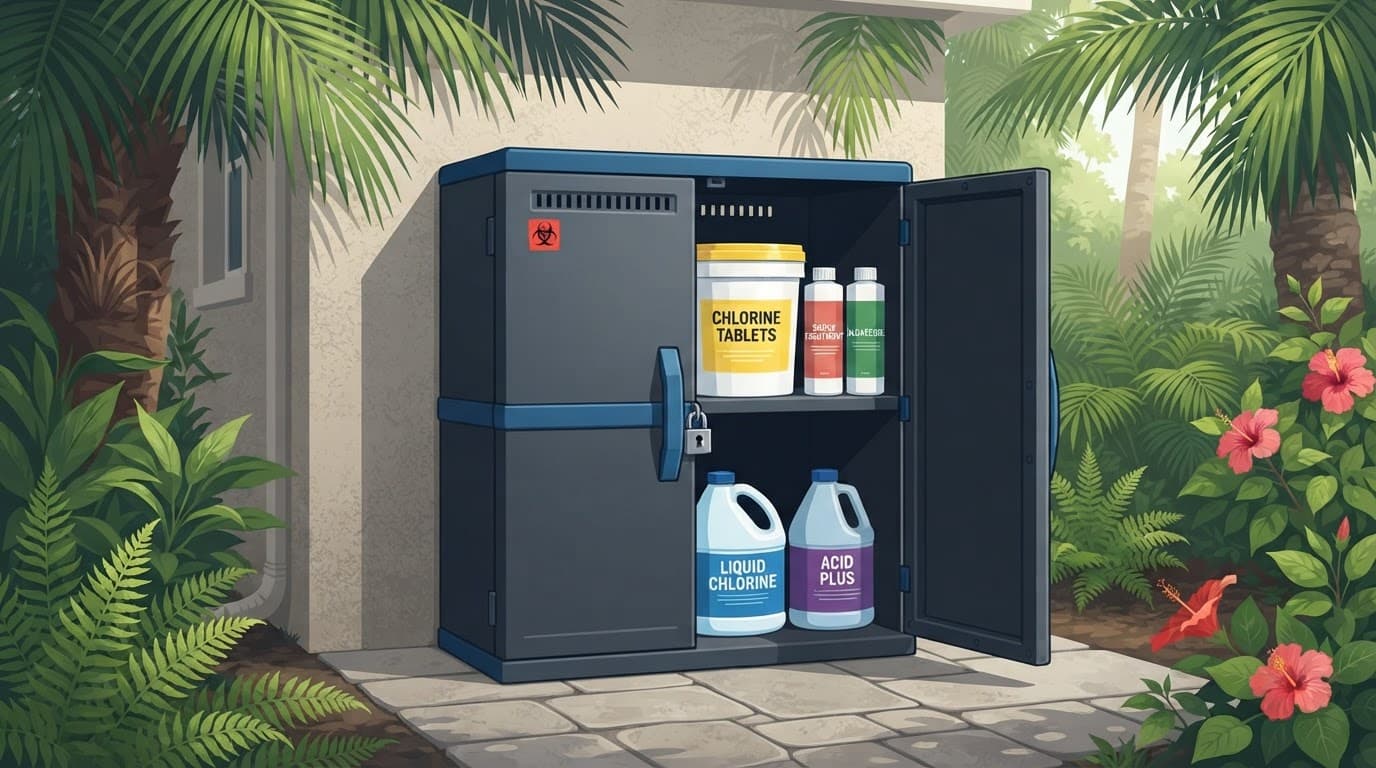
A family should choose a dedicated cabinet that children and pets cannot open. For outdoor storage, choose weatherproof storage, such as a plastic or wood cabinet, in a shaded, dry spot protected from rain.
The chemical storage area needs shade, airflow, and a stable surface away from pool splashes. Keep chemicals off the floor on sturdy shelves, never near a hose, sprinkler, drain, or roof leak.
The EPA’s storage and handling alert also recommends keeping them dry and separated from water. For indoor storage in a utility area, the cabinet should sit far from vehicles, grills, fuel, food, and gas-powered equipment.
Florida heat changes the plan
Sun can turn a small shed into an oven before lunchtime. The CDC says stored products should stay below 95 F (35 C), while product labels may add conditions.
That guidance can rule out a hot pump room, windowless closets, and unshaded sheds. A cabinet under deep shade, with open space around it, gives products a much better chance.
| Storage location | Common problem | Better choice |
|---|---|---|
| An unshaded shed | Heat builds quickly | A locked cabinet under deep shade |
| A crowded garage corner | Fuel and household items sit nearby | A separate cabinet away from traffic |
| A damp pump room | Moisture and corrosive fumes collect | A dry, ventilated storage space |
After choosing a location, keep the chemical storage area dry, shaded, and ventilated. Use room or cabinet ventilation systems to move air around closed containers, rather than storing them in an airtight box.
Separate Chlorine, Acid, and Every Other Product
Most accidents involving pool chemicals start with a shortcut, usually a shared shelf or a borrowed container. Sorting storage containers by color or bottle size isn’t enough.
Families should divide the chemical storage area into chemistry-based zones, even when a cabinet has limited space.
Give dry chlorine its own zone
Chlorine-based chemicals, including chlorine tablets and granular shock, must stay dry, closed, and in their original containers. Keep them away from acid, liquid chlorine, fertilizers, solvents, household cleaners, and water.
Never combine different chlorine products, even if both containers say “pool chlorine.” Dry pool chemicals can react quickly with water or incompatible products, causing dangerous chemical reactions.
The CDC pool chemical safety guidance calls for dedicated locations that separate incompatible pool chemicals. That rule reduces the risk of dangerous chemical reactions.
Keep liquids low and acid separate
Muriatic acid belongs far away from chlorine-based chemicals. Accidental contact can release toxic gas.
Liquid chlorine should sit on a low shelf, where a leak can’t drip onto another product. A liquid container, such as muriatic acid, should never sit over chlorine tablets, powdered shock, or another incompatible chemical.
Acid needs its own low shelf or, better yet, its own locked cabinet. The few extra steps feel fussy until they prevent a serious problem.
Keep Products in Their Original Containers
Keep pool chemicals in their original containers. Their labels give adults the answers they need during normal use or an emergency.
Labels give the right answer
A label identifies the product, hazards, personal protective equipment, first-aid steps, and disposal instructions.
Never transfer chemicals to drink bottles, unmarked buckets, or shared storage containers. A soda bottle can look harmless to a child, even when it holds something dangerous.
Keep every lid closed, and never borrow a scoop from another chemical. If a container cracks, swells, leaks, or loses its label, call the manufacturer first. Follow the label and use the listed protective gear before handling any product.
Keep safety data sheets nearby, either on paper or where an adult can find them quickly. They explain product hazards, first-aid steps, and emergency instructions.
Limit access after every pool task
Return every product to the locked chemical storage area immediately after use. A cabinet lock only works when its key stays beyond a child’s reach. Adults should close and lock the door immediately after chemical handling. No exceptions!
Indoor storage still requires restricted access, even inside a locked cabinet.
A locked pool gate controls access to water. A locked chemical cabinet controls access to the products that keep water safe.
That same habit protects visiting children, curious pets, and anyone helping with backyard chores.
Buy Less and Check It Monthly
Products don’t share one reliable shelf life. Each product’s label controls its storage conditions and timing.
Florida heat and moisture can shorten useful life, especially after a container opens. Buying too many pool chemicals can leave a household storing deteriorating products for years.
Fresh products work more predictably
Buy only what a household can use within a reasonable season. Check purchase dates and expiration dates when available, then use older products first.
Don’t mix old product into a fresh container, even when the names match. That shortcut can create unstable material and hide the age of both products. A simple date note inside the cabinet helps adults choose older items first.
The goal isn’t a packed cabinet. It’s a tidy, dependable supply that’s easy to inspect.
Make a five-minute cabinet check
A quick monthly look at the chemical storage area catches problems before they grow. This review covers products and the cabinet, not pool equipment. During that check, an adult should:
- Inspect containers and chlorine tablets for leaks, cracks, loose lids, or faded labels.
- Check that dry products remain dry and liquids stay upright.
- Confirm the cabinet lock works and the key remains out of reach.
- Review required emergency documents and replace any missing pages.
- Remove tools, food, drinks, fuel, and unrelated household items.
Inspect the recirculation system separately. Never use the pump room as overflow storage.
Anyone handling chemicals should follow the label’s PPE instructions, often goggles and chemical-resistant gloves. That small routine keeps the cabinet safer all year.
When a Pump Room Needs Commercial-Level Safety
Strong pool chemical safety controls require more than a locked cabinet in commercial settings. HOA pools, rental properties, public pools, and other shared facilities need trained staff and controlled access. An active pump room also needs documented procedures for handling pool chemicals.
Florida’s public pool checklist calls for a chemical storage space that the public cannot access. A commercial pump room may need a dedicated chemical storage area for code-compliant indoor storage. Local codes also restrict corrosive-fume chemicals near equipment.
Contain leaks before they spread
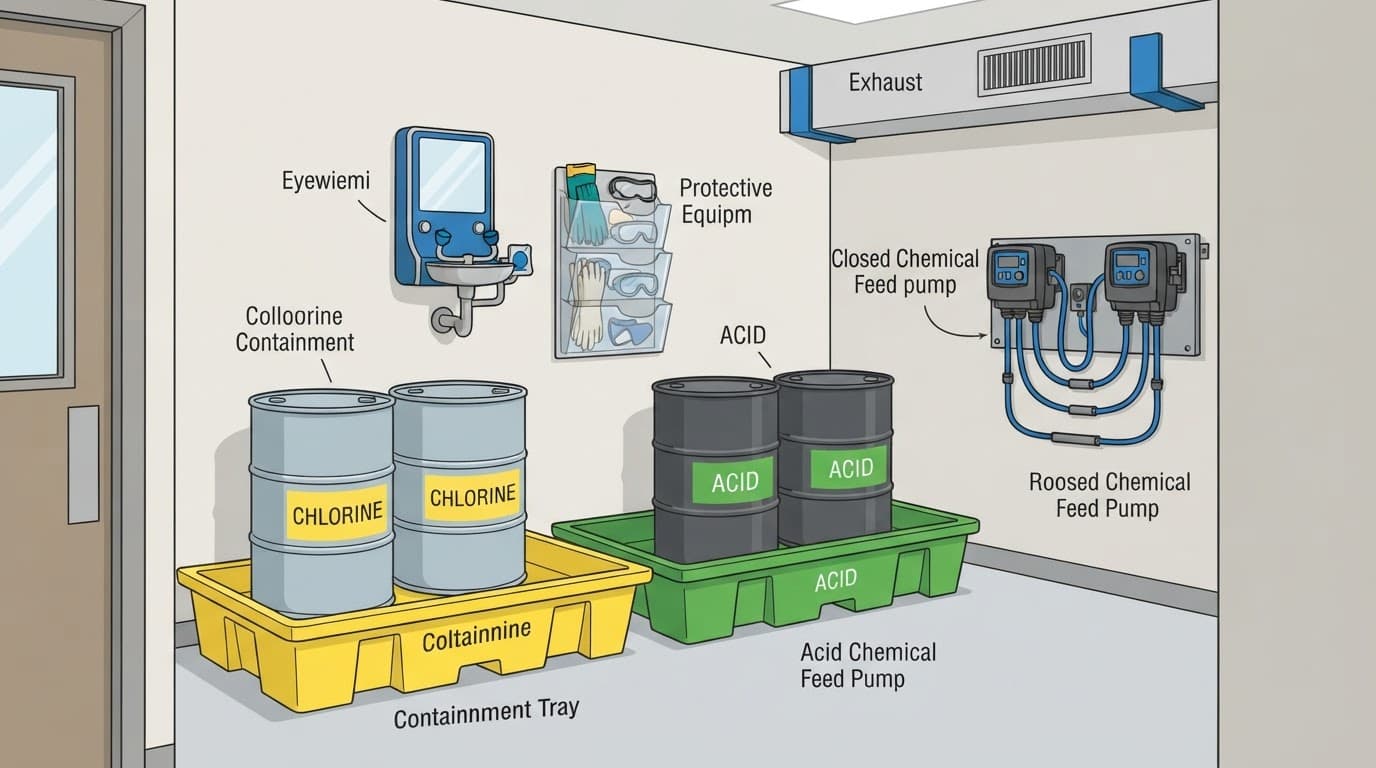
Commercial sites handling pool chemicals need secondary spill containment. In a pump room, trays or containment pallets should catch leaks from pool chemical storage tanks. They should keep leaks from reaching the floor, drain, or nearby equipment.
Chlorine-based chemicals and muriatic acid need separate containment zones. Separate spill containment should be sized for each product. Never place one chemical tank above another or share cleanup tools between them.
Feed pumps, pool chemical storage tanks, and the recirculation system need a professionally planned layout. Each chemical tank needs a stable, labeled position, and its capacity must match the adjustable pump and recirculation system. Property managers should have a professional confirm the chemical tank specifications, rather than relying on online ratings, before selecting an adjustable pump. The pump room should leave clear access around every chemical tank and feed pumps serving the recirculation system.
Ventilation and emergency equipment matter
Ventilation systems in a commercial pump room must move corrosive fumes away from occupied areas. Local fire and building codes control the exact room design.
Staff handling pool chemicals need accessible personal protective equipment, including goggles and gloves. Safety data sheets, spill supplies, an eyewash station, and other protective gear should stay visible and ready, not buried behind equipment.
Only trained adults should enter the storage room, which needs regular checks and clear access. A locked door is a basic first step, not the whole safety plan.
Dispose of Products That Look Wrong
Old pool chemicals don’t become safer with a new scoop. Even a routine old product needs proper disposal guidance. No one should try to revive, combine, or “use up” an unknown product.
Do not mix old chemicals with new ones
Leaking, swollen, or cracked storage containers, caked powder, or unreadable labels all call for caution. Keep children, pets, and bystanders away from the chemical storage area. Don’t approach, touch, or move a suspicious container, even if protective gear is available.
Never pour questionable pool chemicals into the pool, down a drain, or into household trash. The CDC directs owners to contact the manufacturer or local hazardous materials authority for disposal guidance.
The EPA’s pool chemical safety resources also point owners toward local hazardous-waste disposal facilities. That route protects the household, sanitation workers, and the environment.
Keep the response calm
During a leak or unexpected odor in a pump room, adults should move children and pets away first. They should not touch, move, or mix the container.
A strong odor, visible fumes, fire, or a person feeling sick requires an immediate 911 call. For less urgent situations, the manufacturer and local hazardous-waste program can give the next safe step.
Pool Safety Works Better in Layers
A locked chemical cabinet is one layer of pool chemical safety. It protects children from reaching pool chemicals, while pool barriers, self-closing gates, and adult supervision address other backyard risks.
A removable mesh pool fence helps keep young children and pets from reaching the water unsupervised. It does not replace safe chemical habits, and a secured pump room cannot prevent drowning without a physical water barrier. Proper chemical controls also support dependable water quality.
Families ready to add that layer can Get a FREE Quote for professionally installed removable mesh pool fencing. For help with gate options, fence heights, and backyard layouts, they can contact Pool Fence SWFL for a free estimate.
Frequently Asked Questions
Where should pool chemicals be stored?
Store pool chemicals in a cool, dry, shaded, ventilated, and locked cabinet away from children, pets, fuel, food, and equipment. Avoid hot pump rooms, unshaded sheds, damp areas, and locations near drains, hoses, sprinklers, or roof leaks.
Can chlorine and muriatic acid be stored together?
No. Chlorine-based products and muriatic acid must remain in separate storage zones because accidental contact can release toxic gas or cause a dangerous chemical reaction.
Can pool chemicals be transferred to another container?
No. Keep each product in its original, labeled container with the lid closed. Never use drink bottles, unmarked buckets, or shared containers, and never borrow a scoop from another chemical.
How often should a pool chemical cabinet be checked?
An adult should perform a quick cabinet check each month. Look for leaks, cracks, loose lids, faded labels, moisture, expired products, unrelated items, and a lock and key that remain secure.
What should I do with an old or damaged pool chemical?
Do not mix it with a new product, pour it down a drain, place it in household trash, or try to use it up. Keep people and pets away, then contact the manufacturer or local hazardous-waste authority for safe disposal guidance; call 911 for fire, visible fumes, strong odors, or illness.
A Safer Backyard Starts Behind the Cabinet Door
Pool care should bring relief, not another hidden risk. Behind a cool, dry, locked cabinet door, a well-organized chemical storage area supports safer routines and protects the people who matter most.
Small habits make a big difference. Thoughtful pool chemical storage gives Southwest Florida families more peace of mind while they enjoy their backyard.